
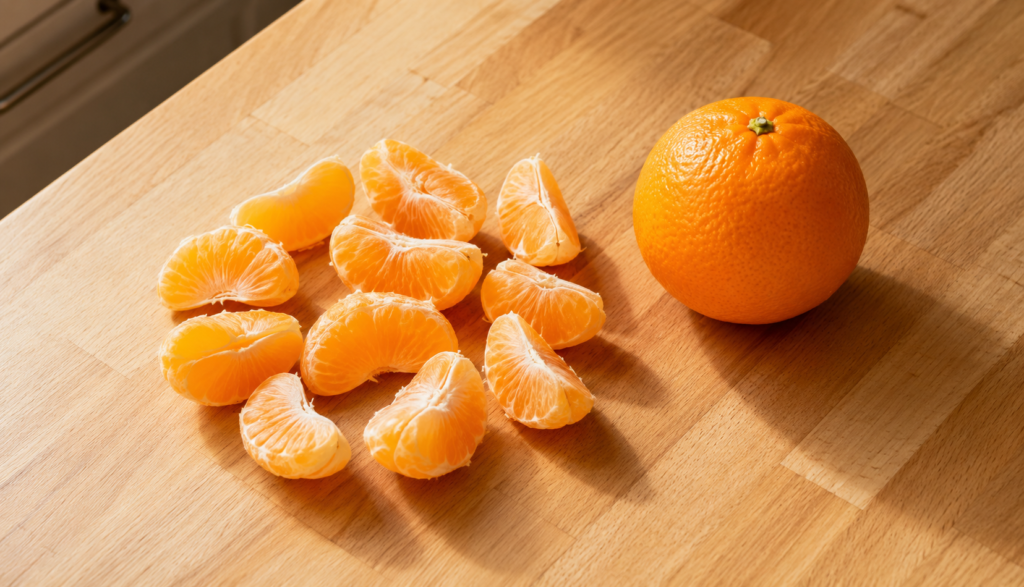
Oranges sit in a category that surprises a lot of dog owners — safe, but with more specific preparation rules than most fruits on the list. The citrus family carries a reputation for being off limits for dogs that isn’t entirely accurate, but it isn’t entirely wrong either. I’ve given orange segments to dogs for years without any issue, but the first time I saw someone let a dog chew on an orange peel and watched the GI fallout that followed, I understood why the category gets a cautious reputation. Can dogs eat oranges? Yes — the flesh is safe, nutritious, and most dogs accept it readily. The peel, seeds, and juice are a different story entirely, and the distinction matters more than most people realize.
What Oranges Actually Offer Dogs Nutritionally
Fresh orange flesh delivers one of the highest vitamin C concentrations of any commonly available fruit. Dogs synthesize their own vitamin C, which is why it’s not classified as a dietary requirement the way it is for humans — but additional dietary sources still support immune function during illness, stress, or heavy exercise in ways the body’s own production doesn’t always cover fully. For active dogs or dogs recovering from illness, fresh orange as an occasional treat contributes real immune support rather than just being a harmless snack.
The antioxidant profile of oranges extends beyond vitamin C. Flavonoids and other compounds present in orange flesh support cellular health and reduce oxidative stress — benefits that accumulate over time with consistent inclusion rather than appearing dramatically after a single serving. Oranges for dogs work best as a rotating treat alongside other antioxidant-rich fruits rather than a standalone focus.
Fiber content in orange segments supports digestion in the same way other fruits do — moderating sugar absorption, feeding beneficial gut bacteria, and supporting regularity. The natural sugar in oranges is higher than in berries but lower than in tropical fruits like mango, which puts them in a middle range where portion control matters but isn’t as restrictive as with the sweetest fruits on the safe list.
What surprised me was how much individual dogs vary in their response to citrus flavor. Some take to orange segments immediately and will eat them as enthusiastically as any other treat. Others find the citrus scent off-putting and won’t touch them regardless of how they’re offered. Neither response is a problem — oranges are a useful option, not a necessary one, and a dog that rejects citrus has plenty of other safe fruits to rotate through.
Orange Peel — Why It Always Comes Off
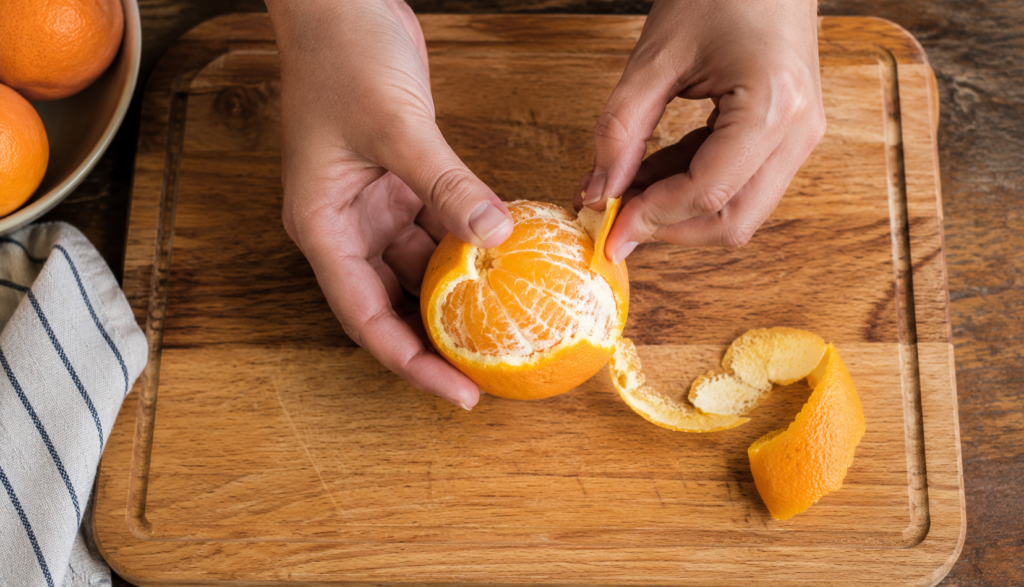
Orange peel is the part of this fruit that shifts oranges from simple to slightly complicated. The peel of an orange contains essential oils — primarily limonene and linalool — that are irritating to the canine digestive system in a way the flesh isn’t. These compounds are concentrated in the peel and to a lesser extent in the white pith beneath it, and they’re responsible for the GI upset that follows when dogs chew on orange peel rather than just the flesh.
The symptoms range from mild digestive upset — loose stools, stomach cramping — to vomiting in dogs that eat a meaningful amount of peel. The essential oils in citrus peel are also used in some flea and insect repellent products specifically because dogs find the scent aversive, which suggests the compounds have a more systemic effect on dogs than on humans who eat citrus peel without issue.
I’ve watched this go wrong when a dog got into a bag of orange peels set aside for composting. She chewed through a significant pile before anyone noticed, and the next several hours involved multiple outdoor trips and visible discomfort. The orange flesh she’d had earlier that week caused zero reaction — the peel was entirely responsible, and it was entirely avoidable.
Remove the peel completely before serving, including as much of the white pith as reasonably possible. Orange seeds should also be removed — they’re not toxic in the way apple seeds are, but they add no value and can be a mild digestive irritant in larger quantities. What remains after peeling and deseeding is clean orange flesh, ready to separate into segments and serve.
Orange Juice and Why It Doesn’t Work for Dogs
Orange juice comes up often as a question, and the answer is consistent with the approach to other fruit juices for dogs — it’s not appropriate as a regular addition to the diet even though the base ingredient is safe. The juicing process removes the fiber that moderates sugar absorption in whole fruit, leaving a concentrated sugar delivery with none of the digestive benefits that come with eating the whole segment.
Commercial orange juice adds further complications. Most products contain added sugar, preservatives, or flavor compounds beyond pure juice. Even fresh-squeezed orange juice delivers the sugar content of multiple oranges in a single glass — far more than any dog should have in one sitting. The citrus sensitivity some dogs have is also more likely to manifest with juice than with whole segments, because the essential oil compounds from the peel sometimes carry through into pressed juice.
Most dog owners miss this completely: orange juice offers dogs none of the fiber benefit of whole orange, delivers more sugar per serving than any appropriate portion of the fruit, and bypasses the mechanical engagement of chewing that makes whole fruit treats more satisfying and slower to consume. There’s no version of orange juice that improves on plain orange segments for dogs. Skip the juice and serve the fruit.
Citrus sensitivity in dogs is worth flagging specifically. Some dogs — particularly those with sensitive stomachs or pre-existing digestive conditions — react to citrus fruit even when the peel is removed and the portion is appropriate. If your dog hasn’t had orange before, start with a single small segment and monitor for any reaction over 24 hours before making it a regular treat. Dogs that show digestive discomfort after small amounts of orange flesh are probably better served by non-citrus fruits.
How Many Orange Segments Dogs Can Have
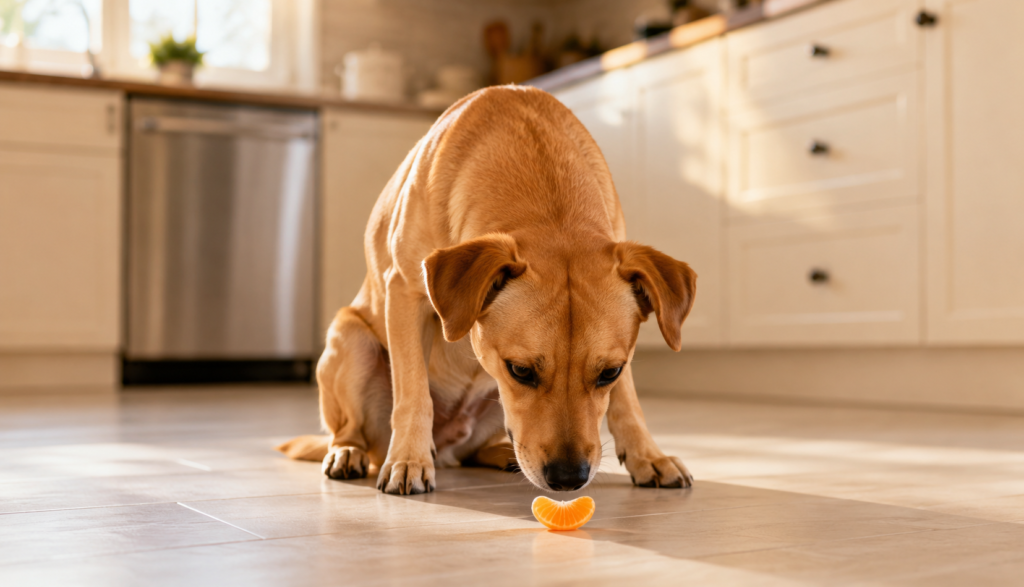
The natural sugar content in oranges means portions need to stay controlled, but oranges aren’t in the same restrictive category as mango or coconut where fat or very high sugar makes small amounts essential. A few segments a few times a week is a practical and safe approach for most healthy adult dogs.
For small dogs, one segment per serving is the right ceiling. Small breeds have less tolerance for sugar load and citrus acidity than larger dogs, and one segment delivers meaningful vitamin C without overloading the system. For medium dogs, two to three segments is appropriate. Large breeds can handle up to four or five segments in a single serving without issue. These amounts reflect the sugar and acidity management rather than a toxicity threshold — there’s room to go slightly over without immediate harm, but consistent overserving accumulates in ways that matter.
From experience, the smarter call is to peel and segment an orange for yourself and set aside one or two pieces for the dog before eating rather than offering pieces at random as you go. That approach keeps portions deliberate rather than cumulative, which is where most overfeeding happens — one segment becomes two, then three, because the dog is still interested and the fruit is still in hand.
Dogs with diabetes, weight issues, or a history of pancreatitis need veterinary guidance before citrus is added to the diet. The sugar content in oranges, while not extreme, is significant enough to affect blood glucose in dogs already managing metabolic conditions. Healthy adult dogs without these concerns handle appropriate orange portions without issue across all size categories.
What Most People Don’t Know
The citrus category includes several fruits that follow the same rules as oranges but get less attention. Mandarins, clementines, and tangerines are all safe for dogs in the same way oranges are — peel and seeds removed, flesh served in appropriate portions. Mandarins and clementines are smaller and lower in acidity than navel oranges, which can make them easier for dogs with mild citrus sensitivity to tolerate. The preparation logic is identical across all of them.
Grapefruit does not follow the same rules. Grapefruit is significantly more acidic than orange and contains higher concentrations of the essential oil compounds that cause digestive irritation in dogs. It’s also more bitter, which means most dogs self-select away from it, but the safety profile is different enough from orange that it shouldn’t be assumed safe just because oranges are. Grapefruit and lemon are not appropriate for dogs and shouldn’t be offered regardless of how the orange rules are applied.
The other thing worth knowing is that citrus essential oils used in household products — diffusers, cleaning sprays, surface cleaners — can cause respiratory irritation in dogs through inhalation even when no fruit is being fed. This doesn’t change the safety profile of eating orange flesh, but it’s a reason to be aware that dogs and concentrated citrus compounds don’t always mix well, and the peel removal rule for feeding reflects a real chemical sensitivity rather than overcaution. If symptoms persist or worsen after your dog eats oranges, a vet visit is always the right call.
Building Citrus Into a Broader Fruit Rotation
Oranges work well as a seasonal addition to a fruit treat rotation rather than a year-round staple. They’re at their best during winter months when other fresh fruits are less available, which gives them a practical niche in a varied treat schedule. Rotating between oranges in winter and stone fruits or berries during warmer months keeps variety consistent across the year without requiring any single fruit to carry the full nutritional load.
Pairing orange segments with lower-sugar fruits on the same day balances the overall sugar intake across the treat session. A couple of orange segments alongside a handful of blueberries or blackberries covers citrus-derived vitamin C alongside berry-derived antioxidants without pushing either sugar content or serving volume into problematic territory.
Safe fruits for dogs are most useful when they’re chosen and rotated with some intention. Oranges contribute vitamin C and antioxidants that complement what berries and stone fruits provide, and working them into a schedule deliberately — rather than offering them at random when one is nearby — is what makes the nutritional contribution consistent rather than occasional. A dog that gets a segment of orange twice a week through winter, alongside berries and apple slices on other days, is getting a meaningfully more varied micronutrient profile than one eating the same processed treat every day.
Frequently Asked Questions

Q. Can dogs eat orange peel?
A. No. Orange peel contains essential oils that irritate the canine digestive system and can cause vomiting and diarrhea. Always remove the peel and as much white pith as possible before serving orange to your dog.
Q. How many orange segments can a dog eat?
A. Small dogs should have one segment per serving. Medium dogs can handle two to three segments. Large breeds can manage up to four or five. Serve a few times a week rather than daily to keep sugar intake controlled.
Q. Can dogs drink orange juice?
A. No. Orange juice removes the fiber that moderates sugar absorption, delivers concentrated sugar, and often contains additives. It offers none of the benefits of whole orange segments. Serve the fruit, not the juice.
Q. Can dogs eat mandarins or clementines?
A. Yes. Mandarins and clementines follow the same rules as oranges — remove the peel and seeds, serve the flesh only in small amounts. They’re slightly less acidic than navel oranges and easier for sensitive dogs to tolerate.
Q. Can puppies eat oranges?
A. Yes, in very small amounts with peel and seeds fully removed. Start with a small piece of one segment and watch for any digestive reaction. Puppies have more sensitive digestive systems and citrus acidity can cause upset more easily than in adults.
Q. Is grapefruit safe for dogs like oranges?
A. No. Grapefruit is more acidic than orange and contains higher concentrations of essential oils that cause digestive irritation in dogs. Do not assume citrus fruits follow the same rules — grapefruit and lemon are not appropriate for dogs
Q. Can dogs with sensitive stomachs eat oranges?
A. Some can, some can’t. Start with a very small piece of flesh with no peel or pith and monitor for 24 hours. Dogs that show any digestive discomfort after a small amount are better suited to non-citrus fruits like blueberries or apple slices.