
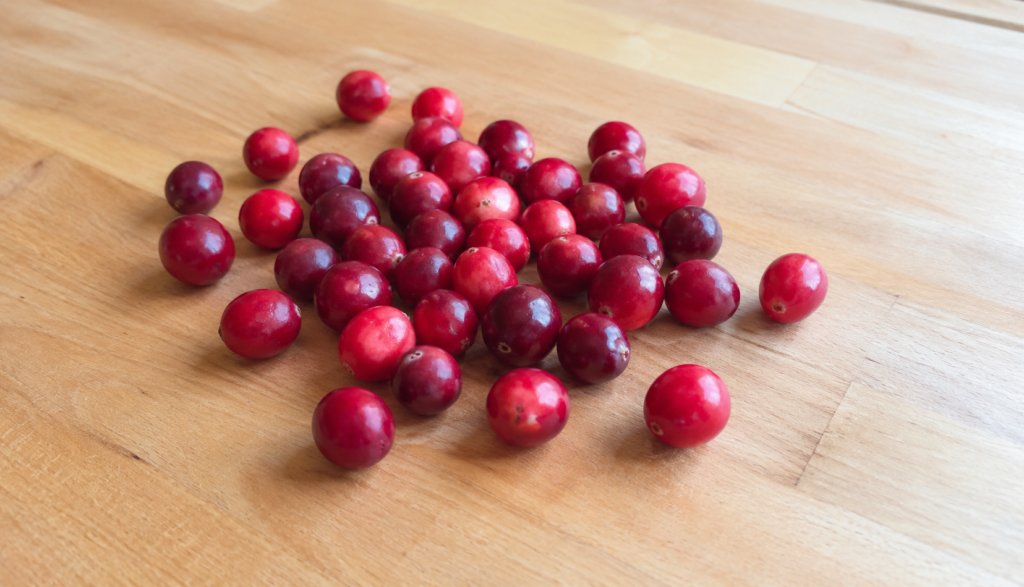
Cranberries have a reputation in dog health circles that outpaces what the evidence actually supports, mostly because of the UTI connection that gets repeated everywhere. The reality is more nuanced — and more interesting. I’ve used cranberries with dogs for years, both as an occasional treat and as a dietary addition during urinary health concerns, and the results depend entirely on which form you use and how much you give. Can dogs eat cranberries? Yes — plain, fresh or frozen cranberries are safe for dogs in controlled amounts. The problem is that most cranberry products available in a typical kitchen are nowhere near plain, and that distinction changes everything about whether they’re appropriate for a dog.
The Nutritional Case for Cranberries
Fresh cranberries deliver a solid combination of vitamin C, vitamin E, and fiber that earns them a genuine place in the safe fruit category beyond just being harmless. Vitamin C supports immune function and acts as an antioxidant, while vitamin E contributes to skin health and cellular protection. The antioxidant profile of cranberries is strong — proanthocyanidins, the compounds responsible for most of cranberry’s documented health effects, are present in meaningful concentrations in fresh fruit.
Proanthocyanidins are the compounds behind the UTI connection. They work by preventing certain bacteria — primarily E. coli — from adhering to the walls of the urinary tract, which theoretically reduces the likelihood of infection taking hold. The research on this in dogs is less definitive than it is in humans, but the mechanism is plausible and cranberry extract dogs receive through veterinary supplements is formulated specifically around this compound. Fresh cranberries contain it in lower concentrations than concentrated supplements, but they do contain it.
The fiber content in cranberries supports digestive health in the same way other berries do — soluble fiber feeding beneficial gut bacteria, insoluble fiber supporting regularity. For dogs eating a standard commercial diet that’s relatively low in whole food fiber, adding fresh cranberries occasionally contributes to gut health in a way that processed treats simply don’t replicate.
What surprised me was how consistently dogs respond to the tart flavor of fresh cranberries — which is to say, inconsistently. Some dogs eat them without hesitation; others find the tartness off-putting and refuse them outright. That’s fine. Cranberries are a useful option, not a mandatory one, and there are enough other safe fruits for dogs that a dog rejecting cranberries loses nothing by skipping them.
Why Most Cranberry Products Are Off Limits
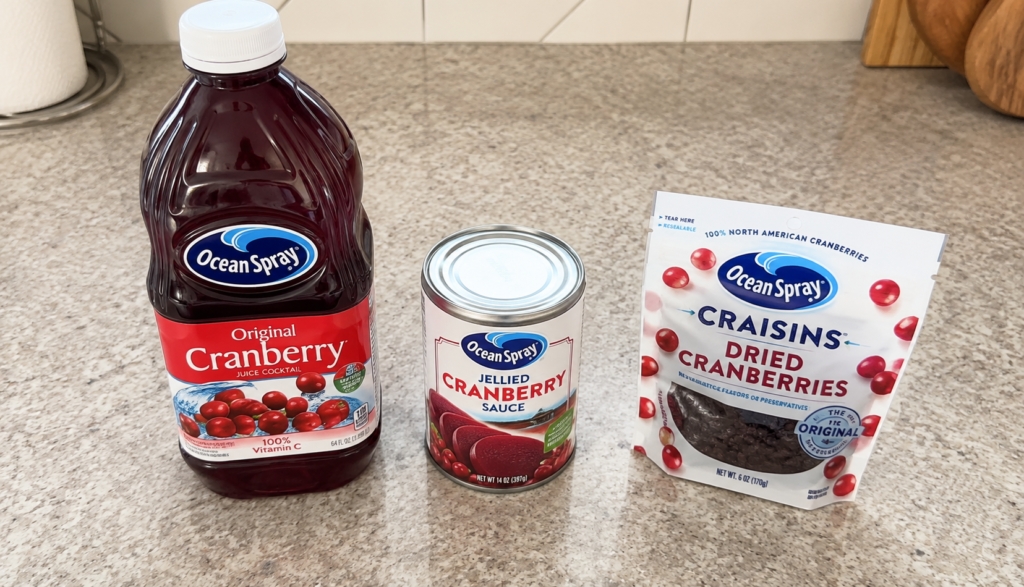
Fresh cranberries and most cranberry products available in a typical kitchen are entirely different things from a dog safety perspective, and this is where most cranberry-related mistakes happen. Owners who know cranberries are safe assume the cranberry sauce at Thanksgiving, the cranberry juice in the fridge, or the dried cranberries in the pantry follow the same rules. They don’t.
Cranberry sauce — both homemade and canned — contains significant amounts of added sugar. Some commercial versions also contain high-fructose corn syrup, orange peel, and other additions that have no place in a dog’s diet. The sugar load in even a small serving of cranberry sauce far exceeds what’s in an equivalent amount of fresh cranberry, and the overall ingredient profile makes it inappropriate regardless of the cranberry content. Cranberry sauce is not a substitute for fresh cranberries.
Cranberry juice dogs sometimes get offered is equally problematic. Commercial cranberry juice — including products marketed as “100% juice” — is almost always sweetened to offset the natural tartness of the berry. Even unsweetened cranberry juice is highly acidic and concentrated in a way that can irritate the digestive system and, with regular exposure, contribute to oxalate formation in the urinary tract. The juice removes the fiber that moderates sugar absorption in whole fruit and delivers the compounds in a concentrated form the body handles differently. Skip cranberry juice entirely.
Dried cranberries are the other common mistake. Most commercially available dried cranberries — including the Craisins brand — contain added sugar equal to or exceeding the weight of the fruit itself. They’re also calorie-dense and easy to over-serve because of the small size. Unsweetened dried cranberries exist but are hard to find and still more concentrated than fresh fruit. Fresh or frozen plain cranberries are always the better choice.
The UTI Claim — What’s Actually True
The cranberry for dogs UTI connection is one of the most repeated pieces of advice in dog health circles, and it’s worth being specific about what the evidence actually says. Cranberry compounds do have a documented mechanism for reducing bacterial adhesion in the urinary tract — that part is real. What’s less established is whether fresh cranberries fed as a treat deliver enough of those compounds at a dose that makes a meaningful clinical difference.
Most dog owners miss this completely: a dog with an active UTI needs veterinary treatment, not cranberries. Untreated bacterial infections don’t resolve on their own, and attempting to manage them with dietary cranberry while skipping veterinary care delays effective treatment and allows the infection to progress. Cranberry has a role in urinary tract health as a preventive support — not as a treatment for an established infection.
Cranberry extract dogs receive through veterinary-formulated supplements is a different matter. Those products are standardized to deliver specific concentrations of proanthocyanidins at doses that have been tested for effect. If urinary tract health is a genuine concern for your dog, a conversation with your vet about appropriate supplementation is more productive than adjusting fresh fruit intake. Fresh cranberries as part of a varied diet can contribute to overall urinary tract health, but the expectations need to match what a treat-sized serving of tart berries can realistically deliver.
Oxalates are the other side of the cranberry and kidney health conversation. Cranberries contain oxalic acid, which contributes to oxalate crystal formation in urine. For dogs already prone to calcium oxalate kidney stones, regular cranberry intake can actually worsen the condition rather than help it. Dogs with a history of oxalate stones should avoid cranberries entirely — the urinary benefit doesn’t apply to them and the risk is real.
How Many Cranberries Dogs Can Have
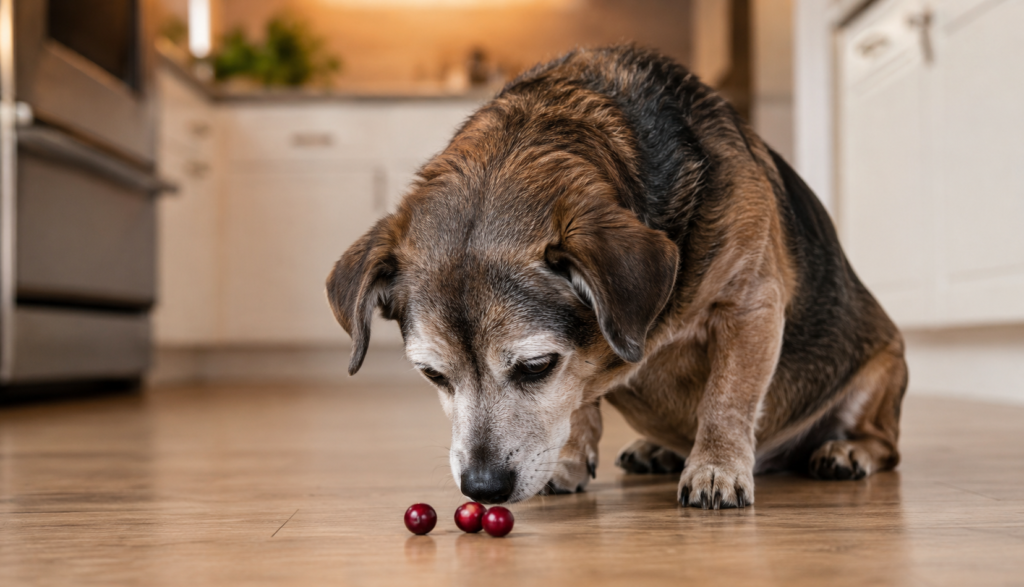
Fresh cranberries are tart enough that most dogs self-regulate to some degree — they’re not the kind of treat a dog will overeat with enthusiasm the way they might with mango or blackberries. But portion control still matters, partly because of the natural sugar content and partly because the acidity of cranberries in large quantities can irritate the digestive system and produce loose stools.
For small dogs, two to three fresh cranberries per serving is appropriate. Medium dogs can handle five to six. Large breeds can manage up to ten in a single serving without issue. Feed cranberries a few times a week rather than daily, and monitor for any digestive reaction when introducing them for the first time — the tartness and acidity are different from the sweeter fruits most dogs are accustomed to, and some dogs need an adjustment period.
From experience, the smarter call is to introduce cranberries alongside a more palatable fruit the first few times — a couple of cranberries mixed with a few blueberries, for example — so the dog gets familiar with the flavor before it’s served alone. Dogs that reject plain cranberries outright often accept them mixed with something sweeter without any issue, and the nutritional contribution is the same regardless of how they’re served.
Senior dogs generally handle cranberries well given the small serving size and soft texture, and the urinary tract support is particularly relevant for older dogs who are more prone to urinary issues. Puppy safety follows the standard pattern — start with one or two, watch for any reaction, and build from there. Dogs with kidney conditions or a history of urinary stones need veterinary guidance before cranberries are added to the diet.
What Most People Don’t Know
The seasonal timing of cranberry exposure creates a risk window most owners don’t think about. Cranberries appear in significant quantities in holiday foods — Thanksgiving stuffing, Christmas puddings, trail mixes, baked goods, and festive snacks — many of which contain other ingredients that are dangerous for dogs. Raisins, xylitol, macadamia nuts, and onion powder all appear in dishes alongside cranberries during the holiday season.
An owner who knows cranberries are safe may not look closely enough at a holiday dish before a dog gets into it, assuming the cranberry content means the overall food is harmless. That assumption is wrong and potentially dangerous. The cranberry component of a holiday dish doesn’t make the dish safe — the other ingredients need to be evaluated independently. Read the full ingredient list of anything cranberry-containing before a dog gets near it, particularly during the holidays when high-risk ingredients are common.
Cranberry supplements marketed for dogs vary enormously in quality and concentration. Some are standardized to useful proanthocyanidin levels; others are essentially flavored treats with negligible active content. If you’re using cranberry supplementation for a specific health purpose rather than just as a treat, look for products with documented proanthocyanidin content and ideally a veterinary recommendation behind the dosing. If symptoms persist or worsen during any period of urinary health concern, a vet visit is always the right call.
Fitting Cranberries Into a Broader Fruit Rotation
Cranberries work best as a rotating component of a varied fruit treat schedule rather than a daily fixture. Their tartness makes them a good palate contrast to sweeter fruits like mango or pear, and the urinary tract support they provide is additive to the antioxidant and immune benefits of berries like blueberries and blackberries. A rotation that includes cranberries two or three times a week alongside other safe fruits covers a broader nutritional range than any single fruit can provide.
The preparation simplicity of fresh cranberries is a practical advantage. No pits to remove, no cores to cut out, no skin concerns — rinse and serve. Frozen cranberries are equally appropriate and available year-round at a lower cost than fresh. The only preparation consideration is checking that any packaged cranberries — fresh or frozen — contain no added sugar, preservatives, or other ingredients. Plain, unsweetened cranberries in any form that fits that description are the right choice.
Building a treat rotation that includes cranberries, blueberries, blackberries, and occasional sweeter fruits like apple or mango gives a dog variety, a range of vitamins for dogs, and consistent antioxidant support across the week. That kind of intentional rotation — each fruit serving a slightly different nutritional purpose — is what makes whole food treats genuinely useful rather than just occasionally acceptable alternatives to processed options.
FAQ

Q. How many cranberries can a dog eat?
A. Small dogs should have two to three fresh cranberries per serving. Medium dogs can handle five to six. Large breeds can manage up to ten. Serve a few times a week rather than daily — the acidity can cause digestive upset in larger quantities.
Q. Can dogs drink cranberry juice?
A. No. Commercial cranberry juice is almost always sweetened and too acidic for dogs. Even unsweetened versions are too concentrated and can irritate the digestive system. Stick to fresh or frozen plain cranberries instead.
Q. Are dried cranberries safe for dogs?
A. Most dried cranberries contain added sugar that makes them inappropriate for dogs. Unsweetened dried cranberries are safer but still more concentrated than fresh fruit. Fresh or frozen plain cranberries are always the better option.
Q. Do cranberries help dogs with UTIs?
A. Cranberry compounds can support urinary tract health by reducing bacterial adhesion, but they are not a treatment for an active UTI. A dog with a UTI needs veterinary care. Cranberries work better as a preventive support than as a remedy.
Q. Can dogs eat cranberry sauce?
A. No. Cranberry sauce contains large amounts of added sugar and often other ingredients that are not appropriate for dogs. It is not a substitute for plain fresh cranberries regardless of the cranberry content.
Q. Are cranberries safe for dogs with kidney stones?
A. Not for dogs with calcium oxalate stones. Cranberries contain oxalic acid which can contribute to oxalate crystal formation. Dogs with a history of oxalate kidney stones should avoid cranberries entirely and consult a vet about diet.
Q. Can puppies eat cranberries?
A. Yes, in very small amounts. Start with one or two fresh cranberries and watch for any digestive reaction before making them regular. The tartness and acidity are different from sweeter fruits, so some puppies need time to adjust.