
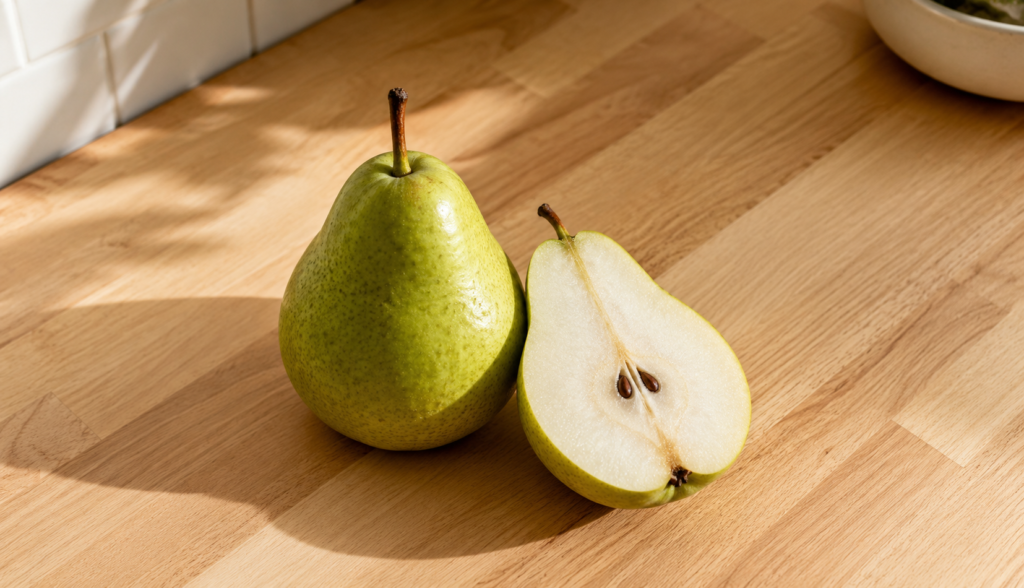
Pears are one of the most underrated fruits in the dog-safe category. Most owners think apples and move on, but pears offer a nearly identical nutritional profile with a softer texture that many dogs actually prefer — especially older dogs or dogs who’ve lost enthusiasm for crunchier treats. I started rotating pears into my dogs’ treat schedule years ago and the response was immediate and consistent. Can dogs eat pears? Yes, without question — but the seeds and core follow the same rules as apple seeds, and skipping that step turns a good treat into an unnecessary risk. Get the preparation right and pears become one of the more versatile fruits you can work with.
The Nutritional Case for Pears as a Dog Treat
Fresh pear flesh delivers a solid combination of vitamin C, vitamin K, and copper — a nutrient profile that supports immune function, blood clotting, and connective tissue health in dogs. Vitamin C in particular is worth noting because while dogs synthesize their own, additional dietary sources support immune response during stress, illness, or aging. Pears for dogs aren’t just a harmless snack; they contribute meaningfully when worked into a regular rotation.
The fiber content in pear flesh is higher than in many other commonly served fruits, which makes it genuinely useful for dogs with sluggish digestion. A few pear slices a few times a week can support regularity in a way that processed treats simply don’t. The soluble fiber in pear also feeds beneficial gut bacteria, which matters for long-term digestive health in ways most owners aren’t thinking about when they hand over a treat.
What surprised me was how well pears work for overweight dogs on calorie-managed diets. Pear flesh is low in calories relative to its volume, sweet enough to satisfy, and substantial enough that a few pieces feel like a real treat rather than a token gesture. For dogs being weaned off high-calorie commercial treats, pear is one of the easier substitutions to make because dogs accept it readily without much convincing.
The antioxidants in fresh pear round out the nutritional picture. Pears contain flavonoids and other compounds that support cellular health and reduce oxidative stress — particularly relevant for senior dogs whose systems are managing more wear than younger animals. Ripe pear served in appropriate portions is functional food, not just a sweet indulgence.
Seeds and Core — The Parts That Always Come Out
Pear seeds contain amygdalin, the same compound found in apple seeds, peach pits, and cherry pits, which breaks down into cyanide during digestion. The amount present in a small number of pear seeds is low enough that a single accidental ingestion isn’t an emergency — but consistent exposure adds up, and there’s no reason to accept any level of risk when removing the seeds takes ten seconds. Pear seed cyanide isn’t a theoretical concern invented for cautious blog posts; it’s the same documented chemistry that makes apple seeds a known hazard.
The pear core is a separate issue from the seeds. The fibrous, dense center of a pear is harder to digest than the flesh and poses a choking hazard for smaller dogs. I’ve watched this go wrong when a small terrier mix got hold of a whole pear that had fallen from a fruit bowl. She went straight for the core after the soft flesh was gone, and the chunk she swallowed was large enough to cause visible discomfort for several hours. No lasting damage, but a vet call and an anxious afternoon that was entirely avoidable.
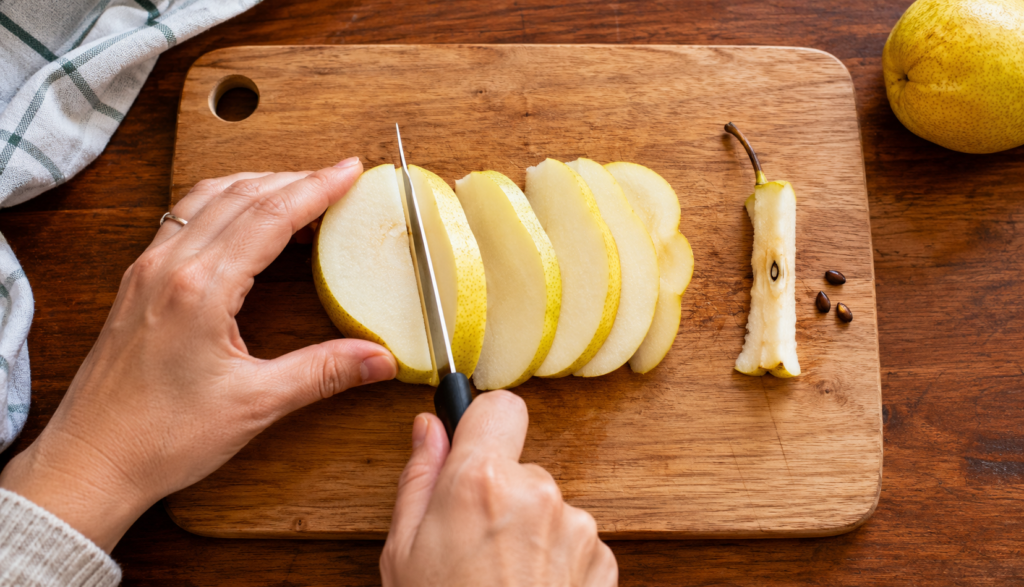
Remove the core completely before serving — not just the seeds from inside it, but the entire fibrous center. Cut the pear flesh away from the core in clean slices, check that no seeds remain on the flesh pieces, and you’re left with plain pear flesh ready to serve. The process takes under a minute and eliminates both risks in one step.
Pear skin is a different question. Unlike peach fuzz, pear skin is thin, relatively easy to digest, and not a meaningful concern for most dogs. The skin does carry pesticide residue if the pear isn’t organic, so washing thoroughly before cutting is worth doing. For dogs with particularly sensitive stomachs, peeling is a reasonable precaution, but for most dogs a well-washed pear served with skin on is perfectly fine.
How Much Pear Is the Right Amount
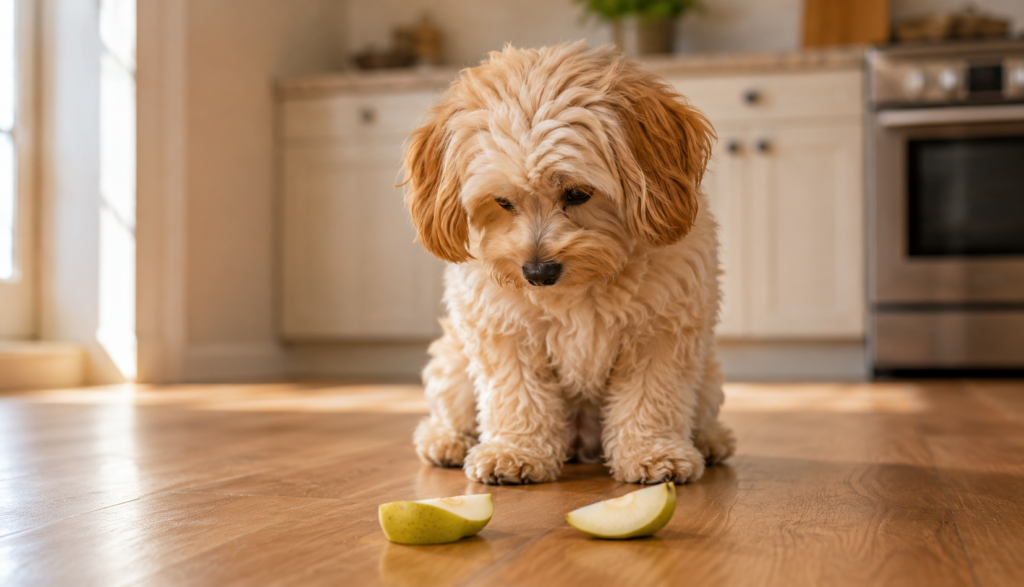
Natural sugar is the ceiling with pears, same as with most sweet fruits. Pear flesh is genuinely sweet — riper pears especially — and the sugar content means portion control matters more than preparation alone. Too much pear in a single sitting produces the predictable outcome: digestive upset, loose stools, and a dog that’s uncomfortable for the rest of the day despite nothing actually being wrong with the fruit.
For small dogs, two to three bite-sized pieces per serving is the appropriate limit. Medium dogs can handle four to five pear slices without issue. Large breeds can manage slightly more, but even for bigger dogs, a controlled handful rather than an open serving is the right approach. Feed pears a few times a week as an occasional treat rather than daily, particularly if your dog is also getting other sweet fruits in rotation.
Most dog owners miss this completely: the ripeness of the pear affects how much sugar hits the digestive system at once. An overripe pear is significantly higher in simple sugar than a just-ripe one, and the softer texture means dogs eat it faster, speeding up sugar absorption. Serve pears at peak ripeness — soft to the touch but not mushy — rather than waiting until they’re past their best before giving them to the dog.
Senior dogs and dogs managing diabetes or weight issues need stricter portion management with pear than healthy adult dogs. The vitamin K content in pears is also worth flagging for dogs on blood-thinning medications, since vitamin K affects clotting. If your dog has any ongoing health conditions or is on medication, check with a vet before adding pears or any new fruit to the diet regularly.
Preparing and Serving Pears the Right Way
Preparation is straightforward once the rules are locked in. Wash the pear under cold water, cut the flesh away from the core in clean vertical slices, check each piece for seeds, and cut the flesh into size-appropriate pieces for your dog. Small dogs get smaller cubes, larger breeds can handle bigger pear slices. Serve fresh, refrigerate cut pieces for up to two days, or freeze for longer storage.
Frozen pear is an underused option. Freeze pitted, cored pear pieces on a flat tray until solid, transfer to a bag, and pull out a serving when needed. The cold texture slows dogs down, extends the treat, and adds a refreshing quality that works particularly well in warmer months. Most dogs take to frozen pear immediately, and the preparation investment upfront is minimal compared to the convenience it creates.
Pear varieties don’t make a meaningful safety difference — Bartlett, Bosc, Anjou, Asian pear — all are equally safe for dogs when prepared correctly. Asian pears are firmer and crunchier than European varieties, which some dogs prefer and others find less appealing. Bosc pears are drier and less sweet, which can actually be useful for dogs that need lower sugar options. The preparation rules apply equally across all varieties.
Canned pears are worth a specific mention because they seem like a convenient shortcut. They’re not appropriate for dogs. Canned pears are packed in syrup or juice with added sugar that far exceeds what’s in fresh fruit, and some products contain artificial sweeteners. Avoid canned pears entirely and stick to fresh pear only — the preparation is simple enough that canned versions offer no real convenience advantage anyway.
What Most People Don’t Know
The comparison most owners make between pears and apples is useful but incomplete. Both require seed and core removal, both are safe in moderate amounts, and both deliver similar vitamins for dogs. Where they diverge is in texture and fiber profile. Pear flesh is softer than apple and higher in soluble fiber, which makes it gentler on digestion for dogs with sensitive stomachs that struggle with apple’s firmer texture and slightly higher acidity.
That distinction matters practically. A dog that gets loose stools after apple slices may handle pear without any digestive reaction at all, because the fiber type and texture difference is meaningful enough to change the outcome. From experience, switching from apple to pear for dogs with mild apple sensitivity resolves the digestive issue in most cases without requiring any other dietary change.
The other thing worth knowing: pear leaves and stems from the tree are not safe for dogs. If you have a pear tree in the garden and your dog has access to fallen fruit, the fruit itself is the concern because of seeds — but the leaves and stems contain compounds that can cause digestive irritation beyond what the seeds alone would produce. Keep dogs away from fallen pears in the garden, or check and pit each one before allowing access. If symptoms persist or worsen after your dog eats pear, a vet visit is always the right call.
Other Fruits That Follow the Same Preparation Logic
One of the most practical things about learning pear preparation correctly is that the logic transfers directly to a handful of other safe fruits for dogs. Apple, pear, and quince all belong to the same botanical family and share the same seed toxicity concern — remove seeds and core, serve flesh only, manage portions. Once you’ve internalized the rule for one, applying it to the others requires no additional research.
Building a fruit rotation around this logic saves time and reduces the chance of preparation errors from switching between different rules for different fruits. Apples on Monday, pears on Wednesday, a piece of watermelon on Friday — each prepared with the same principle in mind — gives a dog variety, a range of vitamins, and a treat experience that stays interesting without creating a research project every time you want to offer something new.
Safe fruits for dogs reward a systematic approach more than an ad hoc one. Understanding why the seeds come out — not just that they do — means you apply the rule consistently rather than only when you remember reading it. That consistency is what keeps treat rotation genuinely safe over the long term rather than safe only when someone is paying close attention.
FAQ
Q. Can dogs eat pear skin?
A. Yes, pear skin is safe for most dogs. It’s thin and easy to digest for healthy adults. Wash the pear thoroughly before serving to remove pesticide residue. Dogs with sensitive stomachs may do better with peeled pear.
Q. Are pear seeds dangerous for dogs?
A. Yes. Pear seeds contain amygdalin which breaks down into cyanide during digestion. While a single seed won’t cause acute poisoning, regular exposure adds up. Always remove all seeds before giving pears to your dog.
Q. How much pear can a dog eat?
A. Small dogs should have two to three bite-sized pieces per serving. Medium dogs can handle four to five pear slices. Serve a few times a week as an occasional treat — the natural sugar content means portions need to stay controlled.
Q. Can dogs eat canned pears?
A. No. Canned pears contain added sugar or syrup that’s not appropriate for dogs. Some products also contain artificial sweeteners. Always use fresh pear — the preparation is simple and canned versions offer no real advantage.
Q .Can puppies eat pears?
A. Yes, in small amounts with seeds and core fully removed. Start with one small piece and watch for any digestive reaction before making it a regular treat. Puppies have more sensitive digestive systems than adult dogs.
Q. Is pear better for dogs than apple?
A. Both are safe and nutritious choices with similar preparation rules. Pear is softer and higher in soluble fiber, making it gentler for dogs with sensitive stomachs. Dogs that react to apple sometimes tolerate pear without any issue.
Q. Can frozen pears be given to dogs?
A. Yes. Freeze cored, seeded pear pieces on a flat tray until solid and serve as needed. Frozen pear slows dogs down, extends the treat, and works especially well as a warm weather option. Preparation rules stay the same whether serving fresh or frozen.