

My dog discovered fish the day I accidentally dropped a piece of grilled tilapia on the kitchen floor, and the speed at which it disappeared told me everything about how appealing it was to him. What followed was a longer research session than I expected, mostly because fish turned out to be a food with a wider range of outcomes than most human proteins. Some fish, prepared correctly, is genuinely excellent for dogs. Other fish, or the same fish prepared incorrectly, can cause serious harm in ways that aren’t always obvious before you’ve looked into it. Understanding the distinction between those two outcomes is what this topic actually comes down to.
Is Fish Safe for Dogs?
I’ve seen this firsthand with several dogs now: plain cooked fish causes no obvious problem for most healthy dogs and is genuinely beneficial rather than just tolerated. Fish appears regularly as a primary protein in commercial dog food formulas, often marketed for its omega 3 benefits rather than as a secondary ingredient.
The omega 3 fatty acids in fish support dog coat health, dog joint health, and even dog brain health over time, making fish one of the more functionally useful proteins you can add to a dog’s diet rather than simply a treat.
The answer is a confident yes for the right type of fish, prepared correctly. The rest of the conversation is about where that qualifier actually matters.
The Raw Salmon Warning
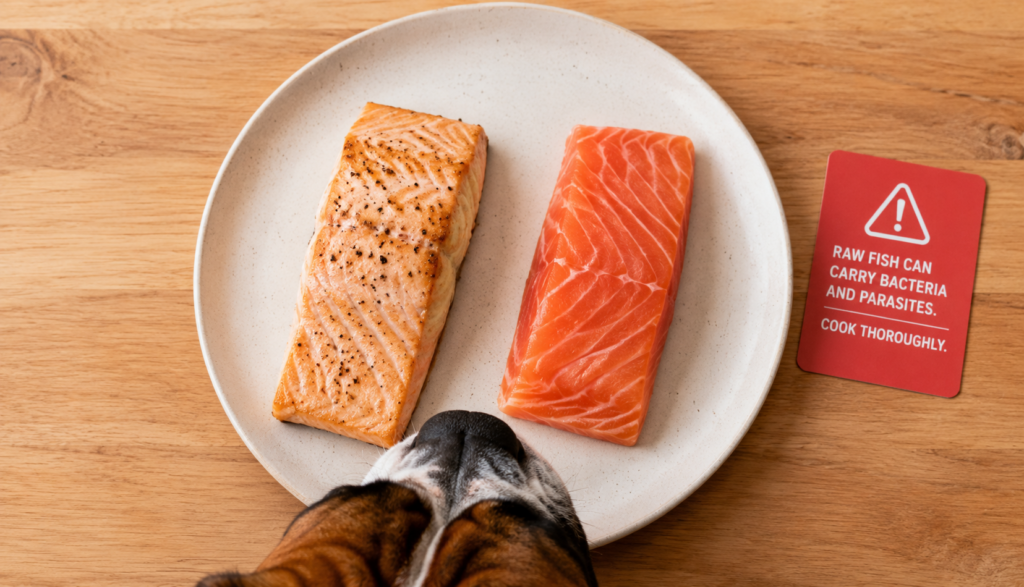
Most dog owners miss this completely, and it’s genuinely the most important thing in this entire article. Raw salmon and certain other raw Pacific fish can carry a parasite called Neorickettsia helminthoeca that causes salmon poisoning in dogs, a condition that is potentially fatal if not treated quickly.
This isn’t a minor digestive upset situation — salmon poisoning can cause vomiting, diarrhea, fever, and rapid deterioration within days of ingestion, and untreated cases carry a high mortality rate. Cooking salmon thoroughly eliminates this parasite entirely, which is why the raw versus cooked distinction matters far more with salmon than with most other proteins.
A dog stealing a bite of smoked or cured salmon isn’t necessarily in the same danger category as raw fresh salmon, but any raw Pacific fish exposure warrants close monitoring and a vet call if symptoms develop within the following week.
Best Fish Types for Dogs
The first time I dealt with this question from a reader, the sheer variety of fish types made it a harder question than expected. Shorter-lived fish with lower positions in the food chain tend to be the safest choices, since they accumulate less mercury content over their lifespan compared to larger, longer-lived species.
Salmon, sardines, tilapia, and cod are all commonly recommended options, each offering good omega 3 content alongside a manageable safety profile when cooked plainly. Sardines packed in water rather than oil or sauce are particularly convenient since they require no additional preparation.
Larger fish like tuna, swordfish, and king mackerel accumulate significantly more mercury over their longer lifespans, making them less suitable as regular additions even when fully cooked.
Canned Tuna and Mercury
What surprised me was how often people reach for canned tuna as an easy, convenient fish option for dogs, without considering the mercury content concern. Canned tuna isn’t acutely toxic in a single-serving sense, but regular feeding builds mercury exposure over time in a way that occasional sardines or tilapia simply doesn’t.
Canned tuna also often comes packed in brine or oil, both of which add unnecessary sodium content or fat to something that should ideally be a plain, clean protein source. Water-packed plain tuna used occasionally is far less concerning than oiled or salted varieties given regularly.
If tuna is the most accessible option, keeping it genuinely infrequent and choosing water-packed plain varieties removes most of the realistic concern without needing to eliminate it entirely.
Fish Bones: A Serious Hazard
I’ve watched this go wrong more clearly with bones than almost any other aspect of fish feeding. Fish bones are thin, small, and surprisingly sharp, making them one of the more underrated choking hazards in the dog food safety conversation.
Unlike larger animal bones that dogs can sometimes work around or crunch through, fish bones are small enough to lodge in a throat or digestive tract without being easily detected until they cause a problem. Filleting fish completely before offering any to your dog removes this risk without requiring any other changes to preparation.
Fish skin is generally fine and doesn’t need to be removed, though heavily seasoned or smoked skin should be avoided for the same reasons seasoning on any other protein should be kept away from dogs.
What Most People Don’t Know
Here’s something that rarely gets mentioned clearly: fish oil and whole fish aren’t interchangeable in terms of what they provide, even though both come from fish. Fish oil supplements give you a concentrated dose of omega 3 fatty acids without the protein, bones, or food-safety concerns of whole fish. Whole cooked fish gives you protein alongside omega 3 content but requires proper preparation to be safe. Many owners supplement with fish oil daily and never feed whole fish at all, which is a completely valid approach — the oil does the nutritional work fish is most valued for without any of the bone or mercury complexity.
How to Safely Offer Fish
From experience, the smarter call is to always serve fish fully cooked, plain, boneless, and without any seasoning, oil, butter, or sauce used in the cooking process. Baking or steaming fish without additions produces the cleanest result for sharing with a dog.
Starting with a small amount and watching how your dog responds makes sense with fish the same way it does with any new protein, since fish allergy does occur in some dogs even though it’s not the most common food sensitivity.
Keeping fish as an occasional treat or supplement rather than a daily staple keeps mercury exposure low and prevents any single ingredient from dominating a diet that should remain varied and balanced overall.
Signs of Trouble to Watch For
Watch for vomiting, diarrhea, fever, or unusual lethargy in the days following any raw fish exposure, particularly raw Pacific fish like salmon, since salmon poisoning symptoms can take several days to fully appear after ingestion.
Signs of a fish allergy typically appear more quickly and include itching, skin irritation, or digestive upset shortly after eating, which resolves when fish is removed from the diet.
If symptoms persist or worsen following any fish exposure, a vet visit is always the right call, and any suspected raw salmon ingestion should be treated as urgent rather than a wait-and-see situation given how quickly salmon poisoning can progress.
Frequently Asked Questions

Q. Can dogs eat raw salmon?
A. No — raw salmon can carry a parasite that causes salmon poisoning in dogs, a potentially fatal condition. Fully cooked salmon is safe and beneficial.
Q. Can dogs eat canned tuna?
A. Occasionally and in small amounts, plain water-packed tuna is fine, but the mercury content makes it a poor choice for regular feeding compared to safer fish like sardines or tilapia.
Q. Are fish bones safe for dogs?
A. No, fish bones are thin and sharp enough to become a serious choking hazard. Always fillet fish completely before offering any piece to your dog.