
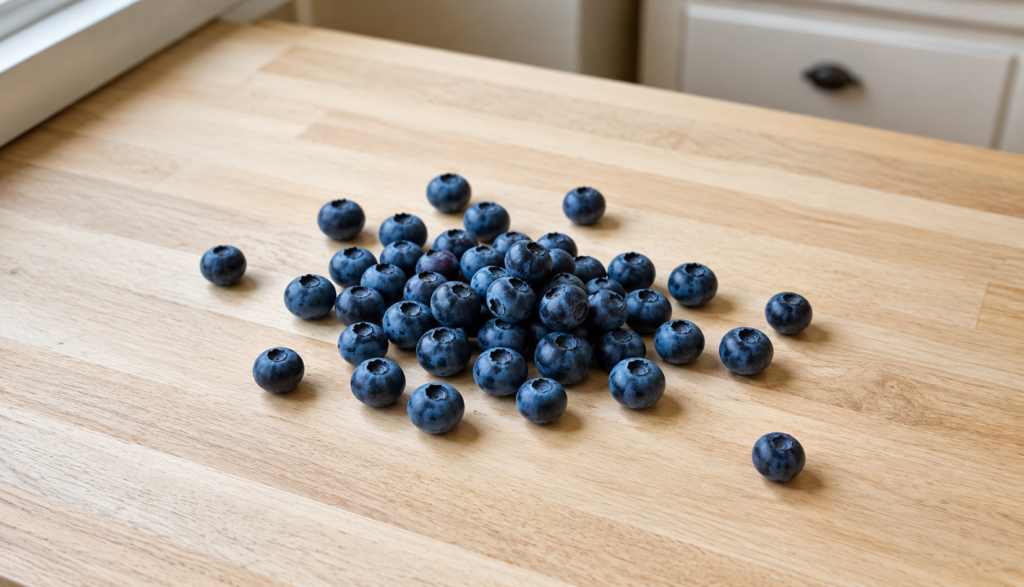
If there’s one fruit I recommend to almost every dog owner without hesitation, it’s blueberries. No pit, no peel to remove, no seeds to worry about, no complicated preparation — just rinse and serve. I use them constantly as training treats specifically because they’re small enough for rapid-fire rewards and healthy enough that I don’t feel like I’m compromising on nutrition for the sake of convenience. Can dogs eat blueberries? Yes, completely and without reservation in sensible amounts. They’re one of the few foods on the entire safe list where the question isn’t really whether to include them — it’s just how often.
Why Blueberries Are a Standout Treat for Dogs
Fresh blueberries deliver one of the highest antioxidant concentrations of any fruit, dog-safe or otherwise. Anthocyanins — the compounds responsible for the deep blue-purple color — are powerful antioxidants that help neutralize free radicals contributing to cellular aging, inflammation, and a range of chronic conditions. This isn’t a marginal benefit. The antioxidant density in blueberries is significant enough that veterinary nutritionists frequently recommend them specifically, rather than just tolerating them as a harmless treat.
Vitamin C and vitamin K round out the nutritional profile. Vitamin C supports immune function, while vitamin K plays an important role in blood clotting and bone health. Fiber content supports healthy digestion without being intense enough to cause issues even in dogs with sensitive stomachs — the fiber in blueberries is gentle, which is part of why they’re so widely tolerated across different dogs and life stages.
Cognitive health is one of the more interesting areas where blueberries show genuine promise. Research in both humans and animals suggests that the antioxidant compounds in blueberries may help protect against age-related cognitive decline by reducing oxidative stress in brain tissue. For senior dogs, particularly breeds prone to cognitive dysfunction syndrome, consistent inclusion of blueberries is one of the more evidence-backed dietary additions available, well beyond what most fruit treats can claim.
The low calorie profile makes blueberries an ideal choice for weight management. A single blueberry contains almost no calories, which means a generous handful can be given as a reward without meaningfully impacting daily caloric intake. For dogs on calorie-restricted diets, or for owners who do a lot of treat-based training, blueberries solve the problem of needing frequent small rewards without the cumulative weight gain that comes from calorie-dense treats.
What to Watch Out For — And Why There’s Not Much
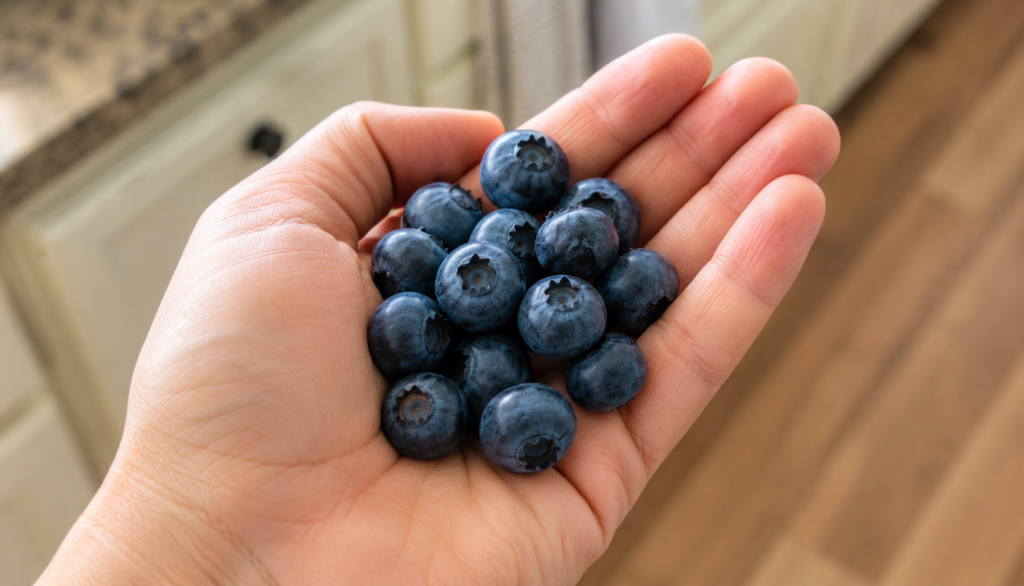
Blueberries are about as low-risk as a fruit gets on the dog-safe list. There’s no pit, no toxic seeds, no peel to remove, and no compound comparable to the cyanide concerns that come with stone fruits or apple seeds. The main consideration is simply volume — too many blueberries at once, like any high-fiber fruit, can lead to loose stools or mild digestive upset.
This is genuinely rare with blueberries specifically because their small size makes overfeeding less likely than with larger fruits. A dog would need to eat a substantial quantity before volume becomes an issue, and most owners naturally serve them in handfuls rather than allowing unrestricted access to a whole container. Still, “blueberries are very safe” doesn’t mean “unlimited blueberries are fine” — moderation applies even to the gentlest options on the list.
Choking hazard is occasionally mentioned with blueberries, primarily for very small or toy breed puppies. The size of a blueberry is manageable for almost any adult dog, but for the smallest puppies, halving them is a reasonable precaution during the early weeks of introducing solid treats. For any dog past the very young puppy stage, whole blueberries present essentially no choking risk.
Most dog owners miss this completely: the only meaningful caution with blueberries relates to dried versions, not fresh or frozen ones. Dried blueberries are concentrated in sugar compared to fresh fruit, and some commercial dried blueberry products contain added sugar on top of the natural concentration that happens during drying. Fresh or frozen blueberries remain the better choice, with dried versions reserved for occasional use and only when unsweetened.
How Many Blueberries Dogs Can Have

Because blueberries are so low in calories and gentle on digestion, the serving guidance here is more generous than for almost any other fruit on the safe list. This is one of the few treats where erring slightly on the side of “more” rather than “less” doesn’t create much practical risk for a healthy adult dog.
For small dogs, five to eight blueberries per serving works well. Medium dogs can comfortably handle ten to fifteen. Large breeds can manage a generous handful — twenty or more — without any particular concern. Unlike fruits where moderation is the dominant theme, blueberries can reasonably be offered daily as part of a regular routine, particularly when used for training purposes where frequent small rewards matter more than restricting overall quantity.
I’ve used blueberries as a daily training treat with several dogs over the years without ever seeing a digestive issue traceable to the fruit itself. The combination of low sugar, low calorie content, and gentle fiber means blueberries tolerate the kind of frequent use that would cause problems with almost any other fruit if given in similar volume.
Senior dogs benefit particularly from regular blueberry inclusion given the cognitive health angle, and the soft texture makes them easy to eat regardless of dental condition. Puppies can have blueberries from the point they’re eating solid food, starting with a smaller handful and the standard halving precaution for the smallest breeds. Dogs with diabetes still warrant some caution despite the low overall sugar content — check with a vet before making blueberries a daily fixture for a dog managing blood sugar issues specifically.
Serving Blueberries the Right Way
Preparation could not be simpler. Rinse fresh blueberries under cold water and serve whole. There’s no cutting, no peeling, no seed removal — just a quick rinse and the fruit is ready. This simplicity is a large part of why blueberries work so well as a daily or near-daily option compared to fruits that require more involved preparation each time.
Frozen blueberries are just as good as fresh and considerably more practical for year-round use. They’re available consistently, cost less than fresh berries outside of peak season, and require zero preparation beyond opening the bag. Most dogs eat frozen blueberries readily, and the cold temperature adds a refreshing quality that works particularly well as a warm-weather treat. I keep a bag in the freezer at all times specifically because it removes any excuse not to have a healthy treat on hand.
From experience, the smarter call is to keep blueberries — fresh in summer, frozen the rest of the year — as a default training and reward treat rather than reaching for commercial options first. The nutritional profile is better, the cost per treat is lower, and dogs respond to them just as enthusiastically as to processed alternatives. Mixing a few blueberries into plain yogurt or mashing them into a frozen lick mat treat are both popular variations that work well without introducing anything unsafe.
What Most People Don’t Know
The cognitive health research around blueberries is more substantial than most owners realize, and it extends a step further than just “antioxidants are generally good.” Specific studies on aging dogs have shown that diets supplemented with antioxidant-rich foods including blueberries can measurably improve performance on cognitive tasks compared to dogs on standard diets. This isn’t speculative marketing language — it’s a documented area of veterinary nutrition research with real findings behind it.
Blueberries for dog UTI support occasionally comes up in the same conversation as cranberries, since both are antioxidant-rich berries associated with urinary tract health in popular discussion. The evidence for blueberries specifically supporting urinary tract health is weaker than for cranberries — the proanthocyanidin content that gives cranberries their specific UTI-related mechanism isn’t present in blueberries in the same way. Blueberries are excellent for general antioxidant support; for urinary tract concerns specifically, cranberries are the more targeted choice.
The other detail worth knowing: wild blueberries, sometimes available frozen or as a specific product, are actually higher in anthocyanin concentration than standard cultivated blueberries due to their smaller size and different growing conditions. Both are safe for dogs, but if maximizing antioxidant density is a specific goal, wild blueberries offer a slight edge. For most owners, the difference is marginal enough not to matter — either version delivers real benefit. If symptoms persist or worsen after your dog eats blueberries, a vet visit is always the right call, though this is genuinely rare with this particular fruit.
Building Blueberries Into a Daily Routine
Unlike most fruits on the safe list, which work best in a rotation to manage sugar or fat content, blueberries are gentle enough to function as a near-daily staple without the same rotation logic applying as strictly. That said, variety still has value — pairing blueberries with blackberries, raspberries, or the occasional piece of apple gives a broader range of nutrients than relying on blueberries exclusively, even though blueberries alone would cause no harm as a consistent choice.
For training purposes specifically, blueberries are close to ideal. Their small size allows for rapid sequential rewards, their low calorie content means a training session’s worth of treats doesn’t meaningfully affect daily intake, and most dogs respond to them with genuine enthusiasm rather than the lukewarm interest some dogs show toward commercial training treats. A dog that’s food-motivated by blueberries gives you a training reward that’s simultaneously healthier than almost any commercial alternative.
Safe fruits for dogs vary considerably in how much caution they require, and blueberries sit at the most permissive end of that spectrum. That doesn’t mean abandoning all portion awareness, but it does mean blueberries can be reached for more freely and more often than almost anything else on the list — a rare case where the safest, most beneficial choice is also the simplest to use consistently.
Frequently Asked Questions
Q. How many blueberries can a dog eat?
A. Small dogs can have five to eight blueberries per serving. Medium dogs can handle ten to fifteen. Large breeds can manage twenty or more. Blueberries are gentle enough to be offered daily as part of a regular routine for most healthy dogs.
Q. Can dogs eat blueberries every day?
A. Yes, for most healthy dogs. Blueberries are low in sugar and calories, gentle on digestion, and don’t carry the same overfeeding risks as denser fruits. Daily use as a training or reward treat is generally fine in sensible portions.
Q. Are dried blueberries safe for dogs?
A. Dried blueberries are more concentrated in sugar than fresh, and some commercial products contain added sugar. Fresh or frozen blueberries are the better default choice. Use unsweetened dried versions only occasionally if at all.
Q. Can puppies eat blueberries?
A. Yes. Puppies can have blueberries once they’re eating solid food. For the smallest breeds, halving the berries during the early weeks reduces any minor choking concern. Otherwise, whole blueberries are fine.
Q. Do blueberries help with cognitive health in senior dogs?
A. Yes. Research suggests the antioxidant compounds in blueberries may help protect against age-related cognitive decline. Regular inclusion is one of the more evidence-backed dietary additions for senior dogs.
Q. Are blueberries good for dogs with UTIs?
A. Blueberries offer general antioxidant support, but cranberries have a more specific documented mechanism for urinary tract health. For UTI-related concerns, cranberries are the more targeted choice over blueberries.
Q. Are frozen blueberries as good as fresh for dogs?
A. Yes. Frozen blueberries retain the same nutritional value as fresh and are more practical for year-round use. Most dogs eat them readily, and the cold temperature makes them an especially good warm-weather treat.