
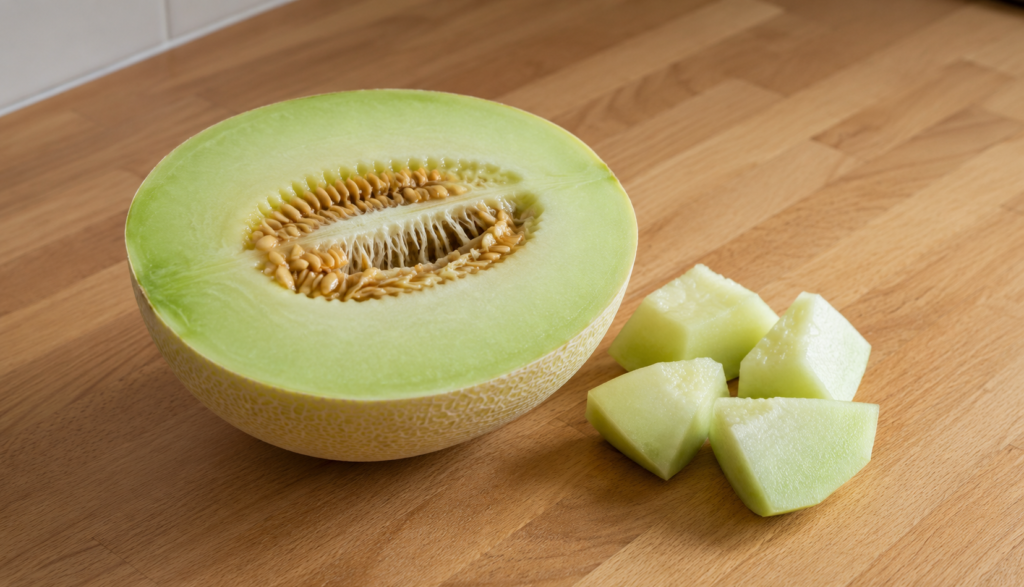
Honeydew gets overshadowed by cantaloupe and watermelon in most conversations about safe melons for dogs, which is a bit unfair given how well it actually performs as a treat. I started giving honeydew to my dogs almost by accident — it was what happened to be in the fridge one summer — and the response was just as enthusiastic as cantaloupe ever got. Can dogs eat honeydew melon? Yes, without complication. The flesh is safe, hydrating, and gentle on digestion. The rind and seeds need to come off, same as with any melon, but beyond that single preparation step, honeydew is one of the more straightforward fruits you can hand a dog.
Why Honeydew Is a Smart Summer Treat
Honeydew flesh is roughly ninety percent water, which puts it in the same hydrating fruit category as cantaloupe and watermelon. On warm days when dogs are less inclined to drink as much plain water as they should, melon chunks supplement hydration in a way that’s genuinely useful, not just a pleasant side effect. For dogs that spend time outdoors in heat, working dogs, or breeds prone to overheating, hydrating fruit options like honeydew are a practical addition to a summer routine.
Vitamin C is present in meaningful amounts in honeydew flesh, supporting immune function and contributing antioxidant protection. The fiber content, while moderate compared to denser fruits, still supports healthy digestion without being intense enough to cause issues even for dogs with somewhat sensitive stomachs. Honeydew for dogs sits comfortably in the gentle end of the fruit spectrum — easy to digest, easy to enjoy, low risk of any adverse reaction in healthy dogs.
The low calorie profile is one of honeydew’s more underrated qualities. A cup of honeydew chunks contains relatively few calories given the volume, which makes it a sensible option for dogs managing their weight. A generous-feeling portion delivers satisfaction and hydration without the caloric cost that comes with denser treats like banana or coconut. For overweight dogs on a calorie-restricted diet, honeydew is one of the better fruit choices specifically because the serving size can stay generous without much caloric consequence.
What surprised me was how gentle honeydew is even for dogs who occasionally react to other fruits. The mild sweetness and high water content seem to sit well with sensitive stomachs more reliably than firmer or more acidic fruits. For dogs being introduced to fruit treats for the first time, honeydew is a reasonable starting point precisely because adverse reactions are uncommon.
The Rind and Seeds — What to Remove Before Serving
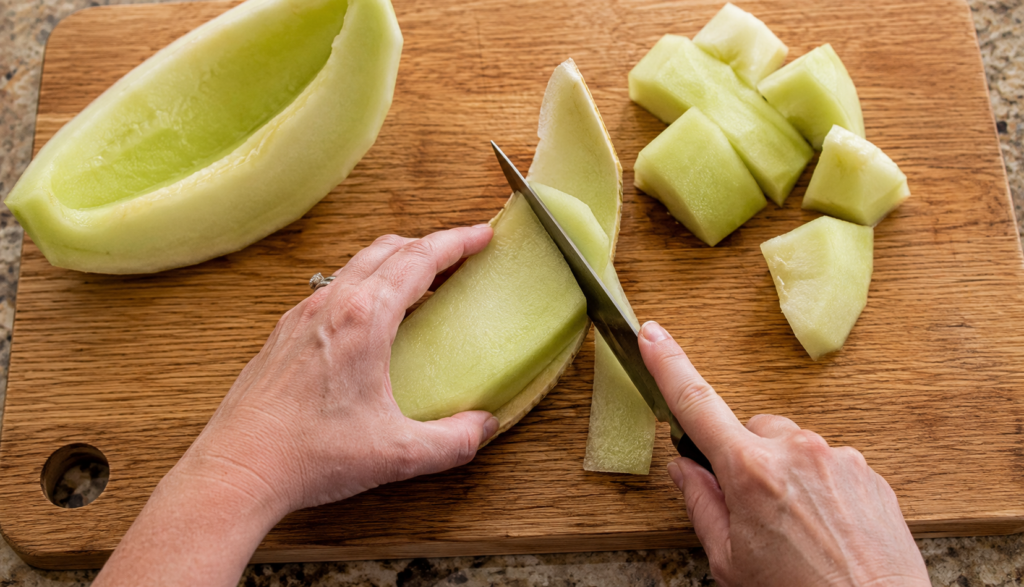
Honeydew rind and honeydew seeds are the two parts that need to come off every time, following the same logic that applies to cantaloupe and other melons. The flesh is the only part appropriate for dogs — neither the rind nor the seeds add value, and both carry some level of risk that’s easily avoided through basic preparation.
The rind is the more significant concern. It’s tough, fibrous, and difficult for dogs to digest properly. Even in modest amounts, rind can cause digestive upset — cramping and diarrhea that resolve on their own but are unpleasant and entirely avoidable. For smaller dogs, a piece of rind is also a potential choking hazard given its firmness. Cut the flesh away cleanly, leaving no green or pale outer layer on the pieces you serve.
I’ve watched this go wrong with a dog who got into a melon rind left in an outdoor compost bin during a backyard gathering. She chewed through a fair amount before being noticed, and the following day involved an uncomfortable bout of digestive upset that the flesh portion she’d had earlier never caused. The lesson is consistent across every melon variety — keep rind completely separate from anything offered to the dog, and dispose of it somewhere a determined dog can’t access.
Honeydew seeds are less dangerous than the rind but still worth removing as a matter of routine. They offer no nutritional benefit, can be a minor choking concern for smaller dogs, and may cause mild digestive irritation if consumed in any real quantity. Scrape the seed cavity clean before cutting the flesh into pieces — a step that takes seconds and removes any uncertainty.
How Much Honeydew Dogs Can Have
Honeydew’s lower sugar content compared to cantaloupe gives slightly more flexibility on portion size, but moderation still matters because any fruit served in excess produces digestive upset regardless of how gentle it is in smaller amounts. Too much honeydew in one sitting, particularly for smaller dogs, leads to loose stools simply from the volume of fiber and water hitting the digestive system at once.
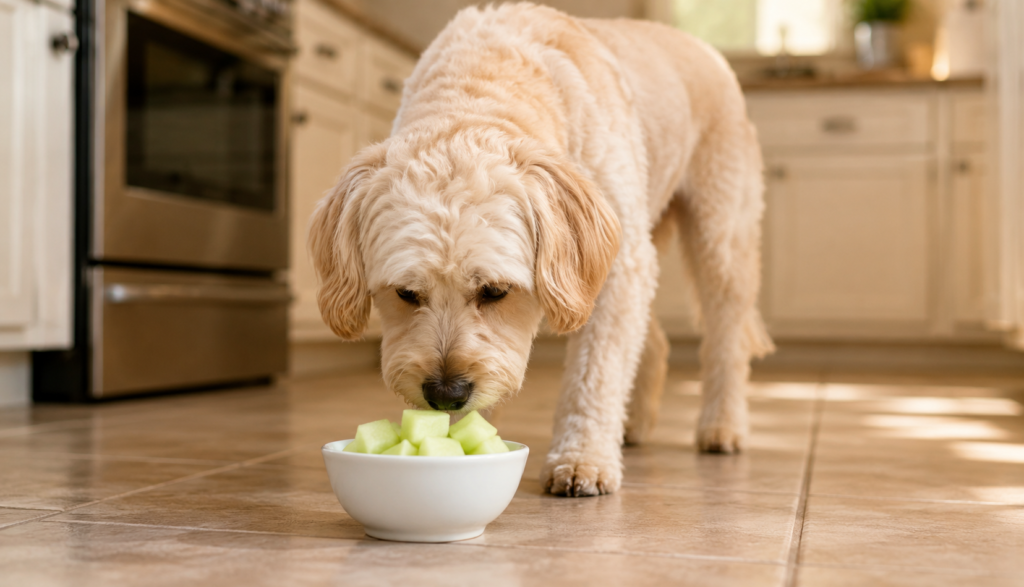
For small dogs, two to three bite-sized pieces per serving is appropriate. Medium dogs can handle a small handful — four to five chunks. Large breeds can manage a slightly bigger portion without much concern, though even for big dogs, treating honeydew as an occasional addition rather than an unlimited snack keeps things sensible. Serve a few times a week during warm months, when the hydration benefit is most relevant and the fruit is at its best in terms of freshness and availability.
Dogs with diabetes need the same caution that applies to other moderately sweet fruits — even honeydew’s relatively lower sugar content can affect blood glucose in dogs managing insulin sensitivity. Check with a vet before introducing honeydew or any fruit regularly into the diet of a dog with metabolic health conditions. Healthy adult dogs handle appropriate honeydew portions across all size categories without any particular concern.
From experience, the smarter call is to cut and portion honeydew before bringing it near the dog, the same approach that works well with cantaloupe. Once the sweet smell registers, most dogs lose any restraint they might otherwise show, and pre-portioning keeps the serving deliberate rather than driven by how persistently the dog is asking for more.
Preparing and Serving Honeydew
A ripe honeydew has a pale, slightly waxy rind and gives gently to pressure at the stem end, with a faint sweet fragrance. Cut the melon in half, scrape out the seeds completely, slice the flesh away from the rind, and cut into pieces sized appropriately for your dog. The preparation process takes just a few minutes and requires no special tools beyond a sharp knife and a spoon for the seeds.
Fresh honeydew keeps in the refrigerator for two to three days once cut, which makes batch preparation practical for the week ahead. Frozen honeydew chunks are an excellent option for hot weather — freeze pieces on a flat tray until solid, then transfer to a bag for storage. The cold temperature slows dogs down and adds a refreshing quality that fresh fruit alone doesn’t provide, particularly appreciated during the hottest part of summer.
Honeydew pairs well with other melons in a rotating summer treat schedule. A small bowl with a mix of honeydew, cantaloupe, and watermelon chunks — all prepared the same way, rind and seeds removed — gives dogs variety without requiring different handling logic for each fruit. Most dogs enjoy the textural and flavor differences across melon types even though the preparation principle stays identical.
What Most People Don’t Know
Honeydew compared to cantaloupe and watermelon is sometimes assumed to be nutritionally interchangeable, and while the preparation rules are identical, the nutrient profiles differ slightly. Cantaloupe is notably higher in beta carotene and vitamin A than honeydew, giving it an edge for dogs where those specific nutrients are a priority. Watermelon has the highest water content of the three and the lowest sugar, making it the most purely hydrating option. Honeydew sits in the middle — solid vitamin C, good hydration, gentle on digestion — without being the standout in any single category.
This doesn’t make honeydew a lesser choice; it makes it a complementary one. Rotating across all three melon varieties through summer captures the strengths of each rather than relying on a single type to cover every nutritional angle. Most dog owners miss this completely when they settle on one “safe melon” and stick with it exclusively — the safe list isn’t meant to be narrowed down to a favorite, it’s meant to be used as a rotation.
The other detail worth knowing: honeydew-flavored products — yogurts, popsicles, flavored waters — frequently contain added sugar or artificial sweeteners that have nothing to do with the actual fruit. The “honeydew” branding on a processed product doesn’t carry over the safety profile of fresh honeydew. Stick to the whole fruit, prepared simply, and skip anything honeydew-flavored that isn’t the actual melon. If symptoms persist or worsen after your dog eats honeydew, a vet visit is always the right call.
Building a Melon Rotation for Summer
Honeydew works best as part of a deliberate summer fruit rotation rather than a standalone go-to. Alongside cantaloupe and watermelon, it rounds out a trio of hydrating, low-calorie treats that cover slightly different nutritional ground while sharing the same simple preparation logic — rind and seeds out, flesh served, portions controlled.
A practical rotation through the warmer months might include honeydew on one day, cantaloupe on another, and watermelon on a third, giving a dog consistent hydration support and a reasonable variety of vitamins for dogs across the week. This kind of rotation requires no extra effort once the basic preparation habit is established, and it keeps treat time interesting for dogs who might otherwise grow indifferent to the same fruit offered repeatedly.
Safe fruits for dogs deliver the most value when used with some intention rather than habit alone. Honeydew earns its place in a summer rotation through genuine hydration benefit and gentle digestibility — qualities that make it a particularly good choice for dogs who don’t tolerate richer or more acidic fruits as well. Working it into a rotation alongside its melon relatives is a simple way to make the most of what each variety offers.
Frequently Asked Questions
Q. Can dogs eat honeydew rind?
A. No. Honeydew rind is tough, difficult to digest, and can cause stomach upset and diarrhea in dogs. It’s also a choking hazard for smaller breeds. Always remove the rind completely before serving honeydew.
Q. Are honeydew seeds safe for dogs?
A. Honeydew seeds are not toxic but are best removed anyway. They add no nutritional value and can be a minor choking hazard for small dogs. Scrape the seed cavity clean before serving the flesh.
Q. How much honeydew can a dog eat?
A. Small dogs should have two to three bite-sized pieces per serving. Medium to large dogs can handle a small handful of chunks. Serve a few times a week during warm months as an occasional treat.
Q. Is honeydew better for dogs than cantaloupe?
A. Both are safe and beneficial. Cantaloupe is higher in beta carotene and vitamin A. Honeydew offers good hydration and is gentle on sensitive stomachs. Rotating between both gives a broader nutritional range than relying on either alone.
Q. Can puppies eat honeydew melon?
A. Yes, in small amounts. Start with one small piece and watch for any digestive reaction before making it a regular treat. Puppies have more sensitive digestive systems than adult dogs.
Q. Is frozen honeydew safe for dogs?
A. Yes. Frozen honeydew chunks make an excellent summer treat. Freeze peeled, seeded flesh on a flat tray until solid and serve as needed. The cold temperature is refreshing and helps slow down fast eaters.
Q. Can diabetic dogs eat honeydew?
A. Only with veterinary guidance. Even though honeydew is lower in sugar than some fruits, it can still affect blood glucose. Dogs managing diabetes or weight issues should not have honeydew introduced without checking with a vet first.