
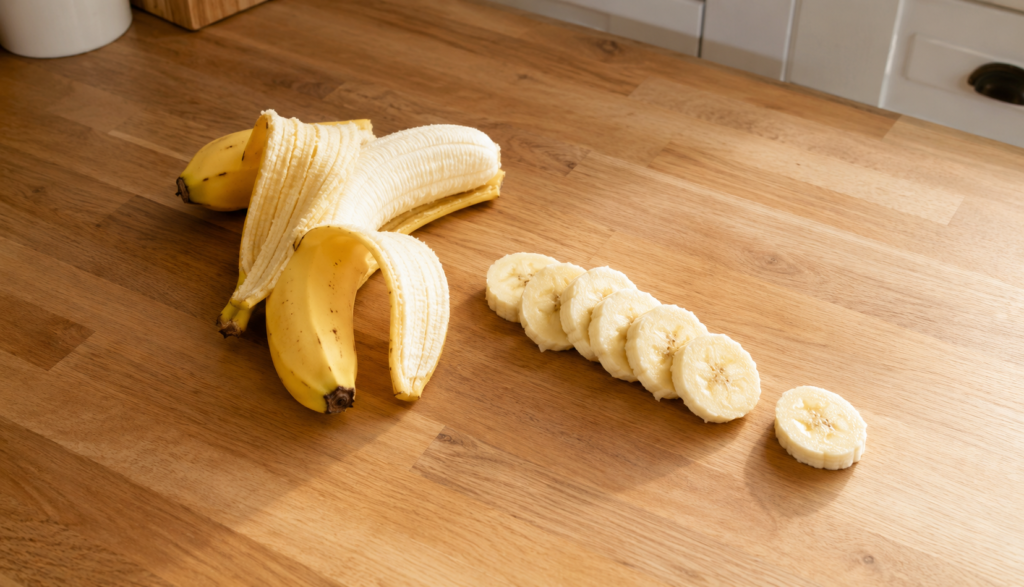
Bananas are probably the most universally recommended fruit treat in dog care circles, and for good reason — no pit, no toxic seeds, no complicated preparation. I keep bananas around specifically because they’re the easiest grab-and-go treat for training sessions or as a quick reward, and most dogs respond to them enthusiastically on the first try. Can dogs eat bananas? Yes — and they’re genuinely one of the more nutritious options available. The main consideration isn’t safety in the traditional sense; it’s sugar content and calorie density, both of which mean bananas work best as an occasional treat rather than a daily fixture, despite how harmless they feel to hand over.
Why Bananas Are a Genuinely Good Treat for Dogs
Fresh banana flesh delivers an impressive nutritional profile for something this simple to serve. Potassium is the headline nutrient — bananas are one of the most potassium-dense fruits available, and potassium plays a critical role in muscle function, nerve signaling, and heart health in dogs. For active dogs or those recovering from illness involving fluid loss, the potassium in banana can be a genuinely useful dietary addition rather than just a sweet treat.
Vitamin B6 and magnesium round out the nutritional picture. Vitamin B6 supports metabolic function and red blood cell production, while magnesium contributes to bone health, muscle function, and enzyme activity throughout the body. Bananas for dogs deliver these nutrients in meaningful amounts relative to their size, which is part of why they’ve earned such a consistent place on the safe treat list across nearly every dog nutrition resource.
The fiber content in banana flesh supports digestion, and the soft texture makes bananas accessible to dogs at every life stage — puppies, adults, and seniors alike can eat banana without any chewing difficulty. This is one of the reasons banana comes up so often as a recommendation for dogs with dental issues or those recovering from oral surgery, where harder treats aren’t appropriate but nutritional variety still matters.
What surprised me was how reliably bananas work for picky eaters. Dogs that turn their nose up at most fruit options will frequently take to banana without hesitation — the sweetness and soft texture seem to appeal across a wider range of individual dog preferences than most other safe fruits. For owners trying to introduce fruit into a dog’s diet for the first time, banana is often the easiest starting point.
The Sugar and Calorie Reality Behind a “Healthy” Treat
Bananas have a reputation as an unambiguously healthy treat, and while that’s broadly true, it understates the sugar and calorie density that makes portion control genuinely important here — more important than with most berries, and comparable to mango or peach in terms of natural sugar content. A whole banana contains significantly more sugar than a dog should have in a single treat session, regardless of how natural that sugar is.
Too much banana leads to the same outcome as overdoing any sugar-dense fruit — digestive upset, loose stools, and an uncomfortable dog. But there’s a second consideration with banana that doesn’t apply as strongly to lower-calorie fruits: weight gain from regular overfeeding. Because bananas are calorie-dense relative to their size and because they’re so palatable that dogs will happily eat more if offered, banana is one of the easier treats to over-serve without realizing the cumulative caloric impact over weeks and months.
Most dog owners miss this completely: the recommendation to limit treats to roughly ten percent of a dog’s daily caloric intake applies just as much to “healthy” treats like banana as it does to commercial biscuits. A few slices of banana a couple of times a week fits comfortably within that guideline for most dogs. A quarter or half banana given daily as a routine treat does not, and the caloric accumulation contributes to weight gain over time in a way that’s easy to overlook because the treat feels virtuous.
For overweight dogs or those on a calorie-managed diet, banana’s calorie density makes it a less ideal choice than lower-calorie options like blueberries, blackberries, or cucumber. The potassium and vitamin benefits are real, but they don’t offset the caloric cost for dogs where weight management is the primary concern. Healthy dogs at an appropriate weight can enjoy banana in moderation without this being a significant issue.
The Banana Peel Question
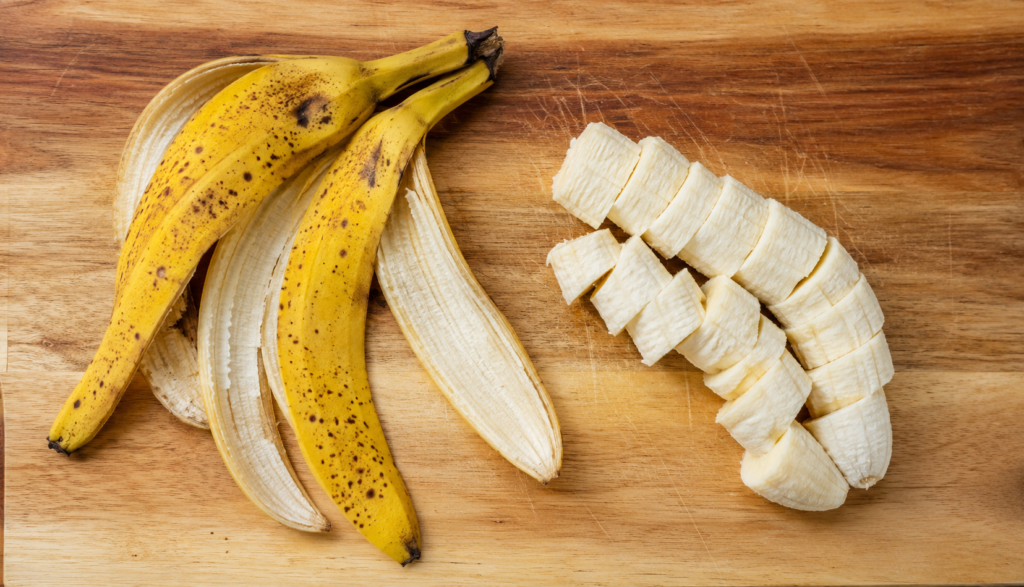
Banana peel comes up constantly as a question, and the answer is more nuanced than a simple yes or no. Banana peel is not toxic to dogs in the way that grape or onion is toxic — there’s no poisoning risk from a dog eating banana peel. The concern is entirely mechanical and digestive. Banana peel is extremely fibrous and tough, far more difficult to digest than the flesh, and it can cause significant digestive upset or, in some cases, intestinal blockage if a dog swallows a large piece without adequately chewing it.
I’ve watched this go wrong when a dog snatched a banana peel out of a kitchen trash bin and swallowed a large section before anyone noticed. The vet visit that followed involved monitoring for signs of blockage over 48 hours, since the peel doesn’t break down easily once swallowed. No surgical intervention was needed in that case, but it was a genuinely concerning few days that the flesh alone would never have caused.
The practical guidance is straightforward: don’t intentionally feed banana peel to dogs, and keep peels disposed of in a way dogs can’t access — a closed bin rather than an open one, particularly for dogs known to scavenge. If a dog gets a small amount of peel incidentally, it’s unlikely to cause serious harm, but larger pieces are a genuine risk worth preventing rather than managing after the fact.
How to Serve Bananas the Right Way
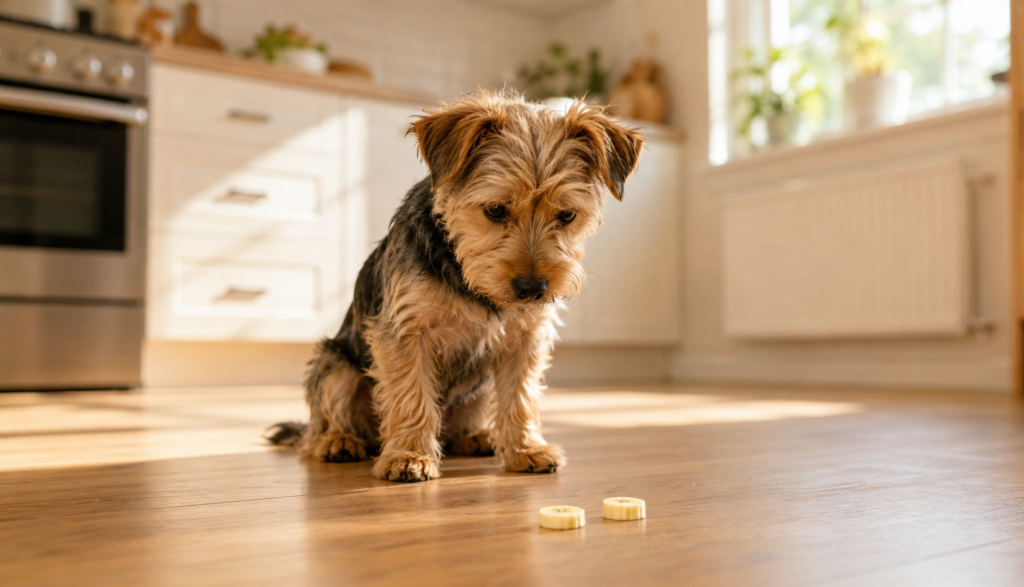
Serving banana to dogs requires almost no preparation. Peel the banana completely, and either mash the flesh, cut it into coin-sized slices, or offer small chunks depending on your dog’s size and preference. For small dogs, thinner slices or smaller pieces reduce any minor choking concern. For larger dogs, slightly bigger pieces are fine.
For small dogs, two to three small slices per serving is an appropriate portion. Medium dogs can handle a quarter of a banana. Large breeds can manage up to half a banana in a single serving, though even for big dogs, a full banana in one sitting exceeds what’s sensible given the sugar and calorie content. Serve banana a couple of times a week rather than daily to keep both sugar intake and caloric contribution within reasonable bounds.
Frozen banana is one of the better warm-weather treat upgrades available. Slice a ripe banana into coins, freeze them on a flat tray until solid, and store in a bag for use as needed. The frozen texture slows dogs down considerably, extends the treat, and most dogs find frozen banana even more appealing than fresh. From experience, the smarter call is to prepare a batch when bananas start to overripen rather than letting them go to waste — slightly overripe banana is actually sweeter and softer, working well for this purpose.
Mashed banana mixed into a small amount of plain yogurt or blended into a frozen treat with a splash of water makes for an easy homemade option that most dogs find irresistible. Keep any mix-ins free of added sugar, xylitol, or artificial sweeteners — plain banana and plain, unsweetened yogurt only.
What Most People Don’t Know
Banana chips and dried banana products are frequently mistaken for a more concentrated, equally healthy version of fresh banana. They’re not. Commercial banana chips are typically fried in oil and coated in sugar, making them far higher in fat and calories than fresh banana for the same volume. Dried banana without added sugar exists but is still significantly more calorie-dense than fresh fruit because of the water removal. Neither product is an appropriate substitute for fresh banana as a dog treat.
Banana bread and other baked goods containing banana are also worth flagging specifically. Even setting aside the banana content, banana bread typically contains sugar, butter, and sometimes nuts or chocolate chips — ingredients that range from inappropriate to genuinely dangerous for dogs depending on the recipe. The presence of banana in a baked product doesn’t make the product safe; the other ingredients need to be evaluated independently, the same principle that applies to cranberry-containing holiday dishes.
Banana for dogs with upset stomachs is a piece of advice that circulates frequently, and there’s some legitimate basis for it — the binding, fiber-rich nature of banana can help firm up loose stools in some cases, similar to how it’s sometimes used in human dietary recommendations during digestive upset. That said, this isn’t a substitute for veterinary evaluation if digestive issues persist. If symptoms persist or worsen, a vet visit is always the right call rather than relying on dietary home remedies alone.
Building Banana Into a Balanced Treat Rotation
Banana works best as one component of a varied fruit rotation rather than a daily staple, given its calorie density relative to lower-calorie options. Pairing banana servings with days featuring blueberries, blackberries, or cucumber balances the overall caloric and sugar contribution across the week without eliminating banana from the rotation entirely.
For training purposes specifically, small banana pieces work well as a high-value reward precisely because most dogs find them so appealing — but the calorie density that makes banana an effective training treat is the same factor that requires keeping training portions genuinely small rather than generous. A pea-sized piece of banana delivers the same training value as a much larger piece, with far less caloric impact across a long training session.
Safe fruits for dogs work best when chosen with some awareness of what each one contributes and costs nutritionally. Banana brings potassium, vitamin B6, and magnesium that complement what berries and stone fruits provide, but its calorie density means it earns a place in rotation rather than becoming the default treat reached for every time. That balance — banana included, but not overused — is what keeps this popular treat genuinely beneficial rather than a quiet contributor to weight gain over time.
Frequently Asked Questions
Q. Can dogs eat banana peel?
A. Banana peel is not toxic but is very fibrous and hard to digest. Large pieces can cause digestive upset or intestinal blockage. Don’t intentionally feed peel to dogs, and dispose of peels where dogs can’t access them.
Q. How much banana can a dog eat?
A. Small dogs should have two to three small slices per serving. Medium dogs can handle a quarter of a banana. Large breeds can manage up to half a banana. Serve a couple of times a week rather than daily due to sugar and calorie content.
Q. Can puppies eat bananas?
A. Yes, in small amounts. Start with one small piece and watch for any digestive reaction before making it a regular treat. Mashed banana is easiest for young puppies still learning to chew.
Q. Are banana chips safe for dogs?
A. No, most commercial banana chips are fried in oil and coated in sugar, making them far higher in fat and calories than fresh banana. They are not an appropriate substitute for fresh banana as a treat.
Q. Is frozen banana good for dogs?
A. Yes. Frozen banana slices are an excellent treat, especially in warm weather. Slice ripe banana into coins, freeze on a tray, and store in a bag. The cold texture slows dogs down and most find it even more appealing than fresh banana.
Q. Can overweight dogs eat bananas?
A. In very small, occasional amounts. Banana’s calorie density makes it less ideal than lower-calorie fruits like blueberries or cucumber for dogs managing their weight. Consider those alternatives as the primary treat choice instead.
Q. Does banana help dogs with upset stomachs?
A. Banana’s fiber content can have a mild binding effect that helps firm up loose stools in some cases. However, this isn’t a substitute for veterinary care if digestive issues persist or worsen — a vet visit is always the right call in that situation.