
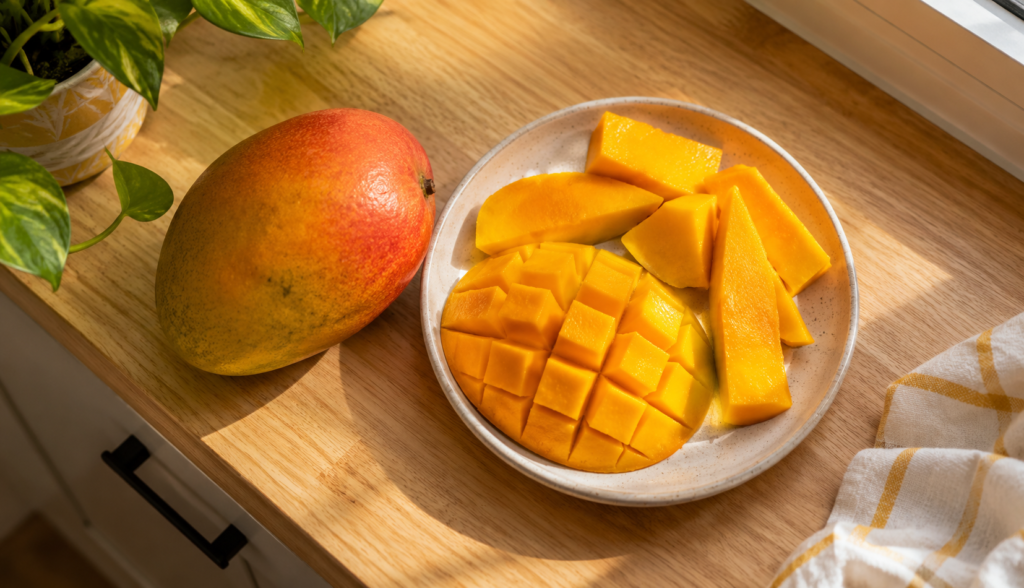
Mango is one of those fruits that seems almost too good to be true for dogs — sweet, soft, packed with nutrients, and most dogs go absolutely wild for it. I started giving mango to my dogs a few years back during summer, mostly because I had plenty of it and wanted to see how they’d respond. The reaction was immediate. But can dogs eat mango safely? Yes — with two non-negotiable preparation steps that most owners skip because nobody told them it mattered. Skip those steps and what should be a healthy treat becomes a choking hazard or a digestive problem. Get them right and mango becomes one of the better fruits you can add to a dog’s treat rotation.
Why Mango Is Good for Dogs
Fresh mango is genuinely nutritious for dogs, not just a harmless indulgence. Mango flesh is loaded with vitamin A, vitamin C, vitamin B6, and vitamin E — a combination that supports immune function, coat health, vision, and cell repair simultaneously. Most commercial dog treats offer nowhere near this kind of nutritional density, which is part of why rotating in whole fruits makes sense for dogs who tolerate them well.
The beta carotene content in mango is particularly worth noting. Beta carotene converts to vitamin A in the body and acts as an antioxidant, helping to neutralize free radicals that contribute to cellular aging and disease. For senior dogs especially, antioxidants in the diet are a meaningful addition rather than a nice-to-have. Mango for dogs isn’t just a treat — it’s functional food when served in the right amounts.
Fiber content is another benefit. Ripe mango has enough dietary fiber to support healthy digestion without overwhelming the gut the way high-fiber vegetables sometimes do. The texture is soft enough that even older dogs or dogs with dental sensitivities handle it without trouble. What surprised me was how quickly dogs with sensitive stomachs adapted to small amounts of mango compared to other fruits I’d tried.
The natural sugar in mango is real and worth managing — more on that shortly — but in controlled portions, it doesn’t pose a problem for healthy adult dogs. Mango chunks as an occasional treat hit a sweet spot between enjoyment and nutritional value that’s hard to match with processed alternatives.
The Two Parts You Must Always Remove
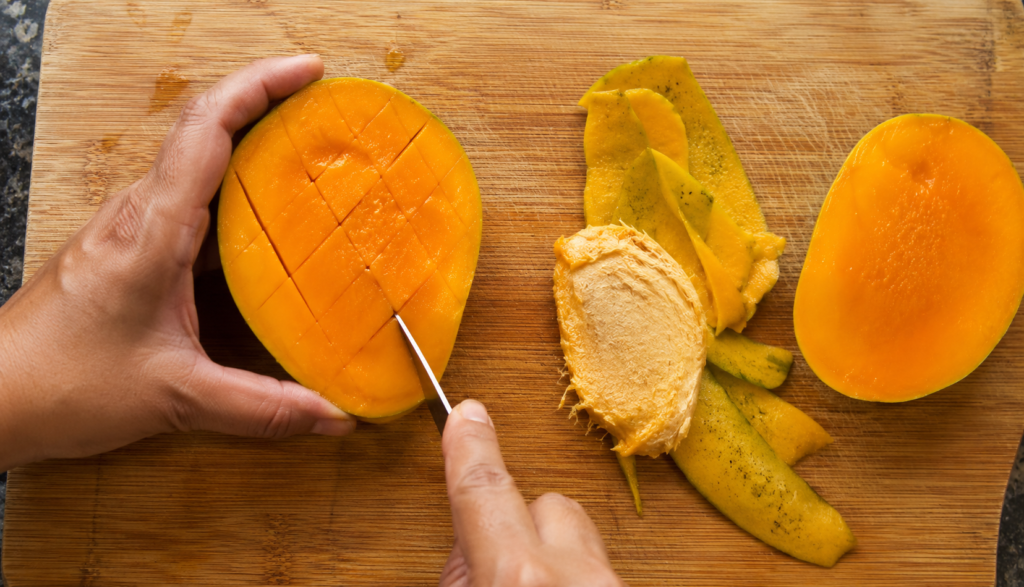
Mango skin and the mango pit are the two things standing between a safe treat and a genuine problem. Neither is optional to remove. Both need to come off every single time, regardless of how ripe the mango is or how large the dog. This is the preparation step most owners miss because mango looks harmless, and the flesh clearly is — but the other parts are a different story.
The mango pit is the more serious concern. It’s large, hard, and shaped in a way that makes it a serious choking hazard for dogs of almost any size. Beyond the physical risk, the mango seed contains small amounts of cyanide — the same compound found in apple seeds and cherry pits. A dog gnawing on a mango pit isn’t going to be poisoned immediately, but it’s an unnecessary exposure to a toxic compound combined with a real choking and intestinal blockage risk. Remove the pit before the mango is anywhere near your dog.
I’ve watched this go wrong when a dog got hold of a mango someone had half-eaten and left on an outdoor table. The pit was still attached and the dog had it down the throat before anyone could react. That trip to the vet to confirm there was no blockage was entirely preventable.
Mango skin is less dangerous but still worth removing consistently. The skin is tough, difficult to digest, and can cause digestive upset — particularly diarrhea — especially in smaller dogs or dogs with sensitive stomachs. It also carries the highest concentration of pesticide residue on the fruit surface. Peeled mango served as plain mango flesh is the only version that makes sense to give a dog.
How Much Mango Dogs Can Actually Have
Portion control is where most well-intentioned mango feeding goes sideways. Mango is higher in natural sugar than many other fruits, which means the serving size matters more than it does with something like blueberries. Too much mango in one sitting leads to digestive upset — loose stools, diarrhea, and an uncomfortable dog for the rest of the day.
For small dogs, one or two bite-sized pieces of mango per serving is the right amount. For medium to large dogs, a small handful of mango chunks — maybe three to four pieces — is a reasonable portion. Mango for small dogs needs stricter limits simply because their digestive systems process sugar less efficiently at volume. The same logic applies to how often you serve it: a few times a week as an occasional treat rather than a daily addition to meals.
I’ve seen this firsthand when a dog I was fostering got into a bowl of cut mango left on a low table. She ate probably a quarter of a full mango before I noticed. No lasting harm, but the next 24 hours involved a lot of outdoor trips and a very uncomfortable dog. The fruit itself was fine — the amount was the problem.
Senior dogs and dogs with diabetes or weight management issues need extra caution here. The sugar content in mango is natural but still significant, and for dogs already managing blood sugar or caloric intake, mango should only be introduced after checking with a vet. Healthy adult dogs handle it without issue when portions stay sensible.
The Best Ways to Serve Mango to Dogs
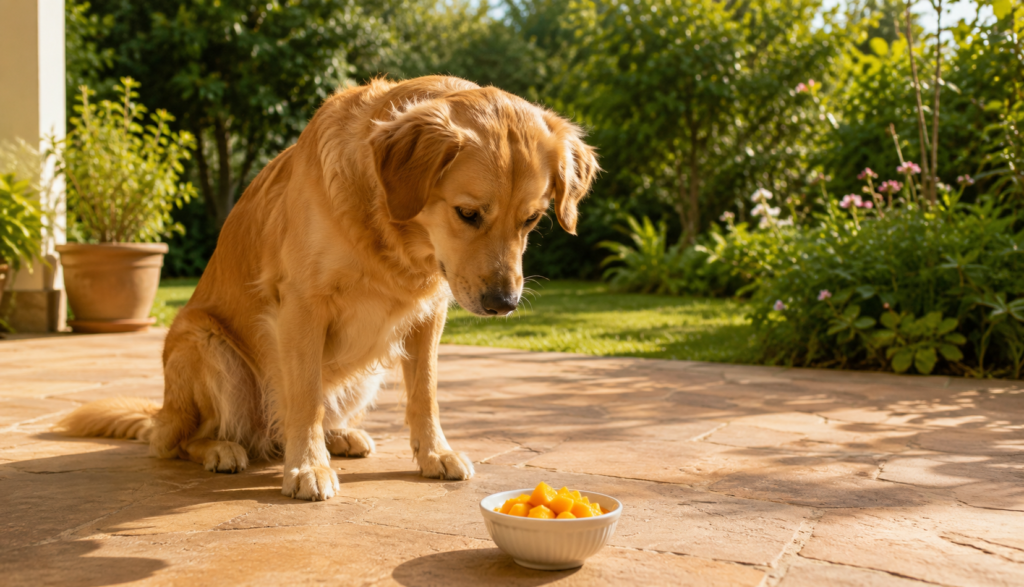
Serving mango to dogs is straightforward once the preparation is right. Peel the mango completely, cut the flesh away from the pit, and slice it into appropriately sized pieces for your dog. Small dogs get smaller cubes; larger breeds can handle bigger mango chunks without issue. Serve it fresh or refrigerate cut pieces for up to two days.
Frozen mango is one of the better summer treat options available. Freeze mango chunks on a flat tray until solid, then transfer to a bag and pull them out as needed. Dogs love the cold temperature, it slows them down and extends the treat, and it’s genuinely refreshing in warm weather. Frozen mango treats require zero preparation beyond the initial cut and freeze — one of the easiest upgrades to a treat rotation.
From experience, the smarter call is to prep a batch at the start of the week and keep it portioned in the fridge. Having ready-to-serve mango pieces means you’re less likely to hand over too much at once out of convenience. Mango served mixed into plain yogurt — no added sugar, no xylitol — is another option dogs enjoy, and it adds a probiotic benefit alongside the fruit.
Mango varieties don’t make a meaningful difference — Alphonso, Ataulfo, Kent, Tommy Atkins — all are equally safe for dogs. Ripe mango is preferable since it’s softer and sweeter, but any ripe variety works. Avoid dried mango entirely. Dried mango for dogs is concentrated in sugar, often contains additives, and offers none of the hydration benefit of fresh fruit.
What Most People Don’t Know
Most dog owners who know mango is safe assume that means all mango products are safe. That assumption causes problems. Mango-flavored treats, mango juice, mango smoothie pouches, and commercial mango snacks marketed for humans frequently contain added sugar, artificial sweeteners, or xylitol — any of which can cause serious harm. The mango itself isn’t the issue; what’s been added to it is.
Xylitol in particular turns up in unexpected places — flavored yogurts, fruit dips, and some packaged mango snack products. It causes rapid insulin release in dogs, leading to hypoglycemia and in severe cases liver failure. If the product isn’t plain mango flesh with nothing added, read the label before your dog gets anywhere near it. If symptoms persist or worsen after a dog eats any mango product, a vet visit is always the right call.
The other thing most dog owners miss completely: unripe mango can cause digestive irritation even without the pit or skin. Unripe mango flesh is significantly more acidic and fibrous than ripe fruit, and some dogs react with vomiting or stomach discomfort. The same ripeness rule applies when deciding whether peaches are ready to serve — stick to ripe fruit, the kind you’d eat yourself, and the digestive risk drops considerably.
Other Tropical Fruits Worth Trying
Mango sits at the top of the tropical fruit list for dogs, but it’s not the only option worth rotating in. Pineapple — fresh, not canned — is safe for dogs in small amounts and contains bromelain, an enzyme that supports digestion. The core and skin need to come off, same principle as mango. Most dogs enjoy the sweetness even if the tartness takes some getting used to.
Papaya is another solid choice. It’s gentler on digestion than mango, lower in sugar, and contains digestive enzymes that can actually help dogs with sensitive stomachs. Remove the seeds and skin and serve the flesh plain. Banana works well for dogs who need a higher-energy treat — the potassium and magnesium are genuinely useful — though the sugar content means keeping portions small.
Most dog owners miss this completely when building a treat rotation: variety matters more than perfection with any single fruit. A dog that gets blueberries on Monday, mango chunks on Wednesday, and a piece of banana on Friday is getting a broader range of vitamins for dogs and antioxidants than one eating the same treat every day. Safe fruits for dogs are a resource worth using deliberately rather than randomly.
FAQ

Can dogs eat mango skin?
No. Mango skin is tough, difficult to digest, and can cause stomach upset and diarrhea in dogs. It also carries pesticide residue. Always peel mango completely before giving it to your dog.
Is the mango pit dangerous for dogs?
Yes. The mango pit is a choking hazard and contains small amounts of cyanide. It can also cause intestinal blockage if swallowed. Always remove the pit entirely before serving mango to your dog.
How much mango can a dog eat?
Small dogs should have one to two bite-sized pieces per serving. Medium to large dogs can handle a small handful of mango chunks. Serve a few times a week at most — mango is higher in natural sugar than many other fruits.
Can puppies eat mango?
Yes, in very small amounts. Start with one small piece and monitor for any digestive reaction before making it regular. Puppies have more sensitive digestive systems than adult dogs, so introduce any new food gradually.
Is dried mango safe for dogs?
No. Dried mango is concentrated in sugar, often contains additives, and offers none of the hydration benefit of fresh fruit. Stick to fresh or frozen mango with no added ingredients.
Can dogs eat frozen mango?
Yes. Frozen mango chunks are one of the best summer treats for dogs. Freeze peeled, pitted mango pieces on a tray until solid and serve as needed. Most dogs love the cold texture and it slows down fast eaters
Can diabetic dogs eat mango?
Only with veterinary guidance. Mango contains significant natural sugar, which affects blood sugar levels. Dogs managing diabetes or weight issues should not have mango added to their diet without a vet’s input first.