
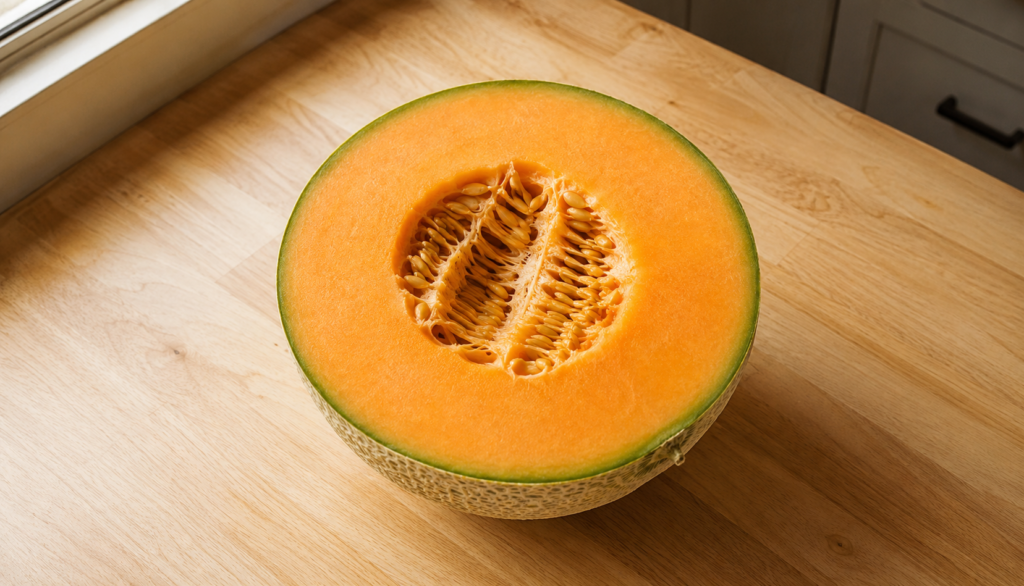
Ninety percent of dog owners eating cantaloupe on a hot afternoon have wondered whether their dog can have a piece. The answer is yes — and cantaloupe is actually one of the better fruits you can share with a dog, not just a harmless indulgence. I started giving cantaloupe to my dogs during summer years ago, partly out of convenience and partly because I noticed how much they wanted it every time I cut one open. The smell alone had them sitting at attention. Can dogs eat cantaloupe? Absolutely — but the rind comes off, the seeds come out, and the portion needs to stay reasonable. Get those three things right and you’ve got a genuinely useful warm-weather treat that most dogs love immediately.
Why Cantaloupe Is a Smart Treat Choice for Dogs
Cantaloupe for dogs isn’t just safe — it’s one of the more nutritionally useful fruits in the safe category. The flesh is rich in beta carotene, which converts to vitamin A and supports eye health, immune function, and skin condition. Vitamin C adds antioxidant protection, and the overall nutrient profile of fresh cantaloupe compares favorably to many commercial treats that offer flavor with minimal substance.
The high water content is what sets cantaloupe apart from most other fruits. Cantaloupe is roughly 90 percent water, which makes it genuinely hydrating rather than just sweet. On hot days when dogs are less inclined to drink as much as they should, cantaloupe chunks can supplement hydration in a way that dry treats simply can’t. I’ve used frozen cantaloupe as a summer staple for years — it keeps dogs cool, occupied, and hydrated at the same time.
Cantaloupe is also a low calorie treat relative to its volume, which makes it a useful option for dogs managing their weight. A few bite-sized pieces deliver real sweetness and satisfaction without the caloric load of commercial treats. For overweight dogs being managed on a reduced-calorie diet, swapping processed treats for cantaloupe a few times a week is a meaningful upgrade that most dogs accept enthusiastically.
What surprised me was how well senior dogs in particular respond to cantaloupe. The soft texture requires minimal chewing effort, the sweetness appeals even to dogs with reduced appetite, and the antioxidants support aging systems in a way that plain kibble doesn’t address. It’s become one of my default recommendations when people ask what treats work well for older dogs.
The Parts to Always Remove Before Serving
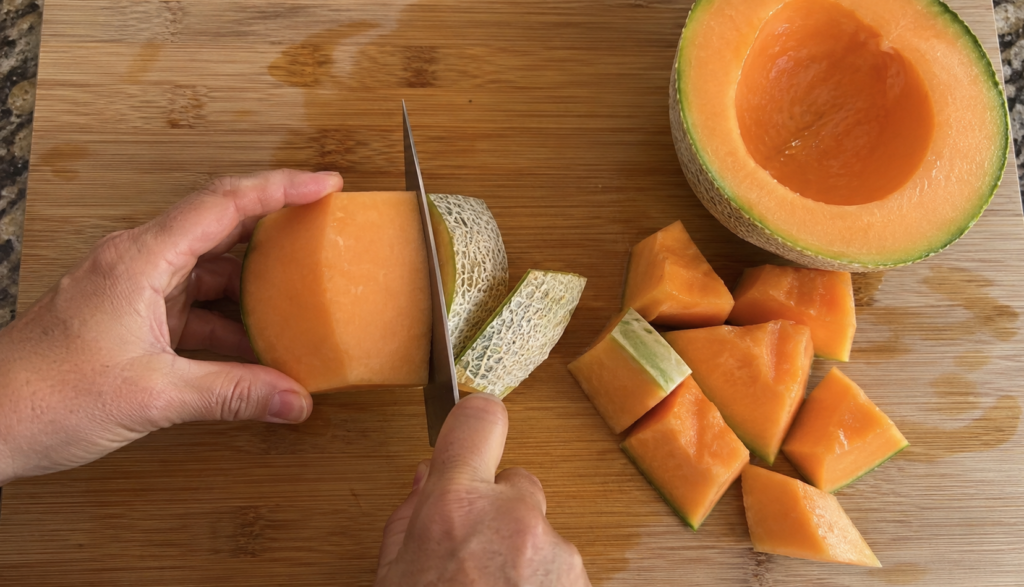
Cantaloupe rind and cantaloupe seeds are the two parts that need to come off every time, no exceptions. The flesh is the only part of cantaloupe that’s appropriate for dogs, and neither the rind nor the seeds add anything worth keeping — they only add risk.
The cantaloupe rind is the bigger concern of the two. It’s tough, fibrous, and difficult for dogs to digest properly. Even in small amounts, the rind can cause digestive upset — stomach cramping, diarrhea, and discomfort that lasts well into the next day. For small dogs, a piece of rind is also a potential choking hazard given how firm the outer skin is. Remove the rind completely, cutting the flesh away cleanly so no green or pale outer layer remains on the pieces you serve.
I’ve watched this go wrong with a Beagle who grabbed a rind piece off the compost pile in the garden. She chewed through most of it before I noticed, and spent the following evening very uncomfortable. The cantaloupe flesh she’d had earlier that same day caused zero issues — the rind was entirely responsible for the reaction.
Cantaloupe seeds are less dangerous than, say, apple seeds or a mango pit, but they’re still worth removing consistently. They add no nutritional value, can be a minor choking hazard for smaller dogs, and may irritate the digestive system in larger quantities. Scrape the seed cavity clean before cutting the flesh into serving pieces. It takes thirty seconds and removes any uncertainty about what your dog is consuming.
How Much Cantaloupe Is the Right Amount
Portion control matters with cantaloupe more than the preparation itself, because the natural sugar content — while not extreme — adds up faster than owners expect when the dog clearly wants more and the fruit is sitting right there. Too much cantaloupe in one sitting leads to digestive upset and loose stools, even though the cause is volume rather than toxicity.
For small dogs, two to three bite-sized pieces per serving is the right ceiling. For medium dogs, a small handful of cantaloupe chunks — four to five pieces — is reasonable. Large breeds can handle slightly more, but more still means a controlled portion, not an open invitation to eat whatever’s left on the plate. Feed cantaloupe as an occasional treat a few times a week rather than a daily addition to meals.
Dogs with diabetes need extra caution here. The natural sugar in cantaloupe, while lower than many fruits, is still significant enough to affect blood glucose levels in dogs already managing insulin sensitivity. If your dog has any metabolic health conditions, check with a vet before introducing cantaloupe or any fruit into the diet. Healthy adult dogs handle appropriate portions without issue, but the size of those portions still matters.
From experience, the smarter call is to pre-cut and portion cantaloupe before bringing it anywhere near the dog. Once they can smell ripe cantaloupe, impulse control on both sides of the equation tends to break down. Having pre-measured pieces ready means you’re working from a plan rather than guessing in the moment.
The Best Ways to Prepare and Serve Cantaloupe
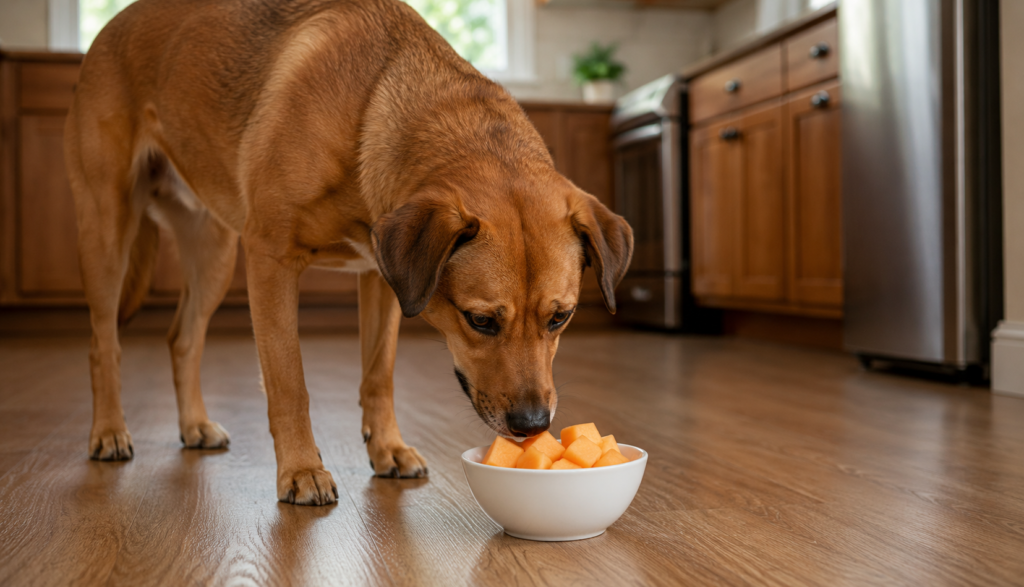
Serving cantaloupe to dogs starts with a ripe melon — soft to the touch at the stem end, fragrant, with deep orange flesh. Unripe cantaloupe is harder, less sweet, and harder on digestion than ripe fruit. Cut the melon in half, scrape out the seeds completely, slice the flesh away from the rind, and cut the flesh into appropriately sized pieces for your dog’s size. That’s the entire preparation process.
Fresh cantaloupe can be refrigerated for two to three days after cutting, which makes batch prep practical. Keep portioned pieces in a sealed container and pull out a serving as needed. For dogs who eat quickly or seem to inhale treats without tasting them, frozen cantaloupe chunks slow things down considerably and extend the treat into something more engaging. Freeze pieces on a flat tray first, then transfer to a bag once solid so they don’t clump together.
Most dog owners miss this completely: cantaloupe pairs well with plain Greek yogurt — no added sugar, no xylitol — as a frozen treat base. Blend a small amount of cantaloupe flesh with plain yogurt, pour into an ice cube tray, and freeze. The result is a layered summer treat that dogs find far more interesting than a plain piece of fruit, and the probiotic content of the yogurt adds a digestive benefit on top of everything the cantaloupe provides.
Plain cantaloupe served simply is always fine, but these variations keep treat rotation interesting without introducing anything unsafe. The rule stays the same regardless of preparation method: rind off, seeds out, portion controlled, ripe fruit only.
What Most People Don’t Know
The assumption most dog owners make is that because cantaloupe flesh is safe, cantaloupe-flavored products are equally safe. That logic fails the same way it fails with mango and apple — the fruit itself is fine, but what manufacturers add to cantaloupe-flavored foods frequently isn’t. Artificially flavored dog treats, human fruit snacks, melon-flavored yogurts, and packaged cantaloupe products can contain added sugar, artificial sweeteners, or xylitol. None of these belong anywhere near a dog.
Xylitol is the one that genuinely matters. It appears in products that seem harmless — flavored yogurts, fruit dips, certain packaged snack products — and causes serious harm to dogs even in small quantities. Rapid insulin release, hypoglycemia, and potential liver damage are all possible. The fruit itself never contains xylitol; it only appears in processed products. Read labels on anything cantaloupe-flavored before assuming it follows the same rules as fresh cantaloupe flesh.
The other thing worth knowing: cantaloupe from a garden or farmers market may carry higher pesticide residue on the rind than supermarket fruit, depending on how it was grown. Since you’re removing the rind anyway, this doesn’t affect the flesh you’re serving — but it’s a reason to wash the outside of the melon before cutting into it, so surface residue doesn’t transfer to the flesh on the knife blade. If symptoms persist or worsen after your dog eats cantaloupe, a vet visit is always the right call.
Other Hydrating Fruits Worth Rotating In
Cantaloupe sits at the top of the hydrating fruit list for dogs, but it’s not the only melon worth considering. Honeydew melon follows the same preparation rules — remove rind and seeds, serve the flesh only — and offers a similar nutritional profile with slightly less sugar. Most dogs accept honeydew as readily as cantaloupe once they’ve tried it.
Watermelon is the other obvious comparison. Seedless watermelon with the rind removed is safe for dogs and even higher in water content than cantaloupe, making it one of the most hydrating treat options available. The red flesh is lower in sugar than cantaloupe and most dogs absolutely love it. A rotation across cantaloupe, honeydew, and watermelon through summer gives dogs variety while keeping the preparation logic identical across all three.
Safe fruits for dogs aren’t all equal in terms of how much work they do beyond just being safe. Hydrating fruits like melons serve a function — especially in warm climates or for active dogs — that goes beyond occasional indulgence. Building a regular summer rotation around these options is one of the more practical things an owner can do for a dog’s overall comfort during hot months.
FAQ

Can dogs eat cantaloupe rind?
No. Cantaloupe rind is tough, difficult to digest, and can cause stomach upset and diarrhea in dogs. It’s also a choking hazard for smaller breeds. Always remove the rind completely before serving cantaloupe to your dog.
Are cantaloupe seeds safe for dogs?
Cantaloupe seeds are not toxic but are worth removing anyway. They add no nutritional value, can be a minor choking hazard for small dogs, and may cause mild digestive irritation in larger quantities. Scrape the seed cavity clean before serving.
How much cantaloupe can a dog eat?
Small dogs should have two to three bite-sized pieces per serving. Medium to large dogs can handle a small handful of chunks. Serve a few times a week as an occasional treat rather than a daily addition to meals.
Can puppies eat cantaloupe?
Yes, in small amounts. Start with one small piece and watch for any digestive reaction before making it a regular treat. Puppies have more sensitive digestive systems than adult dogs, so introduce new foods gradually.
Is frozen cantaloupe safe for dogs?
Yes. Frozen cantaloupe chunks are an excellent summer treat for dogs. Freeze peeled, seeded flesh on a flat tray until solid and serve as needed. The cold temperature is refreshing and slows down dogs who eat too quickly.
Can diabetic dogs eat cantaloupe?
Only with veterinary guidance. Cantaloupe contains natural sugar that can affect blood glucose levels. Dogs managing diabetes or weight issues should not have cantaloupe introduced without checking with a vet first.
Is cantaloupe better for dogs than watermelon?
Both are safe and hydrating choices. Watermelon has a slightly higher water content and lower sugar than cantaloupe. Cantaloupe has more beta carotene and vitamin A. Either works well as a summer treat — rotating between both is a practical approach.