
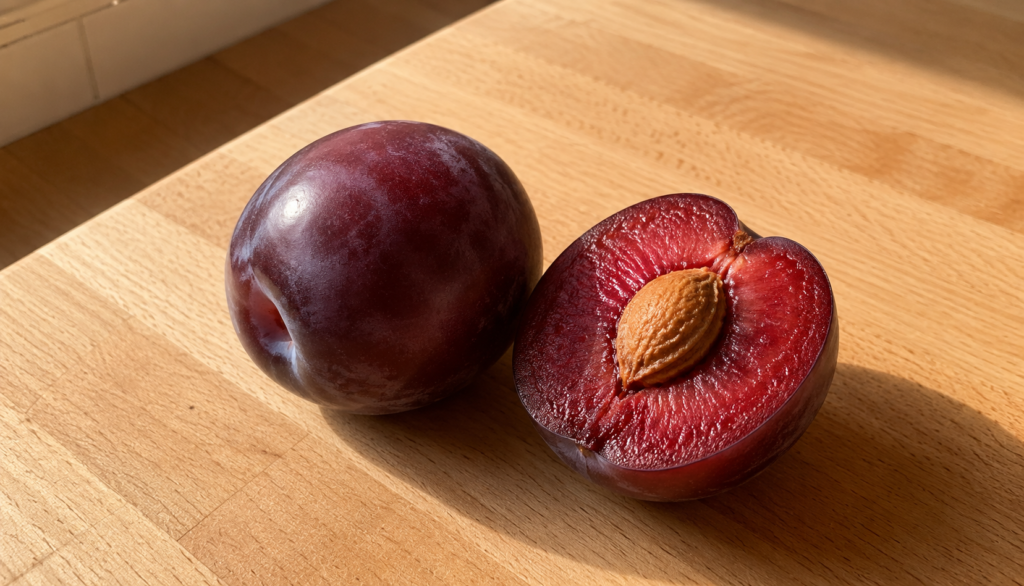
Plums follow the same family pattern as peaches and cherries — safe flesh, dangerous pit — but they tend to fly under the radar compared to those other stone fruits in most dog safety discussions. I’ve found that plums get less attention than they probably should, partly because they’re less commonly given as treats and partly because the pit is smaller and easier to overlook than a peach pit. Can dogs eat plums? Yes — fresh plum flesh is safe and offers genuine nutritional value. The pit needs to come out every time, and the smaller size compared to other stone fruit pits doesn’t make it any less of a concern. If anything, the smaller size makes it easier for a dog to swallow accidentally.
What Plums Offer Nutritionally
Fresh plum flesh delivers vitamin A, vitamin C, and a meaningful dose of antioxidants — particularly in darker-skinned varieties where the pigmentation correlates with higher concentrations of polyphenols. Plums for dogs aren’t a nutritional powerhouse on the level of blackberries, but they offer real value as part of a varied fruit rotation, supporting immune function and contributing to the overall antioxidant load that helps manage cellular aging and inflammation.
The fiber content in plum flesh is notable and contributes to one of the fruit’s more practical uses — supporting digestive regularity. This is the same mechanism behind why dried plums, known as prunes, are associated with digestive support in humans. Fresh plum flesh in appropriate portions can have a similar mild effect in dogs, though the effect is gentler than what comes from dried prunes specifically.
Natural sugar in plums is moderate, similar to peaches, which means portion control matters but isn’t as restrictive as with the sweetest tropical fruits. A few pieces of ripe plum a few times a week deliver real nutritional benefit without creating a sugar load that’s problematic for healthy adult dogs.
What surprised me was how much variation exists across plum varieties in terms of sweetness and texture. Some dogs take to the tartness of certain plum varieties immediately; others prefer the sweeter, softer varieties. There’s no safety difference between common plum varieties — the preparation rules are identical regardless of which type you’re working with.
The Pit — Smaller Than a Peach Pit, Just as Dangerous
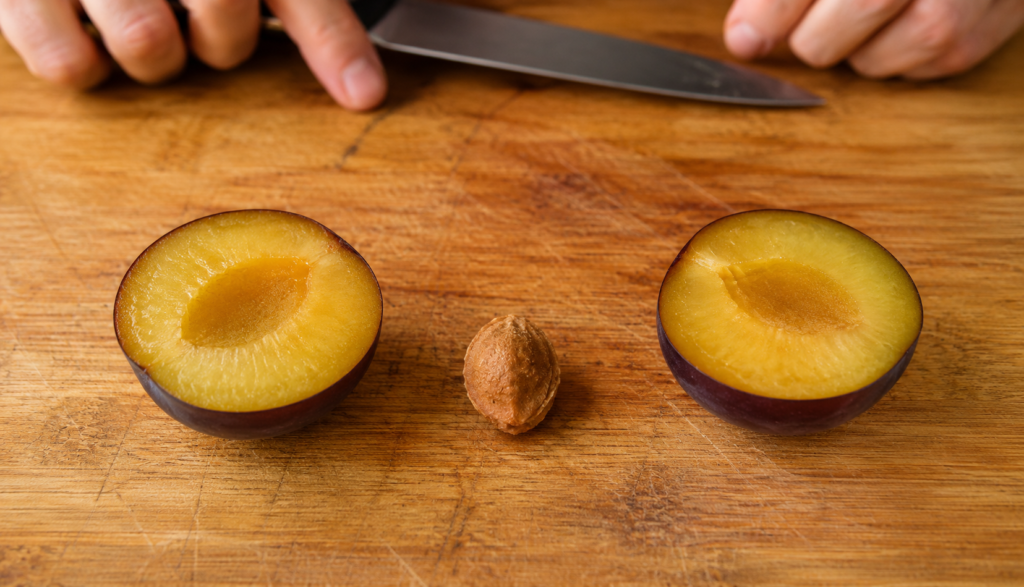
The plum pit contains amygdalin, the same cyanide-producing compound found in peach pits, cherry pits, and apple seeds. The concentration and risk profile are comparable to other stone fruit pits — a single accidental exposure to a small piece isn’t an acute emergency, but consistent or large-volume exposure creates genuine toxicity risk that shouldn’t be tolerated at any level when avoidance is this straightforward.
What makes the plum pit particularly worth flagging is its size relative to the fruit. A plum is smaller than a peach, and its pit is proportionally smaller too — which means a dog can swallow a plum pit far more easily than a peach pit, where the larger size makes accidental whole-swallowing less likely. The smaller pit size shifts the primary risk from choking toward intestinal blockage and toxin exposure, since a dog is more likely to get the whole pit down rather than just chewing on it externally.
I’ve watched this go wrong when a dog got into a bowl of plums left out during a family gathering. Several plums went missing before anyone noticed, pits included. The vet visit involved x-rays to confirm no pits were lodged in the intestinal tract, which thankfully came back clear, but it was an unnecessary scare that proper storage would have prevented entirely. Plums left accessible on a counter or table are an invitation for exactly this kind of incident.
Remove the pit completely before serving any plum to a dog. Cut the fruit in half, twist or pry the pit free, and check the remaining flesh carefully for any fragments that may have broken off during removal. What’s left — clean plum flesh — can be cut into appropriately sized pieces for your dog and served plain.
Plum Skin and How Much to Serve
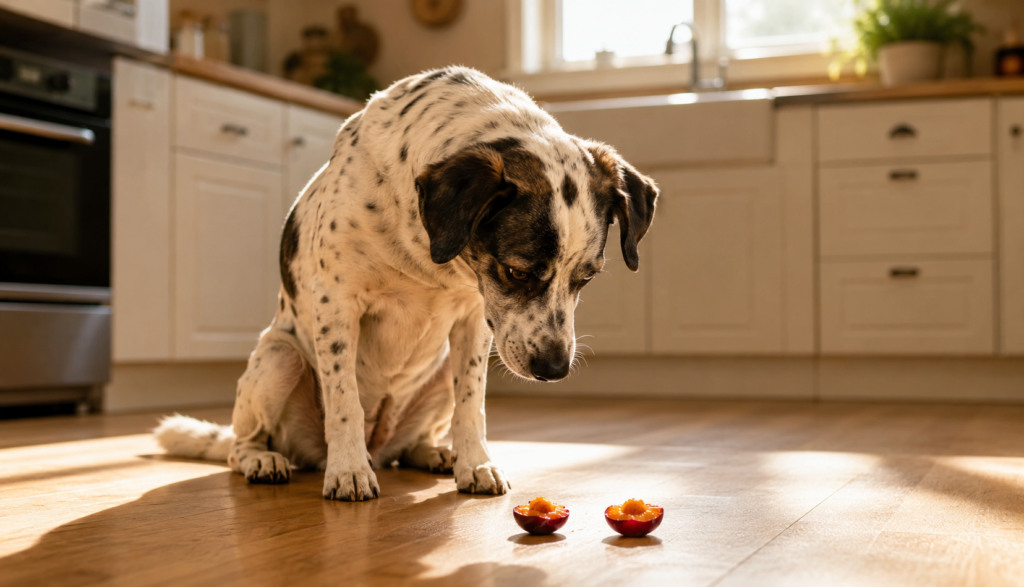
Plum skin is not a significant concern the way the pit is. The skin is thin, edible, and not toxic to dogs. It does carry a higher concentration of pesticide residue than the flesh if the plum isn’t organic, so washing thoroughly before cutting is worth doing. For dogs with sensitive stomachs, the skin’s slightly tougher texture compared to the flesh can occasionally cause mild digestive upset, but this is an individual tolerance issue rather than a general safety concern.
Portion sizing follows similar logic to peaches given the comparable sugar content. For small dogs, one to two bite-sized pieces of pitted plum flesh per serving is appropriate. Medium dogs can handle two to three pieces. Large breeds can manage a slightly larger portion, but a controlled handful of plum pieces rather than free access to whole fruit is always the right approach, partly because controlled portioning is what ensures the pit removal step actually happens consistently.
Too much plum in a single sitting produces the predictable digestive upset that comes with overdoing any moderately sweet, fiber-containing fruit — loose stools and discomfort that resolve on their own but are easily avoided with sensible portions. Feed plums a few times a week as an occasional treat rather than a daily staple, particularly if your dog is also getting other fruits in rotation during the same week.
Dried Plums and Prunes — A Different Category Entirely
Dried plums, commonly known as prunes, deserve separate treatment because they’re frequently confused with fresh plum in terms of safety and appropriateness for dogs. Prunes are significantly more concentrated in sugar and fiber than fresh plum flesh — the drying process removes water content while leaving the sugar and fiber behind in a much smaller volume. A small handful of prunes delivers a fiber and sugar load equivalent to several fresh plums.
Most dog owners miss this completely: prunes’ well-known laxative effect in humans applies to dogs too, and at a smaller body size, the effect is proportionally stronger. A dog given even a modest amount of prunes can experience significant digestive upset — diarrhea that’s more severe than what fresh plum would produce in an equivalent serving. Prunes are not an appropriate substitute for fresh plum as a treat, and the concentrated nature of dried fruit generally makes it a poor choice across most fruit categories for dogs.
If prunes are ever given intentionally — for instance, under veterinary guidance to address constipation — the dosing needs to be much smaller than what a fresh plum serving would be, and it should be done with specific purpose rather than as a casual treat. For general treat purposes, stick to fresh plum flesh with the pit removed, and skip dried plum products entirely.
What Most People Don’t Know
Wild plums and ornamental plum trees common in landscaping carry the same pit toxicity as cultivated fruit varieties, and dogs with garden access to these trees face the same risk as with wild cherries. Fallen plums under an ornamental tree are an easy target for a dog during a walk or backyard time, and the pits inside fallen fruit are just as dangerous as those in fruit bought from a grocery store. If you have plum trees — ornamental or fruiting — on your property, fallen fruit needs to be cleared regularly if a dog has unsupervised access to that area.
Plum stems and leaves carry a lower concentration of the cyanide-producing compounds compared to cherry stems and leaves, but they’re not considered safe either. The primary risk with plums remains the pit specifically, but as a general practice, keeping dogs from chewing on any part of a plum tree beyond the prepared flesh is the more cautious and appropriate approach.
The other detail worth knowing: unripe plums are more likely to cause digestive upset than ripe ones, independent of the pit issue. Underripe stone fruit in general is more acidic and harder to digest. If you’re serving plum to a dog, choose fruit that’s properly ripe — yielding slightly to gentle pressure — rather than firm, underripe fruit that happened to be available. If symptoms persist or worsen after your dog eats plum, a vet visit is always the right call.
Building Plums Into a Stone Fruit Rotation
Plums fit naturally alongside peaches and nectarines in a stone fruit rotation, since the preparation logic — pit removed, flesh served, portions managed — is identical across all three. Once that preparation habit is established for one stone fruit, applying it to the others requires no additional learning, just consistent execution every single time regardless of which fruit is on hand.
Rotating between plums, peaches, and a handful of berries across a week gives a dog a broader range of vitamins for dogs and antioxidant compounds than relying on any single fruit. The stone fruit family brings vitamin A and a different antioxidant profile than what berries provide, making the combination more nutritionally complete than either category alone.
Safe fruits for dogs work best when the preparation requirements are understood rather than just followed mechanically. Knowing why the pit comes out — not just that it does — means the habit holds even when you’re tired, distracted, or handling a fruit you’re less familiar with. That consistency is what keeps a fruit like plum, which carries a real but manageable risk, genuinely safe over the long term rather than safe only when someone happens to be paying close attention.
FAQ
Q. Can dogs eat plum skin?
A. Yes. Plum skin is thin, edible, and not toxic to dogs. Wash the plum thoroughly before serving to remove pesticide residue. Dogs with sensitive stomachs may do better with the skin removed.
Q. Is the plum pit dangerous for dogs?
A. Yes. The plum pit contains amygdalin, which breaks down into cyanide, and is also a choking and intestinal blockage hazard due to its size. Always remove the pit completely before giving plum to your dog.
Q. How many plums can a dog eat?
A. Small dogs should have one to two bite-sized pieces of pitted plum per serving. Medium dogs can handle two to three pieces. Serve a few times a week as an occasional treat rather than daily.
Q. Can dogs eat prunes?
A. Prunes are much more concentrated in sugar and fiber than fresh plum and have a strong laxative effect. They are not an appropriate everyday treat and can cause significant digestive upset. Fresh, pitted plum is the better choice.
Q. Can puppies eat plums?
A. Yes, in small amounts with the pit fully removed. Start with one small piece and watch for any digestive reaction before making it a regular treat. Puppies have more sensitive digestive systems than adult dogs.
Q. Are wild plums dangerous for dogs?
A. Wild and ornamental plum trees carry the same pit toxicity as cultivated fruit. If your dog has access to fallen plums under a tree, clear the fruit regularly to prevent accidental pit ingestion.
Q. What happens if a dog swallows a plum pit?
A. A swallowed plum pit can cause intestinal blockage or cyanide exposure. Contact your vet immediately if you know or suspect your dog has swallowed a pit, even if no symptoms are visible yet.