
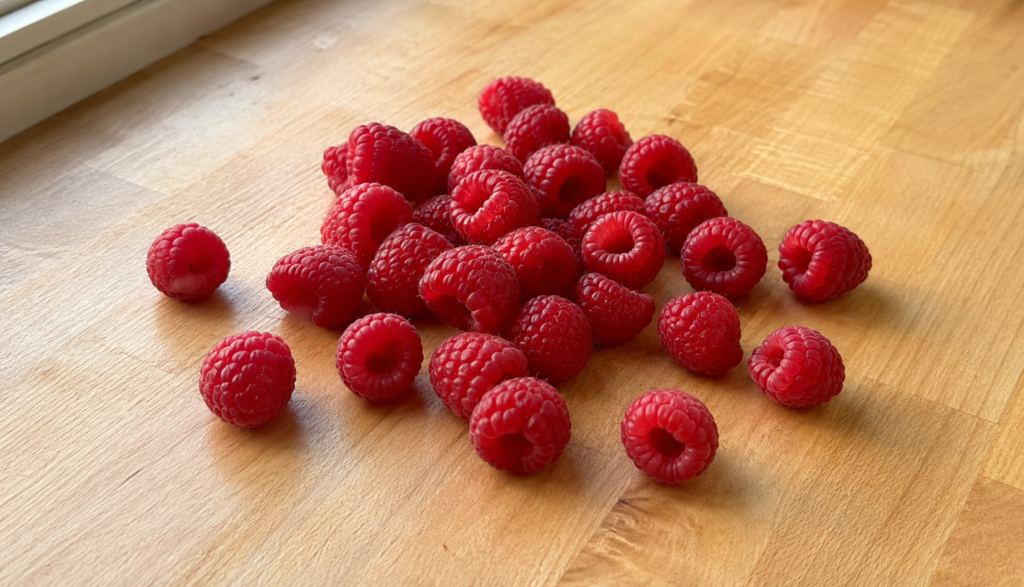
Raspberries are one of those fruits that seems completely uncomplicated right up until you learn the one thing that changes the calculation. I gave raspberries to my dogs for years before I understood the xylitol angle — not the artificial sweetener added to products, but the naturally occurring xylitol present in the fruit itself. Can dogs eat raspberries? Yes — they’re genuinely safe and nutritious in the portions any sensible owner would serve. The natural xylitol in raspberries is present in amounts too small to cause harm at normal treat sizes, but it’s real, it’s documented, and it’s why raspberries are the one berry where “moderation” isn’t just a general guideline — it’s a specific and meaningful limit that should be understood rather than assumed.
Why Raspberries Are Worth Including in a Dog’s Diet
Fresh raspberries sit near the top of the berry category for nutritional value. The antioxidant content is high — comparable to blackberries — with a combination of vitamin C, vitamin K, and manganese that supports immune function, blood health, and bone metabolism simultaneously. For dogs eating a standard commercial diet, the micronutrient density of fresh raspberries adds genuine value that processed treats don’t replicate.
The anti-inflammatory properties of raspberries are one of the more clinically interesting aspects of this fruit. Raspberries contain ellagic acid and quercetin, two compounds with documented anti-inflammatory effects that are relevant for dogs managing joint stiffness, chronic inflammation, or the general inflammatory load that comes with aging. For senior dogs in particular, consistent inclusion of anti-inflammatory whole foods like raspberries works in a direction that supports long-term comfort in a way kibble alone doesn’t address.
Fiber content in raspberries is high relative to their size — higher than most other commonly served berries. That fiber supports digestion, feeds beneficial gut bacteria, and moderates the absorption of the natural sugars in the fruit. The low calorie profile makes raspberries one of the better treat options for overweight dogs being managed on a calorie-restricted diet — a small handful delivers real satisfaction and nutritional value for almost no caloric cost.
What surprised me was how consistently dogs respond to raspberry flavor across different ages and breeds. The slight tartness that makes some dogs hesitant about cranberries or citrus doesn’t seem to register the same way with raspberries — the sweetness-to-tartness ratio lands in a range most dogs find appealing on the first offer. Fresh raspberries for dogs require zero preparation beyond rinsing, which makes them one of the most practical whole food treats available.
The Natural Xylitol Fact — What It Actually Means
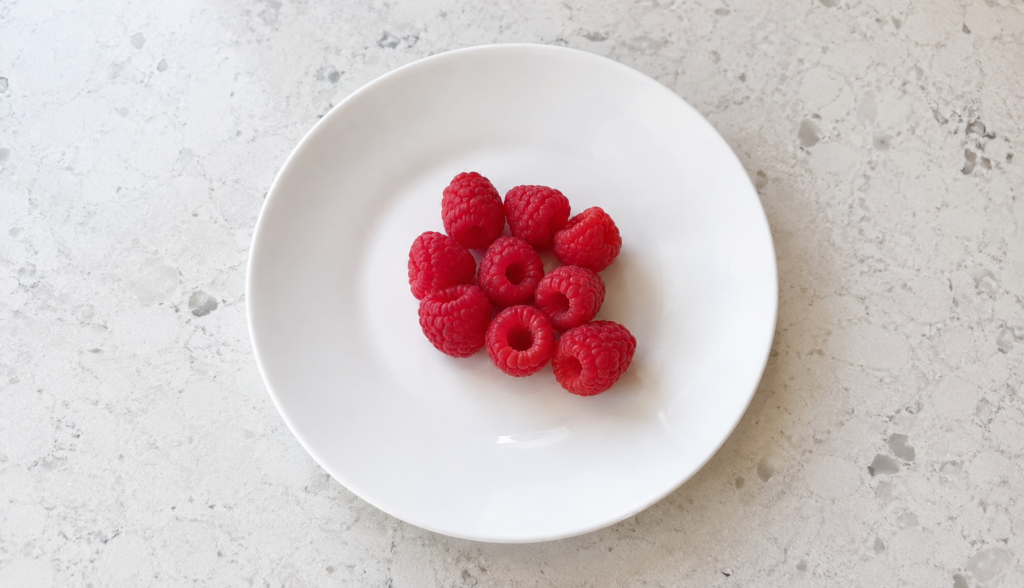
Natural xylitol in raspberries is the detail that generates the most confusion in dog health discussions, partly because xylitol is so strongly associated with artificial sweeteners in processed products that owners don’t expect to find it in whole fruit. Raspberries do contain naturally occurring xylitol — it’s present in the fruit as part of its natural sugar composition, not added during any processing stage.
The concentration is the key context. A raspberry contains a tiny fraction of the xylitol found in a sugar-free product formulated with it as a sweetener. The amount of xylitol in a serving of eight to ten raspberries for a medium dog is well below any threshold that would cause a metabolic response in a healthy adult dog. This is meaningfully different from a dog eating xylitol-sweetened gum, peanut butter, or yogurt — where the concentration is orders of magnitude higher and the risk is immediate and serious.
Most dog owners miss this completely: the natural xylitol in raspberries matters in the context of large quantities, not in the context of normal treat-sized servings. A dog eating a small handful of raspberries a few times a week is not accumulating a meaningful xylitol load. A dog eating a large bowl of raspberries daily is a different situation — not because raspberries become toxic at that volume, but because the cumulative xylitol exposure combined with the sugar and fiber load creates digestive and metabolic stress that sensible portioning avoids entirely.
The practical takeaway is straightforward: serve raspberries in appropriate portions, don’t make them a daily staple at high volumes, and the natural xylitol is a non-issue. Understanding why the limit exists is more useful than either dismissing the concern entirely or avoiding raspberries out of overcaution — both of which are common responses to incomplete information about this topic.
How Many Raspberries Dogs Can Actually Have
Portion sizing for raspberries is more conservative than for blackberries or blueberries specifically because of the natural xylitol content and the higher fiber load relative to berry size. Neither factor creates toxicity risk at reasonable amounts, but both create a ceiling worth respecting rather than testing.
For small dogs, three to five raspberries per serving is appropriate. Medium dogs can handle six to eight without issue. Large breeds can manage up to ten in a single serving. These amounts sit comfortably below any threshold where the natural xylitol or fiber load becomes a concern, while still delivering the antioxidant and nutritional benefits the fruit offers. Serve raspberries two to three times a week rather than daily — rotating them with other berries distributes the nutritional benefits more broadly and keeps any single fruit’s compounds from accumulating unnecessarily.
I’ve seen this firsthand with a Spaniel mix whose owner had been giving her a large bowl of raspberries every day because she loved them and they seemed harmless. The dog was fine on the surface, but the consistent high-volume intake was producing loose stools that the owner had attributed to something else entirely. Reducing to a sensible handful every other day resolved the issue within a week. The fruit wasn’t the problem — the volume was.
Raspberry for senior dogs is one of the stronger use cases for this fruit specifically. The anti-inflammatory compounds, the soft texture requiring minimal chewing effort, and the low calorie profile make raspberries well suited to older dogs managing weight, joint issues, or reduced appetite. Start with a smaller portion than you would for a younger dog and monitor for any digestive reaction — senior digestive systems are slower to adapt to new additions than younger ones.
Serving Raspberries to Dogs the Right Way

Raspberries require almost no preparation, which is part of what makes them so practical as a regular treat option. Rinse fresh raspberries under cold water, check that none are damaged or moldy — which can cause stomach upset regardless of fruit type — and serve whole. The size of a raspberry is appropriate for most dogs without any cutting or modification. For very small breeds or toy dogs, halving them is a sensible precaution, though choking risk from a whole raspberry is low for any dog above miniature size.
Frozen raspberries are equally appropriate and arguably more convenient for year-round use. Fresh raspberries are seasonal, perishable, and expensive outside of peak summer. Frozen raspberries maintain their nutritional profile, cost significantly less, and keep for months without any preparation. Most dogs eat frozen raspberries without hesitation — the texture is different but the flavor is identical, and the cold temperature slows them down in a way that extends the treat.
From experience, the smarter call is to keep a bag of frozen raspberries in the freezer year-round and use fresh raspberries during summer when they’re available and affordable. That combination gives consistent access to the fruit across seasons without the cost and perishability concerns that come with relying on fresh berries exclusively. Plain raspberries served simply — no additions, no mixing with sweetened products — is always the right approach.
Raspberry seeds dogs sometimes question are not a concern. The seeds in raspberries are tiny and soft, nothing like the hard seeds in stone fruits or the cyanide-containing seeds of apples. They pass through the digestive system without issue and don’t require removal. The entire berry, rinsed and served, is the appropriate form.
What Most People Don’t Know
The berry category contains a detail most owners gloss over: not all berries that look safe are safe, and the visual similarity between safe and toxic berries is one of the more significant hazards for dogs with garden access or off-leash time in wooded areas. Raspberries are safe. Several berries that grow wild and can look superficially similar — particularly certain nightshade species — are not.
Holly berries, mistletoe berries, and baneberry are all toxic to dogs and grow commonly enough in gardens and wild spaces that a dog foraging freely has meaningful exposure risk. The fact that raspberries are safe doesn’t create a general rule that red or purple berries are safe — each needs individual identification before a dog is allowed access. If your dog has access to a garden with berry-producing plants, knowing exactly what’s growing there is more protective than knowing the safe list.
Ketones in raspberries are another point that circulates in dog health discussions. Raspberry ketones are compounds found naturally in the fruit and are also used in some weight loss supplements for humans. The concentrations in whole fruit are far too low to produce any pharmacological effect, and the supplements are a different product entirely. The ketones in raspberries don’t create any safety concern at normal treat volumes — they’re a component of the fruit’s flavor and aroma profile rather than an active compound at dietary doses. If symptoms persist or worsen after your dog eats raspberries, a vet visit is always the right call.
Fitting Raspberries Into a Berry Rotation
Raspberries fit most naturally into a rotating berry schedule alongside blueberries, blackberries, and occasional strawberries. Each berry brings a slightly different antioxidant and micronutrient profile — blueberries are highest in certain flavonoids, blackberries bring more omega 3 and fiber, raspberries add manganese and the anti-inflammatory ellagic acid compounds — and rotating between them across a week delivers broader nutritional coverage than any single berry provides alone.
A practical rotatA practical rotation might look like blueberries on Monday, raspberries on Wednesday, and blackberries on Friday — each in appropriate portions for the dog’s size, each rinsed and served plain. That schedule provides consistent antioxidant support, varied fiber sources, and enough variety to keep treat time interesting without requiring any new preparation logic beyond what applies to all berries.
Safe fruits for dogs reward a systematic approach. Understanding why each fruit is on the list — what it contributes, what its limits are, and how it fits alongside other options — is what turns a scattered habit of offering whatever’s in the fridge into a deliberate and genuinely beneficial part of a dog’s diet. Raspberries earn their place in that rotation through real nutritional contribution, and serving them with awareness of the portion limits is all that’s required to make them work well.
FAQ

Q. How many raspberries can a dog eat?
A. Small dogs should have three to five raspberries per serving. Medium dogs can handle six to eight. Large breeds can manage up to ten. Serve two to three times a week rather than daily — the natural xylitol and fiber content mean high daily volumes are worth avoiding.
Q. Do raspberries contain xylitol that can harm dogs?
A. Raspberries contain naturally occurring xylitol in very small amounts — far below the concentration in artificial sweeteners. At normal treat-sized servings, it poses no risk to healthy adult dogs. Large daily quantities are what create concern, not occasional moderate servings.
Q. Are raspberry seeds safe for dogs?
A. Yes. Raspberry seeds are tiny and soft — nothing like the hard seeds in stone fruits. They pass through the digestive system without issue and do not need to be removed before serving.
Q. Can puppies eat raspberries?
A. Yes, in small amounts. Start with two or three raspberries and watch for any digestive reaction before making them a regular treat. Puppies have more sensitive digestive systems than adult dogs, so introduce new foods gradually.
Q. Are frozen raspberries safe for dogs?
A. Yes. Frozen raspberries are as safe and nutritious as fresh ones. They keep for months, cost less than fresh, and most dogs eat them readily. Store a bag in the freezer for year-round access and serve in the same portions as fresh.
Q. Are raspberries good for senior dogs?
A. Yes. The anti-inflammatory compounds in raspberries support joint and cellular health in older dogs. The soft texture requires minimal chewing, and the low calorie profile suits dogs managing their weight. Start with smaller portions than you would for a younger dog.
Q. Can dogs eat raspberries every day?
A. It’s better to rotate raspberries with other fruits rather than serving them daily. The natural xylitol and high fiber content mean high daily volumes accumulate in ways that sensible rotation avoids. Two to three times a week in appropriate portions is the right approach.