
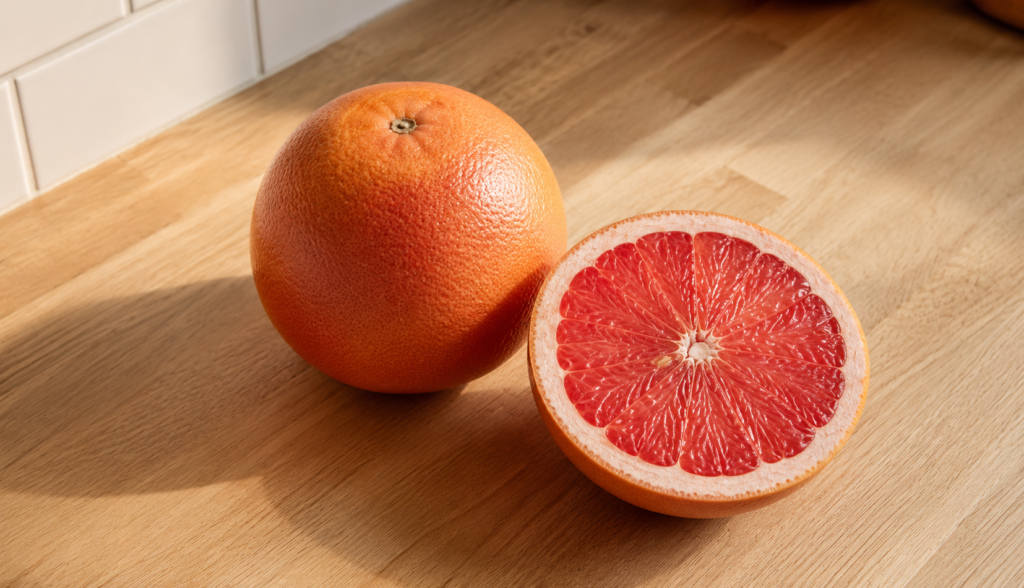
Grapefruit sits in a slightly different category from lemon and lime, even though all three share the same general citrus toxicity profile, because grapefruit specifically carries a second risk that has nothing to do with whether a dog likes the taste. I started looking into grapefruit more closely after a vet mentioned the medication interaction angle, which isn’t something that comes up with most other foods on the avoid list. Can dogs eat grapefruit? No. The peel and seeds are clearly off limits, the acidity makes even the flesh more trouble than it’s worth, and on top of all that, grapefruit contains compounds that interfere with how dogs metabolize certain medications — a concern that exists independent of the standard citrus toxicity issues.
Why Grapefruit Doesn’t Get the Same Pass as Orange
Oranges and mandarins are safe for dogs once peeled and deseeded, which sometimes leads owners to assume grapefruit follows the same pattern since it’s in the same citrus family. It doesn’t. Grapefruit is significantly more acidic than orange, and that acidity alone is enough to cause more pronounced digestive irritation in the flesh than orange ever would, even before considering the peel or seeds.
Beyond acidity, grapefruit contains higher concentrations of psoralen compounds and citrus essential oils than sweeter citrus varieties. These compounds are present throughout the fruit, not just concentrated in the peel the way they are with orange, which means even careful preparation — removing peel and seeds — doesn’t fully eliminate the concern with grapefruit the way it does with orange. The flesh itself carries more of the irritant compound load than orange flesh does.
What surprised me when researching this further was just how much grapefruit’s bitterness functions as a built-in deterrent, similar to lemon. Most dogs show clear aversion to the taste, which reduces real-world accidental exposure significantly. But the same caveat that applies to lemon applies here: natural aversion lowers risk, it doesn’t eliminate it, and it’s not a reason to treat grapefruit as harmless or to deliberately test a dog’s reaction to it.
Naringin, the specific bitter compound that gives grapefruit its distinctive flavor, is part of what makes grapefruit metabolically different from other citrus in ways that matter beyond taste. This compound is implicated in the medication interaction concern that sets grapefruit apart from lemon and lime, making it worth understanding specifically rather than just lumping grapefruit in with “citrus is generally bad for dogs” and moving on.
The Medication Interaction Risk Most Owners Don’t Know About
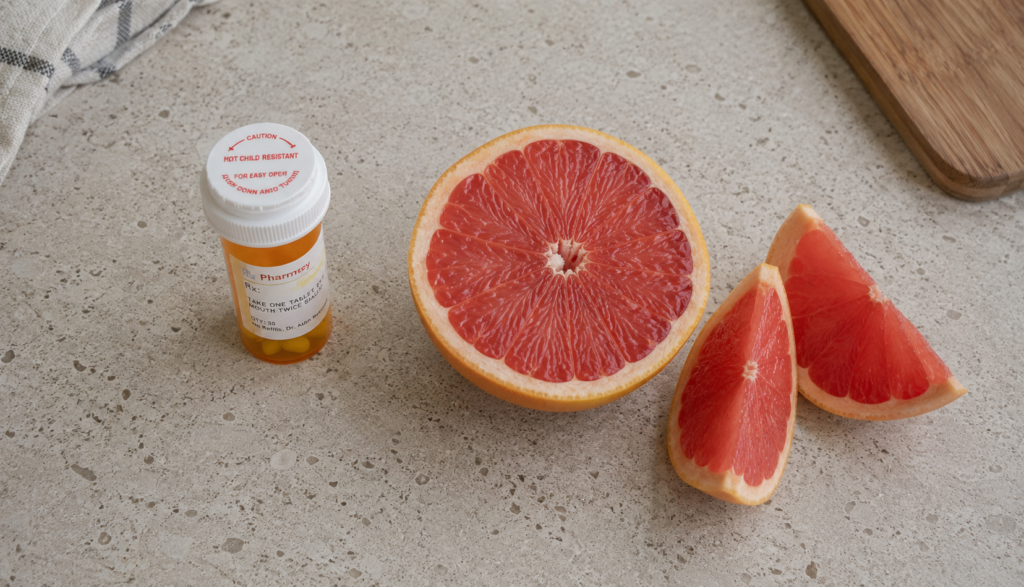
Grapefruit’s most distinctive risk has nothing to do with the toxicity profile shared by all citrus — it’s the well-documented interaction between grapefruit compounds and a range of medications, an interaction that’s actually more thoroughly studied in humans but applies to dogs metabolizing the same drug classes through similar liver pathways.
Grapefruit affects an enzyme system in the liver responsible for metabolizing many common medications. When grapefruit compounds interfere with this enzyme system, drugs that would normally be broken down at a predictable rate can build up to higher-than-intended concentrations in the bloodstream. For a dog on certain medications — some heart medications, certain sedatives, some immunosuppressants, and others — this interaction can mean a normal medication dose suddenly behaves like an overdose, with consequences ranging from mild to serious depending on the specific drug involved.
Most dog owners miss this completely: a dog on no medications at all faces “only” the standard citrus toxicity concern from grapefruit. A dog on certain prescribed medications faces a compounded risk where the grapefruit itself causes irritation and the medication interaction adds a second, potentially more serious layer of concern. If your dog is on any regular medication, grapefruit needs to be off the table entirely, not just minimized — and this is worth specifically asking your vet about if grapefruit exposure is ever a possibility in your household.
This medication interaction risk is one of the more specific, less commonly discussed reasons grapefruit deserves more caution than its citrus relatives. It’s not just about taste aversion and digestive upset — there’s a pharmacological dimension to grapefruit that doesn’t apply to most other foods on the avoid list, and it’s worth taking seriously even for dogs that show no interest in eating grapefruit voluntarily, simply because accidental exposure can happen regardless of preference.
What Happens If a Dog Eats Grapefruit
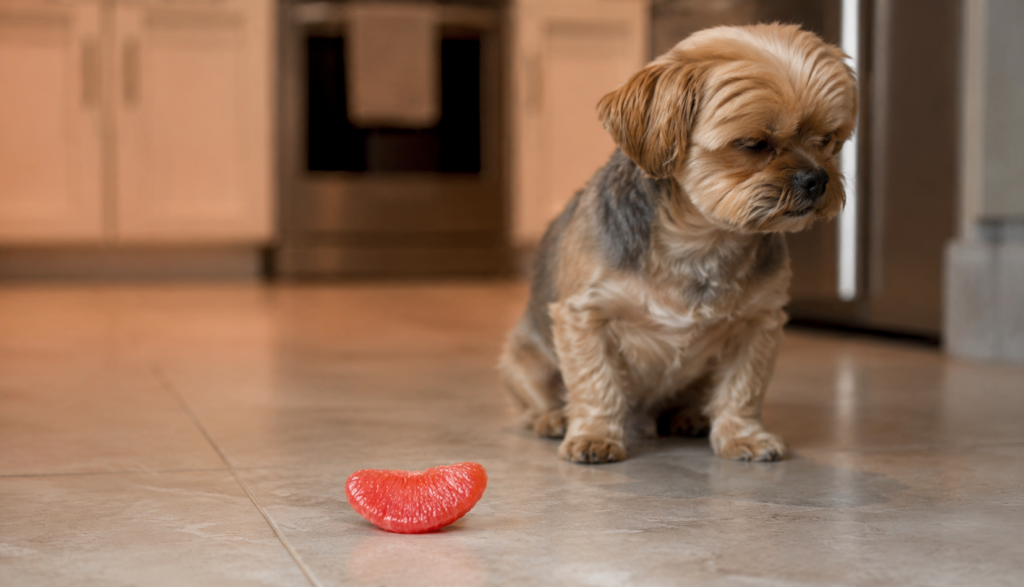
The severity of a reaction depends on the amount consumed and which parts of the fruit were involved, following a similar pattern to lemon exposure but with grapefruit’s added medication interaction layer for dogs on relevant prescriptions. A dog that licks a cut grapefruit out of curiosity and recoils from the bitterness is unlikely to experience anything beyond brief discomfort. A dog that eats a substantial piece — flesh, peel, and seeds together — faces a more serious situation.
Vomiting in dogs and diarrhea are the most common outcomes of meaningful grapefruit exposure, driven by the combination of acidity and irritant compounds. These symptoms typically appear within a few hours and resolve within a day in mild cases without lasting harm. More significant exposure — particularly involving the peel, where psoralen and essential oil concentration is highest — can produce more pronounced symptoms including excessive drooling, lethargy, and in cases of substantial ingestion, photosensitivity reactions affecting light-exposed skin.
I’ve encountered grapefruit exposure less often than lemon in years of working around dogs, which tracks with grapefruit’s even stronger bitterness deterring casual interest. The one case I’m aware of involved a dog that got into grapefruit segments left out after breakfast, ate a few pieces of flesh without peel, and experienced mild vomiting that resolved within the day with no veterinary intervention needed. The dog wasn’t on any medication, which is relevant — had medication interaction been a factor, the situation could have looked quite different.
Grapefruit Juice and Why It’s Worse Than the Whole Fruit
Grapefruit juice concentrates the acidity, the irritant compounds, and the medication-interacting properties of the whole fruit without any of the dilution that comes from the fruit’s natural fiber and pulp structure. There’s no appropriate amount of grapefruit juice — fresh-squeezed or bottled — to give a dog intentionally, and this applies even more strongly than it does to orange juice given grapefruit’s more concentrated compound profile.
Some human medications come with explicit grapefruit juice warnings precisely because the interaction is well-documented and significant enough to affect drug efficacy and safety in humans. The same biological mechanism is relevant for dogs, and a dog drinking even a small amount of grapefruit juice while on a relevant medication faces a real risk that has nothing to do with stomach upset and everything to do with how that medication is processed in the body.
Most dog owners would never think to offer grapefruit juice specifically, but the broader point matters: any grapefruit-derived product — juice, flavored water, grapefruit essential oil used in household products — carries forward the concerns that apply to the whole fruit, sometimes in more concentrated form. Treating “grapefruit” as a category to avoid entirely, rather than just the literal whole fruit, is the safer framing.
What Most People Don’t Know
Grapefruit pith — the white, spongy layer between the peel and the flesh — carries a notable concentration of the bitter, irritant compounds in the fruit, similar to how orange pith concentrates some of orange’s less desirable compounds, but more pronounced in grapefruit given its overall higher compound concentration. Even if peel is removed, residual pith left on grapefruit segments adds to the irritant load a dog would be exposed to from the flesh alone.
The relationship between grapefruit and certain other citrus hybrids is also worth knowing, since grapefruit itself is a hybrid fruit, and similar hybrid citrus varieties — like pomelo or certain tangelo varieties — can carry comparable compound profiles depending on their specific genetic makeup. When in doubt about an unfamiliar citrus variety, the safer assumption is to treat it with the same caution as grapefruit rather than assuming it’s closer to orange in safety profile.
The other detail worth understanding: dogs recovering from illness or on long-term medication for chronic conditions are exactly the population where grapefruit exposure carries the highest stakes, precisely because medication use is more common in these dogs. If you have a senior dog on ongoing medication, or a dog managing a chronic condition with regular prescriptions, grapefruit deserves more active vigilance in your household than it might for a young, healthy, medication-free dog — though the standard citrus toxicity concern applies to every dog regardless of medication status. If symptoms persist or worsen after a dog eats grapefruit, a vet visit is always the right call, and mentioning any medications the dog is on is essential information for that visit.
Safer Choices for Dogs Who Like Tart or Bitter Flavors
Some dogs do show interest in sharp or bitter flavors despite the typical citrus aversion pattern, and there are safer ways to provide that flavor profile without grapefruit’s combined toxicity and medication interaction risks. Fresh cranberries offer real tartness without any citrus-specific concern.Plain, unsweetened Greek yogurt provides tang that many dogs respond to. Green apple, more tart than red varieties, is another safe option with an established preparation routine — core and seeds removed, flesh served in appropriate portions.
None of these alternatives carry the acidity, essential oil, or medication interaction profile that makes grapefruit a poor choice. For owners specifically drawn to the idea of offering a “different” or more interesting flavor than the usual sweet fruit options, these alternatives accomplish that without introducing meaningful risk.
Safe fruits for dogs span a wide enough range that there’s rarely a reason to push toward a genuinely risky option like grapefruit to satisfy variety or curiosity. The combination of acidity, irritant compounds, and the documented medication interaction makes grapefruit one of the more clearly avoidable foods on the broader list of things dogs shouldn’t eat, regardless of how the fruit happens to be prepared.
Frequently Asked Questions
Q. Is grapefruit toxic to dogs?
A. Yes. Grapefruit contains psoralen compounds and essential oils in higher concentrations than sweet citrus like orange, and the flesh itself carries more irritant load. It can cause digestive upset and, in dogs on certain medications, dangerous interactions.
Q. Why is grapefruit dangerous for dogs on medication?
A. Grapefruit interferes with a liver enzyme system responsible for metabolizing many medications. This can cause certain drugs to build up to higher-than-intended levels in the bloodstream, effectively turning a normal dose into something closer to an overdose.
Q. What happens if a dog eats grapefruit peel?
A. Grapefruit peel carries the highest concentration of psoralen and essential oil compounds in the fruit. Eating it can cause vomiting, diarrhea, and in significant exposure, more pronounced symptoms. Contact your vet if your dog eats grapefruit peel.
Q. Do dogs naturally avoid grapefruit?
A. Most dogs show clear aversion to grapefruit’s bitterness, which reduces accidental exposure. However, this natural avoidance doesn’t eliminate risk entirely, and grapefruit should still be kept away from dogs deliberately.
Q. Is grapefruit juice worse than the whole fruit for dogs?
A. Yes. Grapefruit juice concentrates the acidity and irritant compounds without the dilution provided by fiber and pulp. There is no appropriate amount of grapefruit juice to give a dog intentionally.
Q. Is grapefruit pith dangerous for dogs too?
A. Yes. The white pith between the peel and flesh carries a notable concentration of irritant compounds. Even with the peel removed, residual pith on grapefruit segments adds to the risk if eaten.
Q. What are safer alternatives to grapefruit for dogs?
A. Fresh cranberries, plain unsweetened yogurt, and green apple all provide tart or tangy flavors without grapefruit’s toxicity and medication interaction risks. These are safer ways to offer a sharper flavor profile.