
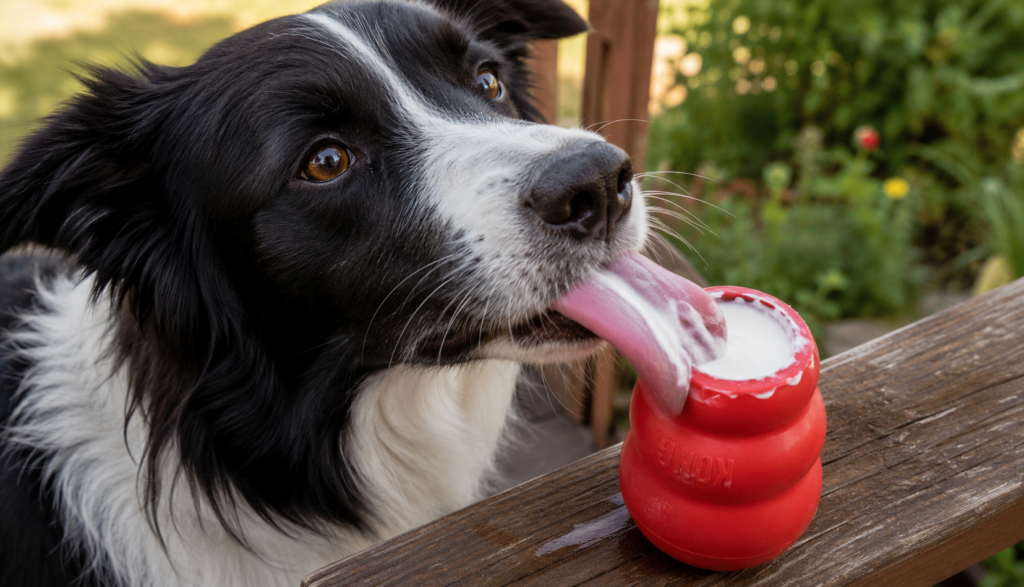
Yogurt sits in a genuinely useful spot in the dog treat conversation because it’s one of the few dairy products that offers something beyond just palatability. The live bacterial cultures in plain yogurt deliver probiotic benefit that’s actually relevant to a dog’s gut health, which is more than most treats can claim. I’ve used plain yogurt as a Kong stuffing, a frozen summer treat, and a medication-hiding vehicle more times than I can count, and it earns its place in the rotation when used correctly. The version most people have in their fridge, though, is rarely the version that works safely for dogs — and that gap between what yogurt could be for a dog and what it usually is on a grocery shelf is what this article is actually about.
Is Yogurt Safe for Dogs?
I’ve seen this firsthand across many dogs and many years: plain, unsweetened yogurt with live cultures causes no obvious problem for most healthy adult dogs in small amounts and is actively beneficial for some. It appears in veterinary dietary recommendations often enough to have genuine credibility rather than just being tolerated.
The safety question with yogurt isn’t about the base product — it’s about which version of yogurt you’re actually dealing with. Plain yogurt and flavored yogurt are nutritionally and safety-wise very different products despite sharing a name and a refrigerator shelf.
The answer is a confident yes for plain, unsweetened, live-culture yogurt. The answer is a firm no for virtually every flavored, sweetened, or sugar-free variety on a standard grocery shelf.
Why Plain and Unsweetened Matters
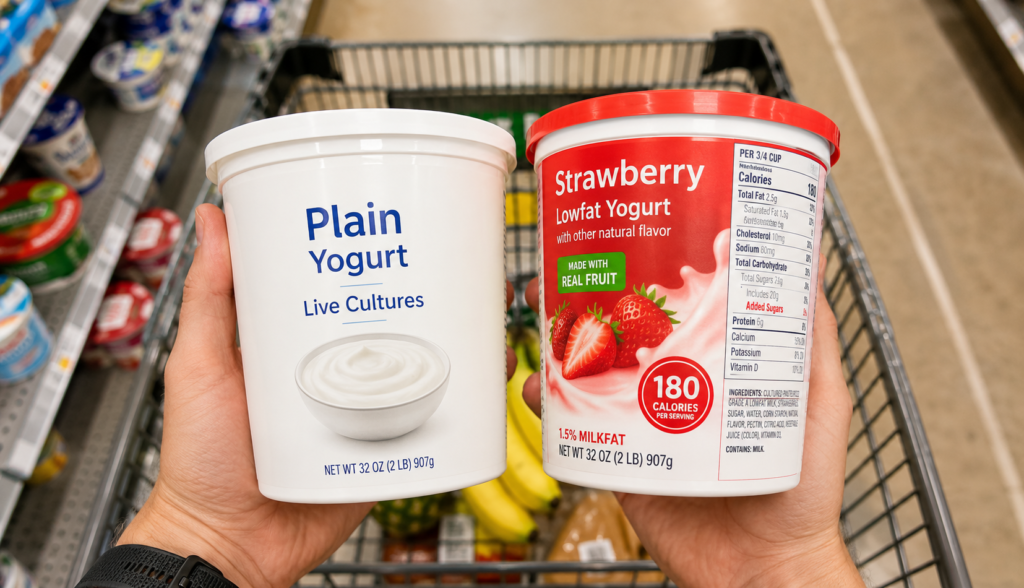
Most dog owners miss how dramatically the ingredient list changes between plain yogurt and any flavored variety. Strawberry yogurt, vanilla yogurt, honey yogurt, and similar products add sugar, fruit concentrates, artificial flavors, and sometimes thickeners that plain yogurt never contains, turning a potentially useful food into a sugar delivery mechanism with no benefit for dogs.
Sugar-free yogurt varieties are the most dangerous category, since these are precisely the products most likely to use xylitol as a sweetener substitute. Xylitol causes rapid insulin release and liver failure in dogs — a yogurt marketed as healthy for humans because it’s sugar-free can be acutely toxic to a dog from even a few spoonfuls.
Reading the ingredient label before offering any yogurt to a dog is non-negotiable rather than optional, and “plain” on the front label isn’t always a reliable signal — checking the ingredients list for xylitol, artificial sweeteners, and added sugars takes ten seconds and removes the guesswork entirely.
The Probiotic Benefit — Does It Actually Work?
The first time I dug into this question properly, the honest answer turned out to be more nuanced than the confident “yogurt gives dogs probiotics” claim that circulates widely. Plain yogurt with live and active cultures does contain beneficial bacteria, and there is genuine scientific basis for the idea that these bacteria support gut health.
The practical question is whether the specific strains in commercially produced yogurt survive the journey through a dog’s digestive system in sufficient numbers to produce a meaningful effect. The evidence here is mixed — some strains survive better than others, and the benefit is likely real but modest rather than dramatic for most healthy dogs.
For dogs recovering from antibiotic treatment, where gut flora has been disrupted, the probiotic case for plain yogurt is somewhat stronger. For healthy dogs with no specific digestive concern, the benefit is more of a bonus than a compelling reason to add yogurt to the diet.
Greek Yogurt vs Regular Yogurt
What surprised me was how often people assume Greek yogurt is automatically better for dogs because it’s positioned as healthier for humans. Plain Greek yogurt is indeed higher in protein and lower in lactose per serving than regular plain yogurt, which are both genuinely useful properties for dogs — the straining process that makes Greek yogurt thicker removes some of the whey and lactose along with the extra liquid.
This makes plain unsweetened Greek yogurt a slightly lower-lactose option than regular plain yogurt, which can matter for dogs with mild dairy sensitivity who can handle some dairy but not the full lactose load of regular milk or standard yogurt.
The same rules apply regardless — plain, unsweetened, live cultures, no added flavors or sweeteners. Greek or regular plain yogurt both work; the Greek version is a marginal improvement for lactose-sensitive dogs rather than a categorical upgrade.
What Most People Don’t Know
Here’s something that genuinely catches most owners off guard: frozen yogurt marketed for humans is not the same as the dog-friendly frozen yogurt treats sold at pet stores, and the two should not be treated interchangeably. Human frozen yogurt often contains added sugar, artificial flavors, and sometimes xylitol, while dog-specific frozen yogurt products are formulated specifically to avoid these ingredients. The popularity of making homemade frozen yogurt dog treats is well-founded, but only when starting from plain, unsweetened, xylitol-free yogurt — a frozen version of a problematic yogurt is still a problematic yogurt, just colder.
How to Use Yogurt Safely
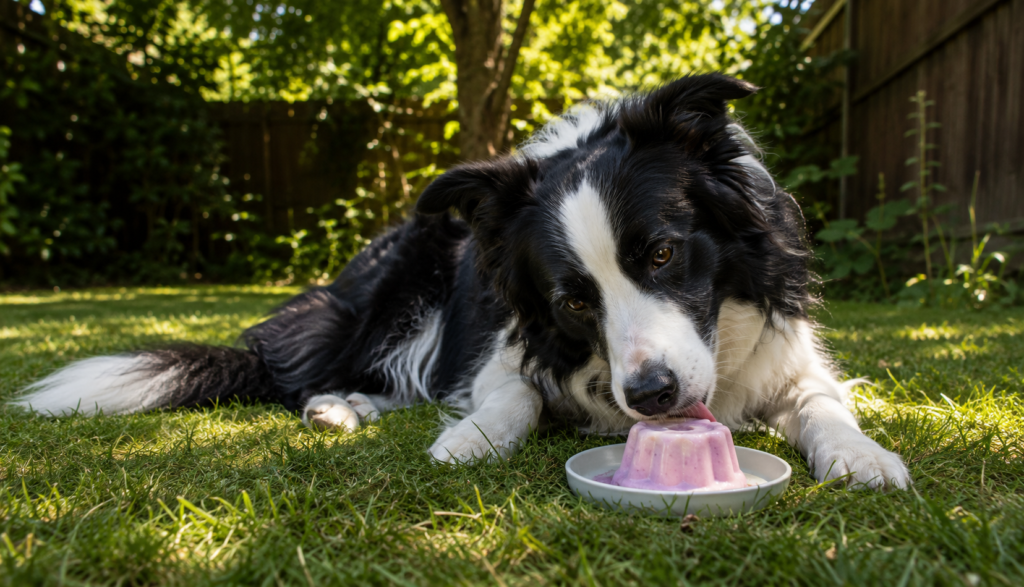
From experience, the smarter call is to use plain unsweetened yogurt in small amounts as a functional food rather than a generous daily treat. A spoonful mixed into food as a meal topper, a thin smear inside a Kong toy, or a small frozen portion on a warm day all represent appropriate uses that keep both fat content and lactose exposure within manageable bounds.
Freezing plain yogurt in small silicone molds makes a genuinely useful summer treat that most dogs enjoy enthusiastically and that keeps portions naturally small by design — a practical format that works better than trying to measure spoonfuls each time.
Starting with a teaspoon-sized amount and watching for any digestive response makes sense the first time any dog tries yogurt, since individual dairy sensitivity still varies even with a lower-lactose product like plain yogurt.
Signs of Trouble to Watch For
Watch for bloating, gas, loose stool, or vomiting in the hours following yogurt consumption, since these indicate dairy sensitivity even with a plain lower-lactose product and suggest switching to a non-dairy probiotic supplement instead if gut health support is the goal.
Any symptoms appearing after flavored or sugar-free yogurt exposure, particularly if xylitol was a listed ingredient, should be treated as an emergency rather than routine digestive upset — contact a vet immediately rather than monitoring at home given how quickly xylitol toxicity can progress.
If symptoms persist or worsen, a vet visit is always the right call, and disclosing the specific yogurt brand and flavor helps the vet assess whether this is straightforward dairy intolerance or a potential xylitol situation requiring urgent treatment.
Frequently Asked Questions
Q. Can dogs eat Greek yogurt?
A. Yes — plain unsweetened Greek yogurt is safe and slightly lower in lactose than regular plain yogurt, making it a good option for dairy-tolerant dogs who benefit from the added protein and probiotic content.
Q. Is flavored yogurt toxic to dogs?
A. Not always toxic, but sugar-free varieties often contain xylitol which is acutely toxic to dogs. Any flavored yogurt with artificial sweeteners should be treated as a potential emergency if consumed.
Q. Can I give my dog frozen yogurt as a treat?
A. Yes, but only when made from plain unsweetened xylitol-free yogurt frozen at home — human frozen yogurt products often contain added sugar and sweeteners that aren’t appropriate for dogs.