

Cottage cheese is the dairy food that actually holds up under scrutiny for dogs, which is a fairly short list. Most dairy products fail the dog safety test on lactose content, fat content, or both — but cottage cheese sits in a noticeably better position on both counts compared to milk, cream cheese, or most hard cheeses. It’s one of the few dairy options I’ve watched vets actively recommend rather than simply tolerate, usually appearing alongside boiled chicken and plain rice as part of a recovery diet for dogs with digestive upset. Understanding why it earns that recommendation, and how to use it correctly, makes this one of the more genuinely useful topics in the dairy section of any dog food guide.
Is Cottage Cheese Safe for Dogs?
I’ve seen this firsthand with dogs recovering from stomach illness, dogs on calorie-restricted diets, and dogs whose owners just happened to share a spoonful: cottage cheese is well tolerated by the majority of healthy adult dogs when served plain and in reasonable amounts.
It’s not toxic, it doesn’t carry the same lactose load as regular milk or ice cream, and the protein content is genuinely useful rather than just being a vehicle for fat and flavor the way some other dairy treats are.
The answer here is a confident yes — more confidently than for most dairy products, and with fewer conditions attached than you’d expect from a food in this category.
Why Cottage Cheese Is Lower Risk Than Most Dairy
Most dog owners miss the reason cottage cheese behaves differently from other dairy, which comes down to how it’s made. The cheesemaking process that produces cottage cheese removes a significant portion of the whey and lactose that make regular milk so problematic for lactose-intolerant dogs, leaving a product with considerably less lactose per serving than cow milk carries.
This doesn’t mean cottage cheese is lactose-free — it still contains some lactose, and dogs with severe dairy sensitivity may still react to it. But the threshold at which a typical dog experiences digestive upset from cottage cheese is meaningfully higher than for regular milk, which is part of why it shows up in bland diet recommendations while milk doesn’t.
The relatively lower fat content of plain low fat cottage cheese compared to cheddar or cream cheese also reduces the pancreatitis risk that makes high-fat dairy so concerning for dogs with fat sensitivity.
Cottage Cheese as a Bland Diet Food
The first time a vet recommended cottage cheese to me for a dog with digestive upset, I assumed it was an unusual suggestion. It turned out to be a fairly standard one. Plain cottage cheese provides gentle, easily digestible protein that a recovering digestive system can process without significant strain, making it a legitimate functional food rather than just a treat.
Combined with plain boiled rice or boiled chicken, a small amount of plain low fat cottage cheese adds protein and palatability to a bland diet that dogs with upset stomachs sometimes resist eating at all, which is a practical benefit beyond just the nutritional composition.
As with any bland diet approach, this works as short-term supportive care rather than a cure, and persistent digestive issues always warrant an actual vet visit rather than continuing the bland diet indefinitely at home.
Low Fat vs Full Fat: Which to Choose
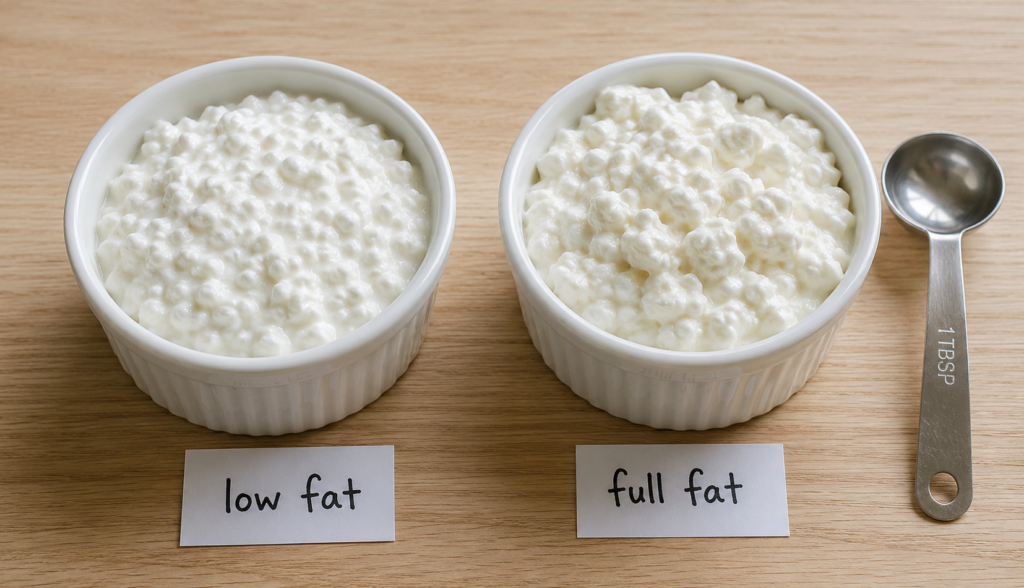
What surprised me was how much the fat content varies between cottage cheese varieties and how rarely that distinction gets made in dog feeding conversations. Full fat cottage cheese carries meaningfully more fat per serving than low fat versions, which matters for dogs with pancreatitis history, weight management concerns, or any sensitivity to high fat meals.
Low fat cottage cheese is the more commonly recommended option specifically because it delivers the protein and digestibility benefits without the same fat content concern, making it the better default for most dogs rather than something reserved for special circumstances.
Full fat varieties aren’t dangerous in small amounts for healthy dogs without fat sensitivity, but the low fat version removes a variable that doesn’t need to be there when the goal is a gentle, easily digestible protein source.
Sodium Content: The Variable Worth Checking
I’ve watched this get overlooked because cottage cheese feels like a simple, natural food without obvious processing concerns. Sodium content in cottage cheese varies significantly between brands, with some varieties carrying considerably more salt than others depending on the manufacturer’s formulation.
For most healthy adult dogs eating cottage cheese occasionally in small amounts, this isn’t a pressing concern. It becomes more relevant for dogs with kidney health issues, heart health conditions, or high blood pressure where sodium intake genuinely needs to be managed, since the variability between brands means a “low sodium” instinct isn’t automatically correct without checking the label.
Low sodium cottage cheese varieties exist and are the better choice for dogs where sodium intake matters, requiring nothing more than a quick label comparison at the point of purchase to identify the right option.
What Most People Don’t Know
Here’s something that rarely gets mentioned clearly: cottage cheese and yogurt fill similar roles in dog nutrition recommendations, but they aren’t interchangeable. Plain unsweetened yogurt is often praised for its probiotic content, while cottage cheese offers higher protein content per serving with less natural sugar. For a dog recovering from digestive upset and needing protein support, cottage cheese typically edges out yogurt on nutritional relevance. For a dog whose owner is specifically targeting probiotic benefit, plain unsweetened yogurt with live cultures is the better tool. Knowing which outcome you’re after tells you which dairy product actually serves the purpose better rather than treating them as equivalent options.
How Much Cottage Cheese Is Safe
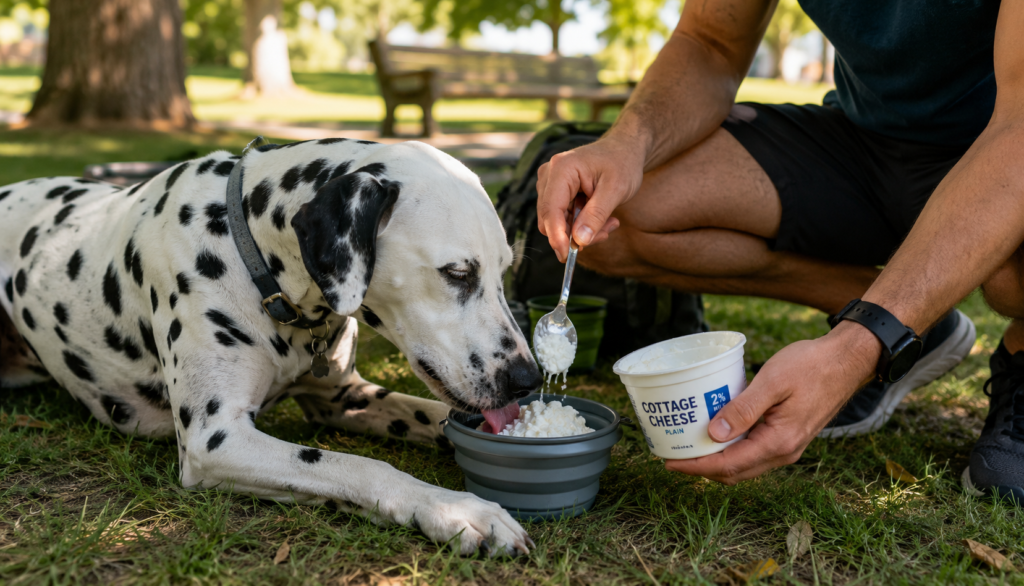
From experience, the smarter call is to treat cottage cheese as a supplement or topper rather than a primary food — a few spoonfuls mixed into regular food or offered alongside a bland diet, rather than a standalone bowl as a meal replacement.
Smaller dogs do best with a teaspoon to a tablespoon at a time, while larger dogs can handle a few tablespoons without the same proportional fat and lactose concern. Starting small and watching for any digestive response makes sense the first time any dog tries it, since individual dairy sensitivity still varies even with a lower-lactose product.
Daily use is reasonable for dogs that tolerate it well and where a vet has suggested it, while occasional use as a treat or meal enhancer works well for dogs with no specific digestive need driving the choice.
Signs of Trouble to Watch For
Watch for bloating, gas, loose stool, or vomiting in the hours following cottage cheese consumption, since these indicate dairy sensitivity even with a lower-lactose product and suggest switching to a non-dairy protein source instead.
Any dog showing worsening digestive symptoms while on a cottage cheese bland diet, rather than improvement, should be seen by a vet rather than having the bland diet continued longer, since persistent symptoms suggest something beyond simple dietary upset needing attention.
If symptoms persist or worsen, a vet visit is always the right call, though for the majority of dogs plain low fat cottage cheese in appropriate amounts causes no issues and earns its place as one of the more genuinely dog-friendly dairy options available.
Frequently Asked Questions
Q. Can dogs eat cottage cheese every day?
A. Small amounts daily are generally fine for dogs that tolerate dairy well, particularly low fat varieties, though it works better as a supplement or topper than a primary food source.
Q. Is cottage cheese good for dogs with upset stomachs?
A. Yes — plain low fat cottage cheese is one of the few dairy foods vets actively recommend as part of a bland diet for digestive recovery, thanks to its lower lactose content and easily digestible protein.
Q. Which is better for dogs — cottage cheese or yogurt?
A. Cottage cheese offers more protein per serving and suits digestive recovery better, while plain unsweetened yogurt with live cultures provides more probiotic benefit — which is better depends on what outcome you’re aiming for.