

Every dog scratches now and then, so a quick scratch behind the ear or along the ribs is nothing to lose sleep over. But when you notice your dog scratching constantly, waking you up at night with the thumping of a back leg, or chewing at one spot until the fur thins out, the itch has stopped being normal. Dog itching is a symptom, not a diagnosis, and the real job is figuring out what is driving it. This guide walks through the most common reasons a dog keeps scratching, how to tell normal from worrying, what you can safely do at home, and when it is time to call the vet.
Is Scratching Normal, or Is It Too Much?
A healthy dog scratches a few times a day, usually in short bursts, and then goes back to whatever it was doing. Normal scratching stops easily when something distracts your dog, and it does not leave marks on the skin. Think of a quick scratch after waking up, or after a roll in the grass.
Dog excessive scratching looks different. The scratching goes on for long stretches, interrupts sleep or play, and keeps coming back even after you redirect your dog. You may also see your dog scratching and biting at the skin, licking the paws, rubbing the face on the carpet, or scooting along the floor. A useful rule of thumb is that if the scratching has lasted more than a few days, or if you can see changes in the skin or coat, something underneath it needs attention.
Signs the Itch Has Become a Problem
Look for red skin, a rash, scabs, flaky patches, hair loss, dark or thickened skin, or a musty smell coming from the coat. A dog scratching and licking paws at the same time is a common pairing, and constant licking of the paws, belly, or armpits is just as important as scratching, because many itchy dogs lick instead of scratch. Any of these signs together with relentless scratching means the skin is struggling.
The Most Common Reasons Dogs Scratch
Most cases of dog itchy skin come down to a short list of causes. Knowing what each one looks like makes it much easier to work out what is happening with your own dog.
Fleas and Flea Allergy
Fleas are the classic answer, and they are still the most common cause of a sudden itch. A single dog can be covered in flea bites without you ever seeing a flea, because fleas move fast and hide in the coat near the base of the tail and the hindquarters. Some dogs are far more sensitive than others. In flea allergy dermatitis, the saliva from just a few bites triggers an intense reaction, so a dog with only two or three fleas can scratch itself raw. If your dog chews the lower back and the base of the tail, fleas should be at the top of the list. Good flea prevention all year round is the simplest way to rule this cause out.
Environmental and Seasonal Allergies
Dog allergies are the second big driver. Dogs react to pollen, mold, dust mites, and grasses in the same way people with hay fever do, except that dogs show it through the skin instead of the nose. Environmental allergies often cause itchy paws, a licked belly, rubbed eyes and face, and recurring red skin in the armpits and groin. Dogs with seasonal allergies may flare in spring or fall and settle in winter, while others itch all year because dust mites and mold never go away indoors.
Food Allergy
A true food allergy is less common than people think, but it does happen. It usually shows up as year-round itching that does not change with the seasons, often with ear trouble or soft stools. The usual culprits are proteins such as beef, chicken, dairy, and wheat that the dog has eaten for a long time. The only reliable way to confirm it is an elimination diet supervised by your vet, not a quick switch to a grain-free bag from the pet store.
Mites and Mange
Several types of mites can make a dog miserable. Sarcoptic mange, also called scabies, causes sudden and severe itching, crusty edges on the ears and elbows, and rapid hair loss. It is highly contagious to other dogs and can cause a temporary itchy rash in people. Demodex mites, which live on most dogs without trouble, can overgrow in puppies and in dogs with weak immune systems, causing patchy hair loss that is often less itchy until infection sets in. Mites cannot be diagnosed by eye, so a skin scraping at the vet is the way to confirm them.
Dry Skin and Dandruff
Plain dry skin is a quieter cause. Cold weather, indoor heating, over-bathing, harsh shampoo, or a diet low in healthy fats can leave the skin flaky and tight. You will usually see dandruff in the coat and a dull, brittle look to the fur. A poor skin barrier also lets allergens and microbes in more easily, which is why dry skin can slowly turn into a bigger problem if it is ignored.
Skin Infections, Yeast, and Hot Spots
A dog skin infection is often the result of scratching rather than the original cause. When a dog scratches, the skin breaks, and bacteria or yeast move in. A yeast infection brings a greasy coat, a strong musty smell, and dark thickened skin, especially in skin folds and between the toes. Hot spots are moist, red, painful patches that appear quickly, sometimes within hours, and they often ooze. This is the secondary infection trap, and it is one reason a simple itch can become a vet visit if it goes on too long.
Ringworm, Ticks, and Contact Reactions
Ringworm is not a worm at all but a fungus, and it causes circular patches of broken hair with scaly skin. Ticks can cause scratching at one specific spot where the bite is irritating the skin. Contact dermatitis happens when the skin reacts to something it touched, such as a new shampoo, a floor cleaner, lawn treatment, or a plant. It tends to show up on the belly, chin, and paws, which are the areas that touch surfaces.
Boredom, Anxiety, and Habit
Not every itch is physical. Dogs with anxiety and boredom can scratch, lick, and chew themselves as a way of coping, particularly when they are left alone for long periods. This is a diagnosis of exclusion, which means you should rule out skin disease first, because a dog that is truly itchy will not improve with more toys or exercise.
Quick Comparison: Causes at a Glance
| Likely Cause | Typical Signs | Common Areas | What to Do |
|---|---|---|---|
| Fleas | Sudden itching, flea dirt, small red bites | Lower back, tail base, hindquarters | Start vet-approved flea control, wash bedding |
| Environmental allergies | Itchy paws, red skin, recurring flares | Paws, belly, face, armpits | Vet visit to plan long-term control |
| Food allergy | Year-round itch, ear trouble, soft stools | Face, paws, rear end | Vet-guided elimination diet |
| Sarcoptic mange | Severe itch, crusts, fast hair loss | Ear edges, elbows, belly | Vet skin scraping and treatment |
| Dry skin | Flakes, dandruff, dull coat | Back and flanks | Gentler bathing, vet advice on diet |
| Yeast or bacterial infection | Odor, greasy coat, dark thick skin | Skin folds, paws, armpits | Vet exam and treatment |
| Hot spots | Moist, red, painful oozing patch | Hips, neck, cheeks | Prompt vet care |
| Contact reaction | Redness after exposure to a new product | Belly, chin, paws | Rinse off, remove the trigger |
| Anxiety or boredom | Scratching or licking mostly when alone | Paws, flanks | Rule out skin disease first |
What Most People Don’t Know
The biggest surprise for most owners is that dog scratching but no fleas is extremely common, and it almost always points to allergies. Because you cannot see a flea, it is easy to assume fleas are not the problem. Yet a dog with flea allergy can be reacting to a handful of bites that have already come and gone. On the other hand, a dog with allergies may have no fleas at all, and the itch still persists.
The second thing few owners realize is the itch-scratch cycle. Scratching damages the skin, damaged skin gets inflamed and infected, and infection makes the itch worse, so the dog scratches even more. This is why a mild itch can turn into a serious skin problem within a week or two, and why treating only the infection without finding the underlying cause means the problem keeps coming back.
Finally, itching is often worse at night, which is why a dog scratching at night is so common. There are fewer distractions, the house is quiet, and a dog’s body temperature and cortisol patterns change in the evening. A dog that scratches mostly at night is not necessarily doing anything different from a daytime scratcher, you are just hearing it.
What You Can Safely Do at Home

If the scratching is mild, your dog is otherwise acting normal, and the skin looks healthy, there are some safe first steps. These are for itch relief in mild cases only, and none of them replaces a vet exam when the problem is persistent.
Check the Coat and Skin
Part the fur and look at the skin on the belly, armpits, groin, paws, and base of the tail. Use a fine flea comb and tap the debris onto a damp white paper towel. If small black specks turn reddish-brown when wet, that is flea dirt, and your dog has fleas even if you cannot see any.
Use a Gentle Bath
A lukewarm oatmeal bath with a dog-formulated shampoo can soothe irritated skin and wash pollen off the coat. Do not bathe too often, because frequent washing strips natural oils and worsens dry skin. Rinse thoroughly and dry the coat well, especially in skin folds. Never use human shampoo, which has the wrong pH for dog skin.
Support Coat and Skin Health
A complete diet, regular brushing, and fresh water all help coat and skin health. Your vet may also suggest omega-3 fatty acids, such as fish oil made for dogs, because they help calm skin inflammation over time. Ask about the right product and amount rather than guessing.
What to Avoid
Skip the internet dog scratching home remedies that involve apple cider vinegar, essential oils, tea tree oil, or rubbing alcohol. Several of these sting broken skin, and tea tree oil can be toxic to dogs. Avoid giving human antihistamine products or other human medicines unless your vet has told you the exact product and dose for your dog, because some contain ingredients that are unsafe for dogs. An e-collar or soft recovery cone can also stop damage while you wait for the appointment.
When to See a Vet
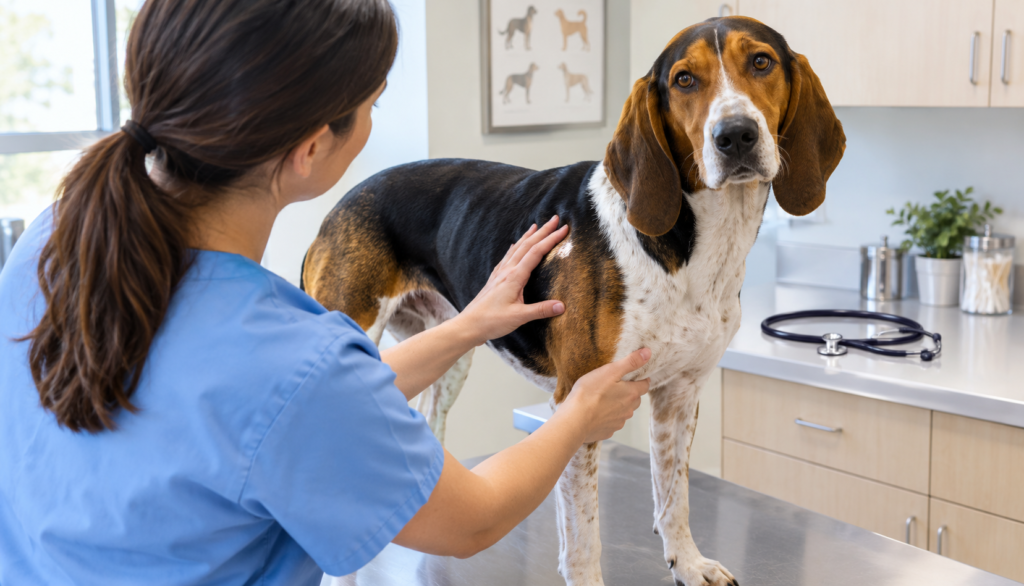
Knowing when to see a vet can save your dog weeks of discomfort. Book an appointment if the scratching lasts more than a few days, keeps coming back, or is getting worse. Go sooner if you see any of the following:
- Open sores, bleeding, or a dog scratching until it bleeds
- A moist, oozing, painful hot spot
- Patchy or rapid hair loss
- A strong odor, greasy coat, or dark thickened skin
- Swelling of the face or hives, which can signal an allergic reaction and needs urgent care
- Itching together with lethargy, loss of appetite, or fever
- Other pets or people in the household developing an itchy rash
Your vet will usually start with a full skin exam, then may run skin scrapings, tape cytology to look for yeast and bacteria, or a fungal test. If allergies are suspected, they may recommend a food trial or allergy testing, and in modern practice there are several effective prescription options that control itching far better than home care. A proper dog itchy skin treatment plan is built around the cause, which is why guessing at home often wastes time.
How to Prevent Constant Scratching
Prevention is about removing triggers and keeping the skin strong. Keep your dog on year-round, vet-approved flea and tick control, because gaps in coverage are when problems start. Wash bedding weekly in hot water, vacuum often, and wipe the paws and belly after walks during high pollen seasons. Brush regularly so you notice lumps, flakes, or hot spots early. Feed a balanced diet, and avoid changing foods constantly, which makes it harder to spot a true food reaction.
Finally, pay attention to patterns. Write down when the scratching happens, which areas are involved, and whether anything changed in food, shampoo, or environment. That short log is exactly what your vet needs, and it often points straight to the underlying cause.
Frequently Asked Questions
Q. Why is my dog scratching so much but has no fleas?
A. Allergies are the most common reason. Pollen, dust mites, mold, and food proteins can all trigger intense itching without a single flea. Dry skin, mites, and skin infections are other possibilities, so a vet exam is the best way to find the cause.
Q. Is it normal for a dog to scratch every day?
A. A few short scratches a day are normal. Scratching that lasts for long periods, wakes your dog at night, or leaves red or broken skin is not normal and should be checked.
Q. What can I give my dog to stop itching?
A. Start with a vet-approved flea preventive and a gentle oatmeal bath for mild cases. Do not give human medicines, including antihistamines, unless your vet confirms the exact product and dose, because some are unsafe for dogs.
Q. When is dog scratching an emergency?
A. See a vet right away for facial swelling, hives, difficulty breathing, severe bleeding, large oozing wounds, or scratching combined with lethargy or refusing food. Those signs can point to a serious reaction or infection.