
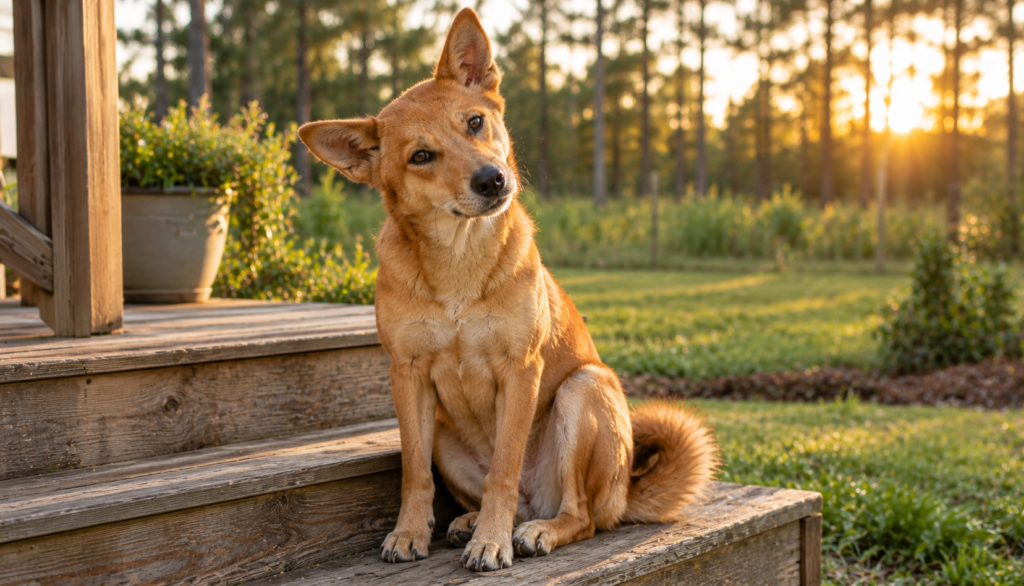
If your dog keeps scratching ear after ear, you are probably wondering whether it is a passing itch or a sign of something that needs treatment. Dog ear scratching is one of the most common reasons owners call the vet, and the cause can range from a little trapped water to a grass seed lodged deep in the canal. The tricky part is that very different problems look almost identical from the outside: a dog pawing and digging at the side of the head.
This guide walks through what is normal, the most common reasons behind a dog scratching ear constantly, what the pattern of scratching can tell you, which warning signs mean you should act today, and what you can safely do at home while you decide on next steps. It is meant to help you judge how urgent the situation is, not to replace an exam, because only a vet can look inside the ear and confirm what is going on.
Is Dog Ear Scratching Normal?
Yes, up to a point. Every dog scratches an ear now and then, just as people rub an itchy nose. A quick scratch after waking up, after a nap, or after a run through long grass is usually nothing. Ear scratching in dogs becomes a concern when it turns repetitive, intense, or one-sided, or when it is paired with other changes in the ear.
Scratching is likely normal when it is brief, happens a few times a day at most, and stops on its own when the dog gets distracted. The inside of the ear looks pale pink and clean, there is no strong odor, and your dog is eating, playing, and sleeping as usual. If you can run a finger gently along the outside of the ear without any flinching, that is another good sign.
It stops being normal when your dog cannot settle, scratches in long bursts, wakes up at night to scratch, or starts leaving marks. A dog scratching ear until it bleeds is already in trouble, even if the ear looked fine yesterday, because the scratching itself damages the skin and makes the itch worse.
Why Your Dog Keeps Scratching Ear: Common Causes
The question why is my dog scratching his ear has no single answer. Most cases fall into a handful of categories, and several of them can happen together. Here are the usual suspects, roughly from most to least common.
Allergies
Allergies are one of the biggest drivers of dog ear problems. A food allergy or a reaction to environmental allergies such as pollen, dust mites, and mold can inflame the skin lining the ear canal. For many dogs the ears are the first place allergies show up, and the scratching often arrives alongside itchy paws, a licked belly, or a rubbed face. Dogs with seasonal allergies may scratch more in spring or fall and calm down in winter. Because allergic inflammation damages the skin barrier, yeast and bacteria move in easily, which is why dog ear allergies and ear infections so often go together.
Ear Infection
A dog ear infection is the other classic cause. Yeast and bacteria live on healthy skin all the time, but when the ear becomes warm, damp, or inflamed they multiply. A yeast infection typically brings a musty or sweet odor and brown or black waxy buildup, while bacterial infections can produce yellow or greenish discharge and more pain. The infection is usually a result of something else, so treating it without finding the underlying cause often leads to recurring ear problems.
Ear Mites
Ear mites are tiny parasites that live in the canal and feed on wax and skin debris. They cause intense itching, and the classic sign is crumbly dark discharge that looks like coffee grounds. Dog ear mites are more common in puppies and in dogs that live with cats or other pets, because they spread easily between animals. Both ears are often affected, and the dog may shake the head hard and scratch until the ear flap is red and sore.
A Grass Seed or Other Foreign Object
A grass seed, plant awn, or other foreign object can slip into the canal during a walk and cause sudden, frantic scratching and head shaking. This usually affects one ear only and often starts abruptly. Some dogs also develop a head tilt or cry out when the ear is touched. A seed deep in the canal can irritate the lining, cause infection, and in the worst case damage the eardrum, so a sudden one-sided onset after time outdoors deserves prompt attention.
Trapped Moisture
Water that stays in the ear after swimming and bathing creates a warm, damp environment where microbes thrive. Trapped moisture is a particular problem for dogs with long, heavy ears that block airflow into the canal. If the scratching begins a day or two after a swim or a bath, this is a likely trigger, although it can easily turn into an infection if the ear does not dry out.
Fleas, Ticks, and Skin Irritation
Sometimes the itch is not in the canal at all. Fleas and ticks love the thin skin around the ears and the base of the ear flap, and a single tick can make a dog scratch relentlessly in one spot. Contact irritation from shampoo residue, sprays, or plants can also inflame the skin on the outside of the ear. Looking closely at the ear flap and the skin around it is worth doing before assuming the problem is deep inside.
Excess Wax and Hair
Some dogs simply produce a lot of dog ear wax, and breeds such as poodles and schnauzers grow excess hair inside the canal that traps debris and wax. This buildup is itchy, and it also prevents air from circulating, which sets the stage for infection.
Growths, Polyps, and Pain
In older dogs, a persistent one-sided problem can sometimes be caused by ear polyps or other growths inside the canal. These are less common but worth knowing about when a dog has chronic scratching in one ear that never fully resolves with treatment. Real dog ear pain may also show up as scratching, rubbing, or reluctance to let anyone touch the head.
Scratching One Ear vs Both Ears
The pattern can give you a useful clue, although it is never a diagnosis. A dog scratching one ear and ignoring the other often points toward something local: a grass seed, a tick, a polyp, or an infection that has taken hold on one side. The dog may also tilt the head toward the affected side.
A dog scratching both ears more often points toward a body-wide cause such as allergies, or toward something that spreads between ears like ear mites. That said, a one-sided problem can become two-sided over time, and an allergic dog can have an infection in just one ear, so use the pattern as a hint rather than a rule.
Quick Comparison: Causes at a Glance
| Likely Cause | Typical Signs | Usual Pattern | What to Do |
|---|---|---|---|
| Allergies | Itchy paws, belly, face; recurring red ears | Both ears, seasonal or year-round | Vet visit to find the trigger |
| Yeast or bacterial infection | Odor, discharge, redness, head shaking | One or both ears | Vet exam and ear cytology |
| Ear mites | Coffee-ground dark discharge, intense itching | Usually both ears | Vet diagnosis and treatment of all pets |
| Grass seed or foreign object | Sudden frantic scratching, head tilt | One ear | Same-day vet visit |
| Trapped moisture | Scratching after swimming or bathing | One or both ears | Dry the ear, watch closely, see vet if it persists |
| Fleas or ticks | Scratching at ear flap, visible parasite | Often one spot | Remove tick, start flea control |
| Polyps or growths | Chronic one-sided problem in older dogs | One ear | Vet exam |
Other Signs to Check Alongside the Scratching
Scratching rarely tells the whole story, and itchy ears can have many different causes. Look at the ear itself and at how your dog is behaving, because the combination of signs is far more useful than any one of them.
Start with the smell. A healthy ear has little to no odor, so a noticeable dog ear smell that is musty, sweet, or sour is a strong hint of infection. Next, check for dog ear discharge. Brown, black, yellow, green, or bloody material is not normal. Look for a red ear, a swollen ear flap, or redness deep inside the ear canal, and check for crusts and scabs at the edge of the ear where your dog has been scratching.
Then watch the behavior. Dog head shaking, a dog scratching ear and shaking head at the same time, a persistent head tilt, rubbing the side of the face on the carpet, or a dog pawing at ear while whining are all signs that the discomfort is more than a casual itch. Breeds with floppy ears, such as cocker spaniels, basset hounds, and retrievers, are more prone to trouble because the ear flap limits airflow and holds in warmth and moisture.
What Most People Don’t Know
Most owners assume that a dog scratching an ear must have an ear infection, and that the fix is ear drops. The reality is more complicated. The scratching is a symptom, not a diagnosis, and the same behavior can come from allergies, parasites, a foreign body, or simple moisture. Treating the wrong problem wastes time and can make things worse. Medicated drops are not safe in every ear, particularly if the eardrum is damaged, and they will not help a grass seed at all.
The second thing many people miss is that the infection is often not the real problem. In many dogs, especially those with recurring trouble, an allergy is quietly driving everything. Allergic inflammation creates the warm, damp, irritated environment that yeast and bacteria love, so the infection returns every time the drops run out. Fixing the underlying cause, whether that is a food trial, allergy management, or better ear drying, is what finally breaks the cycle.
Third, the scratching can injure the ear faster than the original problem would have. Hard scratching and head shaking can burst small blood vessels in the ear flap and cause an ear hematoma, which is why stopping the scratching matters nearly as much as finding the cause. And finally, a one-sided problem that shows up suddenly after a walk is worth treating as a possible foreign body until proven otherwise, since waiting can let a seed travel deeper.
When Scratching Becomes Dangerous
The most common complication of constant scratching is an ear hematoma. This is a pocket of blood that forms between the skin and cartilage of the ear flap, and it makes the flap puff up like a soft pillow. It is painful, it does not go away on its own, and it often needs veterinary treatment. Dogs that shake their heads violently and scratch hard are at the highest risk.
Chronic inflammation can also thicken the canal and, over months, narrow it so much that treatment becomes difficult. A dog with untreated recurring ear problems may eventually need a more serious procedure. Deep infections can spread to the middle or inner ear, leading to balance problems, circling, and hearing changes. A secondary infection can also develop on skin that has been scratched raw, adding pain on top of the original itch.
Safe Home Care While You Decide on a Vet Visit
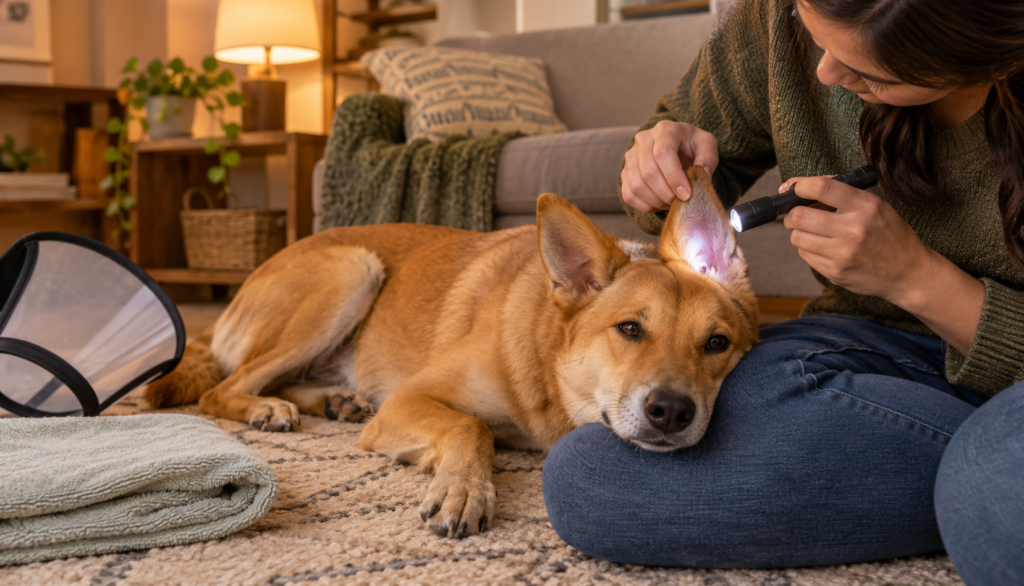
You cannot cure the underlying problem at home, but you can protect the ear and gather useful information while you arrange an appointment. Keep it gentle and simple.
- Look at both ears in good light and compare them. Note color, smell, and any discharge, and take clear photos for your vet.
- Check the ear flap and the skin around the ear for ticks, fleas, scabs, and small wounds.
- Gently wipe the visible outer part of the ear with a soft, dry cloth or gauze if it is dirty.
- Keep the ears dry and skip swimming and baths until the ear has been checked.
- Use a soft cone to stop your dog from scratching if the ear is getting sore or marked.
- Do not push cotton swabs into the canal, because they pack debris deeper and can harm the eardrum.
- Do not pour in vinegar, hydrogen peroxide, or oils, since these can irritate inflamed skin and are risky if the eardrum is not intact.
If you already use a vet-approved dog ear cleaner for routine care, ask your vet whether to keep using it. Often they want to see the ear before it is cleaned, because cleaning can hide the very signs they are looking for.
When to See a Vet
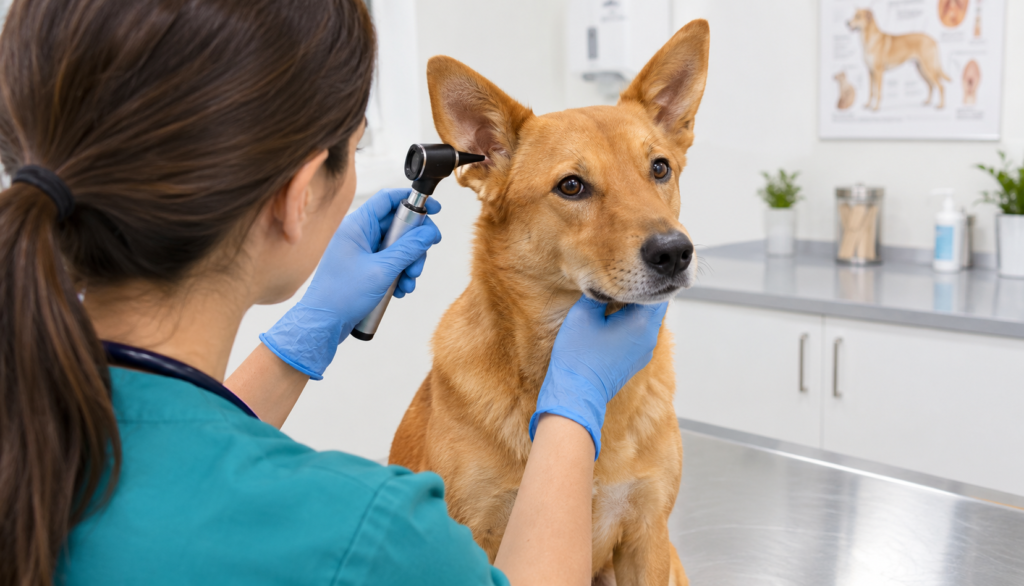
The safest rule is to book a visit if the scratching lasts more than a day or two, keeps coming back, or comes with any change in the ear such as odor, discharge, or redness. Early treatment is usually simpler, cheaper, and far more comfortable for your dog.
Go the same day, or to an emergency clinic, if you notice any of these:
- A sudden, frantic onset of scratching and head shaking, especially in one ear after time outdoors.
- A swollen, hot, or balloon-like ear flap.
- Loss of balance, circling, or a new head tilt.
- Bloody or pus-like discharge.
- Severe pain, or a dog who will not let you near the head.
- Sudden hearing loss or unusual eye movements.
Puppies, senior dogs, and dogs with other health conditions should be seen sooner rather than later.
At the visit, your vet will usually examine the canal with an otoscope, which lets them check for a foreign object and see whether the eardrum is intact. They often take a sample of the discharge for ear cytology, a quick microscope test that shows whether yeast, bacteria, or mites are present and guides the choice of treatment. If allergies are suspected, they may suggest an elimination diet or other allergy management.
How to Prevent Ear Scratching Problems
Prevention is mostly about keeping ears clean, dry, and monitored. A short weekly routine goes a long way.
- Check your dog’s ears weekly for redness, odor, and discharge so you know what normal looks like.
- Dry the ears thoroughly after swimming and bathing.
- Clean only when needed with a vet-approved product, since over-cleaning irritates the skin.
- Ask your groomer or vet whether hair in the canal needs trimming.
- Keep up with year-round flea and tick prevention.
- Check ears and coat after walks through tall grass to catch a grass seed early.
- Work with your vet on allergies, since controlling them reduces repeat flare-ups.
Knowing your own dog’s normal makes everything else easier. A dog that rarely scratches and suddenly will not stop is giving you information, and acting early on that information is the best way to keep a small ear problem small.
Frequently Asked Questions
Q. Why does my dog keep scratching one ear?
A. Scratching only one ear often points to a local problem such as a grass seed, a tick, a polyp, or an infection on that side. Allergies and mites more often affect both ears, but patterns are not reliable. If the scratching is sudden or intense, have the ear checked soon.
Q. Is it normal for a dog to scratch their ear a lot?
A. Occasional scratching is normal, but frequent or intense scratching is not. If your dog scratches for long stretches, shakes the head, or the ear looks red or smells bad, something is bothering the ear and it needs attention.
Q. Can I put anything in my dog’s ear to stop the scratching?
A. It is best not to. Vinegar, peroxide, and oils can irritate the ear and are unsafe if the eardrum is damaged, and drops will not help a foreign object. Gently clean the outer flap only and let a vet decide what goes inside the ear.
Q. When is dog ear scratching an emergency?
A. See a vet the same day for sudden frantic scratching after being outdoors, a swollen or balloon-like ear flap, loss of balance, a new head tilt, bloody discharge, or severe pain. These can signal a foreign object, a hematoma, or a deeper infection.