

Few things are more frustrating than watching your dog scratch at one ear for the third time in an hour while you try to work out whether it is a passing itch or the start of something that needs treatment. Dog ear infection symptoms can look small at first, and many owners miss them until the problem has moved deeper into the ear. This guide walks through exactly what to look for, what each sign usually means, which signs are normal, and which ones mean you should book a vet visit today.
Ear problems are among the most common reasons dogs end up at the vet. The good news is that an infection caught early is usually simple to treat. The bad news is that dogs hide discomfort well, so the earliest signs of ear infection in dogs are often subtle changes in behavior rather than anything dramatic you can see in the ear itself.
What Is a Dog Ear Infection?
An ear infection in dogs is inflammation of the ear canal, usually with yeast, bacteria, or both overgrowing inside it. The medical term for an infection of the outer ear is otitis externa, and it is by far the most common type. When the infection goes deeper it can reach the middle ear and then the inner ear, which is where the more serious symptoms start.
The structure of a dog’s ear explains why infections are so common. Unlike a human ear canal, which runs fairly straight, a dog’s ear canal has an L-shaped bend. It drops down vertically and then turns horizontally toward the eardrum. That shape traps wax and debris, along with trapped moisture, at the bottom of the bend, which creates a warm, damp environment where yeast and bacteria thrive. A healthy ear keeps these organisms in check. An unhealthy one lets them multiply.
It helps to understand that the infection itself is rarely the root problem. Yeast and bacteria live on healthy skin all the time. They only cause trouble when something changes the environment inside the ear, such as allergies, trapped water, or a blockage. That underlying cause is why many dogs get repeat infections even after treatment works.
Dog Ear Infection Symptoms: The Full Signs List
Most dogs show a combination of the signs below rather than just one. You might notice a few at first and more as the infection progresses. The signs fall into two groups: what your dog does, and what you can see or smell when you look at the ear.
Behavior Changes
- Dog scratching ears repeatedly, often with a hind paw, and sometimes hard enough to cause scabs or hair loss around the ear.
- Dog shaking head frequently, especially after lying down or waking up.
- Rubbing ears and the side of the face along the carpet, couch, or your leg.
- A head tilt toward the affected side, which can signal that the infection has gone beyond the outer ear.
- Crying or flinching when you touch the ear, a clear ear pain response.
- Reluctance to have the head handled, or snapping when you reach toward the ear.
- Changes in appetite or energy when the infection is painful or deep.
Physical Signs You Can See
- A red ear canal and redness on the inside of the ear flap.
- A swollen ear flap that looks thicker than the other side or feels warm to the touch.
- Ear discharge that may be dark, waxy, yellow, green, or bloody.
- Crusts, scabs, or flaky skin at the opening of the ear.
- Hair that looks wet, matted, or greasy around the ear.
- A narrowed ear canal where the swelling has partly closed the opening.
The Dog Ear Infection Smell
Smell is one of the most reliable early clues. A healthy ear has little to no odor. A dog ear infection smell is typically unpleasant and gets stronger as the infection grows. A musty smell often points toward yeast, and many owners describe it as similar to corn chips or old bread. A sharper, fouler, or sour odor tends to go along with a bacterial infection. If you can smell your dog’s ears from a few inches away, it is time to look closer.
What the Ear Discharge Tells You
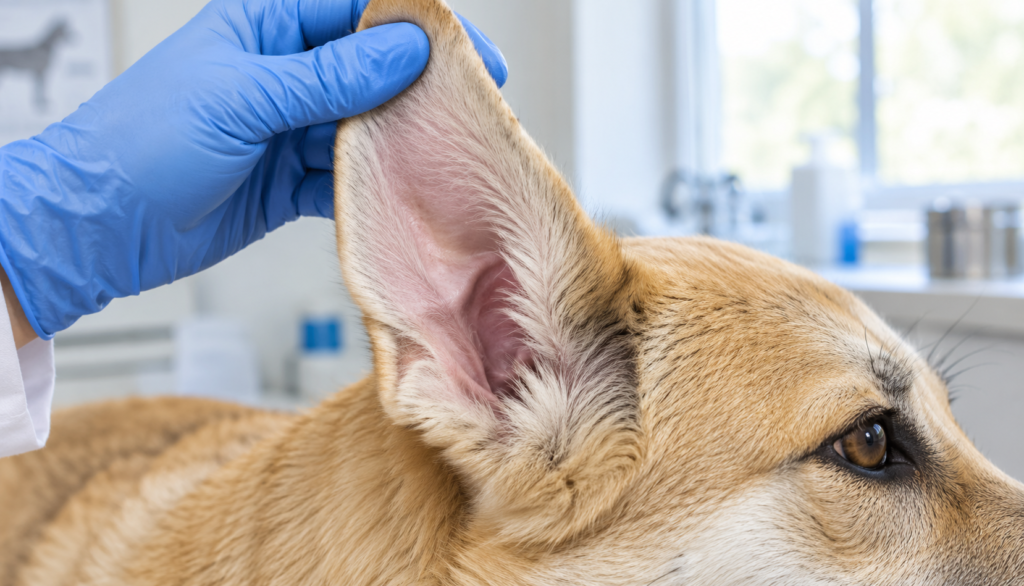
The color and texture of what comes out of the ear gives useful hints about the likely cause. These are general patterns, not a diagnosis, because only a vet can confirm what is growing in the ear. Still, knowing the patterns helps you describe the problem accurately on the phone and decide how quickly to act.
| What You See | Common Meaning | How Urgent |
|---|---|---|
| Light brown wax, little smell | Normal ear wax | Usually fine |
| Dark brown or black discharge, musty smell | Often a yeast infection | See a vet within days |
| Dry, crumbly black material like coffee grounds | Often ear mites | See a vet within days |
| Yellow or green discharge, strong odor | Often a bacterial infection | See a vet soon |
| Bloody or pus-filled discharge | Deeper or more severe infection | Same-day vet visit |
| Swollen, hot ear flap | Possible ear hematoma or severe inflammation | Same-day vet visit |
Brown wax is the entry that confuses people most. A small amount of light brown wax is part of normal ear maintenance. The warning sign is wax that is dark, heavy, wet, or paired with odor, redness, or scratching.
When Ear Symptoms Are Normal
Not every shake of the head means infection. Dogs shake their heads after a bath, after swimming, or when a bit of water or dust gets in the ear. An occasional scratch with no redness, no smell, and no discharge is usually nothing to worry about.
Here is what normal ear behavior generally looks like:
- Normal ear wax that is pale yellow to light brown, in small amounts, with no odor.
- Pink, clean skin inside the ear with no swelling.
- Brief scratching or shaking that stops quickly and does not repeat all day.
- A dog who lets you touch and lift the ear flap without flinching.
A useful rule of thumb is to watch for patterns. One shake after a swim is normal. Shaking that continues for hours, returns every day, or comes with any of the physical signs above deserves attention.
When to Worry: Warning Signs
Some symptoms mean the infection is more than a mild outer ear problem. If you see any of the following, do not wait to see whether it improves on its own.
- Loss of balance, stumbling, or walking in circles, which are vestibular signs and can point to inner ear involvement.
- A persistent head tilt that does not go away.
- Rapid, side-to-side eye movement.
- Sudden hearing loss, such as not responding to sounds your dog normally reacts to.
- A swollen ear flap that feels like a water balloon, which may be an ear hematoma, a pocket of blood that forms from violent head shaking.
- Bloody or pus-filled ear discharge.
- Obvious ear pain, such as yelping, hiding, or refusing food.
- Symptoms in both ears along with skin problems elsewhere on the body.
These signs suggest the infection may be reaching the middle ear or inner ear, or that the eardrum may be damaged. That matters because many treatments are not safe when the eardrum is not intact, which is one more reason to let a vet look before you put anything into the ear.
Yeast, Bacteria, or Ear Mites: Telling the Symptoms Apart
Three culprits cause most ear infections, and their symptoms overlap. Knowing the usual differences helps you understand what your vet may be looking for.
Yeast Infection
A yeast infection usually produces a dark brown or black waxy discharge and a distinct musty smell. The ear is often intensely itchy, and the skin may look red or thickened. Yeast thrives in warm, moist ears, so it is common in dogs with floppy ears and in dogs that swim often.
Bacterial Infection
A bacterial infection tends to produce yellow discharge, green discharge, or sometimes bloody discharge with a stronger, more offensive smell. Bacterial infections are often more painful. They can follow a yeast problem, because the inflamed, damaged skin gives bacteria a way in.
Ear Mites
Ear mites are tiny parasites that are more common in puppies and in dogs that live around other animals, especially cats. They typically cause intense itching and dry, dark debris that looks like coffee grounds. Unlike yeast and bacteria, mites are contagious between pets in the same home.
Because the symptoms overlap so much, guessing at home often leads to the wrong product. A vet can tell these causes apart quickly with a simple test, covered below.
Which Dogs Get Ear Infections Most Often?
Any dog can develop an ear infection, but some are far more prone than others. Breeds with floppy ears such as the Cocker Spaniel, Basset Hound, Labrador Retriever, and Golden Retriever have less airflow into the ear canal, so moisture stays trapped longer. Dogs with narrow canals or lots of hair inside the ear, such as Poodles and Schnauzers, also struggle with debris buildup.
Lifestyle matters too. Dogs that love swimming or bathing get water in their ears more often. Dogs with skin or immune problems are at higher risk because their ears share the same skin as the rest of the body. If your dog is in one of these groups, learning the signs early pays off, because chronic ear infections are common in prone dogs.
What Most People Don’t Know
The biggest surprise for many owners is that an ear infection is usually a symptom, not the disease. In dogs with repeat problems, allergies are one of the most common underlying causes. Food allergies and environmental allergies, such as reactions to pollen or dust mites, inflame the skin inside the ear and set the stage for yeast and bacteria. This is why a dog may seem cured after treatment and then relapse a few weeks later. Unless the underlying cause is found, the infection keeps coming back.
Other hidden triggers include hypothyroidism, a foreign body such as a grass seed lodged deep in the canal, and growths inside the ear. If your dog has recurring infections, ask your vet to look for the underlying cause rather than only treating each flare-up.
The second thing most people do not know is how quickly an outer ear problem can become something bigger. Left untreated, inflammation can thicken the canal wall, narrow the opening, and eventually spread past the eardrum. Middle ear and inner ear infections are harder to treat and can cause lasting damage, including permanent hearing loss and a persistent head tilt. Prompt treatment of a mild infection is far easier than treatment of an advanced one.
Home Care While You Wait for the Vet
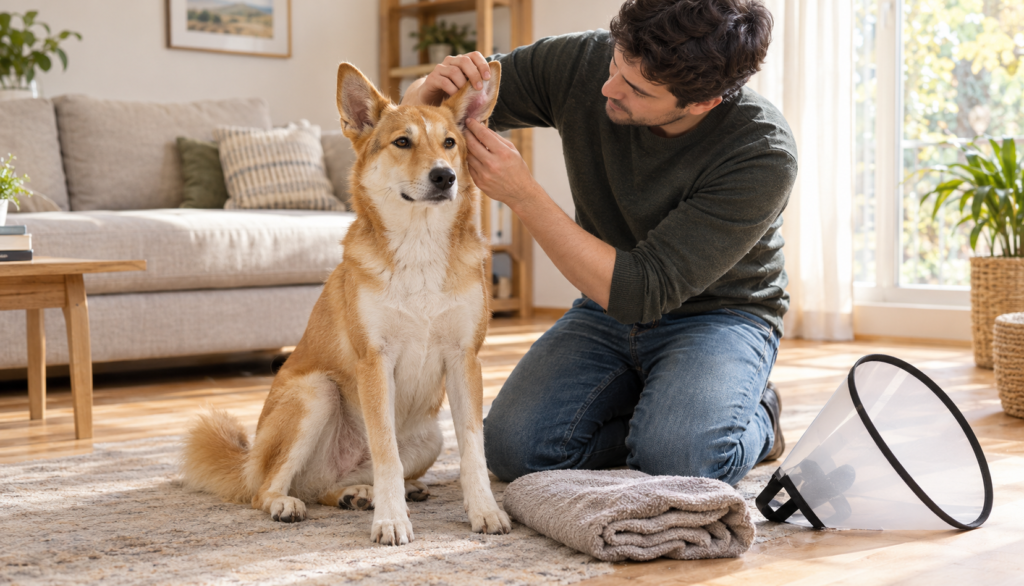
There is no home remedy that reliably cures a true ear infection, but a few careful steps can keep your dog comfortable until the appointment.
- Look at the ear in good light and note the color, smell, and amount of discharge. Photos help your vet.
- Stop your dog from scratching if possible, because scratching can cause scabs, bleeding, and an ear hematoma. A soft cone can help.
- Gently wipe the visible part of the ear flap with a soft cloth or gauze if it is dirty.
- Keep the ears dry. Avoid baths and swimming until your vet has looked.
- Do not insert cotton swabs into the canal. They push debris deeper and can damage the eardrum.
- Do not pour in vinegar, hydrogen peroxide, or oils on your own. These can irritate inflamed skin and are unsafe if the eardrum is damaged.
If you already use a vet-approved dog ear cleaner for routine care, you can ask your vet whether to keep using it during the infection. Often they will want to examine the ear first, because cleaning can hide the signs they need to see.
When to See a Vet
The simplest approach is to book a vet visit any time ear symptoms last more than a day or two, or come back repeatedly. Ear infections rarely resolve on their own, and waiting usually means a more painful dog and a harder infection to treat.
Go the same day, or to an emergency clinic, if you notice:
- Loss of balance, circling, or a sudden head tilt.
- A swollen, hot, or balloon-like ear flap.
- Bloody or pus-filled discharge.
- Severe pain, or a dog who will not let anyone near the head.
- Sudden hearing loss or unusual eye movements.
Puppies, senior dogs, and dogs with other health conditions should be seen sooner rather than later.
How Vets Diagnose an Ear Infection
A vet starts with an exam using an otoscope, a small lighted tool that lets them see down the ear canal and check whether the eardrum is intact. They will usually take a sample of the discharge and look at it under a microscope. This test, called ear cytology, shows whether yeast, bacteria, mites, or a mix is present, and it guides the choice of medication.
Dog ear infection treatment depends on the cause. It often involves a professional ear cleaning followed by medicated ear drops that you apply at home for one to two weeks or longer. Some dogs need oral medication, and some need a follow-up visit to confirm the infection has cleared. Finish the full course even when the ear looks better, because stopping early is a common reason infections return.
If your vet suspects allergies or another underlying cause, they may recommend an elimination diet, allergy management, or blood tests. Treating the underlying cause is what breaks the cycle of recurring infections.
How to Prevent Ear Infections
Prevention is mostly about keeping the ear clean and dry and catching problems early.
- Check your dog’s ears weekly, looking for redness, discharge, and odor.
- Dry the ears thoroughly after swimming and bathing.
- Clean only when needed, using a vet-approved cleaner and the right cleaning technique. Cleaning too often can irritate the skin.
- Ask your groomer or vet whether excess hair inside the canal needs trimming.
- Manage allergies and weight, since both affect skin health.
- Act at the first sign of scratching or smell rather than waiting for it to get worse.
A quick weekly check takes less than a minute and teaches you what your dog’s normal ears look like, which makes any change much easier to spot.
Frequently Asked Questions
Q. What are the first signs of an ear infection in a dog?
A. The earliest signs are usually scratching at the ear, shaking the head, and a mild musty smell. You may also notice light redness inside the ear flap or more wax than usual. Catching these early makes treatment much simpler.
Q. Can a dog ear infection go away on its own?
A. Rarely. Mild irritation from water may clear up, but a true infection usually persists or worsens without treatment and can spread deeper into the ear. A vet visit is the safest way to know which one you are dealing with.
Q. What color is ear infection discharge in dogs?
A. It can be dark brown or black with yeast, yellow or green with bacteria, or crumbly and coffee-ground-like with mites. Bloody discharge suggests a more serious problem. Color is only a clue, so a vet should confirm the cause.
Q. Is a dog ear infection an emergency?
A. Not usually, but it becomes urgent if your dog has loss of balance, a head tilt, severe pain, a swollen ear flap, or bloody discharge. In those cases see a vet the same day.