
If your dog keeps shaking their head and the ears smell like stale corn chips, a dog yeast ear infection is one of the first things a vet will check for. A yeast infection in dog ears is common, itchy, and uncomfortable, and it has a habit of coming back when the real cause is never found. The good news is that a yeast ear infection in dogs is very treatable once it has been properly diagnosed. This guide explains what the symptoms look and smell like, what causes yeast to take over, how vets treat it, what you can safely do at home, and which warning signs mean you should not wait.
What Is a Yeast Ear Infection in Dogs?
Yeast is not an invader. A species called Malassezia lives on the skin of most healthy dogs, including inside the ears, and in small numbers it causes no trouble at all. A yeast ear infection happens when conditions in the canal change and that normal skin flora multiplies out of control. The medical term for any infection or inflammation of the ear canal is otitis externa, and yeast is one of the most common organisms involved, alongside bacteria.
The shape of a dog’s ear makes this easy to happen. The canal is L-shaped, dropping straight down before turning inward toward the eardrum. That bend traps warmth, moisture, and wax, which is exactly the environment yeast prefers. A human ear is shorter and drains far better, so the same problem is much rarer in people.
It helps to think of a dog yeast ear infection as a symptom rather than a disease on its own. Yeast overgrows because something else changed, such as an allergy, trapped water, or a hormone problem. Treat only the yeast and ignore the trigger, and the infection usually returns within weeks.
Dog Yeast Ear Infection Symptoms: What You Will See and Smell
Yeast infection symptoms in a dog’s ear tend to be distinctive, which is why many owners suspect yeast before the vet confirms it. Several signs usually show up together.
The Smell
The most common giveaway is odor. A yeasty ear often smells musty, sweet, or like bread or corn chips. Healthy ears have little to no smell, so any noticeable dog ear odor, especially one that gets stronger over a few days, deserves attention. A sharply sour or rotten smell is more typical of a bacterial infection or a mixed one.
The Discharge
Yeast usually produces a dark brown or black, waxy, sometimes greasy discharge. Owners often describe it as black gunk in the dog’s ears, and it can look like coffee grounds stuck to the ear flap or deep in the canal. The skin underneath is often red and may look moist or oily. Dry, crumbly coffee-ground debris can also point to ear mites, so the color alone should never be treated as a diagnosis.
The Behavior
Itching is typically intense. A dog with a yeast ear infection may scratch their ears constantly, rub the side of the head along the carpet or furniture, or shake the head repeatedly. Some dogs yelp or pull away when you touch the ear, and some hold the head tilted toward the sore side. In long-running cases the skin inside the ear can thicken and darken, and the canal may narrow, which makes the problem harder to treat each time it returns.
When It Is Normal and When to Worry
When It Is Normal
Not every bit of wax is a problem. Healthy dog ears produce a small amount of light tan wax, and a dog may shake their head once or twice after a bath, a swim, or a nap. If the ear looks pale pink, has barely any smell, and your dog is comfortable being touched near it, there is nothing to treat. Occasional light wax is the ear cleaning itself.
When to Worry
It becomes a concern when the signs last more than a day or two, when a bad smell appears, when you see dark discharge, or when the ear looks red and your dog seems bothered. At that point you are most likely looking at an infection rather than normal wax, and guessing with products from the pet store is the wrong first step.
It becomes urgent when you notice a head tilt that does not go away, loss of balance, walking in circles, eyes flicking from side to side, a swollen ear flap that puffs up like a pillow, bleeding, or signs of severe pain. These can mean the infection has reached the middle or inner ear, or that an ear hematoma has formed from relentless shaking. Both need veterinary treatment the same day.
What Causes Yeast Ear Infections in Dogs
Because the yeast is already there, the real question is why it started to overgrow. Understanding the cause is the difference between a one-time treatment and a recurring dog ear infection that returns every few months.
| Trigger | Why It Feeds Yeast | What Usually Helps |
|---|---|---|
| Environmental allergies | Pollen, dust mites, and mold inflame the ear lining and change wax production | Vet-guided allergy management |
| Food allergy | An immune reaction to a protein causes chronic ear inflammation | Veterinary elimination diet trial |
| Moisture | Swimming, bathing, and humid weather leave warm water in the canal | Gentle drying after water exposure |
| Ear shape and hair | Heavy flaps and hair in the canal hold wax and heat | Regular checks and grooming advice |
| Hormone disease | Conditions such as low thyroid change skin health and oil production | Blood work and treating the condition |
| Foreign bodies or growths | Grass seeds or polyps block drainage and irritate the canal | Removal by a vet |
Allergies sit at the top of this list. Dogs with allergic skin disease often have yeasty ears alongside licking paws, itchy bellies, or red skin folds, and the ears are sometimes the first or only sign. If infections come back in the same season, or after a change in food, an allergy is a likely culprit.
Moisture is the second major trigger, and the cause behind what many people call swimmer’s ear in dogs. Floppy-eared breeds trap heat and water under the flap, but upright ears do not make a dog immune. Dogs that swim often, such as hunting and working breeds, still get yeast overgrowth when water stays in the canal.
Previous treatment can also play a role. Medications that clear bacteria, or steroids that calm inflammation, can sometimes let yeast take over if the ear is not rechecked. That is one reason an ear infection that improves and then flares again is common and should not be ignored.
How Vets Diagnose and Treat a Dog Yeast Ear Infection
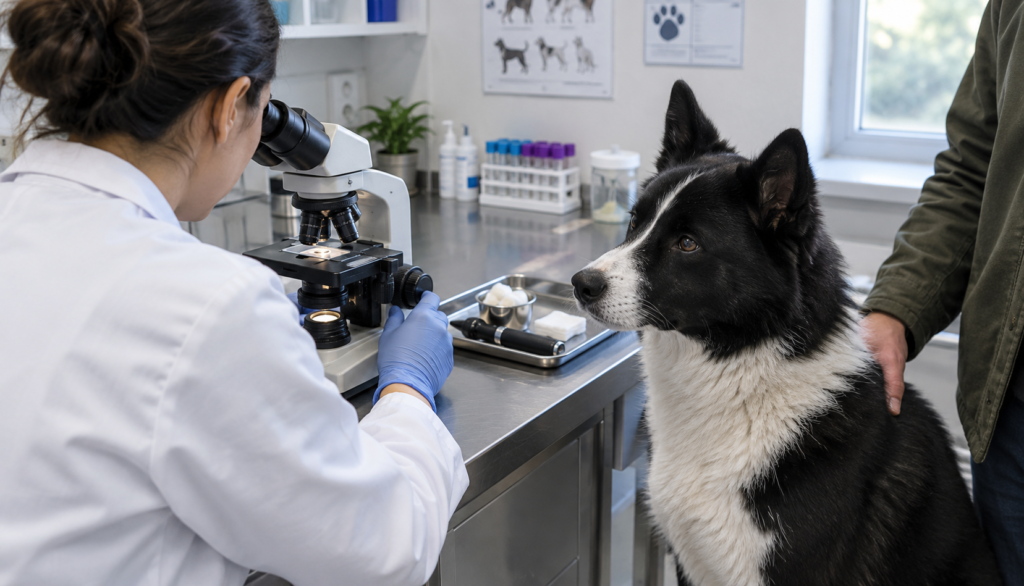
A proper diagnosis starts with an otoscope exam to look down the canal and check whether the eardrum is intact. That check matters enormously, because some medications and cleaners are unsafe if the eardrum is damaged. The vet will then take a sample of the discharge and look at it under a microscope. This test, called ear cytology, shows whether yeast, bacteria, or both are present and roughly how many. Yeast cells often look like small peanut shapes on the slide, which is how a vet can tell them apart from bacteria within minutes.
Treatment usually combines three steps. First, the ear is cleaned with a medicated cleanser designed to break down wax and debris, sometimes under sedation if the ear is very painful. Second, a prescription antifungal ear medication is used. Common active ingredients include miconazole, clotrimazole, terbinafine, and posaconazole, and many products combine an antifungal with an antibiotic and a steroid to treat mixed infections and calm swelling quickly. Third, the vet addresses the underlying trigger, whether that means allergy control, a diet trial, or testing for a hormone problem.
Oral antifungal medication is reserved for severe, deep, or chronic cases, or when the middle ear is involved. These drugs can affect the liver, so vets usually monitor dogs on them for longer courses.
Most uncomplicated yeast infections improve within several days and are treated for one to two weeks or longer, but the right length depends on the dog. The goal is not simply a better-looking ear. Your vet may want a recheck with repeat cytology to confirm the yeast is truly gone before you stop. Finishing the whole course and attending that recheck is the single best way to avoid a quick relapse.
Costs vary widely by location and severity. A basic exam with cytology and ear drops is far cheaper than a chronic case that needs sedated flushing, imaging, or surgery, which is another strong reason to treat early. Ask for an estimate before approving anything beyond the basics.
Home Care for a Dog Yeast Ear Infection: What Helps and What to Avoid
Home care has a supporting role. It works well for comfort, maintenance, and prevention, but it will not replace medication once an infection is established. Searches for a dog ear yeast home remedy turn up plenty of advice, and much of it does more harm than good in an inflamed ear.
Things that are generally safe and helpful include following the medication schedule exactly as prescribed, using a dog-specific ear cleaner only if your vet has confirmed the eardrum is intact, and drying the outer ear gently after swimming or bathing. To clean, hold the ear flap up, fill the canal with the cleanser, massage the base of the ear for about thirty seconds, then let your dog shake. Wipe only the visible part of the ear with a cotton ball or soft gauze. Washing bedding and keeping your dog from scratching also helps the ear heal.
Things to avoid are just as important. Do not pour apple cider vinegar, hydrogen peroxide, or rubbing alcohol into a sore ear, since they sting raw skin and can leave moisture behind. Skip coconut oil and other oils, which can trap moisture and may even feed yeast. Never use tea tree oil, which is toxic to dogs, and do not push cotton swabs deep into the canal, where they pack wax down and can damage the eardrum. Human antifungal creams and ear drops are not a safe substitute for a prescription made for dogs.
When to See a Vet
Book a visit if discharge, odor, redness, or scratching lasts longer than a day or two, if home cleaning has not helped within a few days, or if an infection returns soon after treatment ended. Puppies, senior dogs, and dogs with other health conditions should be seen sooner rather than later, because a small problem can escalate quickly in a painful ear.
Go the same day for a head tilt, loss of balance, bleeding, a swollen flap, severe pain, or any change in hearing or behavior. It helps to bring notes on when the problem started, what you have already tried, and any recent swimming, diet changes, or flea and allergy issues. That history helps your vet find the cause rather than just treat the symptom.
What Most People Don’t Know
The first surprise is that yeast is supposed to be on your dog’s skin. Many owners picture yeast as a germ that arrived from somewhere, but the infection is really a sign that the ear environment changed. That is why a dog yeast ear infection is not usually considered contagious between pets in the way that ear mites are. Mites spread easily between dogs and cats, while yeast overgrowth depends on what is happening inside one particular dog.
The second surprise is the diet myth. Many articles claim that sugar, carbohydrates, or grains cause yeast ear infections, and that cutting them out will cure the problem. There is no strong evidence for this. Where diet does matter is food allergy, in which an immune reaction to a protein inflames the ears. If your vet suspects that, a strict elimination diet trial is the proper test, not guesswork with a new bag of food.
Third, most steroid-containing ear drops are helpful but not magic. They quickly reduce itch and swelling, which can make the ear look and feel normal before the yeast is actually gone. Stopping early because the ear looks better is a very common reason for relapse.
Finally, an infection that affects both ears at once usually points toward an underlying allergy, while a single stubborn ear is more likely to involve a foreign body, polyp, or growth. Telling your vet which ear or ears are involved is a small detail that can change the work-up.
How to Prevent Yeast Ear Infections From Coming Back
Prevention means keeping the canal dry, clean, and healthy. Dry your dog’s ears gently after every swim and bath, using a soft towel on the visible part of the ear. Check the ears weekly for redness, odor, or unusual wax so you catch problems while they are small, and ask your groomer or vet whether any hair in the canal needs attention, since plucking is not right for every dog.
Manage the root cause. For dogs with allergies, that may mean a diet trial, allergy medication, or environmental changes under veterinary guidance, and sticking with the plan is the most effective way to break a repeat cycle. If your dog is prone to infections, a vet-approved cleaner used on a regular schedule can help, but avoid overdoing it, because cleaning too often strips protective oils and irritates the skin. A steady routine and quick action at the first sign of a musty smell prevent most repeat infections.
Frequently Asked Questions
Q. What does a yeast infection in a dog’s ear smell like?
A. It usually smells musty, sweet, or like corn chips or stale bread. The smell often gets stronger as the infection grows, and a strong or worsening odor is a good reason to see your vet.
Q. Can a dog yeast ear infection go away on its own?
A. Rarely. Because yeast overgrows for a reason, the infection usually persists or returns without treatment and can spread deeper into the canal. A vet exam with cytology confirms what is growing and which medication is right.
Q. Is a dog yeast ear infection contagious?
A. Not in the usual sense. Yeast already lives on most dogs, and overgrowth depends on conditions inside one dog’s ear. Ear mites, which can look similar, are contagious, so a vet should confirm the cause.
Q. How long does it take to clear a yeast ear infection in dogs?
A. Many cases improve within a few days and clear in one to two weeks with proper treatment, but chronic infections can take longer. Finish all medication and attend any recheck, even if the ear looks better.