
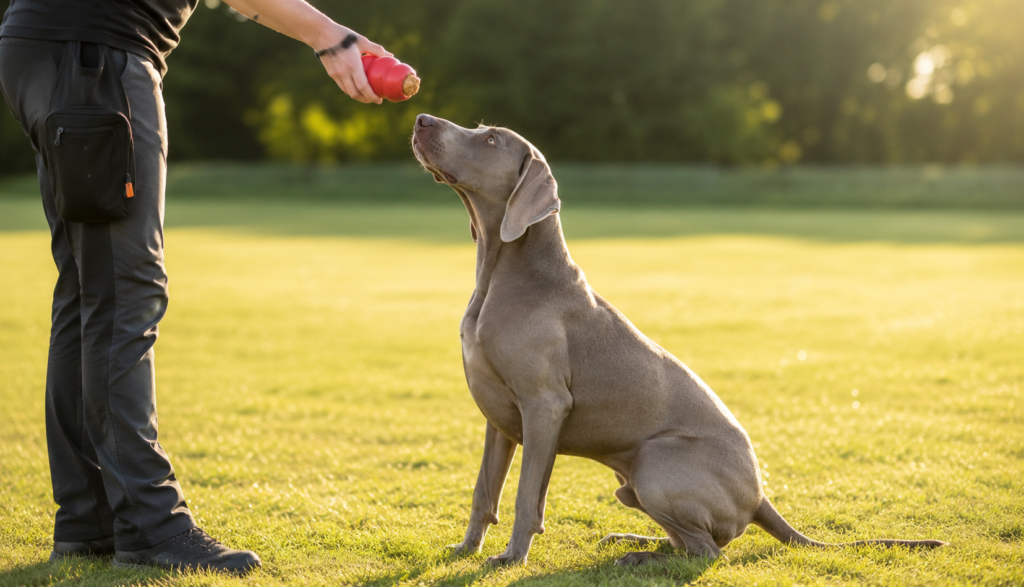
Peanut butter might be the single most iconic dog treat that exists — smeared inside a Kong, used to distract during a bath, hidden around a pill that a dog would otherwise detect and spit out across the room. The enthusiasm dogs bring to peanut butter is so reliable that it’s become a training tool staple and a universal shortcut for getting a reluctant dog to cooperate with almost anything. That reputation is well-earned, and plain natural peanut butter genuinely belongs in the “safe and useful” category for most dogs. But peanut butter is also the food where one specific ingredient has quietly turned some jars on grocery store shelves into a genuine emergency risk, and that’s the part of this conversation that can’t be skipped.
Is Peanut Butter Safe for Dogs?
I’ve seen this firsthand with more dogs and more training sessions than I can count: plain, unsalted, natural peanut butter with no additives is safe for the vast majority of healthy adult dogs and genuinely useful as a high-value treat. The protein content, the palatability, and the thick texture that makes it work so well in Kong toys all contribute to why it’s become the default high-reward training tool for dog owners and professional trainers alike.
Peanut butter appears in commercially produced dog treats, dog-specific spreads, and vet-recommended food stuffing suggestions regularly enough that its basic safety is well established for dogs without specific nut allergies or fat sensitivities.
The answer is a confident yes for the right version. The specific jar in your kitchen right now may or may not be that version, and that distinction is what the rest of this article is actually about.
The Xylitol Warning — Check Every Jar
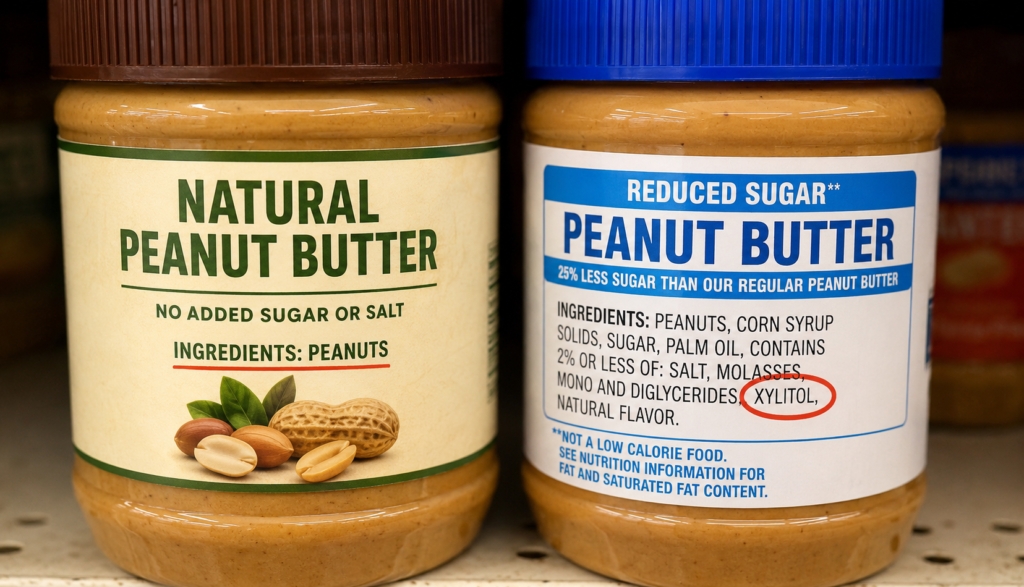
Most dog owners miss this entirely until they read it somewhere alarming, and it deserves the same direct treatment here that it gets in the almond butter conversation. Some peanut butter brands — particularly reduced-sugar, “natural,” and sugar-free varieties — use xylitol as a sweetener substitute, and xylitol is acutely toxic to dogs in a way that has nothing to do with fat, salt, or peanuts.
Xylitol triggers a rapid and dangerous drop in blood sugar by causing insulin release in dogs, and in larger doses causes liver failure that can develop within hours of ingestion. The amount required to cause serious harm is small enough that a few spoonfuls of a xylitol-containing peanut butter can constitute a genuine emergency, particularly in smaller breeds.
Checking the ingredient label every time — not just when buying a new brand, but whenever the jar changes — removes the guesswork entirely. Any peanut butter with xylitol, birch sugar, or “sugar alcohol” listed in the ingredients is off the table for dogs regardless of everything else on the label.
Natural vs Commercial Peanut Butter
The first time I walked a reader through choosing the right peanut butter for their dog, the natural versus commercial distinction became the clearest practical framework. Natural peanut butter ideally contains one ingredient — peanuts — or two if a small amount of salt is present. That single-ingredient version is the safest and most straightforward choice regardless of brand.
Commercial peanut butter varieties like Jif, Skippy, and similar mainstream brands in their standard formulations do not typically contain xylitol, making them generally safe for dogs despite containing added sugar and sometimes hydrogenated oils. These aren’t ideal from a pure nutrition standpoint, but they’re not the emergency risk that xylitol-containing varieties represent.
The category requiring the most caution is “reduced sugar,” “light,” or “natural” commercial varieties that have modified their formulations to reduce sugar content — these are precisely the products most likely to have introduced xylitol as a replacement sweetener, and they deserve the most thorough label check before any dog exposure.
Hydrogenated Oils and Added Sugar
What surprised me was how often the conversation stops at xylitol without addressing the other ingredients worth knowing about. Standard commercial peanut butter often contains hydrogenated or partially hydrogenated oils, which add an unnecessary fat load on top of peanut butter’s already-significant natural fat content, and added sugar that serves no nutritional purpose for a dog.
Neither of these ingredients makes commercial peanut butter acutely dangerous in small amounts, but they make natural single-ingredient peanut butter the meaningfully better choice when the goal is a genuinely healthy occasional treat rather than just a safe one.
For dogs used as Kong stuffing daily or given peanut butter as a regular training reward, the cumulative difference between a clean natural formulation and a commercial variety with added oils and sugar adds up more than any single serving suggests.
Fat Content and Portion Size
I’ve watched this get overlooked when people focus entirely on the xylitol issue and treat any xylitol-free peanut butter as freely giveable. Even the cleanest natural peanut butter is extremely calorie-dense and high in fat content, meaning the pancreatitis risk and dog obesity concern apply regardless of whether the jar passes the ingredient check.
A Kong stuffed with a thin smear of peanut butter is a very different fat exposure than a Kong packed solid with it, and that distinction matters more for small dogs where even modest amounts represent a large proportional calorie hit relative to their daily intake needs.
Treating peanut butter as a high-value treat used strategically — for training, for pill hiding, for Kong enrichment — rather than a generous daily snack keeps both the fat content and calorie load in a range that doesn’t gradually undermine a dog’s weight management over time.
What Most People Don’t Know
Here’s something that rarely surfaces in basic peanut butter safety articles: peanuts and peanut butter can contain aflatoxins, naturally occurring compounds produced by a mold called Aspergillus that grows on peanuts during storage. Aflatoxins are genuinely toxic and have been linked to liver damage with long-term high-level exposure in both humans and dogs. This isn’t a concern from occasional normal peanut butter use — commercial processing and quality control keep aflatoxin levels in mainstream products well below harmful thresholds. But it’s a reason why rotating peanut butter with other treats rather than using it as the exclusive daily enrichment food is a sensible long-term habit, since it removes the theoretical cumulative exposure concern without requiring any change to the jars you’re already buying.
How to Use Peanut Butter Safely
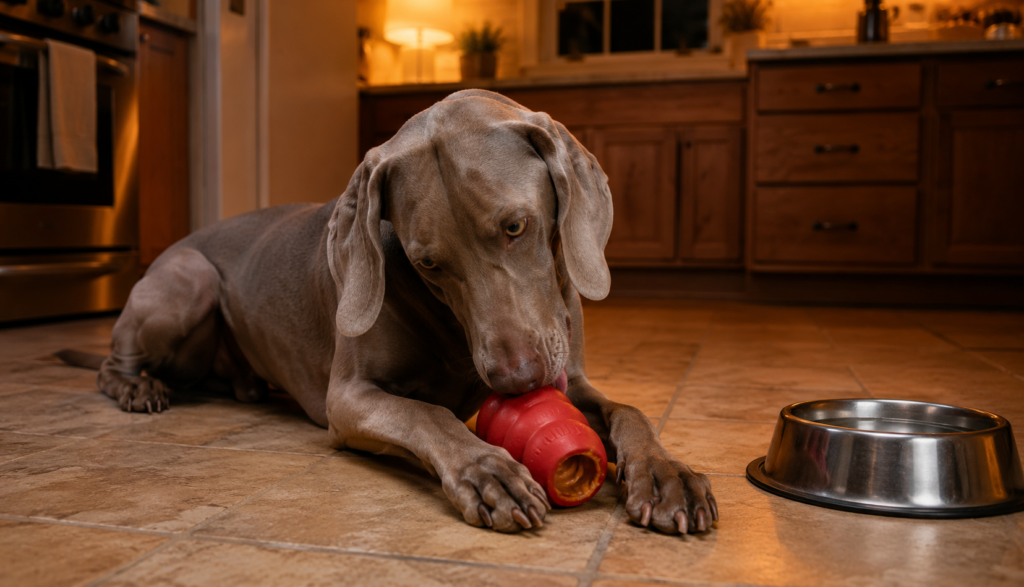
From experience, the smarter call is to keep a jar of single-ingredient natural peanut butter specifically designated for the dog, separate from whatever the household uses, so there’s never a moment of accidentally grabbing the wrong jar in a hurry. A thin smear inside a Kong, a fingertip dab to hide a pill, or a small lick during a training session represents the right scale of use.
Freezing a Kong stuffed with natural peanut butter extends the enrichment time and makes it a genuinely engaging activity for dogs left alone, which is probably the most practical and widely recommended use of peanut butter in dog care beyond basic treat reward.
Starting with a pea-sized amount for a dog new to peanut butter makes sense the first time, since peanut allergy in dogs, while uncommon, does occur and can manifest through itching, hives, or digestive upset that resolves once peanut products are removed.
Signs of Trouble to Watch For
If xylitol exposure is suspected, watch immediately for weakness, vomiting, loss of coordination, or collapse — symptoms can appear within thirty minutes and the situation warrants an emergency vet visit rather than home monitoring under any circumstances.
For plain xylitol-free peanut butter overexposure, watch for vomiting, diarrhea, or a hunched uncomfortable posture in the following hours, since these typically indicate fat-related digestive upset or early pancreatitis rather than any toxicity concern.
If symptoms persist or worsen, a vet visit is always the right call, and disclosing the specific brand and approximately how much was consumed helps the vet assess whether this is routine fat overload or a potential xylitol situation requiring a completely different and more urgent treatment protocol.
Frequently Asked Questions
Q. Which peanut butter brands are safe for dogs?
A. Standard formulations of Jif, Skippy, and similar mainstream brands don’t typically contain xylitol and are generally safe in small amounts, though single-ingredient natural peanut butter with no additives remains the cleanest choice overall.
Q. How much peanut butter can I give my dog per day?
A. A thin smear or fingertip-sized amount per use is the right scale — peanut butter is very high in fat and calories, so generous daily portions add up to a meaningful pancreatitis and obesity risk even with a completely safe formulation.
Q. Can dogs be allergic to peanut butter?
A. Yes, peanut allergy in dogs is uncommon but real — watch for itching, facial swelling, hives, or digestive upset after a first exposure and discontinue use if any of these appear.