
Quick Answer: No, dogs should not eat almonds. While almonds aren’t toxic to dogs the way macadamia nuts or grapes are, they pose real risks — choking hazards, digestive upset, and a real chance of triggering pancreatitis, especially in small breeds. A stray almond or two likely won’t cause serious harm, but almonds should never be an intentional treat.
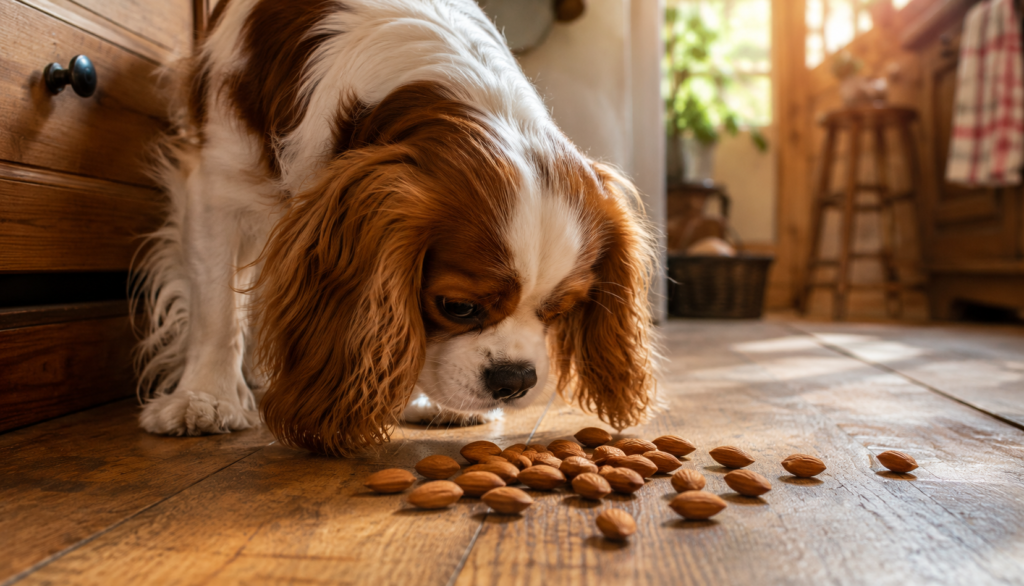
Are Almonds Toxic to Dogs?
Almonds are not classified as toxic to dogs the way onions, garlic, chocolate, or xylitol are. There’s no compound in a plain almond that will poison your dog outright. That said, “not toxic” doesn’t mean “safe.” Almonds sit in a gray zone: they won’t send most dogs to the emergency room, but they’re not a food you should be handing out as a treat either.
The real dangers come from three places: the size and shape of the nut, its high fat content, and what’s often added to almonds before they reach your dog’s mouth — salt, seasoning, or chocolate coating.
Why Almonds Are Risky for Dogs
Dogs don’t chew the way humans do. They tend to gulp small, hard foods, and almonds are exactly the wrong shape and size for that habit.
- Choking hazard: Whole almonds can lodge in a dog’s throat, particularly in small and toy breeds. This is the single most immediate risk.
- Gastrointestinal blockage: If swallowed whole, almonds can cause an obstruction in the esophagus or intestines — a genuine emergency that sometimes requires surgery.
- High fat content: Almonds are calorie-dense and fat-heavy. A handful can be enough to irritate a dog’s digestive system, especially in dogs unaccustomed to rich foods.
- Pancreatitis risk: The fat in almonds can trigger pancreatitis, an inflammation of the pancreas that causes vomiting, abdominal pain, and lethargy. Small breeds and dogs with a history of pancreatitis are especially vulnerable.
What Happens If a Dog Eats Almonds?
If your dog snags one or two plain almonds off the floor, you likely have little to worry about beyond mild digestive upset. Watch for vomiting, diarrhea, or reduced appetite over the next 24 hours.
If your dog eats a larger quantity — a handful or more, especially salted, flavored, or chocolate-covered almonds — the situation is more serious. Signs of pancreatitis or blockage include:
- Repeated vomiting
- Abdominal pain or a hunched posture
- Lethargy or reluctance to move
- Loss of appetite
- Diarrhea
- Bloated or tender belly
Emergency Vet Situations: Call your vet or an emergency animal hospital immediately if your dog ate chocolate-covered almonds, ate a large quantity, is choking, or shows any of the symptoms above. Don’t wait to see if it “passes on its own” — pancreatitis and blockages can escalate quickly.
Almond Butter, Almond Milk, and Almond Flour: Are They Different?
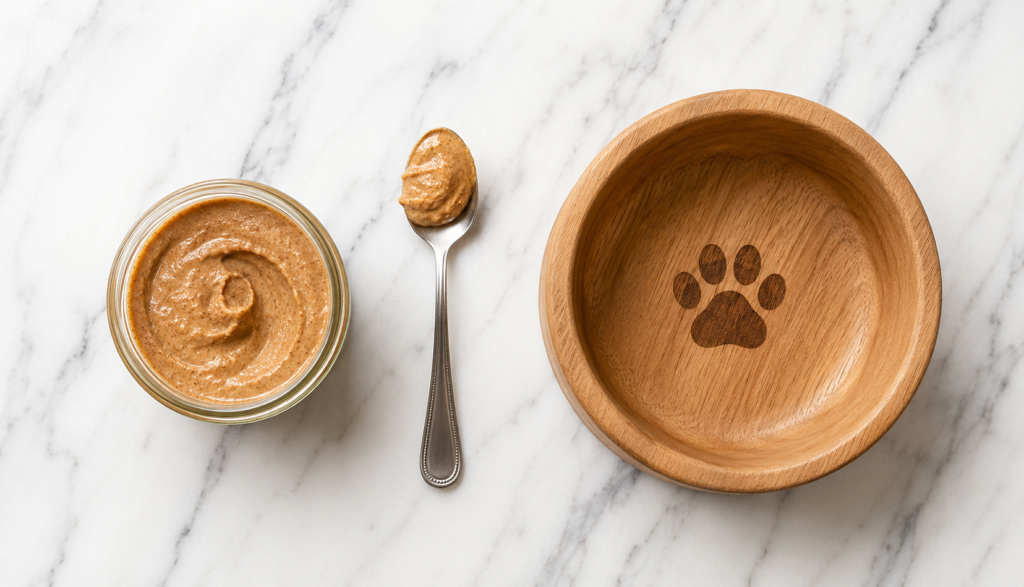
These processed almond products come with their own considerations:
| Product | Safety Notes |
|---|---|
| Almond butter | Can be given in small amounts if plain and xylitol-free — always check the label. Xylitol in “sugar-free” nut butters is highly toxic to dogs. |
| Almond milk | Generally low-risk in small amounts if unsweetened and unflavored, but offers little nutritional benefit to dogs and can cause loose stool. |
| Almond flour | Small amounts baked into dog-safe treats are usually fine, but it’s calorie-dense and shouldn’t replace a balanced diet. |
Xylitol Warning: Always check ingredient labels on almond butter and almond milk. Xylitol, a sugar substitute, is extremely toxic to dogs even in small amounts and can cause a rapid, life-threatening drop in blood sugar.
What Most People Don’t Know
Most owners assume the danger with nuts starts and ends with macadamia nuts, since those are the ones widely flagged as toxic. What gets missed is that almonds cause more emergency vet visits related to choking and obstruction than to poisoning — the mechanical risk is often bigger than the chemical one.
There’s also a lesser-known distinction between sweet almonds (the kind sold for snacking) and bitter almonds, which contain trace amounts of a compound that converts to cyanide. Bitter almonds are illegal to sell raw in the U.S. specifically because of this, but they’re still found in some imported or specialty products. If you’re ever unsure of the source, it’s not worth the risk.
Finally, many owners don’t realize that almond-based holiday snacks — think chocolate-covered almonds, honey-roasted almonds, or trail mixes — are far more dangerous than plain almonds because of what’s mixed in, not the almond itself.
Safe Nut Alternatives for Dogs

If you want to share a nutty snack with your dog, these options are gentler on the digestive system and carry a lower choking risk when prepared properly:
- Small amounts of plain, unsalted peanuts (in moderation)
- A spoonful of plain peanut butter with no xylitol
- Commercial dog treats formulated with nut flavoring
Better Choice: If you’re looking for a healthy fat and protein boost, skip nuts altogether and reach for cooked, unseasoned chicken or a vet-approved dog treat instead. It removes the choking and pancreatitis guesswork entirely.
How to Prevent Almond Accidents
- Store almonds, almond snacks, and trail mixes in sealed containers out of reach
- Be cautious during holidays when spiced or chocolate-covered nuts are common on tables and in gift tins
- Warn guests and kids not to feed table scraps that include nuts
- Check ingredient labels before offering any almond product, even “natural” ones
3-Question FAQ
Q. Can dogs eat almond butter safely?
A. In small amounts, yes — as long as it’s plain and free of xylitol, added sugar, and salt. Always check the label before sharing.
Q. How many almonds can a dog eat before it’s dangerous?
A. There’s no official “safe number.” Even a few can pose a choking risk for small dogs, and a handful can be enough to trigger pancreatitis. The safest amount is zero.
Q. What should I do if my dog ate a handful of almonds?
A. Monitor closely for vomiting, lethargy, or abdominal pain over the next 24–48 hours, and call your vet for guidance — especially if the almonds were salted, flavored, or chocolate-coated.