
Quick Answer: No, walnuts are not recommended for dogs. While English walnuts aren’t classified as acutely toxic like grapes or chocolate, they carry serious risks: black walnuts contain toxins that cause tremors and seizures, moldy walnuts produce dangerous neurotoxins, and the high fat content can trigger pancreatitis. Shells also pose a choking and blockage hazard.
If your dog just snatched a walnut off the kitchen floor or scavenged one under a backyard tree, you’re right to pause and ask questions before assuming it’s harmless. Walnuts sit in a tricky middle ground — they’re not immediately deadly the way chocolate or xylitol can be, but they’re far from a safe snack, and the reasons why are easy to miss.
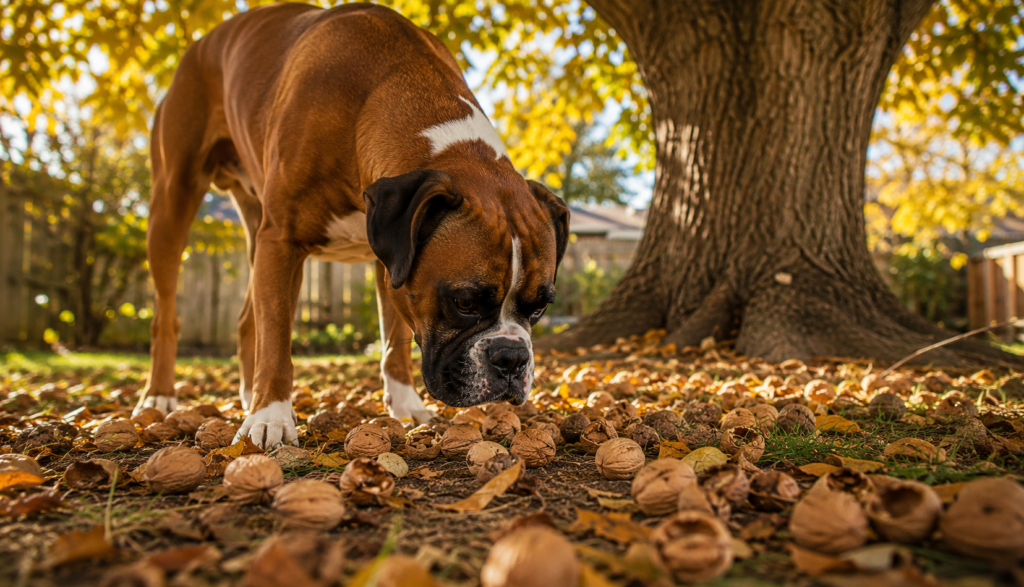
Why Walnuts Are Risky for Dogs
The danger with walnuts isn’t a single toxin — it’s a combination of factors that stack up quickly. Understanding each one helps explain why vets consistently recommend keeping walnuts away from dogs entirely, even though an occasional small nibble of a fresh, unshelled English walnut usually won’t cause an emergency.
Black Walnuts: The Bigger Threat
Black walnuts (different from the English walnuts sold in stores) contain a compound that, when the nut molds or decays, produces tremorgenic mycotoxins. These toxins directly affect the nervous system and can cause tremors, disorientation, and seizures within hours of ingestion. Black walnut trees are common in yards and parks across the U.S., which means dogs often encounter fallen nuts without their owners realizing it.
Mold Is the Real Culprit
Whether it’s a black walnut or an English walnut, the biggest danger comes from mold. Walnuts left outside, stored improperly, or picked up off the ground are prone to developing mold that produces neurotoxins. These toxins are potent enough to cause severe tremors and seizures in dogs even in small quantities, and symptoms can appear within a few hours of ingestion.
What Happens If a Dog Eats a Walnut
A single small bite of a fresh, mold-free English walnut is unlikely to cause a dramatic reaction beyond mild stomach upset. But the picture changes fast depending on quantity, freshness, and whether the shell was involved.
Watch for these symptoms after walnut ingestion:
- Vomiting or diarrhea
- Lethargy or unsteady walking
- Muscle tremors or twitching
- Seizures
- Elevated temperature
- Abdominal pain or bloating
If you notice tremors, seizures, or your dog seems disoriented after eating a walnut, this is an emergency — contact your vet or an emergency animal hospital immediately. Don’t wait to see if symptoms pass on their own.
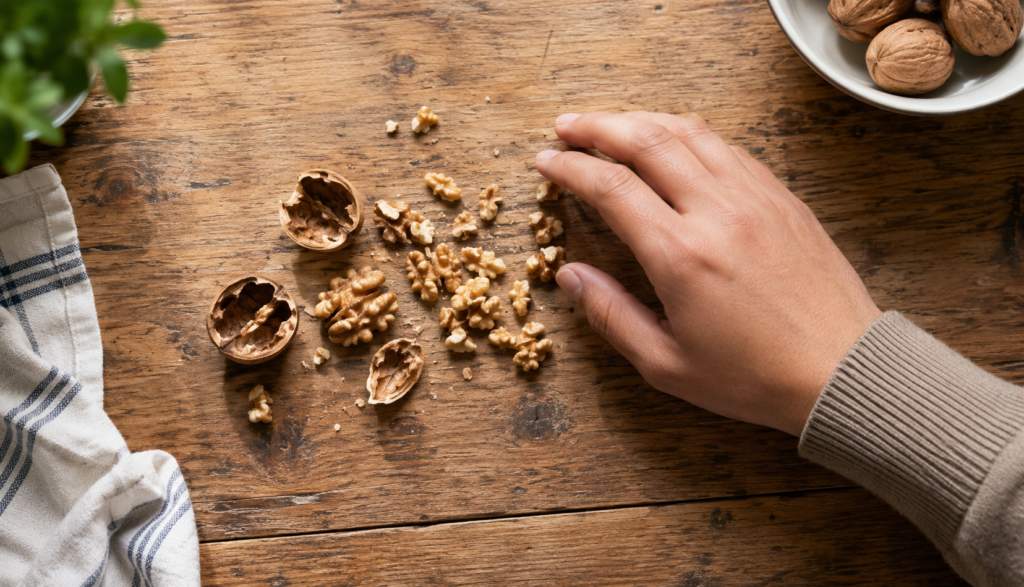
Walnut Shells: A Separate Danger
Even setting aside toxicity, walnut shells are a significant physical hazard. They’re hard, sharp-edged, and don’t break down easily in a dog’s digestive tract. A dog that chews and swallows shell fragments risks:
- Choking, especially in small or toy breeds
- Cuts or irritation to the mouth, throat, or esophagus
- Intestinal blockage, which can require emergency surgery
Blockages are particularly sneaky because symptoms — reduced appetite, straining, vomiting — can take a day or two to appear after ingestion. If you know your dog ate shell fragments, don’t wait for symptoms before calling your vet.
Why High Fat Content Matters
Walnuts, like most nuts, are calorie-dense and high in fat. For dogs — especially smaller breeds or dogs with a history of pancreatitis — a sudden intake of high-fat food can trigger inflammation of the pancreas. Pancreatitis is painful and can become a serious medical emergency, requiring hospitalization in severe cases. This risk applies even to fresh, mold-free walnuts, which is part of why vets don’t recommend them as a regular treat regardless of mold status.
Are Any Nuts Safe for Dogs?
Not all nuts carry the same level of risk, though “safer” doesn’t mean “recommended as a regular treat.” Here’s a quick comparison:
| Nut | Safety Level | Main Concern |
|---|---|---|
| Walnuts (black or moldy) | Unsafe | Neurotoxins, seizures |
| English walnuts (fresh) | Not recommended | Fat content, pancreatitis |
| Macadamia nuts | Unsafe | Weakness, tremors, vomiting |
| Almonds | Caution | Choking, GI upset |
| Peanuts (plain, unsalted) | Generally okay in small amounts | Fat content, allergies |
Plain, unsalted peanuts in small quantities are typically the safest nut option for dogs — but even then, moderation matters, and any new food should be introduced slowly.
What Most People Don’t Know
Most owners assume that because walnuts are a “natural” food humans eat all the time, a small amount is automatically fine for dogs too. What often gets missed is that the danger isn’t really about the walnut itself — it’s about what’s happened to the walnut before your dog gets to it. A walnut sitting under a backyard tree for even a few days can develop mold invisible to the naked eye, and that mold is where the most severe neurological symptoms come from. This is why vets see far more walnut-related emergencies in the fall, when black walnut trees drop their nuts and dogs on walks or in yards get access to nuts that have already started decomposing. A walnut fresh out of a sealed bag in your pantry is a very different risk profile than one your dog found on a hiking trail — and most poisoning cases come from the latter, not the former.

What to Do If Your Dog Eats a Walnut
- Stay calm and assess the situation. Note how many walnuts, whether they were shelled, and whether they looked moldy or fresh.
- Call your vet or an emergency animal hotline. Describe the quantity and type of walnut if known.
- Watch closely for the next 24–48 hours for vomiting, tremors, lethargy, or signs of abdominal pain.
- Don’t induce vomiting unless a vet specifically instructs you to. Some situations call for it, others don’t — let a professional guide you.
- Seek emergency care immediately if you see tremors, seizures, or disorientation.
Frequently Asked Questions
Q. Are black walnuts more dangerous than English walnuts?
A. Yes. Black walnuts are more strongly associated with tremorgenic mycotoxin poisoning, especially once they’ve started to mold or rot, which happens quickly once they fall from the tree. English walnuts (the type sold in stores) carry lower toxin risk but still pose fat-content and shell hazards.
Q. How many walnuts does it take to poison a dog?
A. There’s no safe universal amount — toxicity depends on the dog’s size, whether the walnut is moldy, and how much was eaten. Because the risk-to-benefit ratio is so poor, the safest approach is to avoid giving walnuts intentionally and to treat accidental ingestion as something worth a vet call rather than trying to calculate a “safe” quantity.
Q. My dog ate a walnut and seems fine — do I still need to worry?
A. Possibly. Some symptoms, especially those related to blockages or lower-dose mold toxin exposure, can take a day or two to appear. If you know your dog ingested a walnut, especially shell fragments or a nut that looked old or moldy, monitor closely for 48 hours and don’t hesitate to call your vet even if your dog seems normal right now.