

Sausage is one of those breakfast table foods that dogs seem magnetically drawn to, and the smell coming off a frying pan of breakfast sausage produces a reaction in most dogs that makes it feel almost cruel to say no. But sausage sits at a unique intersection of nearly every dietary concern that matters for dogs — extreme sodium content, high fat content, and seasoning blends that almost always include something genuinely problematic. Unlike some foods where the answer is “yes with caveats,” sausage is one of the clearest cases where the honest answer is closer to “no, and here’s specifically why” rather than a moderated version of yes.
Is Sausage Safe for Dogs?
I’ve seen this firsthand more than once: a dog steals a sausage link off a plate and appears completely fine in the short term. That immediate non-reaction is part of what makes sausage feel more acceptable than it actually is, since the harm here isn’t acute toxicity that announces itself within minutes.
Sausage isn’t toxic the way grapes or chocolate are. A single small piece in a healthy adult dog isn’t typically a crisis. But the combination of what goes into virtually every commercial sausage — salt, fat, spice blends, preservatives, and often garlic or onion — makes it one of the most consistently poor choices available when it comes to intentionally sharing food with a dog.
The honest answer is no, not because sausage is poisonous, but because there is essentially no version of commercial sausage that avoids enough of these concerns to make it worth deliberately offering.
The Sodium and Fat Problem
Most dog owners miss how concentrated the issues in sausage actually are compared to other processed meats. Sausage is seasoned, cured, and often smoked in ways that layer sodium content on top of an already high fat content base, meaning both problems arrive together rather than separately.
The fat content alone in most pork sausage varieties is high enough to raise real pancreatitis risk, particularly in dogs with any existing sensitivity to high fat diets. Pancreatitis is a painful inflammatory condition of the pancreas that a single fatty meal can trigger in susceptible dogs, sometimes appearing within hours of eating.
Simultaneously, the sodium content in a single breakfast sausage link can meaningfully exceed what a small or medium dog should consume in a day, pushing toward dog salt poisoning territory faster than the small size of the link suggests, particularly in smaller breeds where body weight scales the risk significantly upward.
The Seasoning Problem Is Built In
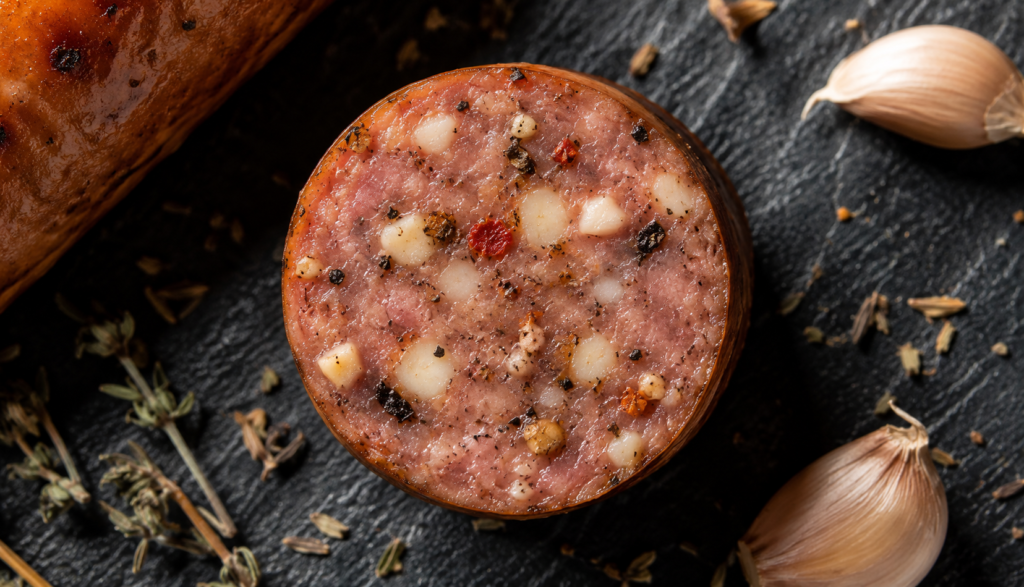
The first time I dealt with this question from a reader, the seasoning issue was the part that surprised them most. Unlike a steak where seasoning is applied externally and at least theoretically separable, sausage seasoning is mixed directly into the ground meat during production, meaning garlic and onion compounds are distributed throughout every bite rather than sitting on a removable surface.
Most commercial sausage varieties, from breakfast sausage to smoked sausage to Italian varieties, include garlic powder or onion powder as standard flavoring components. Both are toxic to dogs regardless of how they’re delivered, and the ground-in distribution means there’s no way to remove them after the fact.
This is what separates sausage from plain cooked pork in a practical sense — the protein base might be the same, but the seasoning is inseparable from the product in a way that makes the safest version of sausage still meaningfully more concerning than plain cooked meat.
Breakfast Sausage vs Smoked Sausage vs Chicken Sausage
What surprised me was how often people assume switching the protein base resolves the concerns. Chicken sausage and turkey sausage are commonly positioned as healthier alternatives, and while they may carry slightly less fat content than traditional pork sausage, they go through the same seasoning and curing process that gives all commercial sausage its characteristic sodium content and spice profile.
Smoked sausage adds the sodium from curing on top of the sodium from seasoning, making it among the worst options in terms of salt load despite being a format that feels like a natural food rather than an overtly processed one.
Breakfast sausage links and patties sit in the middle of this spectrum but still carry enough fat content and seasoning to put them firmly in the “not worth offering deliberately” category regardless of which protein they’re based on.
What About Sausage Casing?
I’ve watched this question come up when people consider whether the casing itself is the problem rather than the filling. Natural sausage casings made from animal intestine are technically digestible for dogs, and the casing itself isn’t a meaningful safety concern compared to what’s inside it.
Synthetic casings made from collagen or plastic are a different matter — plastic casings should never be ingested and should always be removed before any food is offered. Collagen casings are generally digestible but offer no benefit, and their presence or absence doesn’t change anything about the seasoning and sodium content of the sausage filling itself.
The casing question is essentially a distraction from the more significant filling concerns, which remain the same regardless of what the sausage is wrapped in.
What Most People Don’t Know
Here’s a detail that rarely gets mentioned: the preservatives used in commercial sausage, particularly nitrates and nitrites added to smoked and cured varieties, have been associated with health concerns in some animal studies when consumed regularly over time. While this isn’t a “one bite causes harm” concern, it adds another layer to why sausage in particular is worth avoiding as a regular treat in a way that plain cooked meat simply isn’t. The cumulative preservative exposure from regular sausage feeding is an underappreciated risk that sits alongside the sodium and fat concerns rather than replacing them.
Better Alternatives for the Same Moment

From experience, the smarter call whenever the instinct is to share a piece of sausage is to keep plain cooked chicken, plain turkey breast, or a small piece of lean plain beef on hand as the actual treat option. These deliver the same “real meat” experience that makes sausage appealing without any of the sodium, fat, or seasoning concerns.
If the appeal is specifically the breakfast table moment rather than the sausage itself, a small piece of plain scrambled egg is another genuinely safe option that fits the same context without any of the processing that makes sausage such a consistent problem.
Your dog cannot distinguish between the experience of getting sausage and the experience of getting plain chicken — the enthusiasm and satisfaction will be identical, and the health outcome will be significantly better over time.
Signs of Trouble to Watch For
Watch for excessive thirst, vomiting, diarrhea, or a hunched uncomfortable posture in the hours after sausage exposure, since these can indicate either dog salt poisoning from sodium overload or early pancreatitis from the fat content rather than simple digestive upset.
More serious symptoms including lethargy, tremors, or significant weakness following a larger sausage exposure warrant veterinary attention rather than home monitoring, since severe sodium toxicity can escalate unpredictably in smaller dogs particularly.
If symptoms persist or worsen, a vet visit is always the right call, and any sausage exposure involving varieties with visible garlic or onion in the ingredient list should be disclosed to a vet promptly rather than monitored at home.
Frequently Asked Questions
Q. Can dogs eat chicken sausage?
A. Chicken sausage still goes through the same curing and seasoning process as pork sausage, meaning it carries similar sodium content and garlic or onion risk despite the different protein base.
Q. What happens if a dog eats a sausage?
A. A small piece in a healthy adult dog typically causes no immediate crisis, but vomiting, diarrhea, or pancreatitis symptoms are real risks, particularly with larger amounts or repeated exposure.
Q. Is turkey sausage safer for dogs than pork sausage?
A. Turkey sausage may be slightly lower in fat content, but the sodium content and seasoning concerns remain essentially the same, making it a marginal improvement rather than a genuinely safe alternative.