
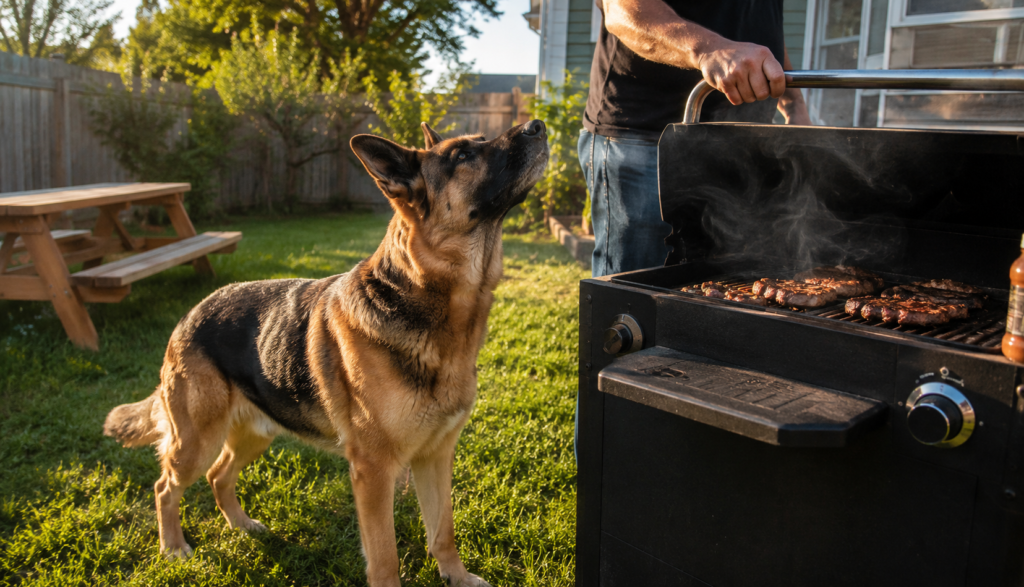
There’s something about a backyard barbecue that makes every dog owner reconsider their rules. The smell alone is enough to turn a well-behaved dog into a persistent beggar, and the impulse to share a piece of steak with a dog who clearly wants it more than anyone at the table is genuinely hard to resist. That impulse isn’t wrong, exactly, but steak sits in a more nuanced place than the straightforward yes it feels like in the moment. The cut matters, the preparation matters, and what happened to that steak between the raw state and the plate matters more than most people account for before they hand over a piece.
Is Steak Safe for Dogs?
I’ve seen this firsthand across many dogs over many summers: a small piece of plain cooked lean steak causes no obvious problem for most healthy adult dogs. Steak is beef, beef is a core dog food protein, and the basic safety case for plain cooked beef extends to steak without much complication.
The nutritional profile of lean steak is genuinely solid for dogs — real protein, iron, zinc, and B vitamins in a form that digests well and supports muscle maintenance over time. This isn’t a junk food treat dressed up as something acceptable, it’s a legitimate protein in the right preparation.
The answer is yes for plain, lean, fully cooked steak in modest portions. The rest of this article is about what turns that straightforward yes into something more complicated in practice.
Which Cuts Are Safe vs Risky
Most dog owners miss this distinction entirely, treating steak as one category when the fat content varies dramatically between cuts. Leaner options like sirloin, flank steak, or tenderloin carry far less pancreatitis risk than heavily marbled cuts like ribeye, T-bone, or brisket, where visible fat runs through the meat itself rather than just along the edges.
Pancreatitis is the primary dietary risk with fatty steak — a painful and sometimes serious inflammatory condition that a high fat meal can trigger in susceptible dogs, sometimes appearing within hours rather than building gradually over time.
Trimming visible fat from any cut before offering it reduces this risk meaningfully, and leaning toward naturally leaner cuts removes most of the concern without requiring any compromise on the protein itself.
Marinades, Seasoning, and Garlic Butter
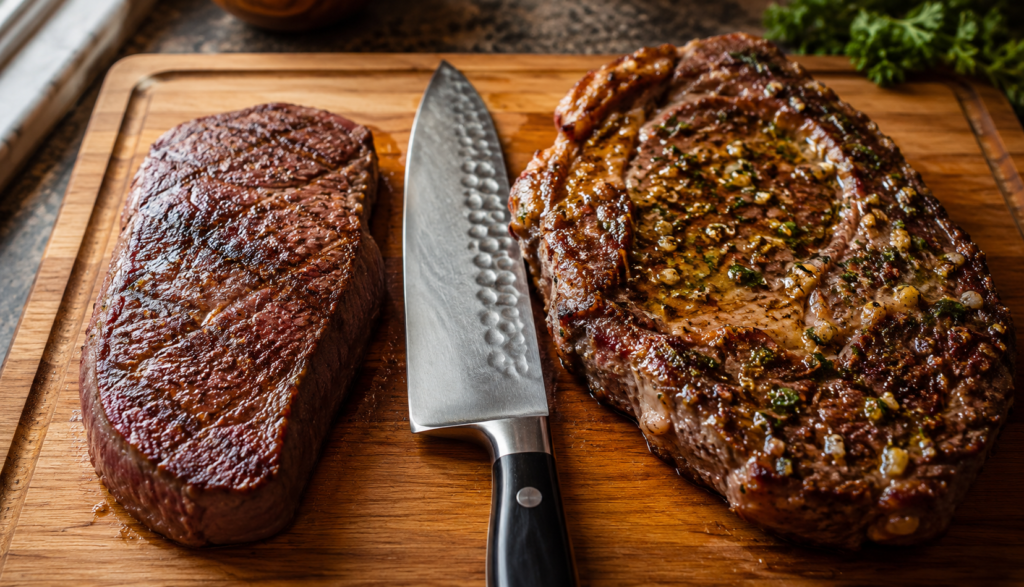
The first time I dealt with this question from a reader, the marinade issue came up immediately, and it’s the single most common way steak feeding goes wrong at a backyard barbecue. A steak that’s been sitting in a marinade of garlic, onion, soy sauce, herbs, and oil for several hours has absorbed those flavors and compounds throughout the meat, not just on the surface.
Garlic and onion are genuinely toxic to dogs regardless of how they’re delivered, and a heavily marinated steak delivers both in a concentrated form that can’t be rinsed off or trimmed away after the fact. The same applies to garlic butter steaks, where the butter base carries melted garlic directly into the meat during cooking.
Plain steak, cooked simply without any marinade or seasoning applied at any stage, is the only version that sidesteps this concern entirely — not a steak that had its seasoning wiped off, but one that was never seasoned in the first place.
Rare Steak: Is It Safe?
What surprised me was how often people assume rare steak is closer to the raw feeding approach they’ve heard about and therefore fine. Rare steak is genuinely different from raw steak — it has reached internal temperatures that kill surface bacteria — but it hasn’t reached temperatures sufficient to eliminate all potential pathogens throughout the meat, making it a meaningfully higher risk than well-done or medium-well steak.
Salmonella risk in particular is lower in well-cooked beef than in rare or medium-rare, and while the risk from a single piece of slightly undercooked steak isn’t enormous, it’s an unnecessary gamble for no real benefit since the nutritional value doesn’t change significantly with cooking level.
Cooking steak through to well-done before offering any to your dog takes nothing away from what they’re getting and removes a risk category that simply doesn’t need to exist.
Steak Bones and Gristle
I’ve watched this go wrong most clearly at outdoor grilling events where the bones feel like a natural extension of sharing the meal. Cooked steak bones, whether from a T-bone, ribeye, or any other bone-in cut, become brittle during cooking and can splinter into sharp fragments that create a genuine choking hazard and risk of internal injury.
Steak gristle, the tough connective tissue sometimes left around the edges of a cut, is another overlooked concern — too tough to chew properly for many dogs, it can be swallowed in large pieces that sit poorly in the digestive tract, causing discomfort or blockage risk particularly in smaller breeds.
Boneless, gristle-trimmed plain steak removes both concerns simultaneously and leaves only the lean muscle meat that made sharing a piece of steak seem like a good idea in the first place.
What Most People Don’t Know
Here’s something that rarely comes up in the basic steak safety conversation: the way steak is rested after cooking actually matters slightly for dogs. Steak that’s cut immediately after cooking releases more juices, which carry rendered fat back into the meat and onto the plate — those pan juices and pooled fat are where a meaningful portion of the fat content ends up post-cooking. Letting steak rest, then cutting a piece from a leaner section and leaving the pooled juices behind, gives your dog the protein without as much of the rendered fat that collects during resting. It’s a small detail, but for dogs with any history of digestive sensitivity it’s worth knowing.
How to Safely Offer Steak
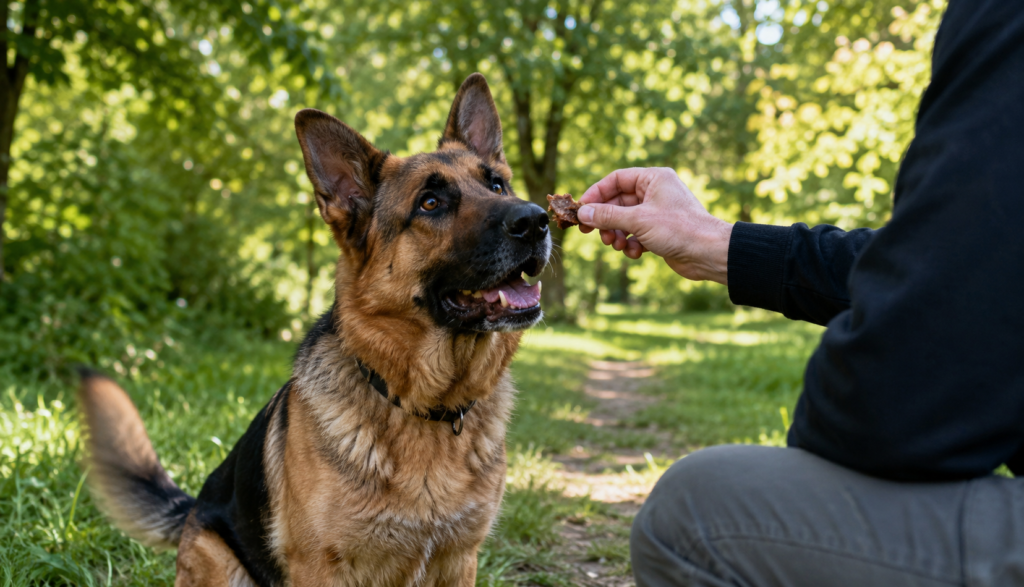
From experience, the smarter call is to set aside a plain, unseasoned piece before any marinade or seasoning goes onto the rest of the steak, cook it through fully, trim visible fat and gristle, and cut it into small pieces before offering. This takes less than a minute of extra thought during the cooking process and produces the genuinely safe version rather than a compromise.
Keeping the portion modest — a few small pieces rather than a significant serving — manages the fat content concern even with leaner cuts, since cumulative fat intake across a meal adds up faster than individual pieces suggest.
Steak works best as a genuine occasional treat rather than a regular protein source for most dogs eating a balanced commercial diet, since the higher fat content relative to chicken or fish makes it worth reserving for special occasions rather than routine feeding.
Signs of Trouble to Watch For
Watch for vomiting, diarrhea, or a hunched, uncomfortable posture in the hours after steak exposure, particularly following a fattier cut or a piece with marinade, since these can indicate early pancreatitis or a reaction to seasoning compounds rather than simple digestive upset.
Any dog that gets into steak bones warrants close monitoring for difficulty swallowing, pawing at the mouth, or unusual restlessness, since bone fragment issues can escalate quickly and may require veterinary attention rather than resolving on their own.
If symptoms persist or worsen, a vet visit is always the right call, but for the vast majority of dogs eating a small piece of plain lean well-cooked steak, the experience is nothing more than a very good evening.
Frequently Asked Questions
Q. Can dogs eat steak every day?
A. Plain lean steak occasionally is fine, but daily steak introduces cumulative fat content that raises pancreatitis risk over time — it works better as a genuine treat than a regular protein replacement.
Q. Can dogs eat rare steak?
A. Well-done is the safer choice — rare steak carries a higher risk of salmonella than fully cooked beef, and cooking it through delivers the same nutritional value without that unnecessary exposure.
Q. Can dogs eat steak bones?
A. Cooked steak bones should be avoided — they splinter into sharp fragments easily, creating a serious choking hazard and risk of internal injury that no amount of enthusiastic chewing makes safe.