

Cheese might be the single most useful trick in a dog trainer’s kit, and there’s a reason it shows up in virtually every “high value treat” recommendation you’ll ever read. Dogs go absolutely wild for it, it’s easy to portion small, and the smell carries well enough to compete with serious distractions. I’ve used it to train recall, to hide pills, and as a last resort bribe when nothing else was working. But cheese is also a food that doesn’t suit every dog equally, and understanding which dogs handle it well and which ones don’t is what separates a useful training tool from an accidental upset stomach every Tuesday morning.
Is Cheese Safe for Dogs?
I’ve seen this firsthand across more dogs than I can count: most healthy adult dogs tolerate small amounts of plain cheese without any obvious problem. It’s not toxic, it doesn’t appear on any serious warning list for dogs, and its long history as a training treat reflects genuine, widespread compatibility rather than an overlooked risk.
The safety question with cheese isn’t really “is it dangerous” but rather “does this specific dog tolerate dairy,” since lactose intolerance in dogs is common enough that it changes the calculation meaningfully for a portion of the dog population.
So the answer is yes for most dogs in small amounts, with the understanding that dairy sensitivity is the primary variable that determines whether cheese works well or causes consistent digestive problems.
Lactose Intolerance in Dogs
Most dog owners miss this completely because dogs don’t come with a dairy sensitivity label attached. Dogs naturally produce less lactase, the enzyme needed to digest lactose, as they mature past puppyhood, meaning adult dogs are genuinely less equipped to handle dairy than young puppies are.
The degree of lactose intolerance varies significantly between individual dogs — some handle cheese daily without any issue, while others show bloating, gas, or diarrhea from even a small piece. This variation is why the “cheese is fine for dogs” conversation always needs the qualifier “for most dogs” rather than being stated as a universal fact.
Watching how your specific dog responds to a small initial piece of cheese tells you more than any general guideline can, since individual dairy sensitivity is impossible to predict from breed or size alone.
Best Cheese Types for Dogs
The first time I dealt with this question from a reader, the variety question came up immediately because cheese covers an enormous range of products. Lower-fat, lower-sodium options like mozzarella and cottage cheese tend to be the gentler choices, with cottage cheese in particular being frequently recommended for dogs with sensitive digestion since its lactose content is relatively low compared to other dairy products.
Cheddar cheese in small amounts is one of the most commonly used training treats and generally well tolerated by dogs who don’t have specific dairy sensitivity, though its fat content is higher than mozzarella and portions should stay genuinely small rather than generous.
Cream cheese is higher in fat content than most other cheese types and lower in protein, making it a less practical treat option despite being technically non-toxic in small amounts for lactose-tolerant dogs.
Blue Cheese: A Specific Warning
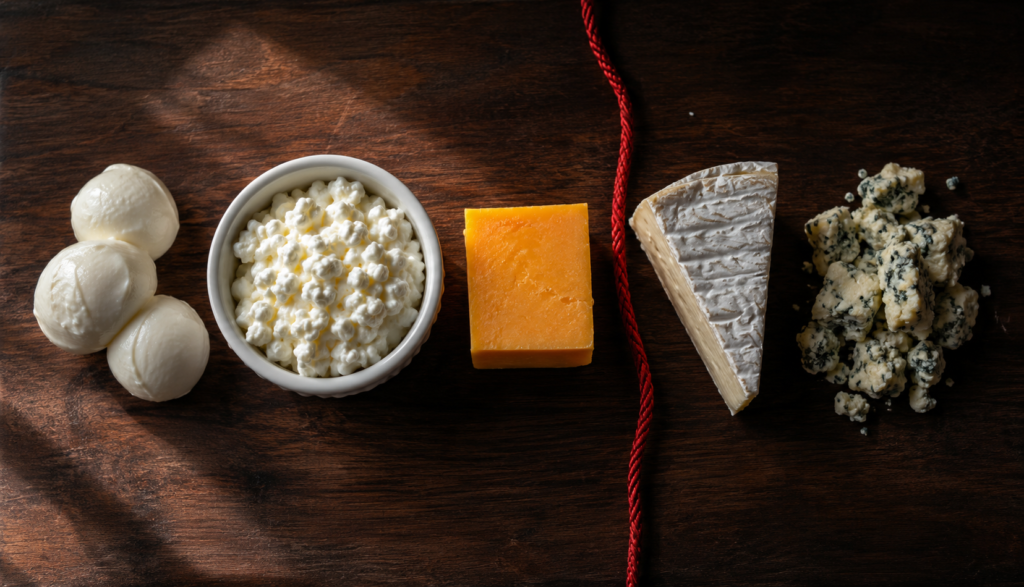
What surprised me was how often blue cheese gets lumped in with other cheese types as though the safety profile is the same. Blue cheese and other mold-ripened varieties carry a real risk beyond just fat and lactose — the specific molds used in their production can produce compounds called roquefortine C that are toxic to dogs, causing vomiting, diarrhea, and in severe cases tremors or seizures.
This isn’t a “too much fat” concern or a lactose issue — it’s a toxicity concern specific to the mold involved, which makes blue cheese a genuinely different category from cheddar or mozzarella rather than just a stronger-flavored version of the same thing.
Other mold-ripened cheeses like brie and camembert carry similar concerns and should be treated with the same caution as blue cheese rather than assumed safe because they’re not blue-veined.
Cheese as a Training Tool and Pill Pocket
I’ve watched this work better than almost any other approach when it comes to giving a resistant dog a pill or supplement they’d otherwise refuse. A small piece of soft cheese wrapped around a tablet is one of the most reliable pill pocket methods available, combining palatability with a texture that disguises the pill effectively.
For training purposes, cheese works best when cut into genuinely tiny pieces — the size of a pea or smaller — rather than generous chunks. Dogs respond to the smell and taste rather than the quantity, meaning smaller pieces train just as effectively while keeping fat content and calorie intake from becoming a concern across a training session.
Using cheese as a high value treat for specific training contexts rather than a daily snack keeps it special enough to remain motivating while limiting the cumulative fat content exposure that comes with daily feeding.
What Most People Don’t Know
Here’s something that rarely comes up: the sodium content in cheese varies dramatically between varieties in ways that aren’t always obvious. Cottage cheese and fresh mozzarella tend to be among the lowest-sodium options, while processed cheese slices, cheese spreads, and some aged hard cheeses carry significantly more sodium per serving than their fresh counterparts. For dogs with kidney health or heart health concerns where sodium intake matters, choosing the lowest-sodium cheese variety available makes a meaningful difference even when portion sizes are kept small.
How Much Cheese Is Too Much

From experience, the smarter call is to treat cheese strictly as a small, occasional treat or training reward rather than a regular food addition. A pea-sized piece per training repetition, or a small cube as an occasional reward, keeps fat content manageable while still delivering the motivational value that makes cheese worth using.
Larger portions served more frequently start to contribute meaningfully to daily fat content, raising the pancreatitis risk that applies to high fat foods generally, particularly for smaller breeds where even modest amounts represent a significant caloric load relative to body weight.
Dogs that show any digestive upset after cheese, including gas, bloating, or loose stool, are signaling lactose intolerance clearly enough to take seriously — switching to a lactose-free alternative or a different high value treat altogether is the appropriate response rather than reducing portion size and continuing.
Signs of Trouble to Watch For
Watch for bloating, gas, diarrhea, or vomiting appearing within a few hours of cheese consumption, since these typically indicate lactose intolerance rather than anything more serious and resolve once dairy is removed from the diet.
Tremors, seizures, or significant vomiting after any blue cheese or mold-ripened cheese exposure warrant urgent veterinary attention rather than home monitoring, since roquefortine C toxicity can escalate beyond simple digestive upset.
If symptoms persist or worsen following any cheese exposure, a vet visit is always the right call, and mentioning which specific type of cheese was involved helps the vet assess whether this is a lactose issue or a toxicity concern that needs different management.
Frequently Asked Questions
Q. Can dogs eat cheese every day?
A. Small amounts daily are fine for lactose-tolerant dogs, but the high fat content makes it worth keeping portions genuinely tiny rather than treating it as an unlimited daily snack.
Q. Is blue cheese toxic to dogs?
A. Yes — blue cheese and other mold-ripened varieties can produce compounds toxic to dogs causing vomiting, diarrhea, and in severe cases tremors or seizures, making them a genuinely different risk from regular cheese.
Q. What is the best cheese for dogs?
A. Cottage cheese and plain mozzarella tend to be the gentler options due to lower fat and lactose content, while small amounts of cheddar are among the most practical for training purposes.