
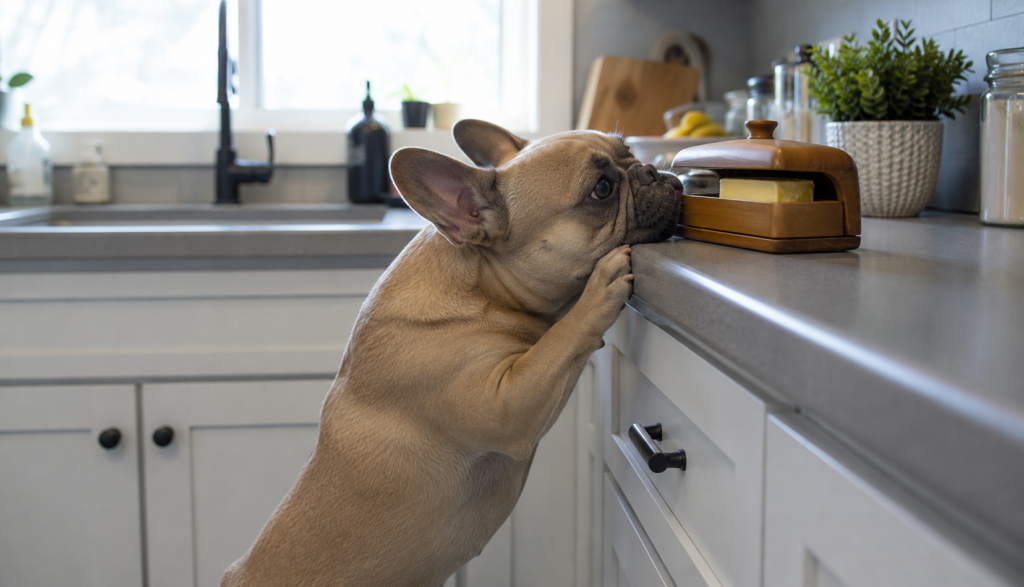
Butter is one of those foods that ends up near dogs entirely by accident more often than by intention. A dropped piece of toast, a licked knife left on the counter edge, a pan sitting at nose height after cooking — butter gets into dogs less through deliberate feeding and more through the casual proximity it has to every meal being prepared in a kitchen. That accidental exposure is usually what prompts the question, and the honest answer is more nuanced than the “it’s just fat, it can’t be that bad” instinct most people start with. Butter isn’t going to cause acute poisoning the way chocolate or grapes do, but it earns its place on the caution list through a different mechanism entirely.
Is Butter Safe for Dogs?
I’ve seen this firsthand more than once: a dog licks a pat of butter off the counter and appears completely fine immediately afterward. Butter isn’t toxic at a fundamental level — there’s no compound in plain unsalted butter that functions as a poison for dogs the way theobromine does in chocolate or thiosulfate does in onions.
That said, “not toxic” and “safe” are doing a lot of different work in a dog food conversation. Butter is almost entirely fat content with minimal protein and virtually no nutritional benefit, making it one of the purest examples of a high fat food with no compensating upside that justifies the risk it carries.
So the answer is: technically not acutely toxic in small accidental amounts, but practically not safe as a deliberate food choice, with real risks that scale directly with how much and how often a dog is exposed.
Why Fat Content Is the Core Problem
Most dog owners miss how concentrated the fat content in butter actually is. Butter is roughly 80% fat by composition, making it one of the highest-fat foods a dog is likely to encounter in a typical household — higher per gram than most meats, higher than cheese, higher than almost any whole food comparison point.
This extreme fat content is what makes pancreatitis the primary concern rather than any toxic compound. Pancreatitis is a painful and sometimes serious inflammatory condition triggered by high fat meals, and butter’s composition makes it one of the more reliable triggers in that category when consumed in anything beyond trivial amounts.
Dogs with existing sensitivity to high fat diets, a prior history of pancreatitis, or obesity-related health concerns should treat butter as completely off limits rather than a manageable occasional exposure, since even a modest lick from a butter dish can push a sensitive dog past its threshold.
Salted vs Unsalted Butter
The first time I dealt with this question from a reader, the salted versus unsalted distinction came up, and it’s worth making clearly. Unsalted butter carries only the fat content concern. Salted butter adds a sodium content layer on top of that, since the salt used in standard salted butter introduces a real additional exposure particularly for smaller breeds where even moderate salt intake adds up quickly against body weight.
This doesn’t mean unsalted butter is safe and salted butter is dangerous — both versions are problematic primarily because of fat content, and the sodium difference is secondary. But if accidental exposure happens, unsalted is the marginally less concerning version of the two, and it’s worth noting for households where butter type is a choice rather than a fixed variable.
Garlic Butter: A Completely Different Risk Level
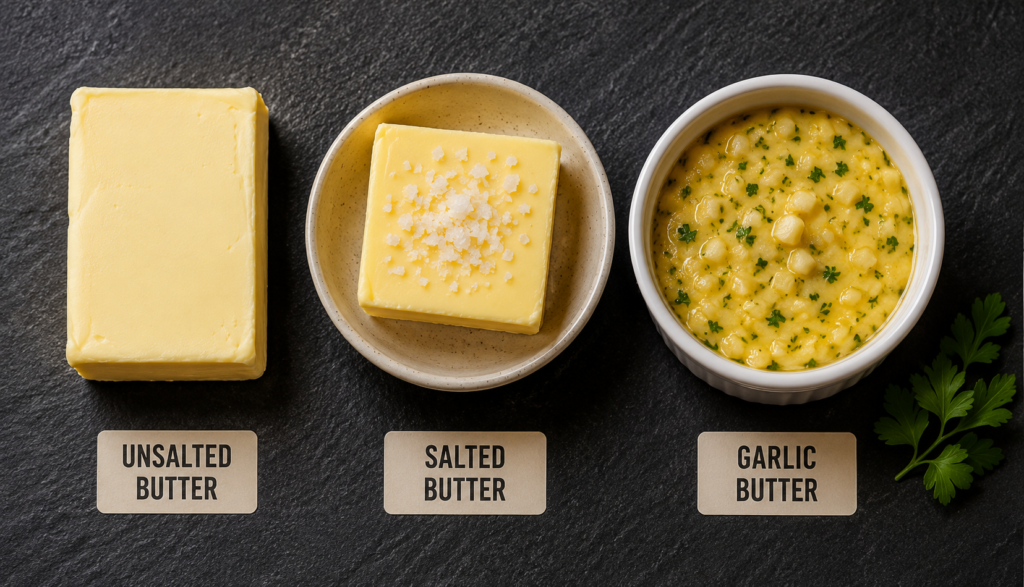
What surprised me was how often garlic butter gets treated as a flavor variation of regular butter rather than a categorically different concern. Garlic butter introduces genuine toxicity risk through the garlic component — garlic is toxic to dogs regardless of how it’s delivered, and butter is an unusually effective carrier because the fat base absorbs and distributes garlic compounds throughout the entire preparation.
A dog that licks garlic butter off a piece of bread or from a pan has been exposed to both the fat content of the butter and the garlic toxicity concern simultaneously, which is a meaningfully worse situation than plain butter exposure alone. Garlic butter on steaks, garlic bread, and compound butter preparations used in cooking are all versions of this same risk.
Any accidental garlic butter exposure involving more than a trivial amount warrants monitoring for garlic toxicity symptoms over the following day or two, since those can take time to fully develop after ingestion.
What About Ghee and Clarified Butter?
Here’s something that comes up less often but deserves a direct answer: ghee, the clarified butter used widely in South Asian cooking, removes the dairy solids and water from butter during the clarification process, resulting in a product that’s nearly pure fat with virtually no lactose remaining. This means ghee avoids the lactose concern that affects some dairy-sensitive dogs, but it concentrates the fat content even further than regular butter does. For dogs sensitive to dairy but not to fat specifically, ghee carries a slightly different profile — but for the more common concern of fat-triggered pancreatitis, ghee is no better and arguably worse than regular butter as an accidental exposure.
Obesity and Long-Term Risk
From experience, the smarter call is to think about butter not just in terms of single-incident risk but cumulative exposure. A dog that regularly accesses butter through licked pans, dropped toast, or food cooked heavily in butter is receiving a consistent high fat diet addition that contributes to dog obesity risk over time alongside the pancreatitis concern.
Dog weight management becomes meaningfully harder when a consistent hidden fat source exists in the environment, and butter is calorie-dense enough that even small regular amounts add up to a real caloric impact that doesn’t show up obviously until weight gain has already occurred.
Keeping butter inaccessible — pans off the stovetop, counters clear, butter dishes stored away — is the most practical management strategy rather than trying to moderate how much a dog licks from surfaces they can access.
Signs of Trouble to Watch For
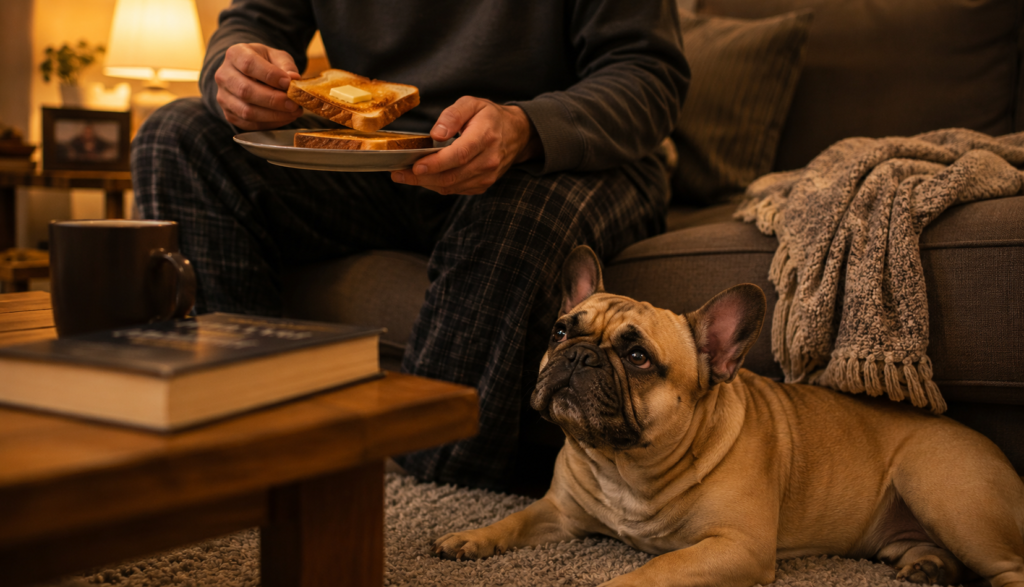
Watch for vomiting, diarrhea, or a hunched and uncomfortable posture in the hours after any significant butter exposure, since these can indicate early pancreatitis rather than simple digestive upset and the distinction matters for how urgently to seek veterinary attention.
Bloating and gas from the dairy component are common and less serious, typically resolving within a day, but abdominal pain, persistent vomiting, or significant lethargy alongside digestive symptoms warrant a vet visit rather than home monitoring.
If garlic butter was involved, watch specifically for lethargy, pale gums, or unusual weakness developing over the following twenty-four to forty-eight hours, since garlic toxicity symptoms can take time to fully appear after ingestion.
Frequently Asked Questions
Q. What happens if a dog eats butter?
A. A small accidental amount typically causes mild digestive upset at most in healthy dogs, but larger amounts raise real pancreatitis risk from the extreme fat content and warrant monitoring for symptoms.
Q. Is garlic butter toxic to dogs?
A. Yes — garlic butter combines the high fat content of butter with the genuine toxicity of garlic, making it meaningfully more concerning than plain butter and worth monitoring carefully after any exposure.
Q. Is ghee safer than butter for dogs?
A. Ghee removes lactose but concentrates fat content even further, meaning it avoids the dairy sensitivity issue but is no better than butter for fat-sensitive dogs and potentially worse for pancreatitis risk.