
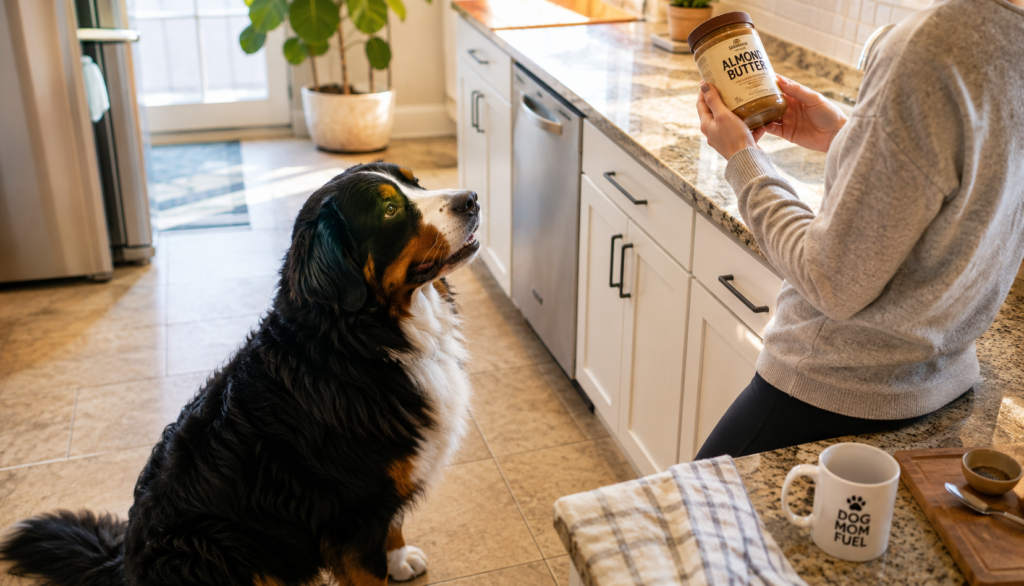
Almond butter has replaced peanut butter in a lot of households over the last several years, and dog owners who make that switch sometimes assume the same casual nut butter treat habits carry over unchanged. They mostly do — but with one specific exception that’s serious enough to make almond butter a label-check-required food rather than a grab-and-go one. The ingredient that makes certain almond butter varieties genuinely dangerous to dogs isn’t almonds, isn’t fat, and isn’t salt — it’s a sweetener that shows up in sugar-free and “natural” varieties that can cause liver failure in dogs even in small amounts. Knowing what to look for on a label before opening a jar is the single most important thing this article can tell you.
Is Almond Butter Safe for Dogs?
I’ve seen this firsthand with dog owners who switched from peanut butter to almond butter without a second thought: in many cases the transition is completely uneventful because the jar they happened to buy was a plain, xylitol-free variety. That accidental safety is what makes the risk easy to overlook.
Plain, unsweetened, unsalted almond butter with no additives is technically safe for dogs in very small amounts. It’s not toxic at a fundamental level the way onions or grapes are, and a small occasional taste won’t harm a healthy dog.
The problem isn’t almond butter as a category — it’s the variation within that category. Two jars of almond butter sitting side by side on a shelf can have completely different safety profiles depending on what’s been added, and that variability is what makes this a label-check-required food rather than a simple yes or no answer.
The Xylitol Warning — This Is the Critical One
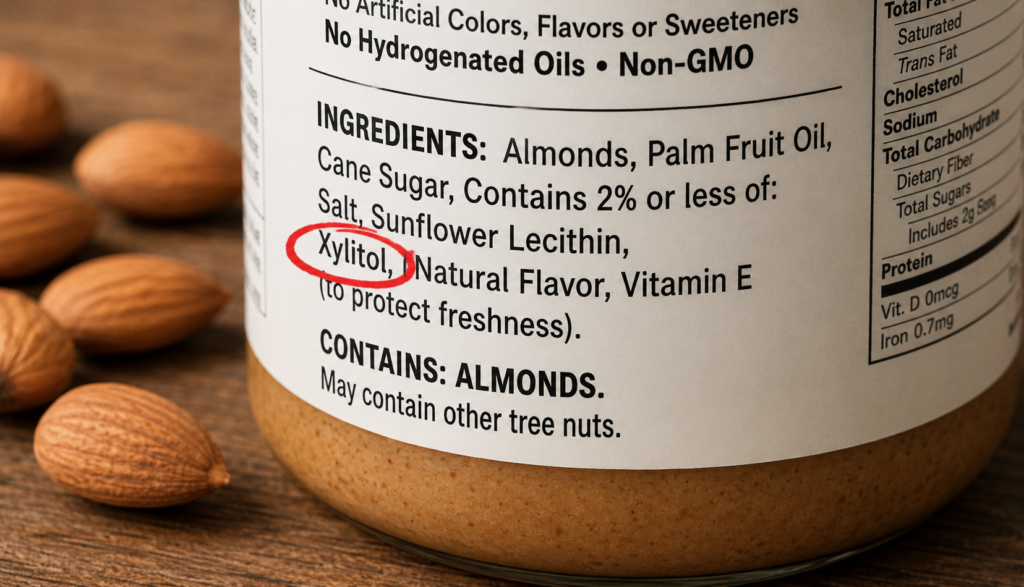
Most dog owners miss this completely until it’s too late, and it’s genuinely the most important thing in this entire article. Xylitol is a sugar substitute used in many sugar-free, reduced-calorie, and “natural” nut butter products, and it is acutely toxic to dogs in a way that has nothing to do with fat content or lactose sensitivity.
Xylitol triggers a rapid release of insulin in dogs that causes severe hypoglycemia, and in larger doses causes liver failure, sometimes within hours of ingestion. The amount required to cause serious harm is small enough that a few licks of a xylitol-containing almond butter can be a genuine emergency in smaller breeds.
Symptoms of xylitol poisoning include vomiting, lethargy, loss of coordination, seizures, and jaundice — and they can appear quickly rather than building gradually. Any suspected xylitol ingestion should be treated as an urgent veterinary situation rather than a wait-and-see one, since early treatment dramatically improves outcomes and delay significantly worsens them.
How to Check the Label Correctly
The first time I walked a reader through this, the label check turned out to be less straightforward than expected because xylitol doesn’t always appear prominently. It can be listed as “xylitol,” as “birch sugar,” or sometimes buried in a longer ingredients list under “natural sweeteners” without being called out specifically.
The safest approach is to look for almond butter that lists only almonds, and optionally salt, as ingredients — nothing else. Single-ingredient natural almond butter with no sweeteners of any kind eliminates the xylitol concern entirely and is the only version worth keeping in a household with dogs.
Sugar-free almond butter, “light” almond butter, and any variety marketed for its reduced calorie content are the highest-risk products, since these are the categories most likely to use xylitol as a sweetener substitute. Avoiding these categories entirely is simpler than reading every label in detail each time.
Almond Butter vs Peanut Butter for Dogs
What surprised many readers when I first wrote about this topic was the comparison between almond butter and peanut butter, which most dog owners treat as the gold-standard nut butter treat. Plain peanut butter is generally considered the safer default specifically because xylitol is less commonly used in standard peanut butter formulations — though it does appear in some sugar-free peanut butter varieties and requires the same label check for that reason.
Nutritionally, plain almond butter and plain peanut butter are comparable for dogs — both high in fat content, both carrying a pancreatitis risk if overfed, and both offering protein alongside that fat. Neither has a meaningful nutritional edge over the other for dogs.
The practical difference is risk profile at the point of purchase: plain peanut butter is slightly more likely to be xylitol-free in its standard formulation, while almond butter has a wider range of additives across common varieties, making the label check more critical as a habit with almond butter specifically.
Fat Content and Pancreatitis Risk
I’ve watched this get overlooked when people focus entirely on the xylitol issue and forget that even a safe, xylitol-free almond butter is still extremely high in fat content. Almond butter carries roughly the same fat load as regular butter per serving, meaning the pancreatitis risk from overfeeding is real regardless of whether xylitol is present.
Using plain xylitol-free almond butter as a Kong stuffing, a pill pocket, or an occasional lick from a spoon keeps the fat content exposure manageable. Using it as a generous regular treat, or spreading it on food daily, introduces the cumulative fat intake concern that applies to any high fat food given regularly.
Small dogs are at particular risk here since even a modest amount of almond butter represents a disproportionately large fat hit relative to their body weight compared to larger breeds where the same quantity spreads more thinly across caloric needs.
What Most People Don’t Know
Here’s something that genuinely catches most owners off guard: the xylitol risk extends beyond almond butter to a much wider range of products that dogs commonly encounter, including some brands of peanut butter, certain yogurts, some sugar-free jellies, and even some human vitamin gummies and dental products. Once you know what xylitol does to a dog’s liver and insulin response, the habit of checking ingredient labels becomes a much broader protective behavior rather than something specific to almond butter alone. Treating any “sugar-free” or “reduced sugar” product as xylitol-suspect until confirmed otherwise is the safest default rather than checking only nut butters.
How to Safely Use Almond Butter
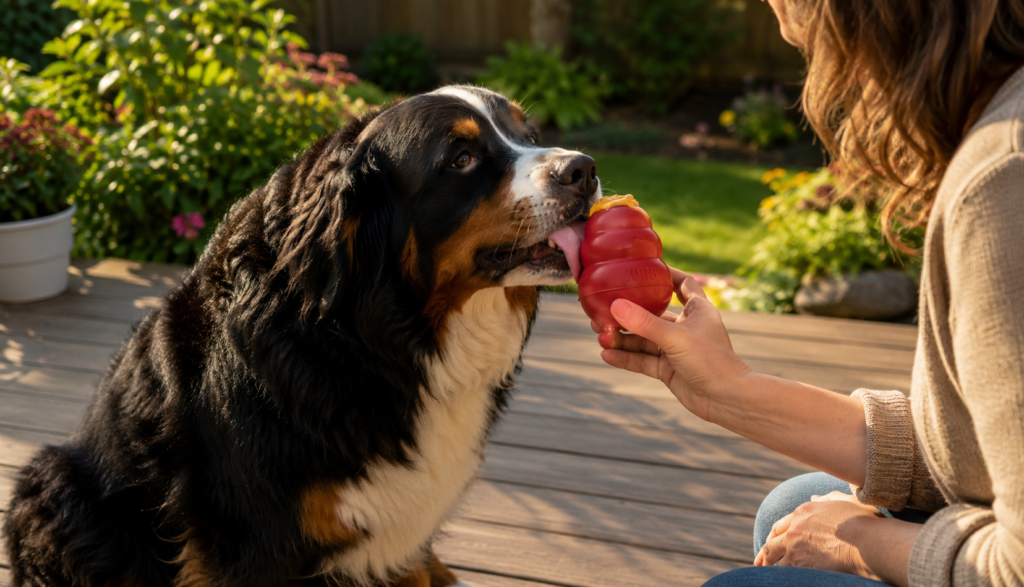
From experience, the smarter call is to buy only single-ingredient natural almond butter with nothing added, confirm the label shows almonds only, and then use it in tiny amounts as a genuine occasional treat rather than a regular dietary addition.
A thin scrape inside a Kong toy, a small dab used to hide a pill, or a lick from a fingertip once in a while keeps both the xylitol risk and the fat content concern well within manageable bounds for most healthy adult dogs.
Storing it out of reach is worth mentioning explicitly — almond butter jars left accessible have a way of being discovered and consumed in much larger quantities than intended, which converts a manageable treat into a fat overload situation even with a safe xylitol-free product.
Signs of Trouble to Watch For
If xylitol exposure is suspected, watch immediately for vomiting, weakness, loss of coordination, or collapse — these symptoms can appear within thirty minutes to an hour of ingestion and should prompt an emergency vet visit rather than home monitoring of any kind.
For plain xylitol-free almond butter overexposure, watch for vomiting, diarrhea, or a hunched uncomfortable posture over the following hours, since these typically indicate fat-related digestive upset or early pancreatitis rather than anything toxicity-related.
If symptoms persist or worsen, a vet visit is always the right call, and disclosing the specific product and how much was consumed helps the vet assess whether this is a fat overload situation or a xylitol emergency that requires a different and more urgent treatment protocol.
Frequently Asked Questions
Q. What happens if a dog eats almond butter with xylitol?
A. Xylitol causes rapid insulin release and potentially liver failure in dogs — treat any suspected xylitol ingestion as an emergency and contact a vet immediately rather than waiting for symptoms to develop.
Q. Is almond butter or peanut butter safer for dogs?
A. Plain versions of both are comparable in safety, but plain peanut butter is slightly more likely to be xylitol-free in standard formulations, making almond butter the one that requires a more careful label check at the point of purchase.
Q. How much almond butter can I give my dog?
A. A tiny amount — a fingertip dab or thin scrape inside a Kong — is plenty for most dogs. The high fat content makes generous portions a pancreatitis risk even with a completely safe xylitol-free product.