
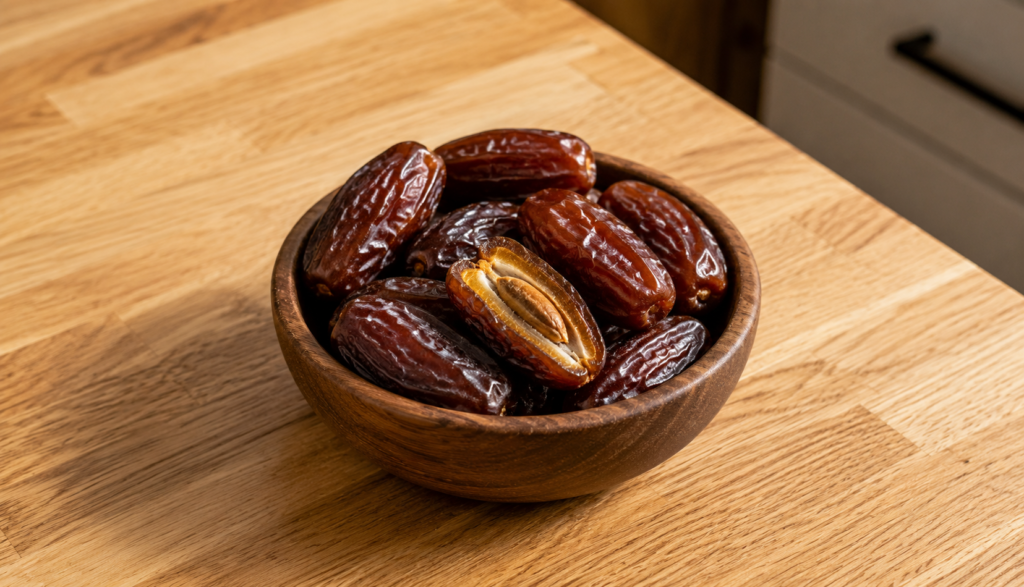
Dates occupy an unusual position on the dog-safe food list — not toxic, not dangerous in the way grapes or onions are, but also not a fruit I’d recommend reaching for when there are so many better options available. I’ve fielded this question a few times from owners who keep dates around as a personal snack and wonder if sharing is reasonable. Can dogs eat dates? Yes, technically, in very small amounts with the pit removed. The honest answer beyond that technicality is that dates are concentrated enough in sugar, and similar enough in risk profile to other dried fruits, that they rarely make sense as a regular treat when fresher, lower-sugar alternatives exist and do more nutritional work for less downside.
What Dates Actually Are and Why That Matters
Dates are the fruit of the date palm, and what most people encounter — whether fresh or dried — is already a naturally sugar-dense food even before any processing happens. Fresh dates have a sugar concentration higher than most fruits commonly given to dogs, and the dried versions found in most grocery stores concentrate that sugar further through moisture removal, similar to what happens with prunes or raisins, though dates don’t carry the specific grape-family toxicity that makes raisins dangerous.
The nutritional case for dates includes potassium, fiber, and some antioxidant content, similar in category to what bananas or figs provide. Dates aren’t nutritionally empty — there’s real fiber and mineral content present. But the concentration of natural sugar that comes with that nutrition is substantial enough that the cost-benefit calculation tips unfavorably compared to fruits offering similar nutrients at a fraction of the sugar load.
What surprised me when comparing dates against other dried fruits is just how energy-dense they are relative to their size. A single date contains meaningfully more sugar and calories than a much larger volume of fresh fruit like apple or pear. This energy density is part of why dates are popular in human snacking and baking — a small amount delivers a strong sweetness and energy hit — but that same quality works against dates as a sensible dog treat, where the goal is usually the opposite: maximum nutritional value for minimum sugar and calorie cost.
Dates for dogs aren’t toxic in the acute sense that grapes or chocolate are, which is an important distinction. This isn’t a food to treat as an emergency if a dog gets into a small amount. It’s simply a food that offers a worse nutritional trade-off than most other options on the safe fruit list, which changes the recommendation from “avoid entirely” to “there’s rarely a good reason to choose this.”
The Date Pit — A Real Hazard Often Overlooked
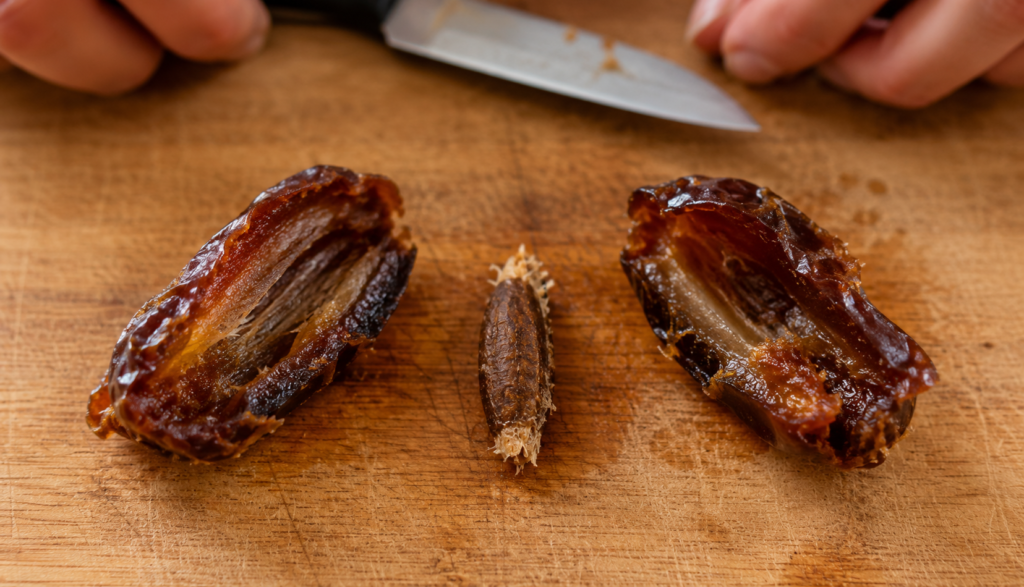
The date pit is large, hard, and elongated — a shape and density that makes it a genuine choking hazard and a risk for intestinal blockage if swallowed. This concern applies regardless of dog size, though smaller dogs face proportionally higher risk given the pit’s size relative to their throat and digestive tract.
Most fresh dates sold whole still contain the pit, and even pitted dates sold in packages occasionally have pit fragments that weren’t fully removed during processing. If you’re sharing a date with a dog, checking carefully that the pit and any fragments are completely removed is a non-negotiable step, not an optional precaution. The pit offers zero nutritional value and exists purely as a hazard once it’s separated from the flesh.
I’ve heard of cases where a dog got into a bag of whole dates left at counter height and consumed several, pits included, before being noticed. The outcome in that particular case required veterinary monitoring for signs of blockage, though no surgical intervention was ultimately needed. The flesh itself wasn’t the primary concern in that scenario — the pits were, and it was an entirely preventable situation through better food storage.
If you do choose to give a dog a small piece of date, pit removal needs to be thorough and verified, not assumed. Cut the date open, visually confirm the pit is gone, and check the remaining flesh for any fragments before offering even a small piece.
Why Sugar Content Makes Dates a Poor Regular Choice
The core issue with dates as a dog treat isn’t toxicity — it’s that the sugar concentration creates problems that other safe fruits simply don’t, at a frequency that matters more than an occasional treat would suggest. Too many dates, or even a single date for a small dog, can deliver a sugar load disproportionate to the dog’s size and metabolic capacity to handle it efficiently.
The immediate consequence of overdoing dates is the same digestive upset that comes with overdoing any high-sugar fruit — diarrhea and discomfort that resolve but are entirely avoidable. The longer-term consequence, relevant for dogs who get dates regularly rather than as a rare exception, is weight gain. Dates are calorie-dense enough that frequent small amounts add up meaningfully over weeks and months in a way that’s easy to underestimate because each individual serving seems small.
Dogs with diabetes or any condition involving blood sugar management should not have dates at all. The sugar concentration is high enough to create a meaningful glucose response, and there’s no version of “a small amount is probably fine” that applies sensibly to a diabetic dog and a food this concentrated in sugar. For dogs without diabetes but who are overweight or managing weight, the same caution applies — dates work against weight management goals more than almost any other fruit on the broader safe list.
Most dog owners miss this completely: a single pitted date, even given as an occasional treat, can represent a more significant sugar and calorie contribution than a generous handful of blueberries or a few cantaloupe chunks. The comparison matters because owners often think in terms of “one piece of fruit” without accounting for how dramatically the sugar density varies between fruit types.
Sticky Texture and Dental Considerations
Dates have an unusually sticky, chewy texture compared to most fresh fruit, closer to caramel than to a typical piece of fruit. This texture creates a practical concern beyond sugar content: sticky foods cling to teeth in a way that contributes to dental plaque buildup over time, similar to the concern with sticky commercial treats or certain peanut butter products.
For dogs already managing dental health issues, or simply as a general practice of minimizing foods that adhere to tooth surfaces, the sticky texture of dates is one more reason to favor fresh, crisp, or soft fruits that don’t leave residue behind the way dates do. This is a secondary concern compared to the sugar and pit issues, but it adds to the overall case for choosing differently when better options exist.
The sticky texture also means dates aren’t an ideal training treat despite their intense flavor — they’re harder to break into small, quick-to-eat pieces compared to something like a blueberry or a small piece of chicken, and the residue left in a dog’s mouth after eating a piece of date can be more bothersome to the dog than a treat that’s consumed cleanly.
What Most People Don’t Know
Date syrup and date paste, increasingly common as “natural” sweetener alternatives in human baking and cooking, carry the same concentrated sugar profile as whole dates without even the modest fiber content that comes with the whole fruit. If a recipe or homemade treat uses date syrup as a sweetener, that product isn’t meaningfully safer for a dog than one using regular sugar, despite the “natural” framing that makes it seem like a healthier choice in human wellness contexts.
Medjool dates specifically, the larger and softer variety commonly sold as a premium product, are even higher in sugar concentration per piece than smaller, drier date varieties because of their larger size and higher moisture content relative to fiber. If dates are going to be given to a dog at all, smaller dried date varieties in tiny amounts represent a marginally better choice than a whole Medjool date, though the broader recommendation to avoid dates as a regular treat applies regardless of variety.
The other detail worth knowing: dates appear in commercial dog treats and some homemade recipes specifically because of their natural sweetness and binding properties, which can make them seem like a validated, dog-appropriate ingredient. Their presence in a commercial product doesn’t change the underlying sugar concentration concern — it simply means the product manufacturer made a formulation choice that prioritizes palatability over minimizing sugar content. If symptoms persist or worsen after a dog eats dates, a vet visit is always the right call, though significant reactions to dates alone are uncommon outside of pit-related incidents.
Better Alternatives That Deliver More Without the Downsides
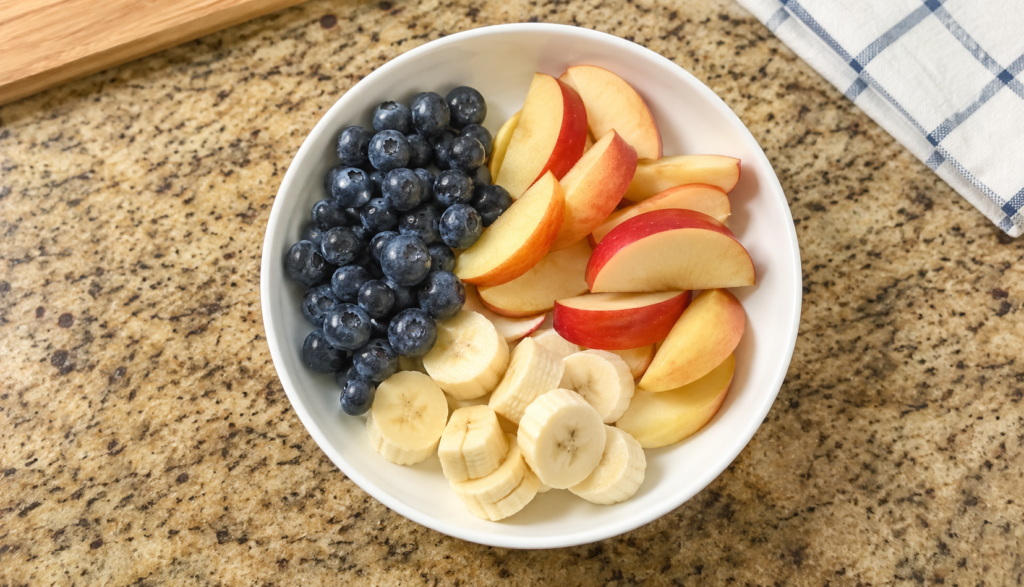
Given the sugar concentration, pit hazard, and sticky texture concerns, dates rarely earn a place in a sensible dog treat rotation when so many better options exist. Fresh fruits like blueberries, blackberries, and apple slices deliver genuine nutritional value — fiber, vitamins, antioxidants — at a fraction of the sugar density that dates carry, with none of the pit risk and none of the dental residue concern.
For owners specifically drawn to dates because of the potassium content, banana offers a comparable potassium contribution with a much lower sugar concentration and none of the pit hazard. For the fiber benefit, pear deliver similar digestive support without the energy density that makes dates problematic for weight management.
Safe fruits for dogs work best when chosen with awareness of what each one actually costs nutritionally, not just whether it falls on the “non-toxic” side of the ledger. Dates pass the basic non-toxicity test, but that’s a low bar compared to the genuinely beneficial, low-cost options available elsewhere on the safe fruit list. There’s rarely a compelling reason to choose dates over almost any other fruit when the goal is a treat that supports rather than works against a dog’s overall health.
Frequently Asked Questions
Q. Are dates toxic to dogs?
A. No, dates are not toxic the way grapes or chocolate are. However, their high sugar concentration and the choking and blockage risk from the pit make them a poor regular treat choice even though they aren’t an emergency-level danger.
Q. Is the date pit dangerous for dogs?
A. Yes. The date pit is large and hard, creating a real choking and intestinal blockage hazard. Always confirm the pit and any fragments are completely removed before offering even a small piece of date to a dog.
Q. How many dates can a dog eat?
A. Given the high sugar concentration, dates are best avoided as a regular treat entirely. If given at all, a tiny piece of pitted date as a rare exception is the most that should be offered, and dogs with diabetes or weight concerns should skip them altogether.
Q. Can dogs with diabetes eat dates?
A. No. Dates are too concentrated in sugar for dogs managing diabetes or other blood sugar conditions. There is no safe small amount that makes sense for a diabetic dog given this fruit’s sugar density.
Q. Are dried dates worse than fresh dates for dogs?
A. Dried dates are more concentrated in sugar than fresh dates due to moisture removal during drying. Both should be avoided as regular treats, but dried dates represent an even higher sugar load per piece than fresh.
Q. What should I give my dog instead of dates?
A. Blueberries, blackberries, apple slices, and banana all offer genuine nutritional benefits with far less sugar concentration and none of the pit hazard that dates carry. These are better default choices for a dog treat.
Q. Can dogs eat date syrup or date paste?
A. No. Date syrup and paste carry the same concentrated sugar as whole dates without the fiber benefit of the fruit itself. They are not a safer alternative just because they’re marketed as natural sweeteners.