
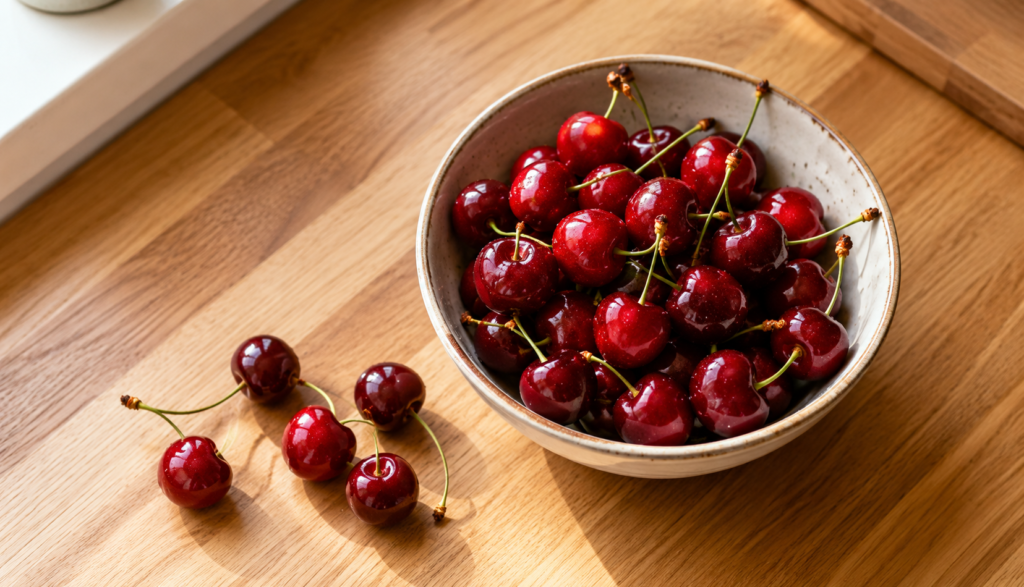
Cherries are the fruit I’m most cautious about recommending to dog owners, not because the flesh is dangerous but because the preparation requirements are strict and the consequences of skipping them are serious. Every other stone fruit on the safe list — peaches, plums, apricots — shares the same pit concern, but cherries add stems and leaves to the equation, and the cyanide concentration in a cherry pit is higher per gram than in most other stone fruit seeds. Can dogs eat cherries? The flesh, properly prepared, is safe and nutritious. The honest follow-up is that cherries are also the fruit where I most often suggest owners simply choose something easier — because the margin for error is narrow and the safer fruit alternatives are plentiful.
What Cherry Flesh Actually Offers Dogs
Fresh cherry flesh delivers vitamin A, vitamin C, and a solid antioxidant profile that earns it a legitimate place on the safe fruit list. The antioxidants in cherries — particularly anthocyanins, the compounds responsible for the deep red pigmentation — have documented anti-inflammatory properties that are relevant for dogs managing joint issues or the general inflammatory load that comes with aging. Cherries for dogs aren’t just a novelty; the nutritional case for the flesh is real.
Vitamin A supports eye health, immune function, and skin condition in dogs. Vitamin C adds immune support and antioxidant protection. The fiber content in cherry flesh supports digestion in the same way other fruits do — moderating sugar absorption and feeding beneficial gut bacteria. For a fruit this small, the nutrient density per cherry is genuinely impressive.
The natural sugar content in cherries is moderate — higher than berries, lower than tropical fruits — which puts them in a range where portion control matters but isn’t as restrictive as with mango or coconut.A few properly prepared cherries a few times a week deliver meaningful nutritional value without a sugar load that creates digestive or metabolic concern for healthy adult dogs.
What surprised me was how much dogs vary in their enthusiasm for cherry flavor. The deep sweetness appeals to most dogs immediately, which is actually part of what makes cherries complicated — a dog that loves the taste will pursue the whole fruit aggressively, pit and all, if given the opportunity. That enthusiasm makes the preparation requirement more important, not less, because there’s no relying on the dog to self-select away from the dangerous parts.
The Toxic Parts — Why Cherries Require More Care Than Other Stone Fruits
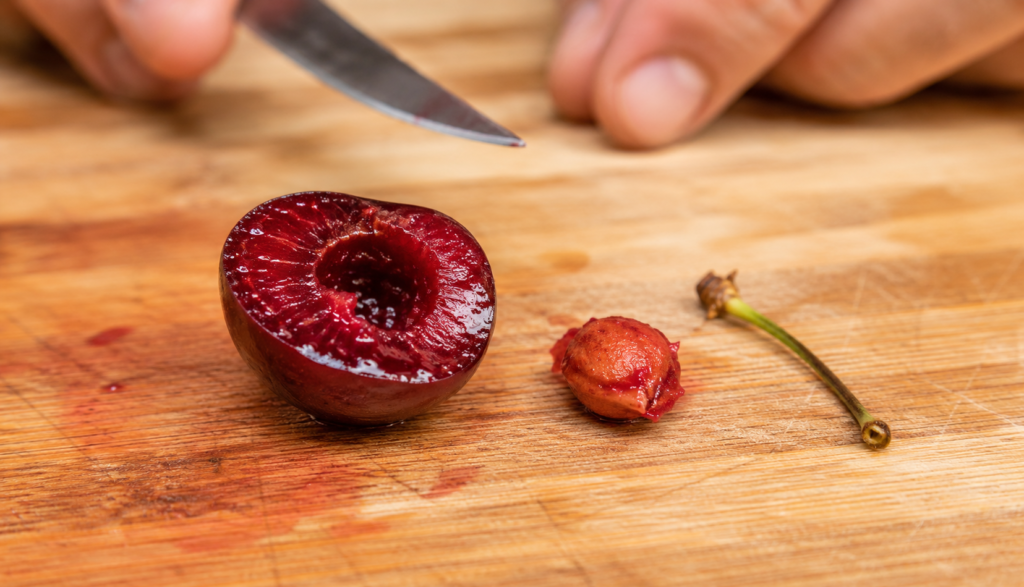
Cherry pits contain amygdalin, which breaks down into hydrogen cyanide when metabolized. This is the same compound present in peach pits and apple seeds, but the concentration in cherry pits is higher and the size of the pit relative to the fruit makes accidental ingestion easier. A dog that gets hold of a whole cherry — stem attached, pit inside — has access to the toxic parts in a single grab, without any of the separation that a larger fruit like a peach provides naturally.
Cherry stems carry the same cyanide compound as the pit, which separates cherries from most other stone fruits where only the seed is the concern. A cherry served with the stem attached isn’t adequately prepared even if the pit is removed. The stem needs to come off as part of the preparation process, every time, alongside pit removal. This two-step requirement — pit and stem both removed — is what makes cherry preparation more demanding than peach or plum preparation.
Cherry leaves are toxic to dogs as well. This matters primarily for dogs with access to cherry trees in the garden, where fallen leaves and dropped fruit create exposure opportunities that owners may not anticipate. The leaves contain the same cyanide-producing compounds as the pit and stem, and a dog foraging under a cherry tree has access to all three toxic parts simultaneously. If you have a cherry tree and a dog with garden access, that combination requires active management rather than assumption of safety.
I’ve watched this go wrong when a dog got into a bag of fresh cherries left on a kitchen counter — stems on, pits in. She ate through several before anyone noticed, and the vet visit that followed involved monitoring for signs of cyanide poisoning for several hours. No lasting harm because the amount was caught early, but dilated pupils and labored breathing were present and unmistakable. The cherry flesh caused none of that — the pits and stems were entirely responsible.
Signs of Cherry Poisoning in Dogs
Knowing the symptoms of cyanide poisoning from cherry ingestion matters because the window for effective intervention is narrow. Cyanide affects the body’s ability to use oxygen at the cellular level, which means symptoms can escalate quickly once they begin. Early recognition and immediate veterinary contact is what changes the outcome.
Dilated pupils are one of the earliest and most distinctive signs — if your dog has eaten cherries with pits or stems and you notice the pupils are larger than normal and not responding to light changes appropriately, treat it as an emergency. Breathing difficulty follows — labored, rapid, or shallow breathing indicates the respiratory system is under stress. Bright red gums, which reflect oxygen-rich blood not being utilized at the cellular level, are another documented sign of cyanide poisoning dogs can display.
Lethargy, weakness, and disorientation accompany the respiratory symptoms as oxygen deprivation progresses. Vomiting may occur as the body attempts to expel the toxin. In severe cases, seizures and loss of consciousness can follow. None of these stages should be waited through at home — if cherry pit ingestion is known or suspected, call your vet or an animal poison control line immediately rather than monitoring to see how things develop.
The amount matters in terms of severity, but there’s no safe number of cherry pits to use as a reassurance threshold. A small dog that ingests two or three pits is at meaningful risk. A large dog that ingests one may show no symptoms. The variability means the response to any known pit ingestion should be consistent: contact a vet, don’t wait. If symptoms persist or worsen after any cherry exposure, a vet visit is always the right call.
How to Prepare Cherries Safely for Dogs

The preparation process for cherries is more involved than for any other fruit on the safe list, which is worth acknowledging honestly. Pit the cherry completely — a cherry pitter makes this faster and cleaner, but a knife works fine. Remove the stem entirely. Check that no pit fragments remain in the flesh. What’s left is plain cherry flesh, which can be served whole for medium and large dogs or halved for smaller breeds.
From experience, the smarter call is to batch-prepare cherries when you have them rather than preparing individual ones on demand. Pit and destem a portion at the start of the week, refrigerate in a sealed container, and serve from that prepared batch. This approach removes the temptation to serve a cherry quickly without full preparation, which is how most cherry accidents happen — not through negligence but through the casual assumption that one cherry with the stem on is fine.
Maraschino cherries dogs are sometimes offered as a seemingly safer alternative because the pit is already removed commercially. They’re not appropriate. Maraschino cherries are preserved in heavy syrup with artificial coloring, added sugar, and preservatives that have no place in a dog’s diet. The pit removal doesn’t redeem the ingredient profile. Fresh, properly prepared cherry flesh is the only version worth serving.
Given the preparation demands, it’s worth asking whether cherries are the right choice when easier alternatives deliver comparable nutrition. Blueberries, blackberries, and raspberries offer similar antioxidant profiles with zero preparation requirements beyond rinsing. For owners who find cherry preparation manageable and have dogs that respond well, cherries are a worthwhile addition. For those who find the process cumbersome or have dogs prone to stealing food, the safer berry options are a better fit.
What Most People Don’t Know
Wild cherries dogs might encounter on walks or in gardens carry the same toxicity profile as cultivated varieties — sometimes worse, because wild cherry trees tend to have higher concentrations of cyanogenic compounds in their leaves and pits than commercially grown fruit. The assumption that wild cherries are somehow more natural and therefore safer is backwards — wild varieties have had less selective breeding to moderate the compounds that make the non-flesh parts dangerous.
The broader cherry plant is toxic beyond just the pit and stem. Cherry tree bark, roots, and wilted leaves are all documented sources of cyanide compounds in dogs. A dog that chews on a fallen branch from a cherry tree, or eats wilted leaves from pruned cuttings, is exposed to the same risk as one that eats the pits directly. This extends the cherry concern beyond fruit season and fruit preparation into year-round garden management for anyone with cherry trees.
Most dog owners miss this completely: the distinction between safe and unsafe parts of the cherry plant is not instinctive for dogs. They don’t avoid the pit because it’s bitter, they don’t recognize the stem as dangerous, and they have no hesitation about chewing bark or leaves if they’re accessible and smell interesting. The entire safety burden falls on the owner, which is why preparation and access control matter more with cherries than with almost any other fruit on the safe list.
Safer Alternatives That Deliver the Same Benefits
The nutritional case for cherries — antioxidants, vitamin A, vitamin C, anti-inflammatory compounds — is compelling, but it’s not unique to cherries. Blueberries deliver comparable antioxidant density with no preparation beyond rinsing. Blackberries add omega 3 and high fiber alongside strong antioxidant content. Raspberries bring anti-inflammatory ellagic acid in a fruit that requires no pit removal, no stem removal, and no additional caution beyond appropriate portioning.
For owners specifically interested in the anti-inflammatory benefits of dark-pigmented fruits, tart cherry extract supplements formulated for dogs exist as a veterinary option that delivers the beneficial compounds without any of the fresh fruit preparation concerns. These products are standardized to consistent dosing and sidestep the toxic parts of the plant entirely. If joint support or anti-inflammatory benefit is the goal, a conversation with a vet about cherry extract supplementation may be more productive than working with fresh cherries as a treat.
Safe fruits for dogs are most useful when they fit practically into a regular routine. A fruit that requires intensive preparation and carries meaningful risk if that preparation is skipped — even once — is a less reliable choice than one that’s consistently safe with minimal effort. Cherries can be part of a dog’s diet when handled correctly, but building a treat rotation around fruits that carry lower margin-for-error is a sensible approach for most owners.
FAQ

Q. Can dogs eat one cherry?
A. One cherry with the pit and stem fully removed is not harmful to a healthy adult dog. The concern is the pit and stem, not the flesh. If the cherry was whole — pit and stem intact — contact your vet rather than waiting to see if symptoms appear.
Q. What happens if a dog eats a cherry pit?
A. Cherry pits contain cyanide-producing compounds. Symptoms include dilated pupils, breathing difficulty, bright red gums, and lethargy. Contact your vet immediately if your dog has eaten cherry pits — do not wait for symptoms to develop before acting.
Q. Are maraschino cherries safe for dogs?
A. No. Maraschino cherries are preserved in heavy syrup with added sugar, artificial coloring, and preservatives. The pit removal doesn’t make them appropriate for dogs. Stick to fresh cherry flesh with pit and stem fully removed.
Q. Can dogs eat cherry stems?
A. No. Cherry stems contain the same cyanide-producing compounds as the pit. Always remove both the pit and stem completely before serving any cherry to a dog — neither is safe regardless of the amount.
Q. How many cherries can a dog eat?
A. With pit and stem fully removed, small dogs can have one to two cherries per serving, medium dogs three to four, and large breeds up to five or six. Serve occasionally rather than daily — the preparation demands make consistent large servings impractical and unnecessary.
Q. Are wild cherries more dangerous than cultivated ones?
A. Yes. Wild cherry trees tend to have higher concentrations of cyanogenic compounds in their leaves, bark, and pits than commercially grown fruit. Dogs with access to wild cherry trees should be kept away from fallen fruit, leaves, and branches year-round.
Q. What are safer alternatives to cherries for dogs?
A. Blueberries, blackberries, and raspberries all deliver comparable antioxidant and anti-inflammatory benefits with no pit or stem removal required. For owners who find cherry preparation demanding, these berries are a consistently safer and more practical choice.