
Finding a puddle of brown liquid on the carpet is alarming, and most owners immediately wonder whether it is something harmless or a true emergency. A dog vomiting brown liquid can be either. Sometimes the color comes from nothing more than kibble, a treat, or a little grass. Other times, brown vomit is digested blood, and that changes the situation completely. The trick is learning to tell the difference quickly, because a few simple clues, such as the texture, the smell, and how your dog is acting, will tell you most of what you need to know.
This guide explains why a dog throws up brown liquid, which shades and textures are usually mild, which ones signal a real problem, what you can safely do at home, and exactly when to call the vet. It is written to help you make a calm, confident decision in the first few minutes, not to replace a veterinary exam.
What Brown Liquid Vomit Means in Dogs
Vomit takes its color from whatever was in the stomach and from anything that mixed with it on the way up. Dog vomit brown in color usually comes from one of three sources: food or something your dog swallowed, bile mixed with stomach contents, or blood that has been partly digested. That third source is the one that matters most, because blood that sits in the stomach is changed by stomach acid and turns from red to dark brown or black.
It helps to think of brown vomit in dogs as a spectrum. At one end is a light tan or milky brown liquid that looks like the food your dog just ate. In the middle is a murky greenish-brown fluid, often bile combined with food. At the far end is a dark, gritty liquid that resembles used coffee grounds, and a thick brown liquid with a foul, fecal smell. The first is often minor. The last two are medical emergencies.
Before you do anything else, take a clear photo of the vomit and note when it happened. Your vet will almost always ask what it looked like, and the picture is more reliable than memory. If you can, collect a small sample in a sealed bag or container, since it can be tested if needed.
Common Harmless Causes of Brown Vomit
Plenty of dogs vomit brown liquid for reasons that turn out to be mild. If your dog threw up once, seems bright and playful afterward, and the liquid looks like the meal they ate, one of the following is the likely explanation.
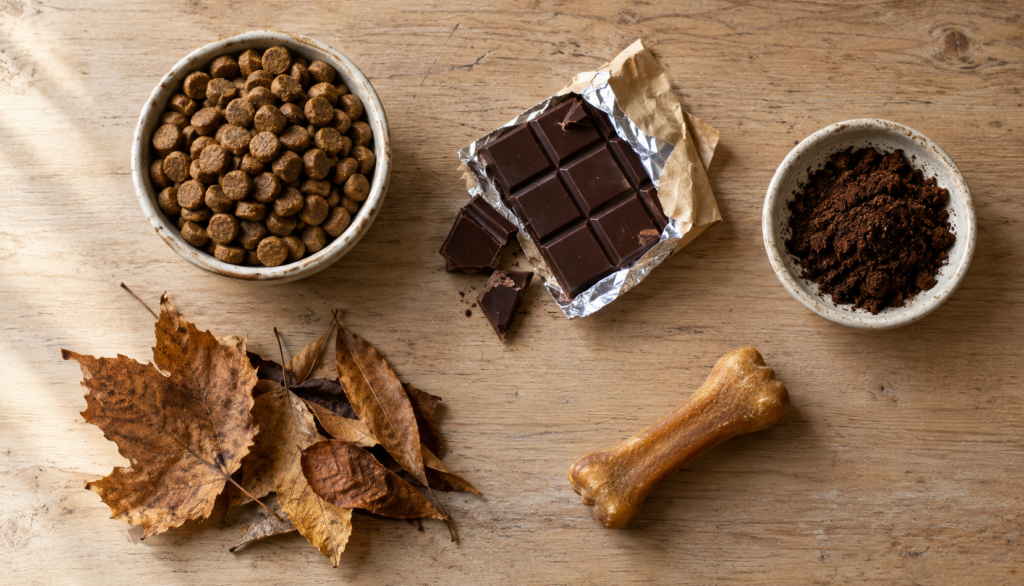
Dog food color. Many kibbles, canned foods, and treats are brown, and when they are broken down by stomach fluid they turn into a brown liquid. If your dog is throwing up brown liquid within an hour or two of eating and you can see tiny bits of kibble in it, the color is simply the food. Dyes in some treats and chews can also tint vomit brown or reddish brown.
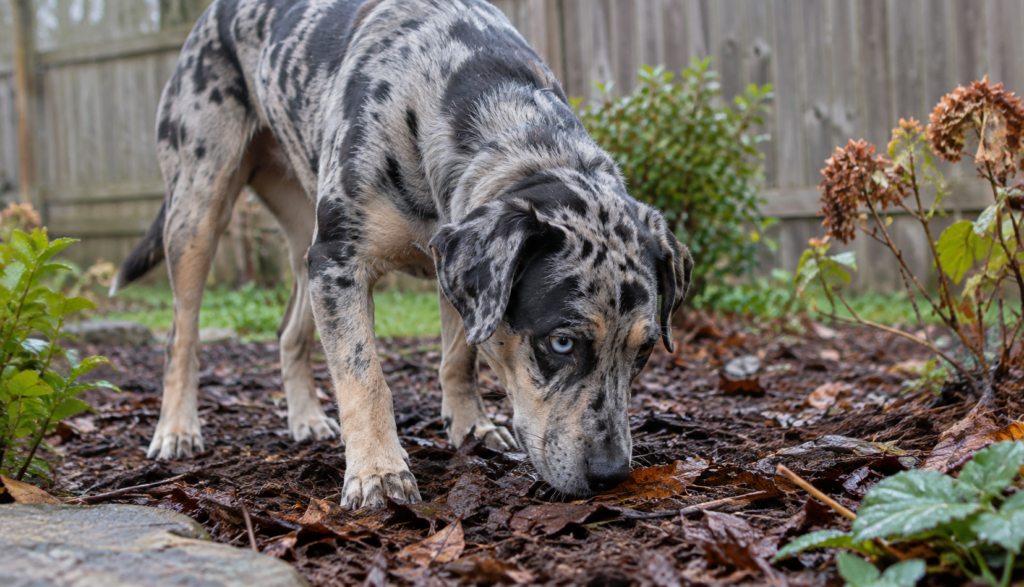
Eating something brown. Chocolate, coffee grounds, soil, mulch, wet leaves, bark, and cocoa-based products all produce brown vomit. Dirt and grass are especially common in dogs that graze outdoors. If your dog eats grass and then vomits brown or green liquid, a stomach irritated by the plant material is usually the cause. Chocolate is a different story, because it is toxic to dogs, so any time brown vomit could involve chocolate or cocoa you should treat it as a possible poisoning.
Bile mixed with food. When a dog vomits on an empty stomach, bile appears as yellow or yellow-green liquid. When bile mixes with partly digested kibble, the result can look brownish. This is common when meals are spaced too far apart, and it often happens early in the morning. Feeding smaller meals more often usually solves it.
A mild upset stomach. Eating too fast, a sudden switch in diet, a scrap from the table, or a stressful day can irritate the stomach lining and cause a single episode of vomiting. This is gastric upset, not disease, and it often passes within a day.
If your dog vomits brown liquid once and then eats and drinks normally, behaves like themselves, and has normal stool, it is reasonable to monitor closely at home. The key words are once, bright, and normal.
Coffee Ground Vomit: The Brown Liquid That Means Blood
The single most important thing to recognize is coffee ground vomit. This looks like dark brown or black granules suspended in a thin brown liquid, similar to wet used coffee grounds. The appearance comes from blood that has been in the stomach long enough for stomach acid to oxidize it. In other words, it is dog vomiting digested blood.
Vomiting blood in dogs, also called hematemesis, always deserves veterinary attention. When the blood has turned dark brown, it usually means the bleeding is coming from the stomach or upper intestine and has been going on for a little while. Common reasons include stomach ulcers, severe gastritis, a swallowed sharp object, tumors, clotting problems, and certain medications.
Medication is an especially important cause. Anti-inflammatory drugs, whether prescribed or given without a vet’s advice, can damage the stomach lining and cause ulcers. Human painkillers such as ibuprofen, naproxen, and aspirin are particularly dangerous for dogs and should never be given unless a veterinarian directs it. Steroids, especially when combined with anti-inflammatories, can add to the risk.
If you see dark, gritty, coffee ground vomit, do not wait to see whether it happens again. Contact your vet or an emergency clinic right away. Even if your dog seems alert, internal bleeding can progress quietly.
Brown Vomit That Smells Like Feces: A Blockage Warning
Another important pattern is thick brown vomit with a foul, fecal smell. When a dog vomits brown liquid that smells like poop, it can mean that the intestines are blocked and material is being pushed backward instead of moving forward. Veterinarians sometimes describe this as a sign of a lower intestinal obstruction, and it is considered an emergency.
Blockages are most often caused by swallowed objects such as socks, toys, corn cobs, bones, rope, fabric, or pieces of plastic. Dogs with a blockage typically also show other signs, including repeated vomiting, loss of appetite, a painful or tense belly, lethargy, straining to pass stool, or passing little or no stool at all. Some dogs hunch their backs, whine, or refuse to be touched around the abdomen.
A foul-smelling brown vomit is different from the mild sour smell of ordinary stomach contents. If you notice a distinct fecal odor, do not try home remedies. Go straight to a veterinarian, because a blockage can cut off blood supply to the intestine and become life-threatening within a day or two.
Other Serious Causes of Brown Vomit in Dogs
Beyond bleeding and blockages, several other conditions can lead to brown liquid vomit. They are less common than simple stomach upset, but they are the reason repeated or severe vomiting should never be ignored.
Gastric ulcers and gastritis. Severe inflammation or erosion of the stomach lining can bleed slowly, giving the vomit a brown tint. Ulcers may follow medication use, stress, liver disease, or kidney disease.
Kidney and liver disease. When the kidneys or liver are failing, toxins build up in the blood and can irritate the stomach, causing nausea, ulcers, and vomiting that may be brown. Affected dogs often drink and urinate more than usual, lose weight, and have bad breath.
Pancreatitis. Inflammation of the pancreas, frequently triggered by a fatty meal, causes repeated vomiting, abdominal pain, and tiredness. The vomit may contain bile or digested blood.
Parvovirus and other infections. In unvaccinated puppies, parvovirus can cause severe vomiting and bloody diarrhea, and the vomit may look brown. Any puppy with vomiting and diarrhea needs to be seen quickly.
Hemorrhagic gastroenteritis (HGE). This sudden condition causes vomiting and bloody, jam-like diarrhea and can lead to dangerous dehydration within hours.
Toxins and poisons. Rat poison, certain plants, chocolate, xylitol, and spoiled food or garbage can all cause vomiting that may be brown or bloody. If you suspect your dog ate something toxic, call a vet or a pet poison hotline immediately.
Swallowed blood. Occasionally, bleeding from the mouth, throat, or nose, such as from a nosebleed or a dental injury, is swallowed and later vomited as brown liquid. This is less common but worth mentioning to your vet.
What Most People Don’t Know
The biggest surprise for most owners is that color alone is not enough to judge brown vomit. Two puddles can look nearly identical, yet one is leftover kibble and the other is digested blood. What separates them is texture, smell, and context.
Here is a simple way to tell. Spread a little of the vomit on a white paper towel. Food-based brown vomit usually leaves a tan or brown stain with visible bits of kibble or plant matter. Digested blood leaves a rust-red or reddish-brown ring around the edges as it soaks in, and the particles look fine and gritty rather than chunky. This quick test is not a diagnosis, but it gives you useful information to share with your vet.
The second thing most people do not know is that black or very dark stool alongside brown vomit is a strong clue to bleeding higher up in the digestive tract. Digested blood in stool looks tarry, black, and sticky, and it has a distinctive strong smell. If your dog has dark vomit and black, tarry stool together, treat it as an emergency.
Finally, many owners believe that a dog who is acting happy cannot be seriously ill. Dogs instinctively hide weakness, and a dog with an ulcer or a slow bleed can wag their tail and ask for food right up until they collapse. Trust the appearance of the vomit and the number of episodes more than your dog’s mood.
When to Worry: Brown Vomit Urgency Chart
Use this table as a quick guide to how urgently your dog needs help. When more than one row applies, follow the most serious one.
| What You See | Likely Meaning | Urgency |
|---|---|---|
| Light brown liquid with kibble bits, one episode, dog acts normal | Food color or mild upset stomach | Monitor at home |
| Brown liquid after eating grass, dirt, or a brown treat | Stomach irritation or dyed food | Monitor closely |
| Brown liquid, two or more episodes in a day | Gastritis, infection, or dietary cause | Call your vet the same day |
| Brown vomit with diarrhea, weakness, or no appetite | Gastroenteritis, pancreatitis, or illness | See a vet within 24 hours |
| Dark, gritty coffee ground vomit | Digested blood from ulcer or bleeding | Emergency vet now |
| Thick brown vomit with a fecal smell | Possible intestinal blockage | Emergency vet now |
| Brown vomit with black tarry stool | Bleeding in the upper digestive tract | Emergency vet now |
| Brown vomit after chocolate, medication, or poison | Possible toxicity | Emergency vet or poison hotline now |
| Brown vomit in a puppy or senior dog with lethargy | Parvovirus, organ disease, or dehydration | See a vet immediately |
What to Do at Home If Your Dog Vomited Brown Liquid
If the vomit looks like food, it happened once, and your dog is bright and alert, you can begin simple home care while you watch for changes. If you see any red-flag signs from the chart above, skip the home care and call a vet.
Check the basics. Look at your dog’s gums. They should be pink and moist. Pale, white, gray, or tacky gums suggest blood loss or dehydration and mean you should go to a vet at once. Feel the belly gently. A swollen, hard, or painful abdomen is a warning sign.
Rest the stomach briefly. For a healthy adult dog that vomited once, withholding food for roughly four to six hours can let the stomach settle. Do not fast puppies, small breeds, senior dogs, or dogs with diabetes or other medical conditions unless your vet advises it.
Offer small sips of water. Give a little water at a time, since gulping a large amount can trigger more vomiting. Ice chips are another gentle option. If your dog vomits the water back up, stop and call your vet.
Reintroduce a bland diet. After the rest period, if there is no further vomiting, offer a small portion of plain boiled chicken with white rice, with no seasoning, oil, or skin. Feed small amounts every few hours for a day or two, then slowly transition back to the regular food over several days.
Remove anything risky. Pick up trash, toys, bones, and anything your dog could swallow. Secure chocolate, medication, and other toxins out of reach.
Do not use human medication. Never give ibuprofen, aspirin, naproxen, or anti-nausea and antacid drugs without veterinary guidance. Some are harmful or even deadly to dogs, and they can make stomach bleeding worse. Do not try to induce vomiting at home unless a vet or poison hotline specifically tells you to.
When to See a Vet
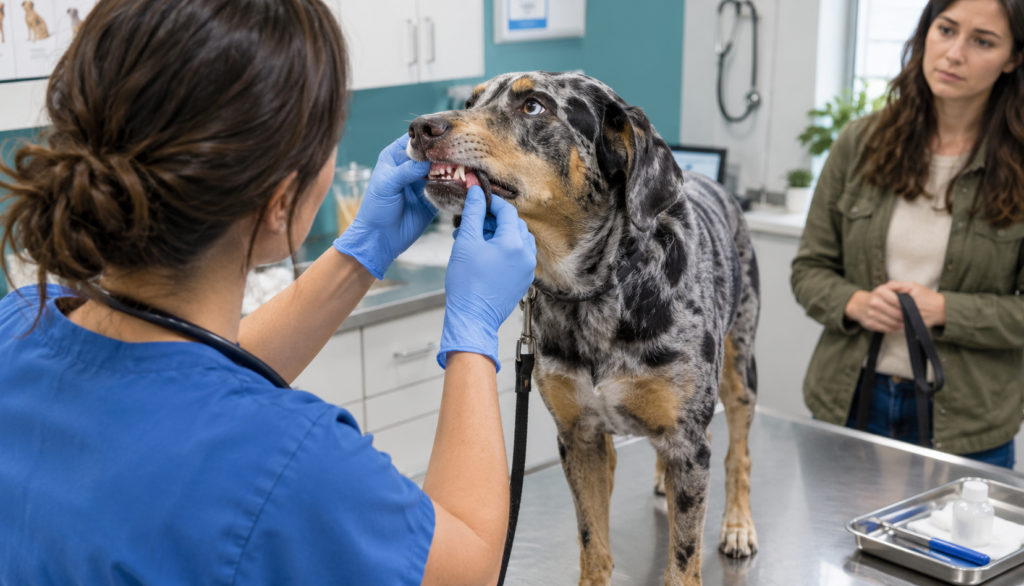
Call a veterinarian right away, or go to an emergency clinic, if you notice any of the following along with brown vomit: dark coffee ground texture, a fecal smell, black tarry stool, repeated vomiting, a swollen or painful belly, unproductive retching, pale gums, extreme tiredness, collapse, refusal to drink, or known access to toxins or foreign objects. Also seek care if the vomiting continues for more than 24 hours, even if each episode seems mild.
At the clinic, your vet will usually perform a physical exam and may recommend blood tests, a fecal test, X-rays, or an ultrasound to look for blockages, ulcers, or organ disease. Treatment depends on the cause. Dogs that are dehydrated receive intravenous fluids, and most are given anti-nausea medication and stomach protectants. Ulcers are treated with acid-reducing drugs and a bland diet, blockages often need surgery or endoscopic removal, and toxin exposure requires specific antidotes or decontamination.
Bring your photo of the vomit, a list of any medications or supplements your dog takes, and details about anything unusual they may have eaten. That information helps your vet reach the right diagnosis faster.
Puppies, Senior Dogs, and Special Cases
Puppies can become dangerously dehydrated much faster than adult dogs, and unvaccinated puppies are at risk for parvovirus. For this reason, brown vomit in a puppy, especially with diarrhea or lethargy, should be treated as urgent rather than watched at home.
Senior dogs are more likely to have kidney disease, liver disease, or tumors that cause vomiting, and they have less reserve to cope with fluid loss. A senior dog that vomits brown liquid more than once, or that has also lost weight or appetite, should be examined promptly.
Small and toy breeds are prone to low blood sugar when they stop eating, so extended fasting is risky for them. Dogs with diabetes, Addison’s disease, or other chronic illness also need veterinary direction before any food is withheld.
How to Prevent Brown Vomit in Dogs
Many cases can be avoided with a few habits. Feed consistent, high-quality meals on a regular schedule, and change foods gradually over seven to ten days. Use a slow feeder bowl if your dog gulps food. Keep garbage, bones, and small objects out of reach, and walk your dog on a leash in areas where they tend to scavenge or eat dirt.
Only give medication that your vet has prescribed for your dog, and never share your own painkillers. Keep up with vaccinations and parasite prevention, schedule regular checkups, especially for senior dogs, and store chocolate, xylitol products, and cleaning supplies where your dog cannot reach them.
Frequently Asked Questions
Q. Is brown vomit in dogs always an emergency?
A. No. Light brown vomit that looks like the food your dog ate, happens once, and comes with normal energy and appetite is often mild. It becomes an emergency when it looks like coffee grounds, smells like feces, repeats, or appears with black stool, a swollen belly, pale gums, or extreme tiredness.
Q. Why is my dog throwing up brown liquid that looks like coffee grounds?
A. Coffee ground vomit is usually digested blood that has been in the stomach long enough for acid to darken it. Possible causes include stomach ulcers, severe gastritis, medication side effects, swallowed foreign objects, and clotting problems. This needs immediate veterinary care.
Q. What does it mean if my dog vomits brown liquid that smells like poop?
A. A fecal smell can mean the intestines are blocked and contents are being pushed back up. Because intestinal blockages can become life-threatening quickly, go to an emergency vet right away rather than trying home remedies.
Q. Can I give my dog anything at home for brown vomit?
A. For a single mild episode in a healthy adult dog, a short rest from food, small sips of water, and then a bland diet of plain boiled chicken and rice can help. Do not give human medications, and skip home care entirely if you see coffee ground vomit, a fecal smell, or other warning signs.