
Few things worry an owner more than watching a dog finish a meal and then bring it straight back up. If your dog is vomiting after eating, you are probably wondering whether it is a harmless quirk or a sign of something serious. The honest answer is that dog vomiting after eating has a long list of possible causes, and most of them are mild: a dog that ate too fast, a sudden food change, or a little stomach irritation. A few, however, are genuine emergencies, which is why the details of how, when, and how often it happens matter so much.
This guide explains why dogs throw up after eating, how to tell vomiting from regurgitation, what you can safely do at home, and which warning signs mean it is time to call your vet. It is general information, not a diagnosis, and it never replaces a veterinary exam.
Is It Normal for a Dog to Throw Up After Eating?
A single episode of a dog throwing up after eating is common and often not a cause for alarm. Dogs are enthusiastic eaters, and many gulp their food with very little chewing. Swallowed air and a stomach packed too quickly can trigger a reflex that sends the meal back up within minutes. If your dog vomits once, then acts completely normal, wants to play, drinks water without trouble, and eats the next meal happily, it is usually a minor event.
So, is it normal for a dog to throw up after eating? Occasionally, yes. Repeatedly, no. When dog vomiting after eating becomes a pattern, such as vomiting after every meal for several days, something is making the stomach or esophagus unhappy and the cause deserves attention. A dog vomiting after eating but acting normal is still worth tracking, because chronic problems can be quiet for a long time before they show other symptoms.
Why Does My Dog Throw Up After Eating? Common Causes
When owners ask why their dog throws up after eating, the answer usually falls into one of a handful of everyday causes. These are the ones vets see most often, and most can be managed with small changes to how and what you feed.
Eating Too Fast
This is the number one reason a dog throws up after eating too fast. Rapid eating and swallowed air stretch the stomach quickly, and the meal comes back up shortly afterward, often still in the shape of the kibble. Dogs that compete with other pets for food, dogs that were once underfed, and naturally greedy eaters are the usual culprits. If your dog vomits right after eating and the food looks barely changed, speed is the first thing to suspect.
A Sudden Diet Change
Dog vomiting after eating new food is very common. The digestive system relies on a stable gut bacteria population, and switching brands, flavors, or protein sources overnight can upset it. A bag of new dry food or a handful of rich treats can be enough. Sudden diet changes are best avoided, and a new food should be mixed in gradually over seven to ten days.
Food Intolerance and Food Allergy
Some dogs react badly to a specific ingredient such as chicken, beef, dairy, wheat, or an additive. Food intolerance and food allergy can both cause a dog to vomit after eating, often alongside itchy skin, ear problems, gas, or loose stools. If your dog vomits after eating and has diarrhea, a reaction to an ingredient is one of the possibilities your vet will explore, usually with a carefully controlled elimination diet.
Exercise, Excitement, and Drinking Too Much
Running around right after a meal can slosh a full stomach and bring food back up. The same goes for gulping a large bowl of water after eating. Many owners notice a dog vomiting after eating and drinking water in one rush, especially on hot days or after play. Letting your dog rest for thirty to sixty minutes after meals is a simple fix, and exercise after meals is worth avoiding entirely for deep-chested breeds.
Grass, Stress, and Stomach Irritation
Plenty of dogs eat grass and then vomit, and a dog vomiting after eating grass is usually dealing with a mildly upset stomach rather than anything dramatic. Stress and anxiety at mealtime, such as noisy households or competition from another dog, can also trigger vomiting. Gastritis, meaning irritation of the stomach lining, is another frequent cause, often brought on by scavenging, spoiled food, or a dog eating something bad on a walk.
Serious Causes That Need a Vet
Mild causes are common, but a dog vomiting after eating can also be an early sign of a condition that cannot wait. Knowing these causes helps you recognize when a routine upset has become an emergency.
Bloat (gastric dilatation-volvulus, or GDV) is the most urgent. The stomach fills with gas and can twist, cutting off blood flow and putting the dog in shock within hours. It most often strikes large, deep-chested breeds such as Great Danes, German Shepherds, Standard Poodles, and Weimaraners. A classic sign is unproductive retching, where the dog keeps trying to vomit and nothing comes up, along with a tight, swollen belly, drooling, restlessness, and pale gums. This is a true dog vomiting after eating emergency, and the only safe response is an immediate trip to an emergency vet.
Intestinal blockage and foreign objects can stop food moving through the gut. Dogs that swallow socks, toys, corn cobs, bones, or fabric may vomit repeatedly after eating or drinking, refuse food, and become lethargic. A dog vomiting after swallowing a foreign object often gets worse over a day or two and needs imaging and sometimes surgery.
Megaesophagus and other esophageal disorders prevent food from traveling normally to the stomach. The esophagus becomes enlarged or weak, so meals pool and are then pushed back up, usually within minutes. This causes regurgitation rather than true vomiting, and it can lead to aspiration pneumonia if untreated.
Pancreatitis is inflammation of the pancreas and is often triggered by a high-fat meal, table scraps, or greasy leftovers. Dogs may vomit after eating, hunch their backs, and seem painful and tired. It can become serious fast and needs veterinary treatment.
Other causes include toxins and toxic foods, parasites, infections, kidney or liver disease, and metabolic conditions. A dog vomiting after eating toxic food, such as grapes, chocolate, xylitol, onions, or garlic, should be treated as an emergency and needs a call to a vet or pet poison hotline right away.
Timing Clues: Right After Eating vs. Hours Later
When the vomiting happens can point toward the cause, and giving your vet an accurate timeline is one of the most useful things you can do.
If your dog is vomiting right after eating, within a few minutes and with food that looks undigested, the most likely explanations are eating too fast, regurgitation, or an esophageal problem. Dog throwing up undigested food in this pattern often means the meal never really reached the stomach.
If you see a dog throwing up food hours after eating, and the food looks partly digested or you see a dog vomiting undigested food hours after eating, that suggests the stomach is not emptying properly. This can point toward a blockage, a stomach motility problem, or a serious obstruction, so it deserves a prompt vet visit. Likewise, a dog vomiting after eating at night, after the evening meal, is worth noting if it repeats, since it may reflect a feeding schedule issue or an overfull stomach lying down to sleep.
A dog vomiting yellow after eating usually means bile has entered an empty stomach, commonly because meals are too far apart. If you notice yellow bile or white foam as the main pattern, those are separate topics with their own causes and fixes.
What Most People Don’t Know
The biggest thing most owners miss is that vomiting and regurgitation are not the same, and the difference changes everything. True vomiting is an active process. Your dog heaves, drools, licks their lips, and you can see the abdominal muscles contracting before the contents come up. The material is often partly digested and may be yellow or foamy.
Regurgitation is passive and sudden. There is no heaving or warning. Food simply slides back out, often within seconds or minutes of eating, usually undigested and shaped like a tube because it never left the esophagus. Many owners describe it as the food just falling out of the mouth. Because regurgitation points to the esophagus rather than the stomach, the causes and the urgency are completely different, and it is one of the first things your vet will ask about.
Two more facts surprise people. First, dogs that vomit after nearly every meal are not just fussy. A pattern like this is a medical sign, and waiting weeks to see if it passes can allow a treatable condition to progress. Second, many dogs that are fed once a day are more prone to bile vomiting and rapid eating, and simply splitting the same amount of food into two or three smaller meals solves the problem more often than owners expect. Filming an episode on your phone can help your vet tell vomiting from regurgitation, which is often more useful than a long description.
When to Worry: Symptom Urgency at a Glance
| What You See | Likely Meaning | Urgency |
|---|---|---|
| One episode, dog acts normal, eats next meal | Ate too fast, excitement, mild upset | Watch at home |
| Vomiting after eating grass, then normal behavior | Mild stomach irritation | Watch at home |
| Vomiting after a new food or treat | Diet change or intolerance | Monitor; call vet if it repeats |
| Vomiting after every meal for several days | Chronic digestive, allergy, or esophageal issue | Book a vet visit soon |
| Vomiting plus diarrhea and lethargy | Infection, gastritis, parasites, pancreatitis | Call vet the same day |
| Vomiting more than twice in 24 hours, or not eating | Possible illness or blockage | Call vet the same day |
| Puppy or senior dog vomiting repeatedly | Higher risk of dehydration and serious illness | Call vet promptly |
| Retching with nothing coming up, swollen belly | Possible bloat (GDV) | Emergency, go now |
| Blood in vomit, pale gums, collapse, suspected toxin | Poisoning, internal bleeding, shock | Emergency, go now |
What to Do at Home for a Mild Episode
If your dog is an otherwise healthy adult, has vomited once or twice, and is still bright, alert, and drinking, simple home care is often enough. Think of this as a short-term plan, not a way to avoid the vet when symptoms continue.
Start by picking up the food bowl and resting the stomach for around six to twelve hours, which is the commonly advised window for a healthy adult dog. Do not fast puppies, toy breeds, senior dogs, or dogs with diabetes without asking your vet first. Keep fresh water available, but offer it in small sips rather than a full bowl, because gulping water can trigger another round of vomiting.
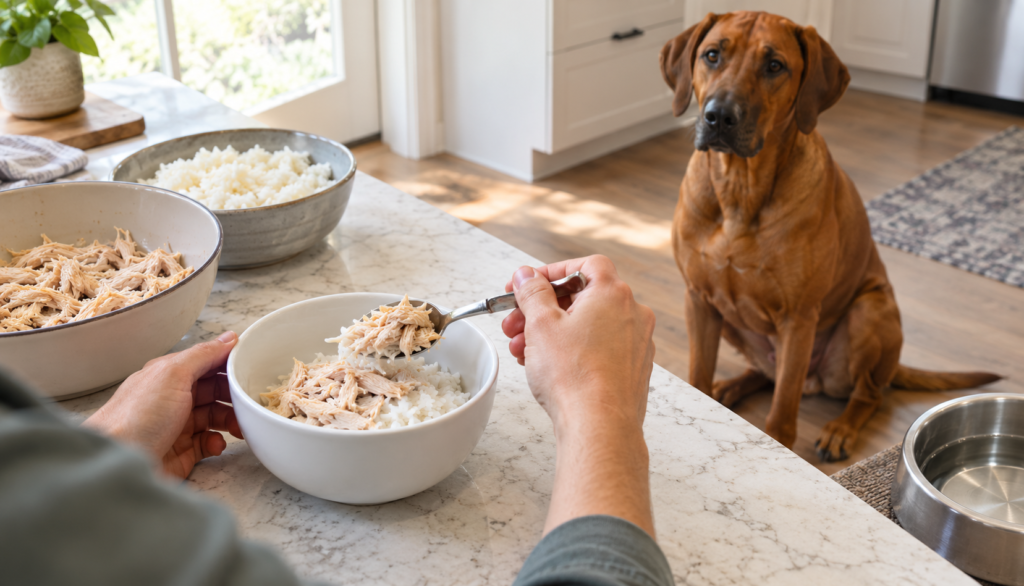
When the stomach has settled, reintroduce food slowly. A bland diet of plain boiled chicken with white rice, in several tiny portions, is the usual choice. This is the standard home remedy for dog vomiting after eating when the cause looks mild. Bland diet reintroduction should last a couple of days, then your dog can be gradually moved back to normal food by mixing the two. Avoid fatty foods, dairy, seasoning, and table scraps during recovery.
Never give human anti-nausea medication, painkillers, or any over-the-counter drug without your vet’s approval, because several are dangerous to dogs. Do not try to induce vomiting at home unless a veterinarian tells you to do so. And watch your dog closely: if the vomiting continues, your dog becomes lethargic, or you see signs of dehydration such as dry gums, sunken eyes, or skin that stays tented when gently pinched, call your vet.
When to Call the Vet or Go to Emergency
Many owners hesitate over whether to call the vet when a dog vomits after eating. A good rule is to call the same day if the vomiting repeats, if your dog stops eating, or if vomiting comes with diarrhea, fever, or lethargy. Dehydration risk rises quickly with repeated vomiting, especially in small dogs and puppies, so waiting too long can turn a manageable problem into a harder one.
Go to an emergency clinic immediately if you notice any of the following: unproductive retching, a hard or swollen belly, pale or blue-tinged gums, collapse or extreme weakness, blood or coffee-ground material in the vomit, severe pain such as a hunched posture or crying out, or any chance your dog swallowed something toxic or an object that could block the gut. Do not wait to see whether these signs pass. When in doubt about a dog vomiting after eating, a phone call to your vet or an emergency clinic costs nothing and can save your dog’s life.
Your vet may examine your dog, ask about diet and timing, and recommend bloodwork, X-rays, or ultrasound. Bringing a note of when your dog eats, what the vomit looked like, and any recent changes in food, treats, or routine makes the visit faster and more accurate.
How to Stop Your Dog From Throwing Up After Eating
Once serious causes are ruled out, prevention is mostly about slowing down and simplifying mealtimes. These changes help many dogs that vomit after eating.
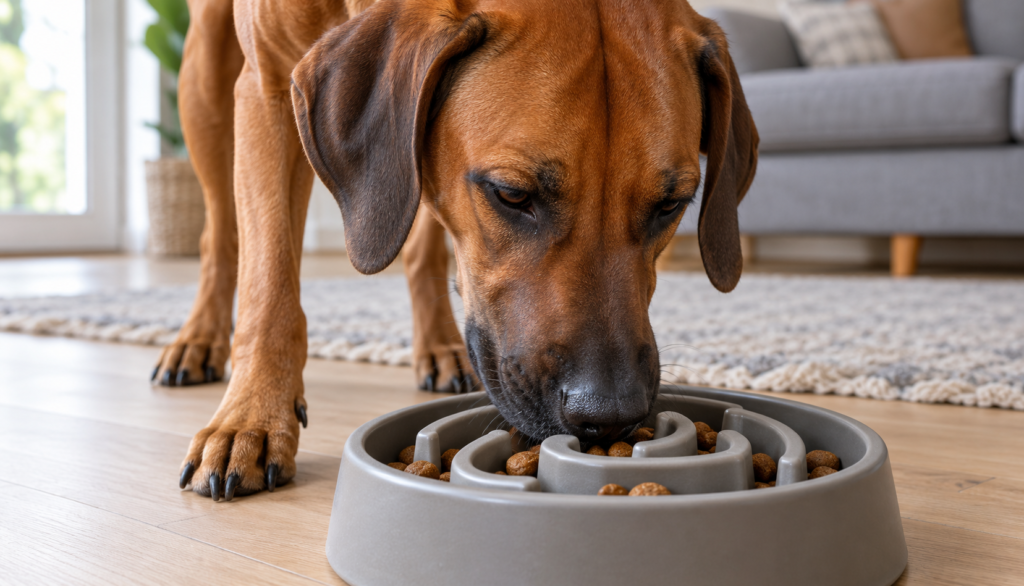
Use a slow feeder bowl. A slow feeder bowl for dogs that vomit after eating forces them to work around ridges or obstacles, which cuts down gulping and swallowed air. A puzzle feeder or a lick mat works similarly, and even scattering kibble on a baking tray can help. Meal pacing matters just as much as the equipment.
Split the daily portion into two or three smaller meals instead of one large one. Feed dogs separately if competition makes them gulp. Keep mealtime calm and quiet, since stress and anxiety at mealtime can trigger vomiting on their own. Wait thirty to sixty minutes after eating before play or walks, and limit water right after the meal.
Review the food itself. Many owners ask about the best dog food for dogs that vomit after eating, and the honest answer is that it depends on the cause. Some dogs do well on a highly digestible, moderate-fat diet, while dogs with confirmed allergies may need a veterinary hypoallergenic or novel-protein formula. Ask your vet before changing foods, and make any switch gradually. Cut back on treats, table scraps, and fatty leftovers, which are common triggers for stomach upset and pancreatitis.
Puppies and Senior Dogs: Extra Caution
A puppy vomiting after eating needs closer attention than an adult dog. Puppies have small energy reserves, and their digestive systems are sensitive, so repeated vomiting can cause dehydration and low blood sugar quickly. Puppies are also at risk of parvovirus and intestinal parasites, both of which cause vomiting and need prompt treatment. Puppies also tend to eat too fast and swallow things they should not, so a vet visit is wise if a puppy vomits more than once or seems tired.
A senior dog vomiting after eating is also a reason for a check-up. Older dogs are more likely to have kidney disease, liver problems, pancreatitis, or tumors, and vomiting can be an early sign. Even if the cause turns out to be simple, a senior dog with new or repeated vomiting after meals deserves bloodwork and a proper exam rather than weeks of waiting and hoping.
Frequently Asked Questions
Q. Why does my dog throw up after eating but act normal?
A. The most common reasons are eating too fast, swallowed air, or a mildly irritated stomach. If it happens once and your dog stays bright and hungry, it is usually minor. If it repeats over several days, schedule a vet visit even though your dog seems fine.
Q. Should I feed my dog again after vomiting?
A. For a healthy adult dog, rest the stomach for several hours, then offer a few small spoonfuls of plain boiled chicken and white rice. Increase portions slowly if your dog keeps it down. Puppies, toy breeds, and diabetic dogs should not be fasted without veterinary advice.
Q. How long is too long for a dog to keep vomiting after eating?
A. Call your vet if your dog vomits more than twice in 24 hours, vomits after every meal for several days, or stops eating. Puppies and senior dogs should be seen sooner. Go to an emergency vet immediately for unproductive retching, a swollen belly, blood, or collapse.
Q. Is dog vomiting after eating a sign of bloat?
A. It can be. Bloat typically shows as retching with little or nothing coming up, a swollen or tight belly, drooling, and restlessness, mostly in large deep-chested breeds. If you see these signs, treat it as an emergency and get to a vet right away.