
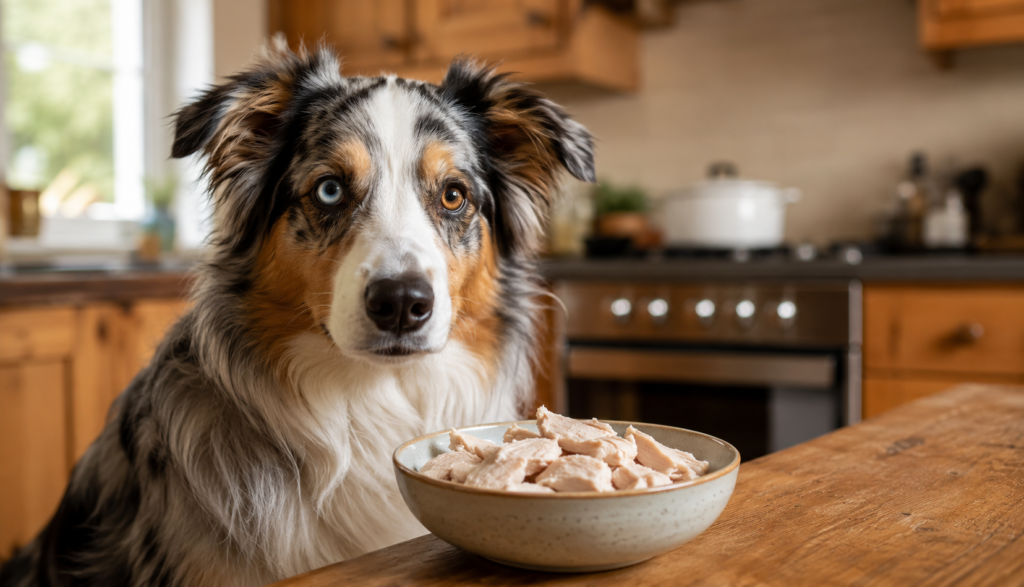
The first time my dog had a serious bout of digestive upset, the vet’s immediate advice was boiled chicken and plain rice, nothing else. I remember being surprised that something so simple was the actual recommendation, not some prescription diet or specialty product. That moment reframed how I thought about chicken entirely, shifting it from “common ingredient in dog food” to “one of the most genuinely useful foods a dog owner can keep available.” Chicken earns that reputation legitimately, but it comes with a few preparation-specific pitfalls that catch owners off guard, particularly around bones, skin, and the raw versus cooked debate that keeps coming up in dog nutrition circles.
Is Chicken Safe for Dogs?
I’ve seen this firsthand more times than I can count: plain cooked chicken is about as consistently safe and well-tolerated as any food in a dog’s diet. It appears as a primary ingredient in the majority of commercial dog food formulas, gets recommended by vets for bland diet protocols, and suits dogs of virtually every age, size, and health status when prepared correctly.
This isn’t a “safe in moderation” qualifier in the usual cautious sense — chicken is genuinely one of the core proteins most dogs can eat regularly without issue, making it a reliable staple rather than an occasional treat with caveats attached.
The answer is an unambiguous yes for plain cooked chicken. The rest of the conversation is about which version of chicken that means, because the form and preparation make a significant difference.
Why Boiled Chicken Works for Upset Stomachs
Most dog owners miss this specific angle: boiled chicken isn’t just safe, it’s actively useful as a recovery food during digestive upset because of how easily it digests compared to richer proteins. The lean protein content gives a dog’s body what it needs without putting additional strain on an already-irritated digestive system.
Combined with plain white rice, boiled chicken forms the classic bland diet that vets have recommended for decades for dogs recovering from vomiting, diarrhea, or general stomach sensitivity. The simplicity is the point — nothing in the combination asks much from a compromised gut.
This works as a short-term recovery tool rather than a permanent diet, and ongoing digestive issues still warrant an actual vet visit rather than indefinitely cycling through bland diet protocols at home.
Chicken Bones: The Clearest Risk
The first time I dealt with this question from a reader, chicken bones came up almost immediately, and they deserve that level of attention. Cooked chicken bones are brittle and splinter into sharp fragments easily, creating a genuine choking hazard and a real risk of internal injury if a sharp piece is swallowed.
This applies to every cooked chicken bone regardless of size — a large thigh bone and a small wing bone both splinter when cooked, and both pose the same category of risk even if the scale differs slightly.
Raw chicken bones are softer and less prone to splintering than cooked ones, which is part of why raw feeding advocates sometimes include them, though even raw bones carry risk and should only ever be offered with direct supervision rather than left with a dog unattended.
Chicken Skin: Worth Removing
What surprised me was how many people remove the skin for themselves out of dietary habit but then give it to the dog as a bonus, not realizing it’s exactly the part worth keeping away from dogs too. Chicken skin concentrates the fat content and absorbs the seasoning, butter, or oil from cooking more heavily than the underlying meat does.
This makes chicken skin the primary pancreatitis risk in a chicken-based meal — not the breast meat underneath, which is genuinely lean. Removing the skin before offering any chicken to your dog takes five seconds and eliminates the biggest real concern in this food.
For dogs with existing sensitivity to high fat diets or any prior pancreatitis history, chicken skin should be treated as completely off limits rather than an occasional acceptable indulgence.
Rotisserie Chicken: The Hidden Problem
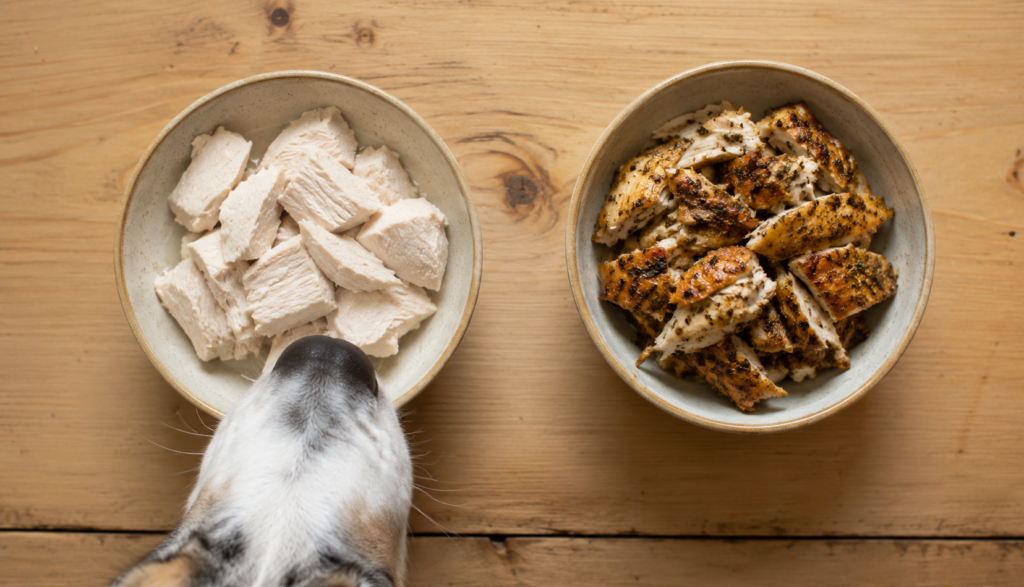
I’ve watched this trip up owners who assume store-bought rotisserie chicken is a convenient shortcut to plain cooked chicken. The issue is that rotisserie chicken is heavily seasoned before and during cooking, typically with garlic, onion, and various spice blends that absorb deeply into the meat rather than sitting only on the surface.
This means pulling the breast meat off a rotisserie chicken and offering it to a dog isn’t the same as plain boiled chicken, even if you’ve removed the skin and bones. The seasoning exposure is already in the meat itself by the time it reaches the carving stage.
Plain chicken boiled or baked at home without any seasoning, oil, or garlic involvement remains the only version that delivers the genuine safety and digestive benefit that makes chicken worth recommending in the first place.
What About Raw Chicken?
Here’s something that generates more debate than most dog nutrition topics: raw chicken carries a salmonella risk that cooking eliminates, and while some raw feeding advocates argue dogs handle raw chicken safely, the risk isn’t zero and the benefit over properly cooked plain chicken isn’t clearly established enough to justify that exposure for the average pet dog.
This is particularly worth considering in households with young children, elderly individuals, or immunocompromised family members, since salmonella from raw chicken can transfer from a dog’s mouth and environment to humans who then come into contact with surfaces the dog has touched.
Plain boiled or baked chicken delivers everything nutritionally that raw chicken does, without the food safety concern, making it the easier and more defensible choice for most households regardless of where someone lands on the raw feeding debate.
Chicken Giblets and Other Parts
From experience, the smarter call is to treat chicken giblets, the organ meats often discarded when roasting a whole bird, as a legitimate and nutritionally dense bonus rather than waste. Plain boiled chicken liver, heart, and gizzard are all safe for dogs and carry a higher concentration of nutrients than breast meat alone.
Chicken broth made from plain simmered chicken without onion, garlic, or seasoning also works as a palatable addition to food for dogs who need encouragement to eat during illness or recovery.
Ground chicken cooked plainly at home is another useful form, particularly for puppies or dogs with dental issues who benefit from a softer texture than whole breast pieces provide.
Signs of Trouble to Watch For
Watch for vomiting, diarrhea, or unusual lethargy after chicken exposure, which can indicate either a chicken allergy in dogs that have developed sensitivity, or a reaction to seasoning or skin if the chicken wasn’t fully plain when served.
Any dog showing signs of abdominal discomfort, difficulty swallowing, or unusual pawing at the mouth after eating chicken should be evaluated for a possible bone fragment rather than assumed to have simple digestive upset.
If symptoms persist or worsen, a vet visit is always the right call, though for the vast majority of dogs eating plain cooked chicken, no issues arise at all and it remains one of the most reliably safe proteins available.
Frequently Asked Questions

Q. Can dogs eat chicken every day?
A. Yes, plain cooked chicken can be part of a dog’s regular diet, either as a treat or as a protein component, as long as it’s balanced with other nutrients a commercial diet or vet-guided meal plan provides.
Q. Can dogs eat rotisserie chicken?
A. Not ideally — rotisserie chicken is heavily seasoned with garlic and spices that absorb into the meat during cooking, making it meaningfully different from plain boiled chicken despite looking similar.
Q. Is raw chicken safe for dogs?
A. Raw chicken carries a salmonella risk that cooking eliminates, and plain cooked chicken provides the same nutritional value without that exposure, making it the safer and simpler choice for most dogs.