
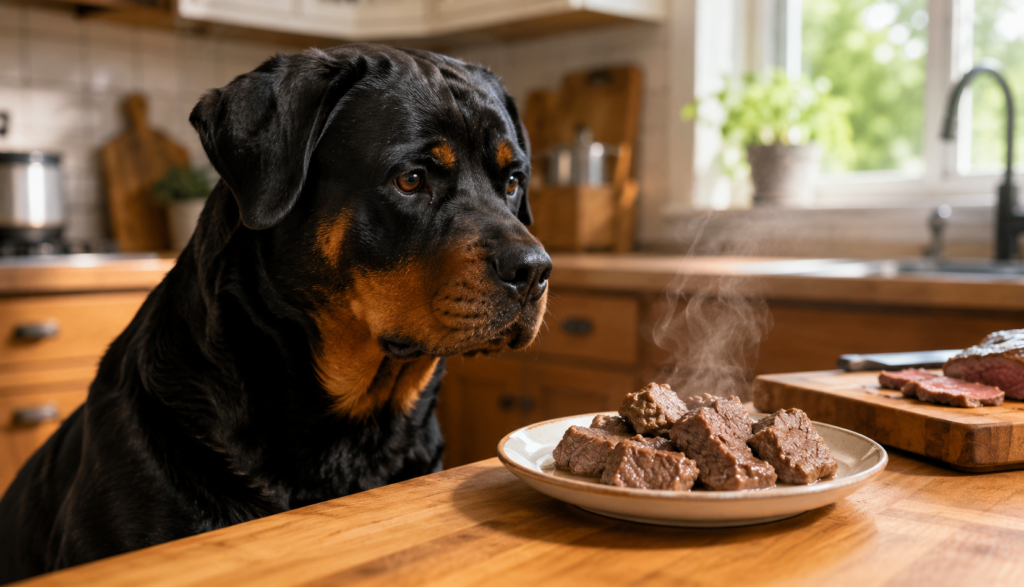
Beef is one of those foods that feels so obviously compatible with dogs that most people never stop to think about it twice. It’s the primary protein in a huge portion of commercial dog food, dogs have been eating meat for as long as they’ve existed alongside humans, and the idea of a dog turning down beef feels almost impossible to imagine. All of that intuition is broadly correct, but the cut, the preparation, and what goes into the cooking process matter more with beef than most owners realize before they’ve actually looked into it. Understanding what separates a genuinely beneficial piece of beef from a problematic one makes this a far more useful topic than the easy “yes” answer alone suggests.
Is Beef Safe for Dogs?
I’ve seen this firsthand across many dogs and many years: plain cooked beef in reasonable amounts is safe for the vast majority of healthy dogs. It’s not toxic, it doesn’t carry hidden danger the way onions or grapes do, and it serves as a primary protein source in most commercial dog food formulas for good reason.
Beef delivers iron, zinc, and a complete amino acid profile that genuinely supports muscle maintenance and overall dog nutrition, making it one of the more substantive proteins available rather than just a palatable treat option.
The answer is a confident yes for lean, plain, properly cooked beef. What follows is where “lean” and “plain” actually matter in practice, because not all beef is created equal from a dog safety standpoint.
Lean Cuts vs Fatty Cuts
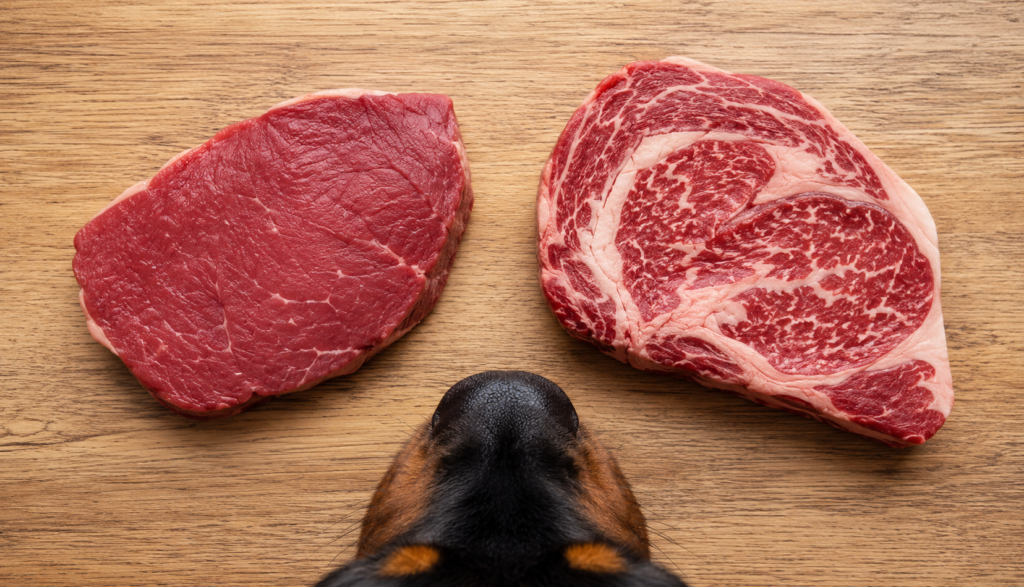
Most dog owners miss this distinction completely, treating beef as a single category when it’s really a wide spectrum of fat content depending on the cut. Lean beef cuts like plain ground beef with fat drained off, sirloin, or flank steak carry far less pancreatitis risk than fattier cuts like ribeye, brisket, or anything heavily marbled.
The fat content concern with beef isn’t theoretical — high fat meals are one of the more reliable triggers for pancreatitis in dogs, a painful and sometimes serious condition that can require veterinary treatment to resolve properly.
Choosing leaner cuts and draining any rendered fat before serving keeps beef in the genuinely safe category rather than the “probably fine but pushing it” territory that fattier preparations occupy.
Ground Beef: How to Prepare It Safely
The first time I dealt with this question from a reader, ground beef came up as the most accessible form since most people have it regularly. Plain ground beef cooked thoroughly and drained of excess fat is a perfectly safe and convenient protein option for dogs, easy to portion and mix into food.
The key steps are cooking it fully rather than serving it rare or raw, draining the fat after cooking rather than serving it in its own grease, and keeping it completely plain without any seasoning, onion, garlic, or any other ingredients that typically go into a human ground beef recipe.
Ground beef cooked for a taco, a burger, or a pasta sauce has already had seasoning worked through it in a way that can’t be separated out afterward, making home-prepared plain ground beef the only version worth offering rather than repurposing leftovers from a seasoned human meal.
Beef Bones: A Specific Warning
What surprised me was how often owners assume beef bones are safer than chicken bones simply because they’re larger and seem more durable. Cooked beef bones of any size can splinter under the pressure of a determined chewer, and a large splintered fragment from a beef bone carries a more serious injury risk than a small chicken bone fragment simply because of the size of the pieces involved.
Raw beef bones are commonly used in raw feeding and do carry less splintering risk than cooked ones, but even these should only be offered under direct supervision and sized appropriately for the dog rather than left as an unattended chew for any extended period.
Beef marrow bones, the thick cylindrical bones often sold specifically for dogs, are relatively safe as supervised chews but should be monitored for cracking and replaced before they reach a point where a dog might swallow a large chunk.
Beef Liver and Organ Meat
Here’s a detail that rarely gets the attention it deserves: beef liver is one of the most nutritionally dense foods a dog can eat, carrying concentrated levels of vitamin A, iron, and B vitamins that muscle meat alone doesn’t match. Small amounts of plain cooked beef liver work as a legitimate nutritional supplement rather than just a treat.
The important caveat with beef liver specifically is that vitamin A toxicity can occur with very large or very frequent amounts, since liver is so concentrated in that nutrient. A small piece a few times a week is very different from liver making up a significant portion of a dog’s daily food intake.
Other beef organ meats including heart and kidney are also nutritionally solid options in small amounts, all of which appear in premium commercial dog food formulas for exactly the same reasons they’re worth considering as occasional home additions.
What Most People Don’t Know
Here’s something rarely mentioned in basic beef safety articles: beef is actually one of the more common food allergy triggers in dogs, despite being so widely used in commercial food. Dogs that develop a beef allergy typically show it through skin irritation, itching, or chronic ear infections rather than the more obvious digestive symptoms owners expect from a food reaction. This means a dog that’s been eating beef-based food for years without obvious digestive upset could still be experiencing a low-grade beef allergy manifesting through skin and coat symptoms that owners attribute to environmental causes instead.
How to Safely Offer Beef
From experience, the smarter call is to always serve beef plain, fully cooked, with visible fat trimmed or drained, and without any seasoning involved in the cooking process. Boiling or baking plain beef without additions produces the cleanest result for sharing with a dog.
Starting with a modest portion rather than a large serving makes sense particularly for dogs new to beef or switching protein sources, since any new food can cause mild digestive upset when introduced more quickly than a digestive system is ready to handle.
Keeping beef as one protein among several in a varied diet is also worth considering, particularly for dogs with any history of food sensitivity, since rotating proteins reduces the likelihood of developing a reaction to any single source over time.
Signs of Trouble to Watch For
Watch for vomiting, diarrhea, or a hunched and uncomfortable posture after beef exposure, particularly following a fattier cut or a larger than usual serving, since these can indicate early pancreatitis rather than simple digestive upset.
Chronic itching, recurring ear infections, or persistent skin irritation in dogs eating beef regularly warrants a conversation with a vet about whether a beef allergy might be the underlying cause rather than an environmental trigger.
If symptoms persist or worsen following any beef exposure, a vet visit is always the right call, though for the vast majority of dogs eating plain lean beef in reasonable amounts, no issues arise and it remains one of the most reliably solid protein sources available.
Frequently Asked Questions

Q. Can dogs eat raw beef?
A. Raw beef carries a salmonella risk that cooking eliminates, and plain cooked beef delivers the same protein and nutritional value without that exposure, making it the safer and simpler choice for most dogs.
Q. Can dogs eat beef liver?
A. Yes, plain cooked beef liver in small amounts is highly nutritious, but large or frequent servings risk vitamin A toxicity since liver is so concentrated in that nutrient.
Q. What beef cuts are safest for dogs?
A. Leaner cuts like sirloin, flank, or plain drained ground beef are the safest options, since they deliver protein without the high fat content of fattier cuts that raise pancreatitis risk.