
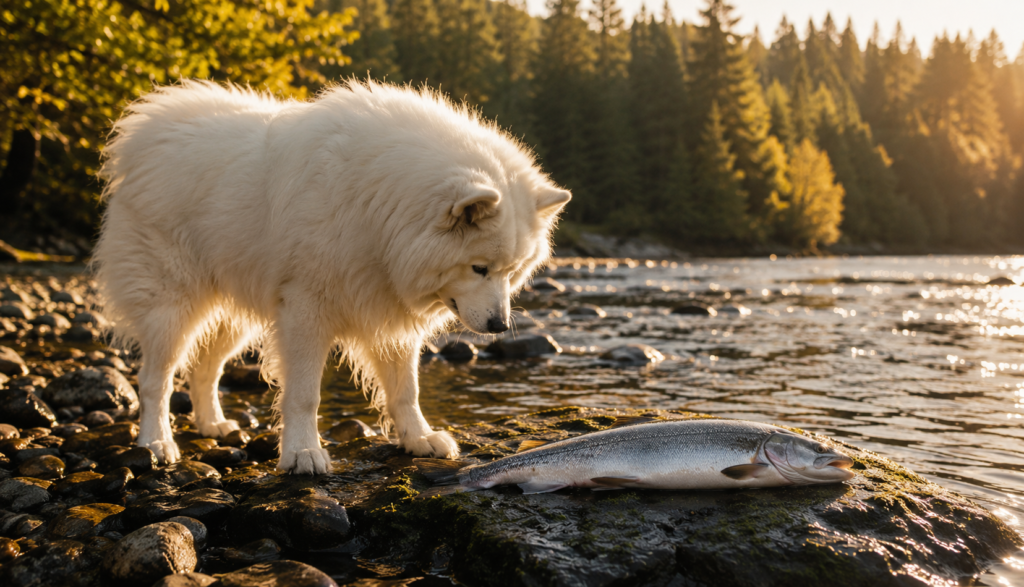
Salmon sits in a genuinely unusual position in the dog food safety conversation because it’s simultaneously one of the most beneficial fish you can offer and one of the most dangerous when served incorrectly. The gap between cooked salmon and raw salmon isn’t just a food safety technicality — it’s the difference between a genuinely excellent protein and a potentially fatal one, and that distinction is specific to salmon in a way that doesn’t apply equally to most other meats. Understanding exactly what makes raw salmon dangerous and why cooking resolves that danger is what separates a confident salmon-feeding routine from an accidental emergency.
Is Salmon Safe for Dogs?
I’ve seen this firsthand across several dogs now: plain cooked salmon is one of the better proteins you can offer. It appears as a featured ingredient in premium dog food formulas specifically because of its omega 3 content, and vets regularly recommend it for dogs who benefit from additional DHA and EPA support for coat, joint, and brain health.
Cooked salmon is genuinely excellent for dogs when prepared plainly, and the nutritional case for it goes beyond simply being a protein source — it delivers specific fatty acids that many standard dog diets don’t provide in meaningful amounts.
The answer is a confident yes for fully cooked salmon. The raw version is a separate conversation entirely, and one that requires more direct attention than most raw food discussions do.
Why Raw Salmon Can Be Fatal
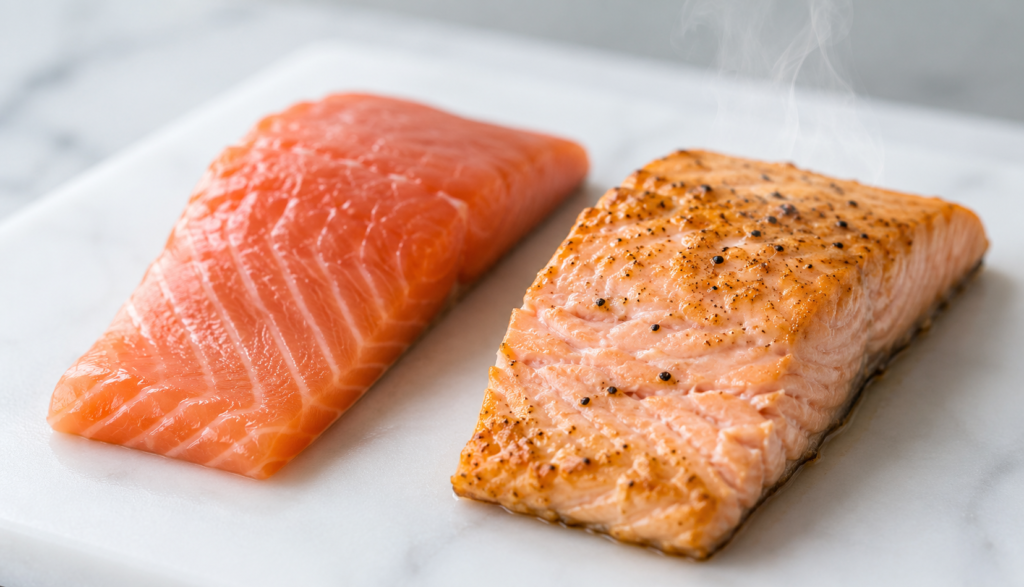
Most dog owners miss the specific mechanism here even when they know raw salmon is dangerous, and understanding it matters more than the general warning alone. Raw salmon can carry a parasite called Neorickettsia helminthoeca, which causes salmon poisoning disease in dogs — a condition that is not just uncomfortable but potentially fatal within two weeks if left untreated.
This isn’t the same low-level salmonella risk that applies to most raw proteins. Salmon poisoning is a distinct, dog-specific condition caused by this particular organism, and it progresses quickly enough that dogs can deteriorate significantly before owners realize what’s happening if they don’t know the symptoms to watch for.
Cooking salmon thoroughly to an internal temperature that kills parasites eliminates this risk entirely — the cooked version carries none of this danger, which is why the preparation distinction matters so much more with salmon than with almost any other protein.
Salmon Poisoning Symptoms to Know
The first time I dealt with this question from a reader who had actually experienced it, the timeline caught them off guard more than anything. Salmon poisoning symptoms typically appear five to ten days after ingestion rather than immediately, which means a dog that ate raw salmon and seemed completely fine for a week can still develop serious illness before owners connect the dots.
Watch for vomiting, diarrhea, fever, lethargy, loss of appetite, and swollen lymph nodes as the primary symptoms. These can escalate to more serious neurological symptoms if the condition progresses without treatment, and the mortality rate for untreated salmon poisoning is genuinely high.
Any known or suspected raw salmon ingestion warrants a vet call even if your dog seems completely fine, since the delayed symptom onset means “fine right now” doesn’t mean “in the clear.” Early treatment with antibiotics is highly effective — waiting for symptoms to fully develop before seeking help is where outcomes worsen significantly.
Smoked Salmon: Not a Safe Middle Ground
What surprised me was how often smoked salmon gets treated as a cooked alternative when it’s actually closer to the raw end of the risk spectrum than most people realize. Cold-smoked salmon hasn’t reached temperatures sufficient to kill Neorickettsia, making it carry the same salmon poisoning risk as fully raw salmon despite looking and feeling processed.
Hot-smoked salmon reaches higher temperatures during smoking and is generally considered safer on the parasite front, but it typically carries significant added sodium content from the curing and smoking process that makes it a poor choice for dogs regardless of the parasite question.
Plain cooked salmon, baked or poached at home without seasoning, remains the only reliably safe version — neither smoked nor cured products offer a convenient shortcut that resolves both the safety and sodium concerns simultaneously.
Salmon Skin: Safe or Not?
I’ve watched this come up regularly because salmon skin looks like a natural byproduct that should be fine either way. Plain cooked salmon skin is safe for dogs and actually carries a meaningful concentration of omega 3 fatty acids, making it a legitimate part of the fish rather than something to discard.
The concern with salmon skin comes entirely from preparation. Skin from smoked, seasoned, or heavily salted salmon carries whatever was applied to the outside of the fish during processing, making seasoned skin meaningfully different from plain cooked skin despite coming from the same fish.
Plain baked or poached salmon skin, kept together with the fillet and cooked simply, is perfectly fine and doesn’t need to be separated out before offering the fish to your dog.
Salmon Oil vs Whole Salmon
Here’s something that rarely gets addressed clearly: salmon oil supplements and whole cooked salmon aren’t interchangeable, though both deliver omega 3 content. Salmon oil gives you a concentrated, consistent dose of DHA and EPA without any of the food preparation concerns, bones, or parasite risk, making it the more convenient daily supplement for dogs who need consistent omega 3 support.
Whole cooked salmon gives you protein alongside omega 3 content, which salmon oil alone doesn’t provide. For dogs who benefit from both protein variety and omega 3 supplementation, occasional whole cooked salmon and daily salmon oil can work as complementary rather than competing approaches.
Many owners use salmon oil daily and whole salmon occasionally, which covers both the nutritional and practical bases without overcomplicating the routine.
How to Safely Prepare Salmon
From experience, the smarter call is to always cook salmon fully at home, plain, without seasoning, garlic, butter, lemon, or any other additions typical of human salmon recipes. Baking or poaching produces the cleanest result and ensures the fish reaches internal temperatures that eliminate any parasite concern.
Removing pin bones before serving eliminates any choking hazard from the small bones that remain even in filleted salmon, and keeping portions modest — a few small pieces rather than a full fillet — keeps fat content manageable even though salmon is a leaner protein than many red meats.
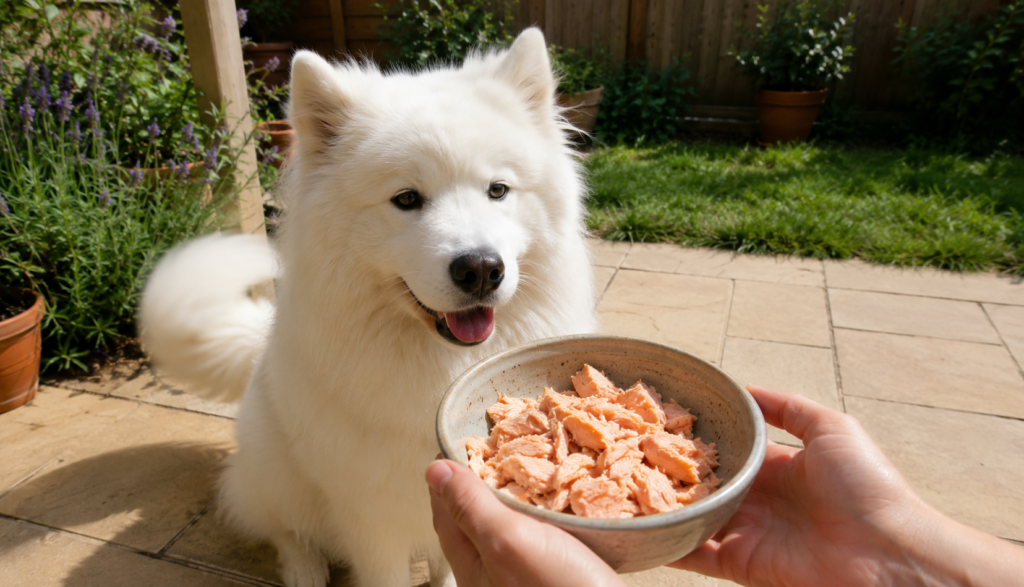
Canned salmon packed in water without added salt is another convenient option and has been cooked during the canning process, making it safe from the salmon poisoning standpoint while requiring no additional preparation beyond draining.
Signs of Trouble to Watch For
Watch for vomiting, diarrhea, fever, lethargy, or loss of appetite appearing five to ten days after any raw or cold-smoked salmon exposure, since that delayed timeline is the characteristic pattern of salmon poisoning rather than immediate digestive upset.
A dog that has eaten raw salmon and develops any of these symptoms within two weeks should be seen by a vet urgently rather than monitored at home, since the condition responds well to early antibiotic treatment but deteriorates quickly without it.
If symptoms persist or worsen, a vet visit is always the right call, and any known raw salmon exposure should be disclosed to the vet immediately regardless of current symptom status so they can assess risk and advise appropriately.
Frequently Asked Questions
Q. What are the symptoms of salmon poisoning in dogs?
A. Symptoms include vomiting, diarrhea, fever, lethargy, and loss of appetite, typically appearing five to ten days after ingestion rather than immediately, making early vet contact after any raw salmon exposure important.
Q. Is smoked salmon safe for dogs?
A. Cold-smoked salmon carries the same salmon poisoning risk as raw salmon since it hasn’t reached temperatures to kill parasites. Hot-smoked is safer on that front but still too high in sodium for dogs.
Q. Can dogs have salmon oil every day?
A. Yes, plain salmon oil in appropriate amounts is a vet-approved daily supplement that delivers DHA and EPA for coat, joint, and brain health without any of the food preparation concerns of whole salmon.