
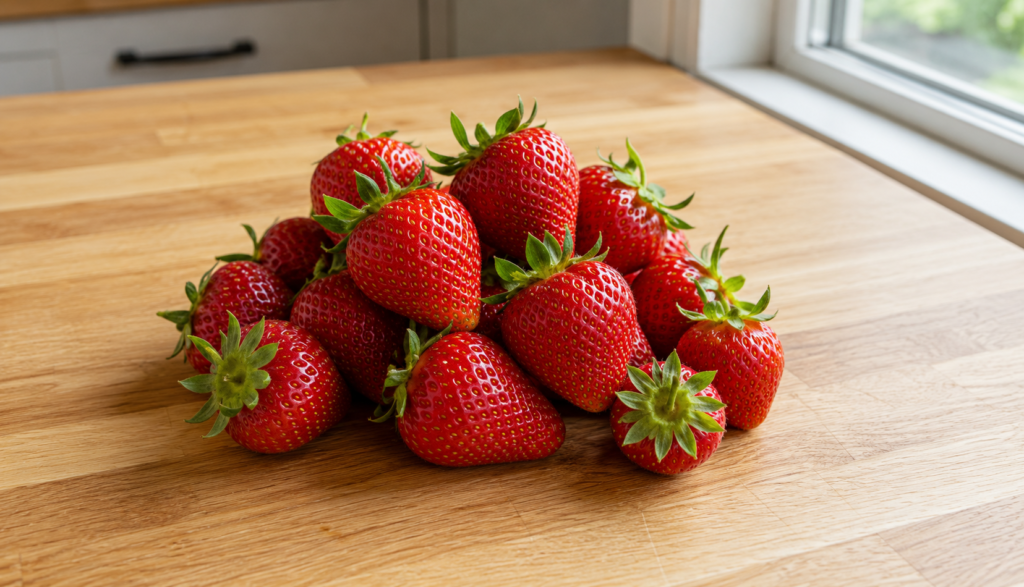
Strawberries land somewhere between blueberries and mango on the complexity scale — not quite as effortless as blueberries, since there’s a top to deal with, but far simpler than anything involving a pit or peel removal process. I’ve used strawberries as a treat for years specifically because dogs respond to them with the kind of enthusiasm usually reserved for much less healthy options. Can dogs eat strawberries? Yes, without question. They’re genuinely one of the better fruits available, combining real nutritional value with a flavor profile most dogs find irresistible. The preparation is minimal, the risk profile is low, and the main thing to manage is simply how many you’re handing over in one sitting.
What Makes Strawberries Worth Including
Fresh strawberries deliver a strong vitamin C content along with a meaningful dose of antioxidants, particularly anthocyanins and other polyphenols responsible for the deep red color. These compounds support immune function and help manage oxidative stress, contributing to the same kind of long-term cellular health benefits that make berries broadly valuable in a dog’s diet. Strawberries for dogs aren’t just a sweet indulgence — there’s genuine nutritional substance behind the appeal.
Fiber content in strawberries supports healthy digestion, and the malic acid naturally present in the fruit has a mild whitening effect on teeth, which is occasionally cited as a minor secondary benefit of regular strawberry consumption. This isn’t a substitute for proper dental care, but it’s a pleasant bonus on top of everything else strawberries contribute, and it’s part of why strawberries occasionally show up as an ingredient in commercial dental chews and treats.
The low calorie profile makes strawberries a sensible choice for dogs managing their weight. A handful of sliced strawberries delivers real flavor and satisfaction without much caloric cost, putting them in a similar category to blueberries and blackberries in terms of how generously they can be served relative to fruits like banana or mango.
What surprised me was how consistently strawberries work as a training treat alternative to blueberries for dogs that want something with a bit more texture and a stronger flavor punch. Sliced into small pieces, strawberries hold up well for repeated quick rewards during a training session, and most dogs respond to the scent and taste with noticeably more enthusiasm than they show toward some of the milder berries.
Strawberry Tops and Leaves — What’s Actually Fine
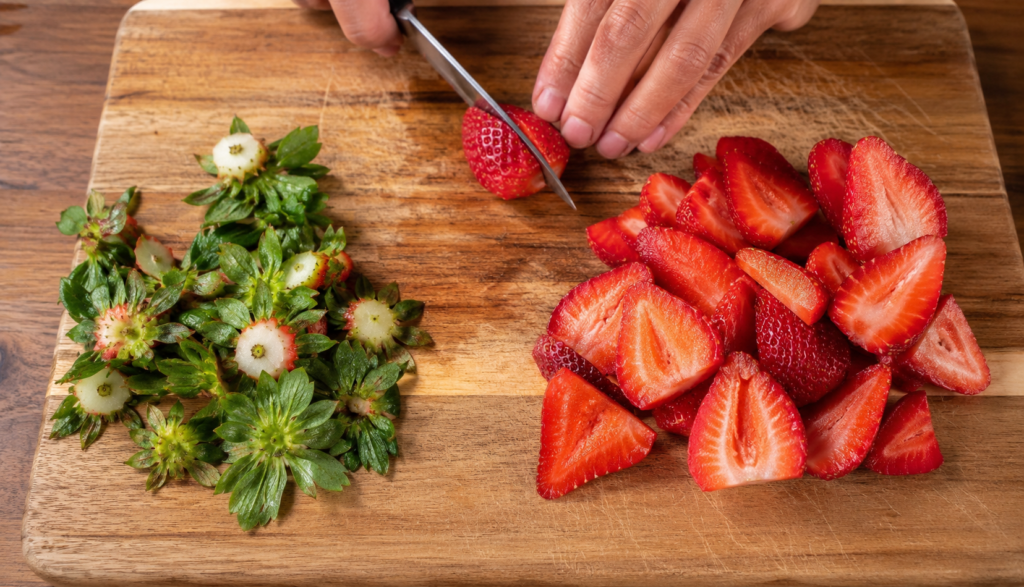
Strawberry tops — the small green leafy crown at the top of the berry — come up as a question more often than almost any other part of any fruit on the safe list, and the answer is more relaxed than most owners expect. Strawberry leaves and the green calyx are not toxic to dogs. There’s no compound in the strawberry plant comparable to the cyanide-producing seeds in apples or stone fruits, and the leafy top doesn’t carry any documented toxicity concern.
That said, the tops aren’t particularly easy to digest either. The leafy texture is fibrous and tougher than the berry flesh, and while eating a strawberry top occasionally isn’t harmful, it offers no real benefit and can be slightly more difficult for some dogs to digest comfortably compared to the soft flesh alone. Most owners remove the tops simply because it makes for a cleaner, more uniformly textured treat, not because of any safety concern.
Most dog owners miss this completely: there’s no need to be especially careful or worried if a strawberry top accidentally gets served along with the berry, the way there would be with an apple core or a stone fruit pit. If you’re slicing strawberries for a dog and a small bit of green top slips through, it’s not a reason for concern. Removing the tops as a matter of routine is a reasonable practice for texture and presentation, but it’s not a safety-critical step the way pit or peel removal is with other fruits.
How Many Strawberries Dogs Can Have
Strawberries sit in a moderate sugar range — higher than blueberries, lower than mango or banana — which gives reasonable flexibility on portion size while still warranting some attention to avoid overdoing it. Too many strawberries in one sitting, like any moderately sweet fruit, can produce loose stools, though this takes a genuinely large quantity given the relatively gentle nature of strawberries on digestion.
For small dogs, two to three medium strawberries, sliced, per serving is appropriate. Medium dogs can handle three to four. Large breeds can manage four to five strawberries in a single serving without much concern. These amounts reflect sensible portion management rather than a toxicity threshold — strawberries are gentle enough that there’s some flexibility here, similar to blueberries though not quite as permissive given the slightly higher sugar content.
I’ve used strawberries regularly with dogs of various sizes without issues traceable to the fruit itself, provided portions stayed reasonable. Serve strawberries a few times a week as part of a regular treat rotation — they’re gentle enough to use somewhat more frequently than higher-sugar fruits like mango or peach, without quite reaching the near-daily flexibility that blueberries offer.
Senior dogs generally tolerate strawberries well given the soft texture once sliced, and the antioxidant content offers the same kind of cellular health support that makes berries broadly valuable for aging dogs. Puppies can have strawberries in small amounts once eating solid food, sliced appropriately to avoid any choking concern from a whole berry. Dogs with diabetes warrant the standard caution around moderately sweet fruits, with a vet conversation recommended before regular inclusion.
Serving Strawberries the Right Way

Preparation is straightforward. Rinse fresh strawberries under cold water, remove the green top if you prefer a cleaner treat, and slice into pieces appropriate for your dog’s size. Whole strawberries are fine for larger dogs, but slicing reduces any minor choking concern and makes portioning easier to manage consistently.
Frozen strawberries work just as well as fresh and offer the same convenience advantages that apply to other berries — available year-round, lower cost outside of peak season, and requiring zero preparation beyond slicing if desired. Most dogs enjoy frozen strawberries readily, and the cold temperature provides a refreshing quality that’s particularly appreciated during warmer months.
From experience, the smarter call is to keep a bag of frozen strawberries on hand alongside frozen blueberries, giving a rotating berry option that requires minimal advance planning. Mashed strawberry mixed into plain yogurt, or blended into a frozen treat for a lick mat, are both popular preparations that most dogs respond to enthusiastically without introducing anything unsafe, provided the yogurt is plain and unsweetened.
What Most People Don’t Know
Dried strawberries follow the same pattern as other dried fruits — more concentrated in sugar than the fresh version, and worth treating with more caution as a result. Commercial dried strawberry products sometimes include added sugar on top of the natural concentration that occurs during drying. Fresh or frozen strawberries remain the better default, with dried versions reserved for occasional use and only when unsweetened.
Strawberry plants in a home garden present a slightly different consideration than store-bought berries. While the fruit and leaves aren’t toxic, garden strawberry plants are sometimes treated with pesticides or fungicides that haven’t been formulated with pet safety in mind, particularly in non-organic gardening contexts. If you grow strawberries at home and have a dog with garden access, knowing what treatment products have been used on the plants matters more than the fruit’s inherent safety profile.
The other detail worth knowing: strawberries are sometimes recommended specifically for dogs transitioning onto a more varied, whole-food-inclusive diet because of how readily most dogs accept them compared to less palatable safe fruits. For owners trying to introduce fruit as a treat category for the first time, strawberries’ strong flavor and soft texture make them one of the more reliable starting points, similar to banana in terms of broad acceptance across different dogs. If symptoms persist or worsen after a dog eats strawberries, a vet visit is always the right call, though adverse reactions to this particular fruit are genuinely uncommon.
Building Strawberries Into a Berry Rotation
Strawberries fit naturally alongside blueberries, blackberries, and raspberries in a rotating berry schedule, each bringing a slightly different nutrient emphasis and flavor profile. Strawberries contribute strong vitamin C and a flavor most dogs find especially appealing, which makes them a useful inclusion specifically for dogs that show less enthusiasm toward milder berries.
A practical weekly rotation might include blueberries early in the week, strawberries mid-week, and blackberries or raspberries toward the weekend — each in portions appropriate to the dog’s size, each requiring minimal preparation. This kind of rotation delivers broader antioxidant and vitamin coverage than relying on any single berry exclusively, while keeping treat time varied enough that dogs stay genuinely interested rather than growing indifferent to a repeated single option.
Safe fruits for dogs work best when used with intention, and strawberries earn a regular place in that rotation through genuine nutritional contribution and consistently strong dog acceptance. The minimal preparation required — slice and serve, tops optional — keeps strawberries practical enough to use regularly without the kind of preparation burden that makes some other safe fruits feel like more trouble than they’re worth.
Frequently Asked Questions
Q. Can dogs eat the green tops on strawberries?
A. Yes. Strawberry tops and leaves are not toxic to dogs. They’re more fibrous and slightly harder to digest than the flesh, which is why most owners remove them, but it’s not a safety concern if a small bit slips through.
Q. How many strawberries can a dog eat?
A. Small dogs can have two to three sliced strawberries per serving. Medium dogs can handle three to four. Large breeds can manage four to five. Strawberries can be served a few times a week as part of a regular treat rotation.
Q. Are frozen strawberries good for dogs?
A. Yes. Frozen strawberries are just as nutritious as fresh and offer a refreshing, cooling treat, especially in warm weather. Most dogs enjoy the cold texture, and frozen berries are convenient for year-round use.