
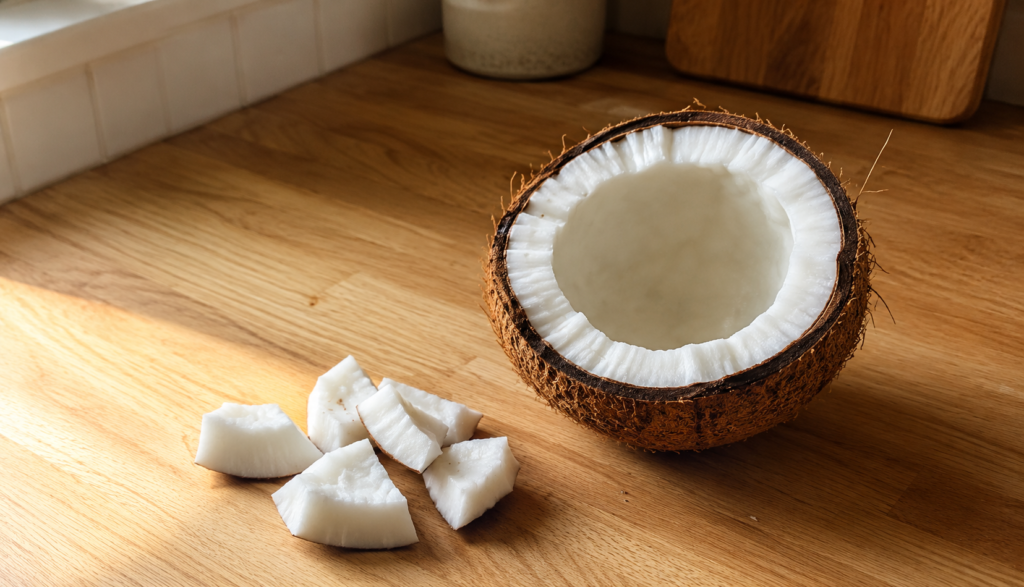
Coconut sits in an interesting position on the dog-safe food list — genuinely beneficial in controlled amounts, but easy to overdo in a way that causes real problems. I started experimenting with coconut as a dog treat a few years ago after reading about the benefits of lauric acid for immune function and coat health. The results were noticeable over time, but so was what happened the first time I gave too much too soon. Can dogs eat coconut? Yes — fresh coconut flesh and small amounts of coconut oil are safe for dogs and offer legitimate health benefits. The fat content is what requires attention, because coconut is rich enough that portion control here matters more than it does with almost any other fruit on the safe list.
What Makes Coconut Beneficial for Dogs
Fresh coconut flesh is one of the more nutritionally interesting foods in the dog-safe category. The headline compound is lauric acid, a medium chain triglyceride that the body processes differently from long-chain fats. Lauric acid has documented antibacterial, antiviral, and anti-inflammatory properties — it’s one of the reasons coconut oil became so widely discussed in pet health circles, and the same compound is present in coconut flesh in meaningful amounts.
Medium chain triglycerides in coconut are metabolized directly by the liver rather than being stored as body fat the way longer-chain fats are, which means the energy from coconut is available quickly and doesn’t carry the same weight gain risk as an equivalent amount of saturated fat from other sources. That distinction matters for dogs on controlled diets — coconut in appropriate portions adds nutritional value without the same caloric concern as fat from meat sources.
Skin and coat health is the benefit most owners notice first with regular coconut inclusion. The healthy fats in coconut flesh support the lipid barrier of the skin, which reduces flakiness, supports a glossy coat, and can calm mild inflammatory skin conditions over time. I’ve watched this work on a dog with chronic dry skin — consistent small amounts of coconut flesh over six weeks produced a visible improvement in coat texture without any other dietary change.
The antioxidants in coconut flesh round out the profile. They’re not as concentrated as in blackberries or blueberries, but they contribute to the overall anti-inflammatory picture that makes coconut worth including. Coconut for dogs isn’t a miracle food, but it does earn its place in a varied treat rotation through genuine nutritional contribution rather than just being harmless.
The Fat Content Problem — Why Portions Matter So Much
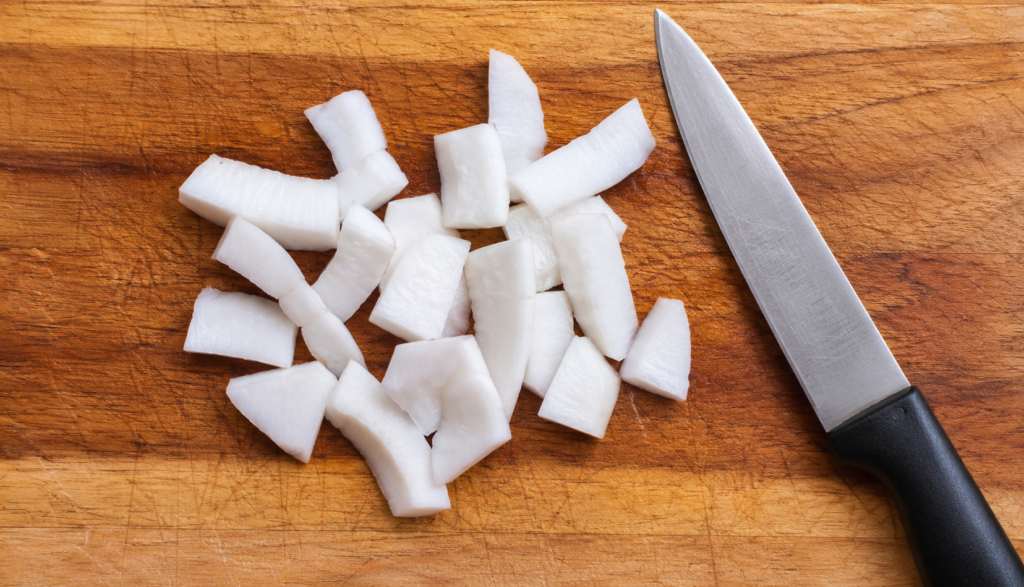
Coconut flesh is high in fat. That’s the single most important thing to understand about feeding coconut to dogs, because the same healthy fats that make it beneficial become a problem at volume. Too much coconut in one sitting causes digestive upset — loose stools and diarrhea — because the digestive system simply can’t process that much fat efficiently at once. Over time, consistently high fat intake contributes to weight gain and, in predisposed dogs, can trigger pancreatitis.
Pancreatitis in dogs is a serious condition — inflammation of the pancreas triggered by the organ working too hard to produce the enzymes needed to break down large fat loads. It’s painful, can require hospitalization, and in severe cases is life-threatening. High fat content foods served in excess are one of the documented dietary triggers. Coconut doesn’t cause pancreatitis in a dog that gets a small piece occasionally — but a dog that regularly gets large amounts of coconut flesh or frequent doses of coconut oil is accumulating fat load that adds to overall risk.
Most dog owners miss this completely: dogs with a history of pancreatitis, dogs prone to weight gain, and breeds with known fat metabolism sensitivities — Miniature Schnauzers and Yorkshire Terriers particularly — need extra caution with coconut. For those dogs, the benefits don’t outweigh the risk at any meaningful serving size, and other treats are a smarter choice. Healthy adult dogs without these risk factors handle appropriate portions of coconut well, but appropriate is the operative word.
I’ve watched this go wrong with a Cocker Spaniel who got into a bag of shredded coconut left on a low shelf. She ate a significant amount before anyone noticed, and the next 24 hours involved visible abdominal discomfort and multiple outdoor trips. No lasting harm, but a clear demonstration that the fat content in coconut is real and the digestive consequences of too much are unpleasant. If symptoms persist or worsen after your dog eats coconut, a vet visit is always the right call.
Which Coconut Products Are Safe and Which Aren’t
Fresh coconut flesh is the cleanest option and the one with the most straightforward safety profile. Cut away from the shell, served in small pieces, plain and unsweetened — that’s the version that delivers benefits without complications. The flesh is firm enough to require real chewing, which slows dogs down and makes it more satisfying as a treat than softer options.
Shredded coconut is common in kitchen cupboards and comes up often as a question. Unsweetened shredded coconut is safe in small amounts — the preparation logic is the same as fresh coconut flesh, just in a different texture. Sweetened shredded coconut is not appropriate for dogs. The added sugar load on top of the already significant fat content creates a combination that offers no benefit and real downside. Check the label before using any packaged shredded coconut as a dog treat — unsweetened only.
Coconut oil for dogs is a separate topic that’s generated enormous discussion. Small amounts — a quarter teaspoon for small dogs, up to a teaspoon for large breeds — are safe and can contribute to the same coat and immune benefits as the flesh. More than that, particularly when introduced too quickly, causes diarrhea in most dogs. Start with the smallest possible amount and increase very gradually if you choose to use it. Coconut oil applied topically to dry skin or paws is also safe and effective without any of the ingestion concerns.
Coconut water is lower in fat than the flesh but high in potassium and sodium. Small amounts of plain, unsweetened coconut water are not toxic to dogs, but the sodium content makes it a poor regular addition to the diet — particularly for dogs on low-sodium diets for heart or kidney conditions. Coconut milk is too rich and too high in fat to be appropriate for dogs in any meaningful amount. Fresh coconut flesh in small portions remains the safest and most beneficial form.
How Much Coconut Dogs Can Actually Have
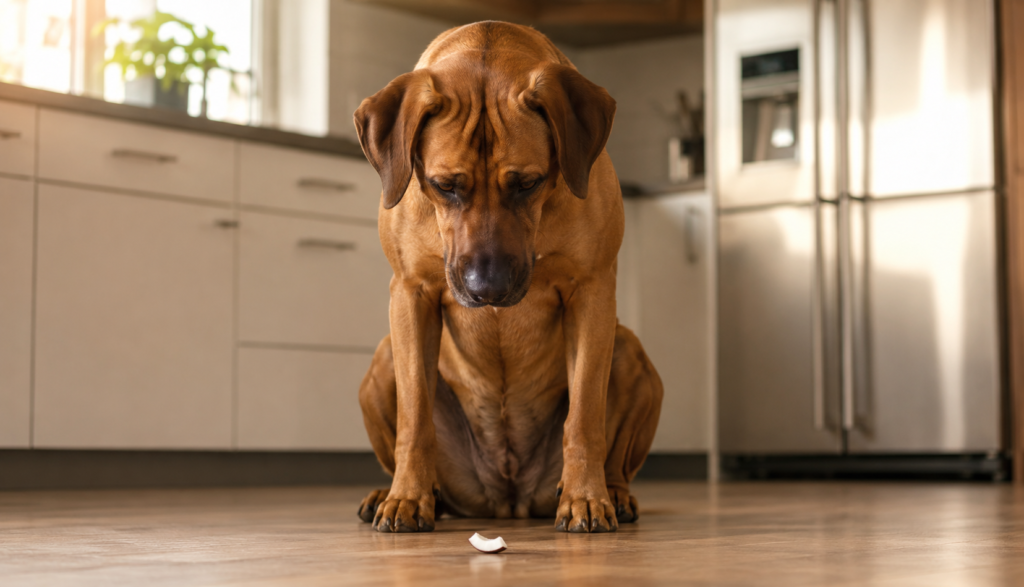
The serving size question for coconut is more conservative than for fruits like berries or melon because the fat content changes the calculation. This isn’t about sugar or fiber load — it’s about fat, and the digestive system’s capacity to handle it in a single sitting alongside whatever else the dog has eaten that day.
For small dogs, one small piece of fresh coconut flesh — roughly the size of a fingernail — is an appropriate serving. For medium dogs, two to three small chunks. Large breeds can handle a few larger pieces, but even for big dogs, coconut should be an occasional treat rather than a daily addition. Think of it more like a supplement in treat form than a fruit snack — the serving frequency and size reflect the fat density rather than treating it like a low-calorie berry.
From experience, the smarter call is to introduce coconut gradually over a week or two rather than jumping straight to a regular serving. Start with a tiny piece, watch for any digestive reaction over 24 hours, and build up slowly from there. Dogs that haven’t had coconut before need time for their digestive systems to adjust to the fat content, and a gradual introduction prevents the acute digestive upset that comes from hitting an unprepared system with a novel fat source all at once.
Weight management is the other factor that adjusts the serving size calculation. For dogs already carrying extra weight or being managed on a calorie-restricted diet, coconut’s fat content means it’s not the ideal treat choice regardless of the health benefits. Lower-fat options like blackberries, blueberries, or plain apple slices serve those dogs better without the caloric cost.
What Most People Don’t Know
The coconut shell is the part of this equation that gets almost no attention, and it’s the part that causes the most acute problems. Coconut shell is extremely hard, fibrous, and completely indigestible. Dogs that chew on coconut shell — which many will attempt enthusiastically because of the coconut smell — risk cracking teeth, swallowing sharp fragments, and causing intestinal blockage or perforation. The shell looks like a natural chew toy and functions like a hazard.
If you’re working with a whole coconut, keep the shell completely away from the dog once cracked. Pieces of shell that fall on the floor during prep should be picked up immediately. This is one of those preparation details that doesn’t come up in the general “coconut is safe for dogs” conversation but matters significantly in practice. The flesh is the safe part; the shell is not a treat, a chew, or anything a dog should have access to.
The other thing worth knowing: coconut products marketed specifically for dogs — coconut-based chews, coconut oil capsules, coconut-flavored treats — vary enormously in quality and ingredient lists. Some contain additives, sweeteners, or flavor compounds that don’t belong in a dog’s diet despite the coconut branding. Plain, unsweetened, additive-free coconut in any of its safe forms is always a better choice than processed coconut products, regardless of how they’re marketed.
Other High-Value Treats That Complement Coconut
Coconut works best as one component of a varied treat rotation rather than a standalone focus. Its fat content means it needs to be balanced against lower-fat options across the week, and pairing it with antioxidant-rich berries creates a rotation that covers more nutritional ground than either alone.
Blueberries and blackberries on the days between coconut servings provide antioxidant density without the fat load, keeping the overall treat profile balanced. Plain apple slices or pear pieces on other days add fiber and vitamins without complicating the fat balance. This kind of deliberate rotation — each treat chosen for what it contributes rather than just what it doesn’t harm — is the approach that makes fruit and whole food treats genuinely useful for dogs rather than just occasionally acceptable.
Coconut oil dogs respond to well as a topical treatment is worth mentioning alongside dietary use. Applying a small amount to dry paw pads, cracked skin, or areas of mild irritation is safe, effective, and sidesteps the ingestion and fat load concerns entirely. For dogs that aren’t good candidates for dietary coconut because of weight or health conditions, topical application delivers some of the same skin and coat benefits without going anywhere near the digestive system.
Frequently Asked Questions

Q. Can dogs eat fresh coconut flesh?
A. Yes. Fresh coconut flesh is safe for dogs in small amounts. It contains lauric acid and healthy fats that support immune function and coat health. Keep portions small due to the high fat content — too much causes digestive upset.
Q. Is coconut oil safe for dogs?
A. Yes, in small amounts. A quarter teaspoon for small dogs and up to a teaspoon for large breeds is a safe starting point. Introduce gradually — too much too soon causes diarrhea. Coconut oil can also be applied topically to dry skin or paws.
Q. Can dogs eat shredded coconut?
A. Unsweetened shredded coconut is safe in small amounts. Sweetened shredded coconut is not appropriate — the added sugar combined with the high fat content offers no benefit and real downside. Always check the label before serving.
Q. Is coconut water safe for dogs?
A. Small amounts of plain, unsweetened coconut water are not toxic to dogs. However, the potassium and sodium content make it a poor regular addition to the diet. It’s not a recommended hydration source — fresh water is always the better choice.
Q. Can the coconut shell hurt dogs?
A. Yes. Coconut shell is extremely hard, indigestible, and can crack teeth or cause intestinal blockage if swallowed in fragments. Keep the shell completely away from dogs during preparation and dispose of any pieces that fall on the floor immediately.
Q. Can dogs with pancreatitis eat coconut?
A. No. Dogs with a history of pancreatitis should avoid coconut entirely. The high fat content is a documented dietary trigger for pancreatitis flare-ups. Choose lower-fat treats like berries or plain apple slices instead.
Q. How often can dogs eat coconut?
A. Coconut should be an occasional treat rather than a daily addition — a few times a week at most, in small portions appropriate for your dog’s size. The fat density means it needs to be balanced against lower-fat treats across the week.