
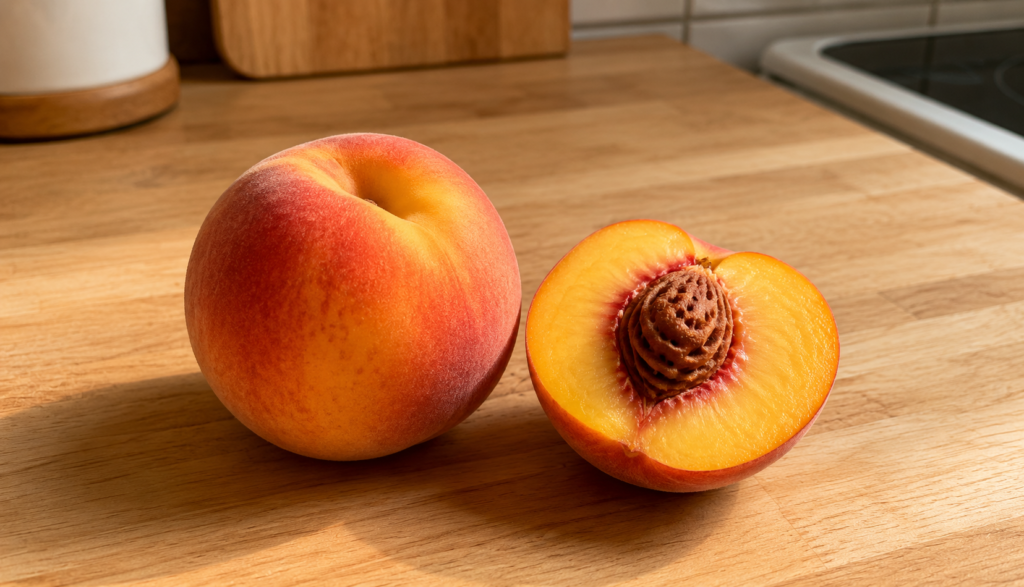
Peaches are one of those fruits that land in a grey area for most dog owners — not obviously dangerous like grapes, not obviously safe like blueberries. I’ve had dogs that would steal a peach off the counter the second my back was turned, and for years I wasn’t entirely sure whether to be concerned or not. Can dogs eat peaches? Yes — fresh peach flesh is genuinely safe and offers real nutritional value. The problem is the pit, which is both a physical hazard and a source of cyanide that no dog should be chewing on. Get the preparation right and peaches become a solid seasonal treat. Ignore it and you’re dealing with a preventable emergency.
What Makes Peaches a Good Treat for Dogs
Fresh peach flesh earns its place in a dog’s treat rotation on nutritional merit alone. Peaches for dogs deliver vitamin A and vitamin C in meaningful amounts — both of which support immune function, skin health, and cellular repair. The fiber content in peach flesh aids digestion without overwhelming the gut, and the soft texture makes peaches accessible to dogs at any life stage, including seniors with dental sensitivities.
The antioxidant content in ripe peach is another genuine benefit. Peaches contain compounds that help neutralize free radicals, which contribute to cellular aging and chronic inflammation. For dogs eating a standard commercial diet, adding antioxidant-rich whole foods like fresh peach as an occasional treat is one of the simpler ways to supplement nutrition without overhauling anything.
From experience, the smarter call is to introduce peaches during summer when they’re naturally at their best — ripe, sweet, and soft. Dogs respond to ripe peach far more enthusiastically than to underripe fruit, and ripe peach is also gentler on digestion. An underripe peach is more acidic and fibrous, which can cause stomach discomfort even without any preparation errors.
Peaches are also relatively low in calories compared to their volume and sweetness, which makes them a useful option for dogs on calorie-managed diets who still need treat motivation. A few peach slices deliver satisfaction and nutritional value without the caloric cost of commercial treats, which tend to be dense and processed regardless of how they’re marketed.
Why the Peach Pit Is Non-Negotiable to Remove
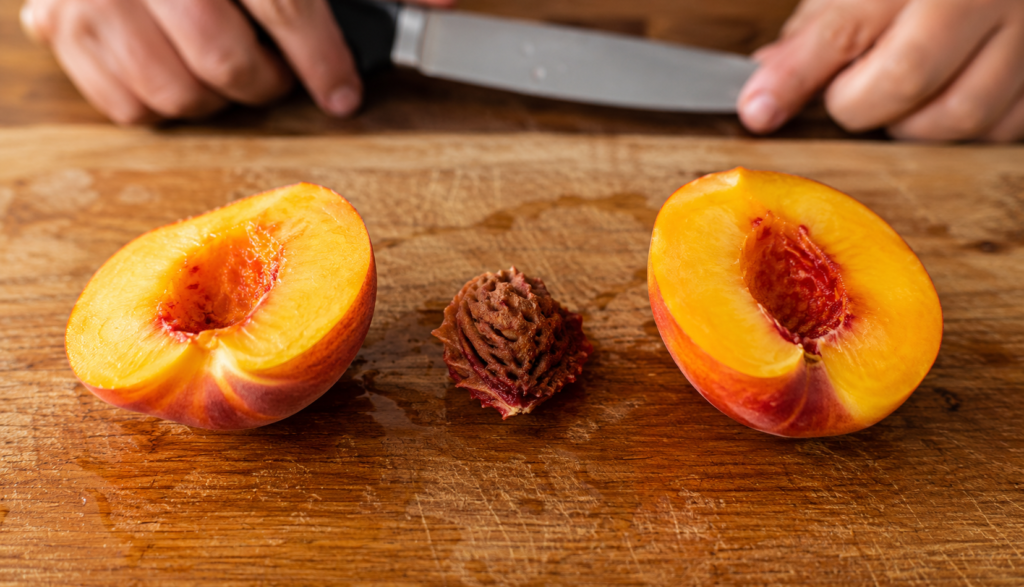
The peach pit is the single reason peach preparation requires attention. It’s not a minor concern or an overcautious recommendation — the peach pit presents two separate and serious risks that apply regardless of the dog’s size or how supervised the situation is.
First, the physical risk. A peach pit is large, hard, and irregularly shaped — exactly the profile of a serious choking hazard. For small dogs it’s an obvious danger, but medium and large dogs aren’t immune. A dog that crunches through a peach pit can also crack teeth, and fragments of the broken pit become a sharp intestinal hazard if swallowed. Dogs that get hold of whole peaches without supervision tend to go for the pit after the flesh is gone, which is precisely when the risk peaks.
Second, the chemical risk. Peach pit cyanide is real. The pit contains amygdalin, the same compound found in apple seeds, cherry pits, and mango seeds, which breaks down into hydrogen cyanide when metabolized. A dog gnawing on a single pit isn’t going to experience acute poisoning from a one-time exposure — the amount required is higher than that. But regular access to peach pits, or a dog that consumes multiple pits at once, creates genuine toxicity risk. The answer isn’t calibrating how much pit exposure is acceptable; it’s removing the pit entirely every single time.
I’ve watched this go wrong when a dog got into a bag of peaches left on a low shelf in the kitchen. She’d eaten through two full peaches, pits included, before anyone noticed. The vet visit that followed involved monitoring for signs of intestinal blockage for 48 hours. The flesh caused zero issues — the pits were entirely the problem, and it was entirely preventable.
What to Do About Peach Skin
Peach skin sits in a different category from peach pit — it’s not dangerous in the way the pit is, but it’s worth understanding before deciding whether to leave it on. The skin of a fresh peach is edible and not toxic to dogs, but the fuzzy texture and tougher consistency compared to the flesh can cause mild digestive upset in some dogs, particularly those with sensitive stomachs.
Most dog owners miss this completely: peach skin also carries the highest concentration of pesticide residue on the fruit surface. Commercially grown peaches are frequently treated with fungicides and pesticides that concentrate on and just under the skin. Washing the peach thoroughly before cutting helps, but peeling removes the uncertainty entirely. For dogs eating peaches regularly, peeled peach is the cleaner choice.
That said, a dog that eats peach skin occasionally from a washed piece of fresh peach isn’t in any meaningful danger. The skin concern is about consistency over time rather than a single exposure. If your dog handles peach skin without any digestive reaction, leaving it on a well-washed peach is a reasonable call. If they’re prone to stomach sensitivity, peel it as a default.
Plain peach flesh — pitted, peeled if preferred, cut into appropriate pieces — is the version to aim for every time. There’s no preparation variation that makes the pit acceptable to leave in, but the skin decision has some flexibility based on your dog’s individual tolerance.
How Much Peach Dogs Can Have
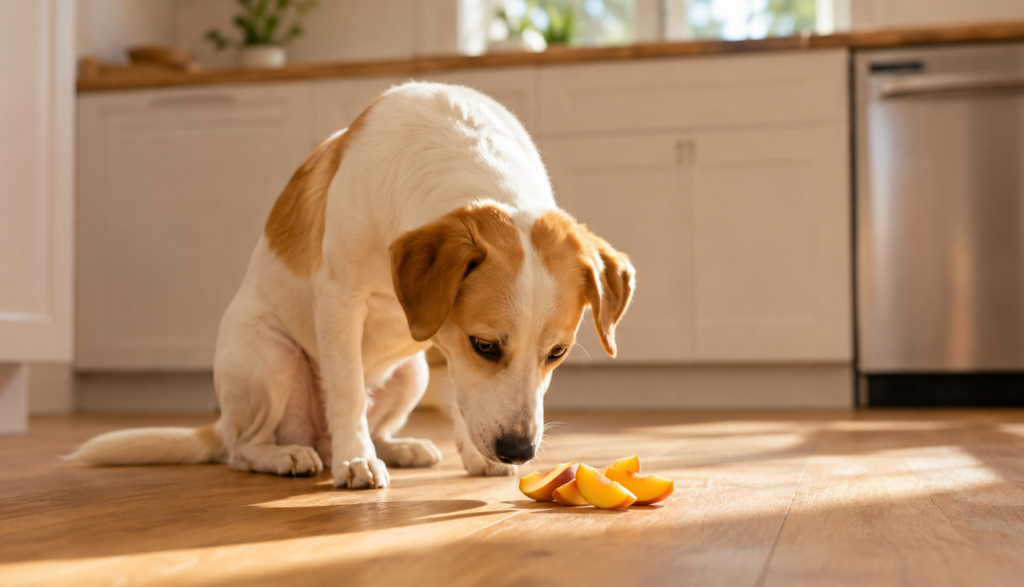
Natural sugar is the limiting factor with peaches, not toxicity. Peach flesh is sweeter than many other dog-safe fruits, which means portion control matters more than it does with something like blueberries or cucumber. Too much peach in a single sitting reliably produces digestive upset — loose stools and diarrhea — even in dogs that handle the fruit well in smaller amounts.
For small dogs, one to two bite-sized pieces per serving is the appropriate ceiling. Medium dogs can handle three to four peach slices. Large breeds can manage slightly more, but a controlled portion of peach slices rather than a free-for-all is always the right approach. Feed peaches as an occasional treat a few times a week rather than daily, and don’t serve them alongside other high-sugar fruits in the same sitting.
Senior dogs and dogs with diabetes need particular attention here. The sugar content in peach for large dogs or frequent servings can affect blood glucose in ways that matter for dogs already managing metabolic conditions. Healthy adult dogs tolerate appropriate peach portions without issue, but the appropriateness of those portions depends on the individual dog’s health baseline.
Canned peaches are worth addressing separately because they come up often. Canned peaches are not a suitable substitute for fresh peach for dogs. Commercial canning almost always involves heavy syrup or added sugar, and some products contain artificial sweeteners. The sugar load in canned peaches far exceeds what’s in fresh fruit and has no place in a dog’s diet. Fresh peach only — and if fresh isn’t available, skip it until it is.
What Most People Don’t Know
The gap most dog owners don’t account for is the difference between peaches and other stone fruits. Knowing that dogs can eat stone fruit safely — or that you’ve given your dog peach before without incident — doesn’t automatically extend to every fruit in the same botanical family. Cherries, plums, apricots, and nectarines all have pits with the same amygdalin compound as peach pits, and the fruit flesh rules vary across the group.
Cherries in particular are more complicated than peaches. Cherry pits contain higher concentrations of cyanide compounds than peach pits, and even the leaves and stems of cherry plants are toxic to dogs. An owner who’s comfortable giving their dog peach because it went fine might hand over a cherry with the same confidence — and that’s where the logic breaks down. Each stone fruit needs to be evaluated individually rather than grouped under a blanket rule.
Nectarines follow essentially the same rules as peaches — remove the pit, serve the flesh, watch portions — and are equally safe when prepared correctly. Apricots are safe in small amounts with the pit removed but have a higher concentration of cyanide in the pit than peaches, so caution around the seed matters even more. If symptoms persist or worsen after your dog eats any stone fruit, a vet visit is always the right call.
Building a Stone Fruit Rotation for Dogs
Peaches don’t need to be a standalone treat — they fit naturally into a rotating fruit schedule that keeps variety in a dog’s diet without requiring constant research into what’s safe. The preparation logic for stone fruits is consistent enough that once you’ve internalized it for peaches, applying it to nectarines and apricots is straightforward: pit out, flesh served, portions managed.
Pairing peach with other summer fruits keeps treat rotation interesting. Watermelon, cantaloupe, and blueberries all work well alongside peach without any safety conflicts. A small bowl of mixed fruit pieces — all properly prepared — is something most dogs find far more engaging than a single ingredient, and the variety delivers a broader range of vitamins for dogs than any single fruit can provide alone.
Frozen peach chunks follow the same logic as frozen mango and cantaloupe — freeze pitted, peeled pieces on a tray until solid, then store in a bag and pull out servings as needed. Dogs eat frozen peach more slowly than fresh, which extends the treat and keeps them occupied. In warmer months, rotating between fresh and frozen versions of the same fruit is one of the more practical things you can do with safe fruits for dogs that are in season.
FAQ
Can dogs eat peach skin?
Peach skin is not toxic but can cause mild digestive upset in sensitive dogs and carries pesticide residue. Washing the peach thoroughly before serving reduces the risk. Peeling is the cleaner choice, especially for dogs with sensitive stomachs.
Is the peach pit dangerous for dogs?
Yes. The peach pit is a choking hazard, can crack teeth, and contains amygdalin which breaks down into cyanide. Always remove the pit completely before giving peaches to your dog — no exceptions.
How much peach can a dog eat?
Small dogs should have one to two bite-sized pieces per serving. Medium dogs can handle three to four peach slices. Serve a few times a week as an occasional treat — the natural sugar content means portions need to stay controlled.
Can dogs eat canned peaches?
No. Canned peaches contain heavy syrup or added sugar that’s inappropriate for dogs. Some products also contain artificial sweeteners. Stick to fresh peach only — if fresh isn’t available, skip it until it is.
Can puppies eat peaches?
Yes, in very small amounts with the pit and skin removed. Start with one small piece and monitor for any digestive reaction. Puppies have more sensitive digestive systems than adult dogs, so introduce new foods gradually.
Are nectarines safe for dogs like peaches?
Yes. Nectarines follow the same rules as peaches — remove the pit, serve the flesh only, keep portions controlled. The pit contains the same cyanide compound as peach pits and must be removed every time.
Can frozen peaches be given to dogs?
Yes. Frozen peach chunks are a great summer treat. Freeze pitted, peeled pieces on a flat tray until solid and store in a bag. Most dogs eat frozen peach more slowly than fresh, which extends the treat and slows fast eaters down.