

Diarrhea is one of the most common reasons dog owners search for answers, and it can feel unsettling when you don’t know why it’s happening. The truth is that loose stool in dogs has a long list of possible triggers — some as mild as a new treat, others as serious as an underlying illness. Understanding the most common causes helps you figure out whether this is something to manage at home or a sign that your dog needs veterinary attention.
Part of what makes diarrhea so confusing for owners is that it’s a symptom, not a specific condition — the digestive tract has a limited number of ways to respond to irritation, so a dozen very different problems can all produce the same watery result. A dog who raided the trash overnight and a dog fighting off a parasite can both show up with nearly identical stool the next morning. That’s why looking at the full picture — timing, other symptoms, recent changes at home, and how your dog is otherwise acting — matters more than the diarrhea itself when it comes to figuring out the cause. This guide breaks down the usual suspects behind dog diarrhea, what the color and consistency can tell you, how home care differs by cause, and when the underlying reason matters enough to call the vet.
When It’s Normal (Mild, Short-Term Causes)
Most cases of dog diarrhea trace back to something simple and short-lived. A dog’s digestive system is more sensitive than people expect, and it doesn’t take much to throw it off balance for a day or two. Vets refer to this broad category as acute, uncomplicated diarrhea — sudden in onset, self-limiting, and not accompanied by other signs of illness. It’s by far the most common presentation, and in most healthy adult dogs it resolves on its own within 24 to 48 hours regardless of which specific mild trigger caused it.
- Dietary indiscretion: Getting into the trash, eating something off a walk, or snagging a scrap of table food is the single most common cause of sudden diarrhea in dogs.
- Sudden food change: Switching dog food brands or flavors too quickly, without a 5-7 day transition period, commonly upsets the gut.
- New treats or table scraps: Rich, fatty, or unfamiliar foods — even “dog-safe” ones — can cause loose stool if introduced suddenly or in large amounts.
- Stress: Travel, boarding, a new home, a new pet, or a change in routine can trigger stress colitis, a stress-related form of diarrhea.
- Minor stomach upset: Sometimes there’s no clear trigger at all — just a passing bout of gastrointestinal irritation that resolves within a day or two.
If your dog is eating, drinking, playing, and acting like themselves otherwise, mild dietary causes are the most likely explanation, and home monitoring is usually appropriate.
When to Worry (Causes That Need Attention)
Some causes of diarrhea are more than a passing stomach upset. These are the categories worth taking seriously, especially if symptoms persist beyond a day or two, keep coming back, or show up alongside other signs like vomiting, fatigue, or appetite loss. Unlike dietary indiscretion, these causes generally don’t resolve with a bland diet alone — they need to be identified and treated at the source, which usually means a vet visit rather than a wait-and-see approach.
- Parasites: Roundworms, hookworms, whipworms, and protozoal parasites like giardia and coccidia are frequent culprits, especially in puppies or dogs with outdoor access.
- Bacterial infections: Salmonella, E. coli, and Clostridium overgrowth can all cause diarrhea, sometimes with blood or mucus present.
- Viral infections: Parvovirus (especially in unvaccinated puppies), coronavirus, and distemper can cause severe diarrhea alongside vomiting and lethargy.
- Food intolerance or allergy: Some dogs develop ongoing sensitivity to specific proteins or ingredients, leading to recurring diarrhea tied to their regular diet.
- Toxin ingestion: Chocolate, xylitol, certain plants, and spoiled food can all cause diarrhea as one of several toxicity symptoms.
- Underlying illness: Pancreatitis, inflammatory bowel disease (IBD), liver or kidney disease, and hormonal disorders like Addison’s disease can all present with chronic or recurring diarrhea.
- Medication side effects: Antibiotics, NSAIDs, and some supplements list diarrhea as a known side effect.
What the Color and Consistency Can Tell You
| Appearance | Possible Meaning |
|---|---|
| Yellow, watery | Rapid transit through the gut, often diet-related or mild viral irritation |
| Green | May indicate eating grass, or rapid movement through the intestines |
| Black or tarry | Possible digested blood from the upper GI tract — seek vet care promptly |
| Bright red streaks | Fresh blood, often from the lower colon or rectum — warrants a vet call |
| Mucus-coated | Common with colitis or stress-related inflammation of the colon |
| Gray, greasy | May suggest a pancreas or fat-digestion issue |
Color alone doesn’t confirm a diagnosis, but it’s a useful clue to share with your vet if the diarrhea doesn’t resolve quickly. Consistency matters too — watery diarrhea that has no form at all generally points to a more significant disruption than soft, only partially formed stool. Frequency is another piece of the puzzle: a dog passing loose stool once is very different from one straining multiple times an hour, which can indicate colitis or inflammation of the lower colon specifically. If you’re ever unsure what you’re looking at, a photo taken on your phone is genuinely useful information to bring to a vet appointment or describe over the phone — it’s far more precise than trying to describe color and texture from memory once you’re at the clinic.
Home Care for Mild Cases
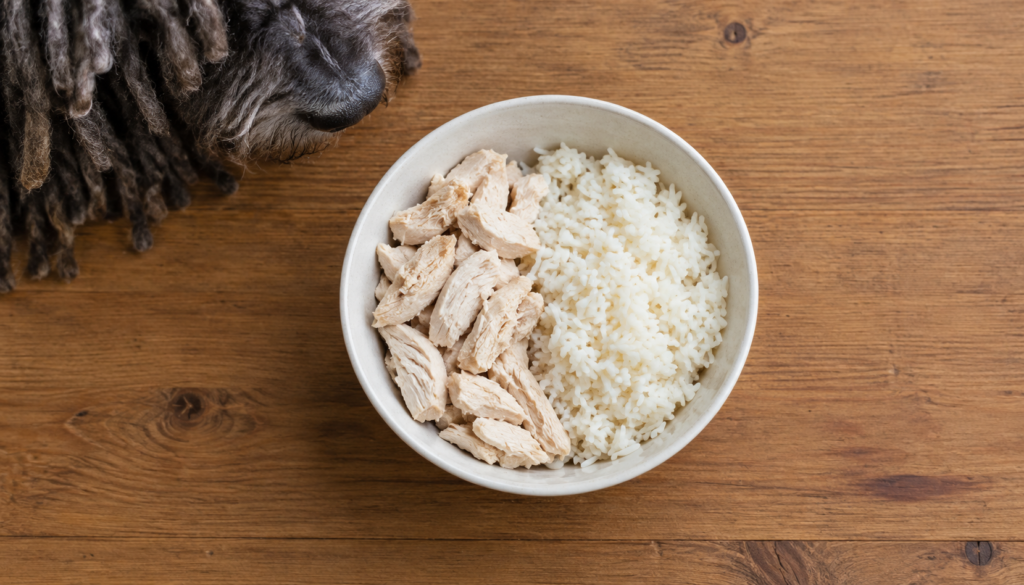
For diarrhea with no other symptoms in an otherwise healthy adult dog, these steps often help calm the gut and firm up stool within a day or two. Home care is meant for mild, uncomplicated cases only — it’s not a substitute for veterinary treatment when a more serious cause is suspected, and it should never be relied on for more than 48 hours without improvement.
- Bland diet: Plain boiled chicken (no skin, no seasoning) with white rice, in a roughly 1:2 ratio, for 24-48 hours.
- Plain canned pumpkin: A spoonful can help firm up stool thanks to its fiber content.
- Fresh water access: Diarrhea increases the risk of dehydration, so keep water available at all times.
- Short-term fasting (adult dogs only): Some vets recommend withholding food for 12-24 hours to let the gut rest — never do this with puppies, seniors, or dogs with health conditions without vet guidance.
- Gradual return to normal food: Reintroduce regular food slowly over 2-3 days once stool firms up.
What Most People Don’t Know
Diarrhea isn’t a diagnosis — it’s a symptom, and the same loose stool can come from a dozen unrelated causes that all look identical on the outside. This is why vets often ask about recent diet changes, travel, exposure to other animals, and medication history before jumping to tests: the context surrounding the diarrhea often narrows down the cause faster than the stool itself. Many owners also don’t realize that stress alone, with zero dietary trigger, can produce diarrhea just as reliably as spoiled food — a phenomenon vets call stress colitis, common after boarding, vet visits, thunderstorms, or moving homes. And chronic, recurring diarrhea that keeps returning every few weeks is rarely “just sensitive stomach” — it’s one of the more reliable early indicators of food allergies, IBD, or other conditions that benefit from being caught early rather than managed indefinitely with bland diets.
Can Diarrhea Be Prevented?
You can’t eliminate every risk of an upset stomach, but a few habits meaningfully lower how often it happens:
- Transition foods gradually: When switching diets, mix the new food in over 5-7 days rather than swapping overnight.
- Secure the trash and counters: Since dietary indiscretion is the single most common cause, limiting access to trash, compost, and counter edges prevents a large share of cases.
- Stick to dog-safe treats in moderate amounts: Even safe human foods can cause loose stool if given in large quantities or too rich for your dog’s usual diet.
- Keep parasite prevention current: Routine deworming and parasite preventatives reduce the risk of parasite-driven diarrhea, especially in dogs with regular outdoor or dog-park exposure.
- Minimize sudden environmental stress where possible: If travel or boarding is unavoidable, bringing familiar bedding, food, and toys can reduce stress colitis risk.
- Watch for patterns: If diarrhea consistently follows a specific food, treat, or supplement, that’s a strong clue toward an intolerance worth discussing with your vet.
When to See a Vet
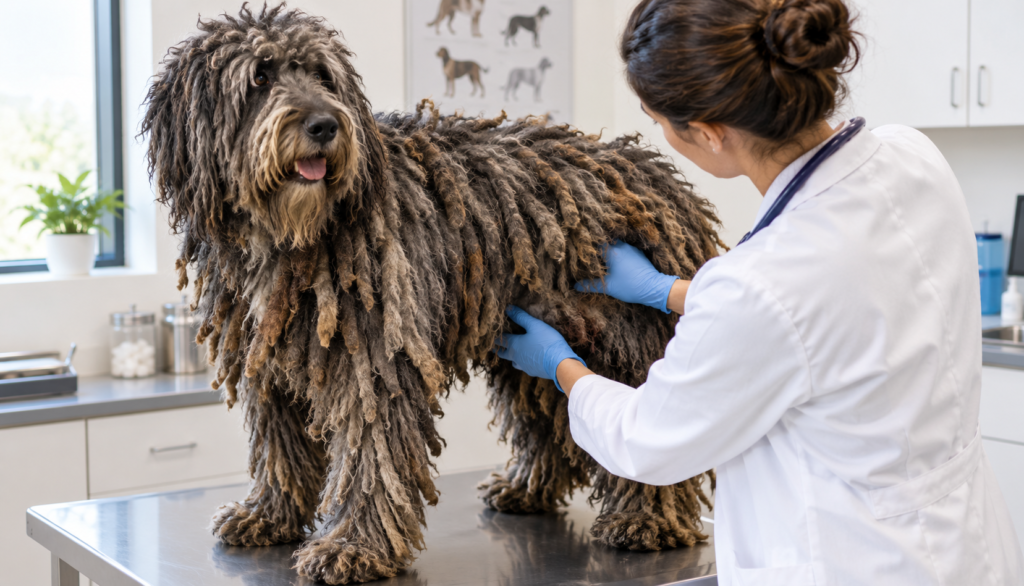
Contact your vet if diarrhea is paired with any of the following:
- Blood (bright red or black/tarry stool)
- Repeated vomiting
- Lethargy or noticeable weakness
- Loss of appetite lasting more than a day
- Fever
- Visible pain, bloating, or a distended abdomen
- Diarrhea lasting more than 2 days despite home care
- Known or suspected toxin exposure
- Puppies, senior dogs, or dogs with existing health conditions — seek care sooner rather than later, since dehydration progresses faster in these groups
Your vet may run a fecal test to check for parasites, bloodwork to rule out organ or metabolic issues, or recommend imaging if a blockage or foreign object is suspected. For diarrhea that keeps recurring every few weeks without an obvious trigger, don’t be surprised if your vet suggests an elimination diet trial or more targeted testing — chronic, cycling diarrhea is one of the more common ways food allergies and inflammatory bowel disease first show up, and catching it early usually means an easier, less invasive treatment path than waiting until symptoms escalate.
FAQ
Q. What is the most common cause of diarrhea in dogs?
A. Dietary indiscretion — getting into trash, table scraps, or something eaten on a walk — is by far the most common cause of sudden diarrhea in otherwise healthy dogs.
Q. Can stress alone cause diarrhea in dogs without any dietary trigger?
A. Yes. This is called stress colitis, and it can happen from travel, boarding, thunderstorms, or a change in routine — with zero connection to what the dog has eaten.
Q. Should I be worried if my dog’s diarrhea keeps coming back every few weeks?
A. Recurring diarrhea with no clear trigger is one of the more reliable early signs of food allergies or inflammatory bowel disease, and it’s worth having your vet investigate rather than repeatedly managing it with a bland diet.
Q. Does the color of my dog’s diarrhea actually matter?
A. Yes, to a degree. Black or tarry stool and bright red streaks both point to blood and warrant a vet call, while yellow or green tones are usually less urgent but still worth noting if the diarrhea persists.