
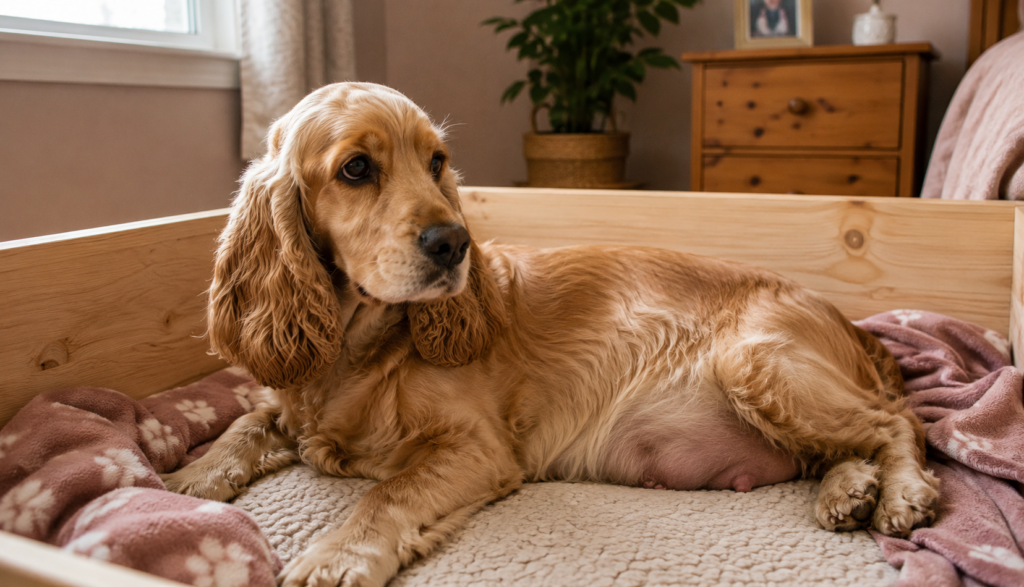
If your dog is nearing her due date, knowing the signs of labor can mean the difference between a calm, well-prepared delivery and a stressful scramble. Dogs give clear physical and behavioral signals in the hours and days before whelping begins — you just need to know what you’re looking for. This guide walks through every stage, from the earliest pre-labor clues to the moment active labor starts, so you can recognize what’s normal and know exactly when it’s time to call your vet.
Canine pregnancy typically lasts 58 to 68 days from ovulation, with most litters arriving around day 63. As that window approaches, your dog’s body begins preparing days in advance, well before any puppy is actually ready to be born. Some signs are subtle enough to miss if you’re not watching closely; others, like the pre-labor temperature drop, are precise enough to set your watch by. Being able to tell the difference between normal pre-labor behavior and a sign that something’s wrong is one of the most useful skills a dog owner can have heading into whelping.
Timeline: When Labor Signs Typically Appear
| Time Before Labor | What’s Happening |
|---|---|
| 7–10 days before | Nesting behavior begins, appetite may shift, mammary glands enlarge further |
| 24–48 hours before | Temperature drop below 100°F, restlessness, possible loss of appetite |
| 12–24 hours before | Nesting intensifies, panting, pacing, digging at bedding |
| 1–2 hours before | Visible contractions, active straining, first puppy imminent |
The Temperature Drop: The Most Reliable Early Sign
A pregnant dog’s body temperature normally sits between 100°F and 102.5°F. In the 24 hours before labor, progesterone levels fall sharply, and her temperature typically drops to 99°F or lower. This is considered the single most dependable predictor of labor onset.
If you’re tracking closely, take a rectal temperature reading twice daily starting around day 58 of pregnancy, using a standard digital thermometer designed for pets. Log each reading so you can spot the drop clearly rather than relying on memory — a change from a baseline of 101°F down to 99°F or lower is the signal you’re watching for, and it’s usually sudden rather than gradual.
This drop happens because progesterone, the hormone that has maintained the pregnancy for the past two months, falls sharply as the body shifts into labor mode. Once you see the drop, most dogs will begin active labor within 24 hours, though some start sooner and a small number take slightly longer. It’s the single most objective, trackable sign available — unlike behavioral cues, which vary a lot between individual dogs, a temperature drop below 100°F is consistent across nearly all pregnant dogs regardless of breed or temperament.
Nesting and Behavioral Changes

Nesting instinct usually shows up gradually over the final week, then intensifies sharply in the last day. Watch for:
- Digging, scratching, or rearranging bedding in her whelping box
- Seeking out quiet, enclosed, or dark spaces
- Restlessness — unable to settle, getting up and lying back down repeatedly
- Pacing or circling
- Increased clinginess toward her owner, or conversely, wanting to be left alone
Some dogs also show a noticeable drop in appetite in the last 12–24 hours. A dog who refuses food she’d normally eat, especially paired with restlessness, is often close to labor.
Nesting is instinctive, but it’s worth giving your dog a designated whelping box well before this stage begins — ideally by week seven of pregnancy — so she has time to claim it as her own space rather than choosing a closet, under a bed, or another spot that’s harder for you to monitor. A good whelping box is low-sided enough for her to step in and out easily, lined with washable bedding, and placed somewhere quiet, warm, and away from household foot traffic. Dogs that have a familiar, comfortable nesting spot established in advance tend to settle into labor more calmly than dogs still searching for the “right” place when contractions begin.
Physical Signs That Labor Is Close
Alongside behavioral shifts, several physical changes point to imminent labor:
- Mammary gland changes: Glands become fuller and may begin producing milk in the final 24–48 hours
- Vulvar swelling and discharge: The vulva softens and enlarges; a clear or slightly cloudy discharge is normal in early labor
- Panting: Heavy panting with no exertion or heat-related cause is common as contractions begin internally
- Vomiting or loss of appetite: Mild nausea is common in the hours leading into labor, and some dogs skip meals entirely for a full day beforehand without it being a cause for concern
- Visible abdominal contractions: Waves of tightening across the belly, distinct from normal breathing movement — often visible as a rippling or tensing motion along the flank
- Shivering or trembling: A mild, whole-body shiver — separate from being cold — is common as labor hormones surge, even in warm rooms
Not every dog shows every sign, and the intensity varies by individual. Some dogs telegraph labor loudly with pacing, panting, and vocalizing; others go quiet and simply seek out a private corner. Knowing your dog’s normal baseline temperament in the weeks leading up to delivery makes it much easier to notice when something shifts.
Stage One vs. Stage Two Labor: Knowing the Difference
Labor in dogs happens in two distinguishable stages, and knowing which one your dog is in tells you what to expect next.
Stage One (6–12 hours): Internal contractions begin, but they’re not usually visible from the outside. This is the restlessness, panting, nesting, and appetite-loss stage. The cervix is dilating in preparation for delivery, but no puppies have appeared yet.
Stage Two (active labor): Visible straining and abdominal contractions begin. This is when puppies are actually delivered. The first puppy typically arrives within an hour of strong visible contractions starting — if straining continues for longer than 60–90 minutes with no puppy, contact your vet.
When Contractions Become Visible
Once labor moves into its active phase, you’ll see clear, rhythmic tightening of the abdomen — distinct from normal breathing. Contractions typically start further apart and grow closer together and stronger as delivery approaches. Straining that looks like a squatting or hunching position, paired with visible abdominal effort, means the first puppy is close.
What Most People Don’t Know
Many owners assume nesting behavior alone means labor is imminent, but nesting can start up to a week early and doesn’t reliably predict timing on its own — the temperature drop is far more precise. Another lesser-known detail: it’s completely normal for a dog to have a 15–30 minute (sometimes longer) rest period between delivering puppies. This isn’t a sign of trouble unless it’s paired with continued hard straining without progress, in which case it warrants a call to the vet. Owners also sometimes miss that a small amount of dark green or black-tinged discharge right before or during delivery is normal (it’s a natural pigment released from the placental attachment site) — it’s excessive bright red bleeding or foul-smelling discharge that signals a problem, not the dark green tinge itself.
When to Call Your Vet Immediately
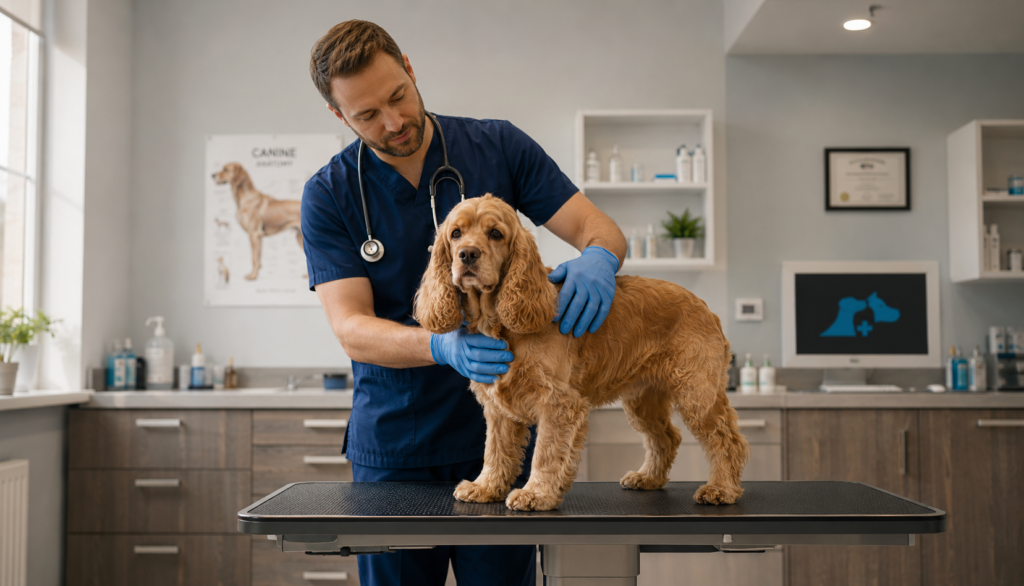
Most labors proceed without complication, but certain signs mean you should contact your vet or an emergency animal hospital right away:
- Strong straining for more than 60–90 minutes with no puppy delivered
- More than 2–4 hours between puppies with continued signs of labor
- Green or black discharge appearing before any puppy has been delivered
- Heavy, bright red bleeding
- Signs of extreme weakness, collapse, or a temperature spike above 103°F
- Known pregnancy duration exceeding 65–66 days without labor starting
Frequently Asked Questions
Q. How long before labor does a dog’s temperature drop?
A. The temperature drop below 100°F typically happens 12–24 hours before labor begins, making it the most reliable early warning sign available to track at home.
Q. Do all dogs show nesting behavior before labor?
A. Most do, but the intensity and timing vary widely by dog. Some show obvious nesting a week out; others barely nest at all and go straight into stage one labor with restlessness and panting.
Q. How long can early labor signs last before puppies arrive?
A. Stage one labor (restlessness, panting, temperature drop, no visible contractions) can last anywhere from 6 to 12 hours before stage two active labor and delivery begin.