
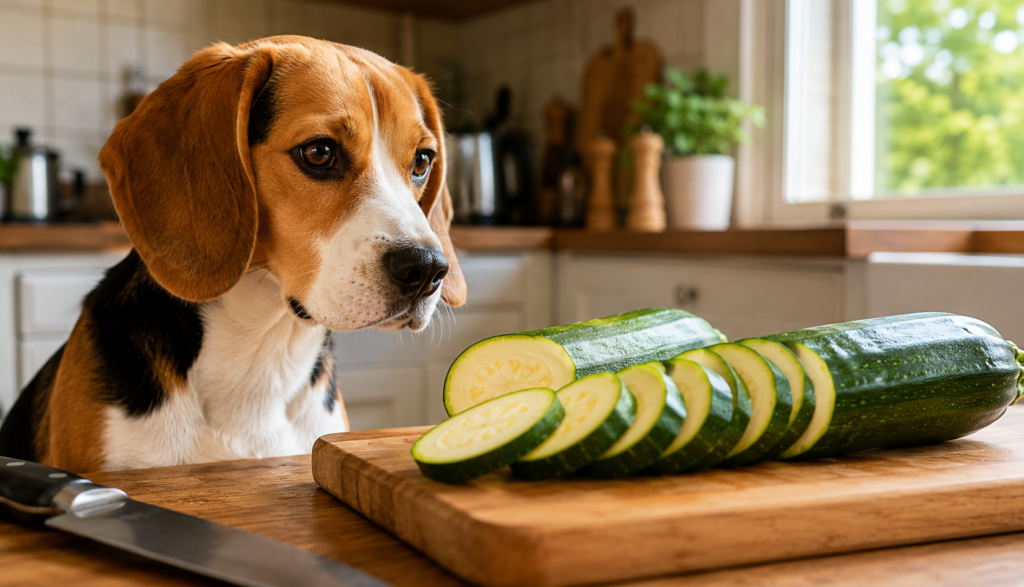
My garden produces more zucchini every summer than my family could ever realistically eat, and at some point my dog became the unofficial backup plan for the overflow. It turns out that instinct to share was a good one. Zucchini is genuinely one of the safer, more beneficial vegetables you can offer a dog, with very little downside as long as it’s prepared simply. Between the hydration, the low calorie count, and how easy it is on digestion, zucchini is a vegetable worth understanding properly rather than just tossing over out of garden surplus.
Is Zucchini Safe for Dogs?
I’ve seen this firsthand with multiple dogs over several summers now: zucchini is about as low-risk as vegetables get. It’s not toxic, it doesn’t appear on any warning list, and the vast majority of dogs handle it without any digestive upset at all.
The mild flavor and soft texture make zucchini an easy vegetable to introduce, even for dogs who tend to be picky about trying new foods. Most dogs accept it readily, whether raw or cooked.
So the answer is a confident yes. Zucchini sits comfortably among the safest options available, with very few caveats compared to vegetables that carry more nuanced risk profiles.
Raw vs Cooked: Does It Matter?
Most dog owners miss this completely: unlike some vegetables that genuinely need cooking to be safe, zucchini is perfectly fine either way. Raw zucchini retains slightly more of its water content and crunch, which some dogs actually prefer as a refreshing snack.
Cooked zucchini, whether steamed or lightly sautéed without oil, becomes softer and easier to chew, which can be gentler for puppies or senior dogs with less robust teeth or digestion.
Neither version carries meaningfully more risk than the other, so this choice really comes down to texture preference rather than any safety concern, which is fairly rare among dog-safe vegetables.
Skin and Seeds: Safe to Eat?
The first time I dealt with this question from a reader, both the skin and seeds came up, and the answer for each is reassuringly simple. Zucchini skin is entirely safe and doesn’t need to be peeled, and it actually carries a meaningful portion of the vegetable’s fiber content.
Zucchini seeds are soft and small enough that they pose essentially no choking hazard, unlike the harder seeds found in some other vegetables and fruits. There’s no need to remove or scoop them out before serving.
This makes zucchini one of the lower-effort vegetables to prepare, since there’s no peeling, seeding, or extensive prep required beyond washing and cutting into appropriately sized pieces.
Why Zucchini Bread Is a Different Story
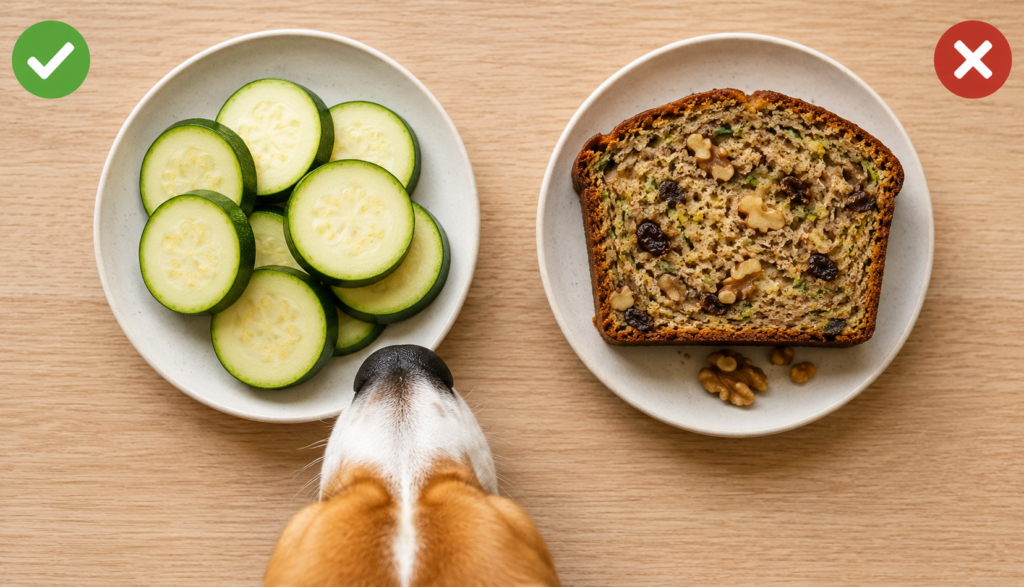
What surprised me was how often people assume “zucchini bread” is just zucchini in bread form, when really it’s an entirely different food with its own set of concerns. Zucchini bread typically contains added sugar, oil, and sometimes nutmeg, which in larger quantities carries genuine toxicity risk for dogs.
Some recipes also include walnuts or raisins, both of which introduce separate hazards entirely unrelated to the zucchini itself. The vegetable is the safe part of that recipe. Almost everything else baked in alongside it isn’t.
If your dog ever gets into zucchini bread, it’s worth treating that as a different situation entirely from plain zucchini, since the ingredients surrounding it are where the actual concern lives.
What Most People Don’t Know
Here’s something that rarely comes up: zucchini is botanically a fruit, not a vegetable, despite being treated as a vegetable in every kitchen and nutritional conversation. It’s actually a type of summer squash, harvested while immature, which is part of why it has such a high water content and mild flavor compared to winter squash varieties like butternut. This classification quirk doesn’t change anything about safety, but it explains why zucchini behaves more like a hydrating snack than a dense, calorie-rich vegetable.
Nutritional Benefits
From experience, the smarter call is to view zucchini as a genuinely useful low calorie option for dogs managing weight, since it offers real volume without much caloric impact at all. It delivers fiber, vitamin C, and potassium, contributing modestly but meaningfully to overall dog nutrition.
The high water content also makes zucchini a good hydrating vegetable, particularly useful during warmer months or for dogs who could benefit from a bit of extra moisture in their diet.
For senior dogs or those managing weight alongside joint concerns, zucchini’s combination of low calorie content and easy digestibility makes it one of the more practical regular treat options available.
Risks and Things to Watch For
I’ve watched this go wrong mostly with portion size or preparation rather than zucchini itself causing problems. Large, unchewed chunks can present a mild choking hazard, particularly for smaller dogs or fast eaters who don’t chew thoroughly.
Seasoned, oiled, or buttered preparations meant for human meals add unnecessary fat and salt that plain zucchini never carries, and overfeeding any vegetable can still lead to mild digestive upset or diarrhea if introduced too quickly.
If symptoms persist or worsen, a vet visit is always the right call, but for the vast majority of dogs, plain zucchini in reasonable amounts causes no issues whatsoever.
Frequently Asked Questions

Q. Can dogs eat zucchini every day?
A. Yes, small amounts of plain zucchini can be given regularly as part of a balanced diet, since it’s low calorie, hydrating, and generally well tolerated by most dogs.
Q. Is zucchini skin safe for dogs?
A. Yes, zucchini skin is safe and doesn’t need to be peeled. It contains a meaningful portion of the vegetable’s fiber and poses no additional risk to dogs.
Q. Can dogs eat zucchini bread?
A. No, zucchini bread often contains sugar, nutmeg, and sometimes raisins or walnuts, all of which carry separate risks for dogs unrelated to the zucchini itself.