
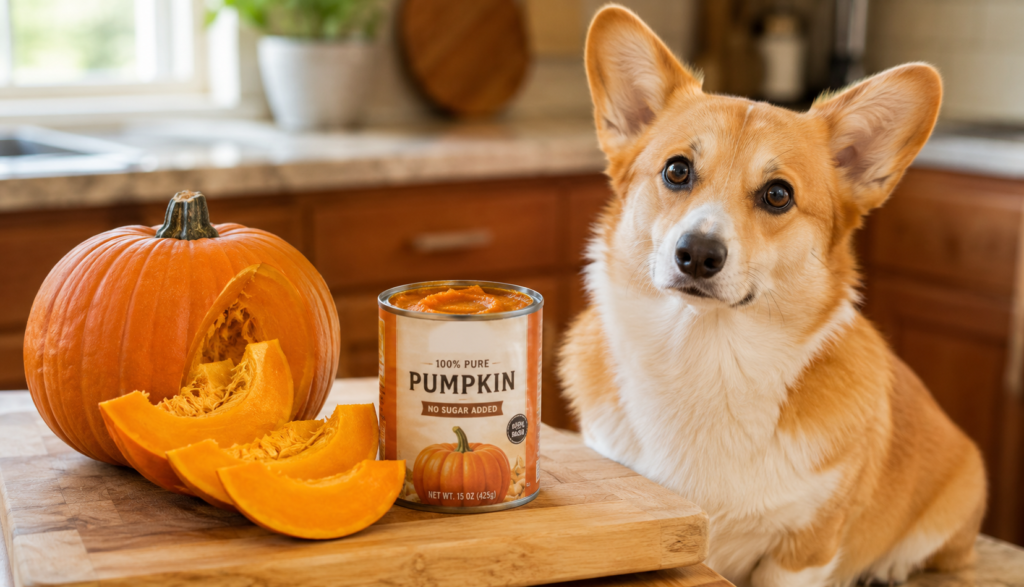
The first time my dog had a rough stomach week, a vet tech told me to keep a can of plain pumpkin puree in the pantry at all times, and I genuinely thought she was joking. She wasn’t, and that small can has bailed me out more times since than I’d like to admit. Pumpkin is one of those rare foods that’s both completely safe for dogs and genuinely useful for something beyond just being a treat. Understanding the difference between the version that helps and the version that can quietly cause problems is what makes this topic worth getting right.
Is Pumpkin Safe for Dogs?
I’ve seen this firsthand across more dogs than I can count at this point: pumpkin is about as low-risk as it gets. It’s not toxic, it doesn’t appear on any warning list, and the overwhelming majority of dogs not only tolerate it but actively enjoy it.
This isn’t a “tolerated in moderation” vegetable the way some others are. Pumpkin is frequently recommended outright by vets, which puts it in a smaller, more trusted category compared to most produce people ask about.
So the answer here is a confident yes, with the understanding that “pumpkin” can mean several different products, and not all of them are created equal.
Why Vets Recommend Pumpkin for Diarrhea
Most dog owners miss this completely until they’re handed the advice directly: plain pumpkin is genuinely effective for managing both diarrhea and occasional constipation, depending on how it’s used. The fiber content helps regulate digestion in both directions, which is fairly unusual for a single food to accomplish.
For loose stool, pumpkin helps absorb excess water in the digestive tract. For mild constipation, that same fiber content adds bulk and moisture that makes things move more easily. This dual benefit is part of why it’s become such a standard recommendation.
This works as supportive care, not a cure for underlying issues, so ongoing digestive upset still deserves an actual vet visit rather than relying on pumpkin indefinitely to manage symptoms.
Canned vs Raw vs Pie Filling
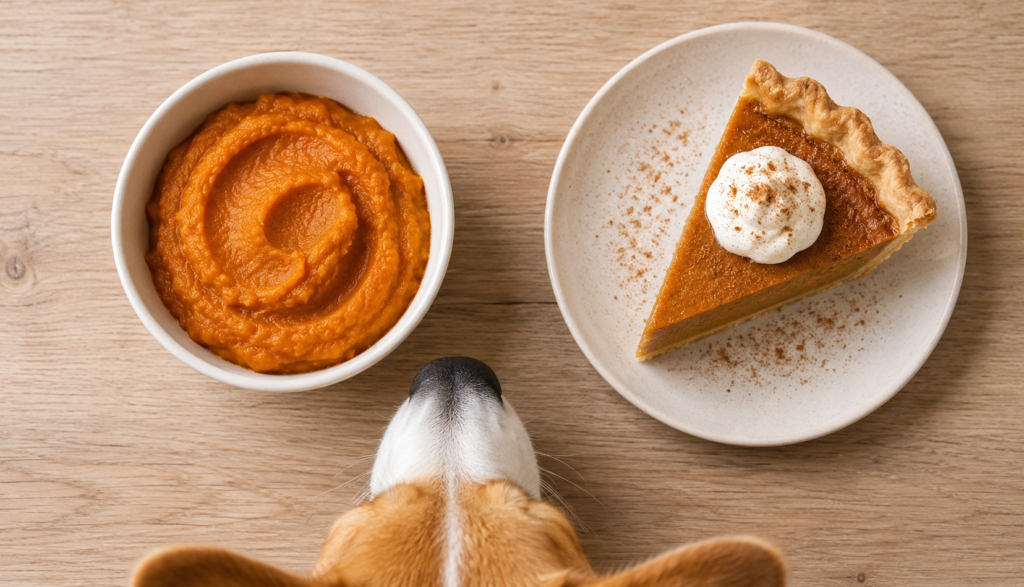
The first time I dealt with this question from a reader, the pie filling mix-up came up almost immediately, and it’s the single most important distinction in this entire topic. Canned pumpkin puree, the plain kind with no other ingredients listed, is exactly what you want. Pumpkin pie filling is a completely different product loaded with added sugar and spices, including nutmeg, which carries real toxicity risk for dogs in larger amounts.
Raw pumpkin is technically fine but tough and harder to digest, making cooked or canned plain pumpkin the more practical choice in almost every situation. Roasted pumpkin, served plain, works well too if you’re starting from a fresh pumpkin rather than a can.
Checking the label every single time, even if you’ve bought the same brand before, is worth the ten seconds it takes to avoid accidentally grabbing pie filling instead of plain puree.
Pumpkin Seeds: Safe or Not?
What surprised me was how genuinely beneficial pumpkin seeds can be, not just tolerated. Plain, unsalted, and ideally ground or crushed pumpkin seeds are safe for dogs and even carry some additional nutritional value of their own.
Whole, hard pumpkin seeds straight from a fresh pumpkin can present a choking hazard if not prepared properly, so roasting and grinding them lightly before offering any to your dog is the safer approach.
Seasoned pumpkin seeds, the kind sold for human snacking with salt or spice coatings, should be avoided entirely, since those additions defeat the purpose and introduce unnecessary sodium.
What Most People Don’t Know
Here’s a detail that rarely gets mentioned: the pumpkin spice flavoring used in seasonal lattes, baked goods, and treats has nothing to do with actual pumpkin at all. It’s a blend of cinnamon, nutmeg, clove, and ginger, several of which carry their own concerns for dogs in large amounts, particularly nutmeg. This means a “pumpkin spice” flavored treat could be far riskier than plain pumpkin itself, despite sharing the name, which trips up a lot of well-meaning owners during the fall season.
Nutritional Benefits
From experience, the smarter call is to think of pumpkin as both a functional food and a genuinely nutritious treat. It delivers solid fiber content along with meaningful vitamin A and beta-carotene, supporting digestion and overall health at the same time.
It’s also low calorie relative to its volume, making it a reasonable choice for dogs managing weight without sacrificing the digestive benefits that make pumpkin worth keeping on hand in the first place.
Senior dogs and dogs with recurring mild digestive sensitivity often benefit the most from having plain pumpkin worked into their routine occasionally, given how gentle and dual-purpose it tends to be.
Risks and Things to Watch For
I’ve watched this go wrong almost exclusively around product confusion rather than pumpkin itself causing harm. Pie filling, seasoned seeds, and pumpkin spice flavored products are where the real risk lives, not the plain vegetable.
Overfeeding plain pumpkin can still cause mild digestive upset in the opposite direction, since too much fiber at once can occasionally worsen loose stool rather than firm it up, so portion control still matters.
If symptoms persist or worsen, a vet visit is always the right call, particularly if pie filling or anything containing nutmeg was involved rather than plain pumpkin alone.
Frequently Asked Questions

Q. How much pumpkin should I give my dog for diarrhea?
A. A small amount of plain canned pumpkin, typically a spoonful for smaller dogs and slightly more for larger dogs, is a common starting point, but checking with your vet for specific guidance is best.
Q. Is canned pumpkin the same as pumpkin pie filling?
A. No, canned pumpkin puree contains only pumpkin, while pie filling contains added sugar and spices like nutmeg. Always check the label to confirm you have plain puree.
Q. Can dogs eat pumpkin seeds?
A. Yes, plain roasted and ground pumpkin seeds are safe and offer some nutritional benefit, but whole hard seeds and salted or seasoned versions should be avoided.