
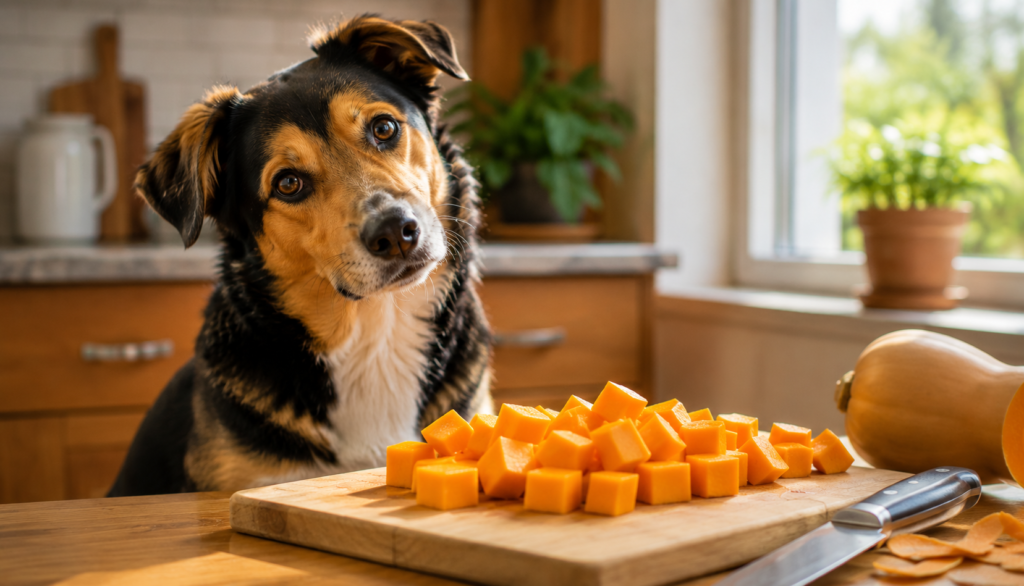
My vet once handed me a small container of plain cooked butternut squash during a visit for my dog’s upset stomach, and I remember being surprised that the recommendation was a vegetable rather than some kind of medication. That visit is what taught me just how highly regarded butternut squash actually is in veterinary circles, well beyond the casual “vegetables are fine in moderation” advice you hear about most produce. Butternut squash is genuinely one of the safest, most beneficial foods you can offer a dog, and understanding why makes it easy to see why vets reach for it specifically.
Is Butternut Squash Safe for Dogs?
I’ve seen this firsthand across multiple dogs now: butternut squash is about as low risk as vegetables get. It’s not toxic, it doesn’t carry any of the warning signs associated with onions or grapes, and the overwhelming majority of dogs tolerate it extremely well.
This isn’t just “tolerated,” either. Butternut squash is frequently recommended by vets specifically because it’s gentle, nutrient-dense, and easy on a dog’s digestive system when prepared correctly.
So the answer here is a confident yes. Of all the vegetables covered across this kind of safety guide, butternut squash sits near the top of the list in terms of genuine benefit rather than just “won’t hurt them.”
Why Vets Recommend It for Digestive Issues
Most dog owners miss this completely: butternut squash isn’t just a treat option, it’s often used as a functional food for dogs experiencing mild digestive upset or an unsettled stomach. The fiber content helps firm up loose stool, while the gentle texture is easy for a sensitive stomach to process.
This is part of why you’ll sometimes see plain cooked squash recommended alongside bland diet advice during a bout of diarrhea or general stomach trouble, similar to how plain rice or boiled chicken gets used.
It’s worth noting this works as a supportive food, not a cure, and ongoing digestive issues still warrant an actual vet visit rather than relying on squash alone to resolve things.
Raw vs Cooked vs Canned
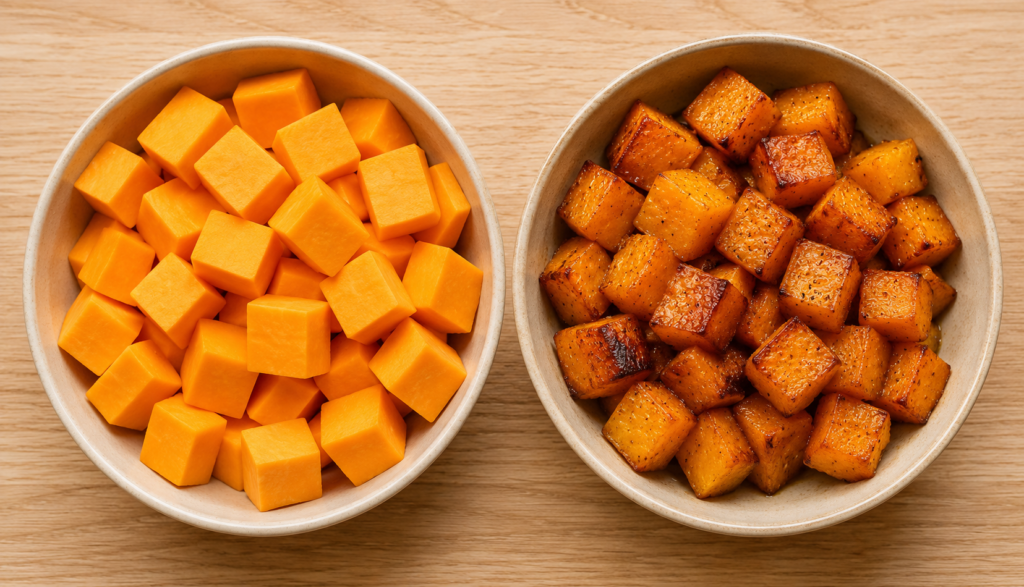
The first time I dealt with this question from a reader, the raw versus cooked distinction came up immediately. Raw butternut squash is genuinely hard, dense, and difficult for dogs to chew or digest properly, making cooked squash the clear better option in almost every case.
Roasted butternut squash or steamed butternut squash, served plain, are both excellent choices, softening the texture while preserving most of the nutritional value intact.
Canned squash can work too, but only if it’s plain puree with nothing added. Many canned squash products marketed for pie filling contain added sugar, spices, or other ingredients meant for human desserts, which defeats the purpose entirely and should be avoided.
Seeds, Skin, and Preparation
What surprised me was how often people leave the skin on without realizing it’s genuinely tougher to digest than the flesh itself. Butternut squash skin should be peeled away before cooking, since it doesn’t break down easily and offers little benefit compared to the inner flesh.
Butternut squash seeds aren’t toxic, but they’re hard, can present a choking hazard, and offer no real nutritional value to a dog, so removing them before serving is a simple, worthwhile precaution.
Once peeled, seeded, and cooked plain, cutting the squash into small, manageable pieces makes it easy for dogs of any size to eat safely without much risk involved.
What Most People Don’t Know
Here’s a detail that rarely comes up: butternut squash and pumpkin are nutritionally very similar, which is why squash often gets used as a pumpkin alternative when pumpkin isn’t in season or available. Both offer comparable fiber content and similar digestive benefits, so if a vet has ever recommended plain pumpkin for your dog’s stomach, plain butternut squash generally works just as well as a substitute, and vice versa depending on what you happen to have on hand.
Nutritional Benefits
From experience, the smarter call is to think of butternut squash as one of the more nutritionally valuable treats available, not just a neutral filler vegetable. It delivers meaningful vitamin A and beta-carotene, both of which support eye health and immune function over time.
It’s also genuinely low fat and low calorie relative to its volume, making it a solid choice for dogs managing weight without sacrificing nutritional value the way many treats do.
Senior dogs and dogs with sensitive digestion often do particularly well with squash worked into their diet occasionally, given how gentle it tends to be compared to richer or fattier treat options.
Risks and Things to Watch For
I’ve watched this go wrong mostly with preparation shortcuts rather than the squash itself causing harm. Serving it raw, with skin still on, or straight from a sweetened canned product are the main ways this otherwise excellent vegetable causes unnecessary problems.
Overfeeding any vegetable, including squash, can still lead to mild digestive upset or diarrhea if portions are too large or introduced too suddenly rather than gradually.
If symptoms persist or worsen, a vet visit is always the right call, but for the vast majority of dogs, plain cooked butternut squash in reasonable amounts causes no issues at all.
Frequently Asked Questions
Q. Can dogs eat butternut squash every day?
A. Yes, small amounts of plain cooked butternut squash can be given regularly as part of a balanced diet, especially for dogs who tolerate it well and benefit from the added fiber.
Q. Is canned butternut squash safe for dogs?
A. Plain canned squash puree with no added ingredients is safe, but canned products meant for pie filling often contain sugar and spices that aren’t appropriate for dogs.
Q. Can dogs eat butternut squash seeds?
A. Butternut squash seeds aren’t toxic, but they’re hard to digest and can pose a choking hazard. Removing them before serving the squash is the safer approach.