
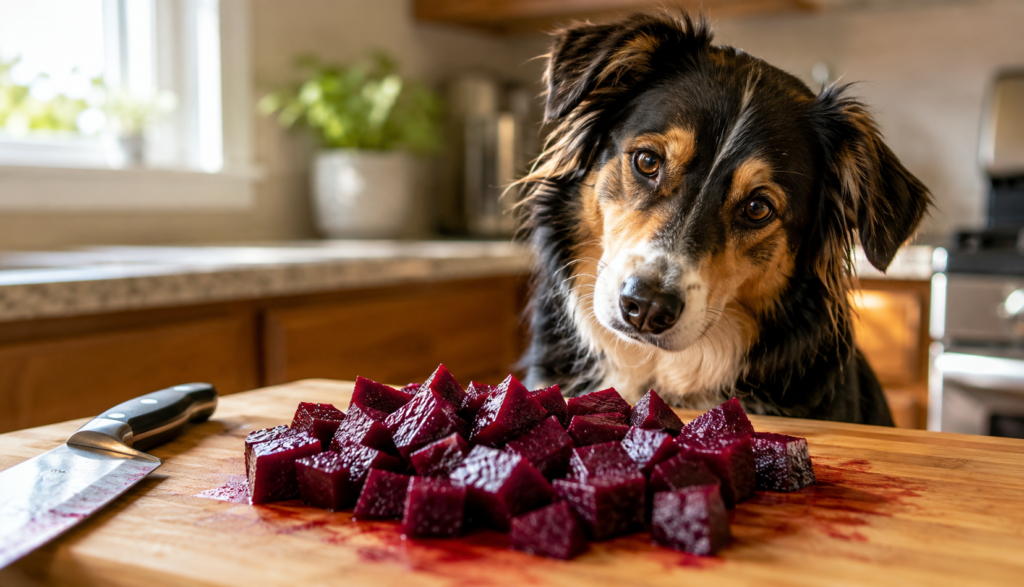
I once found a suspicious red puddle in my backyard and genuinely thought something was seriously wrong with my dog, only to remember an hour later that I’d shared a few pieces of roasted beet with him the night before. That panic, completely unnecessary in hindsight, is exactly the kind of thing that makes beets one of the more misunderstood vegetables in a dog’s diet. Beets are safe for dogs in moderation, but the visual side effects they can cause are dramatic enough to genuinely scare an owner who doesn’t know what’s coming.
Are Beets Safe for Dogs?
I’ve seen this firsthand with more than one dog now: beets aren’t toxic, and most healthy dogs can eat small amounts without any serious problem. They’re not on any major warning list, and cooked beets in particular tend to be well tolerated.
That said, beets aren’t a vegetable to feed casually or in large amounts either. Between the sugar content, the fiber load, and the visual surprise they can cause, beets sit in more of a “fine occasionally, with caveats” category than something like plain green beans.
So the short answer is yes, with the understanding that this is a treat best given sparingly rather than a regular addition to your dog’s bowl.
Why Beets Turn Urine and Stool Red
Most dog owners miss this completely the first time it happens: beets contain natural pigments that can pass through a dog’s digestive system largely unchanged, leading to a condition called beeturia, where urine and sometimes stool take on a noticeably red or pink tint.
This is harmless and temporary, but it looks alarming if you don’t know it’s coming, since red-tinted urine can understandably trigger fear of internal bleeding or something far more serious. The color shift typically resolves within a day or so as the beets fully pass through.
If you’ve recently fed your dog beets and notice this, there’s generally no cause for concern. If you haven’t fed beets and see the same thing, that’s a very different situation worth a vet visit.
Raw vs Cooked vs Canned vs Pickled
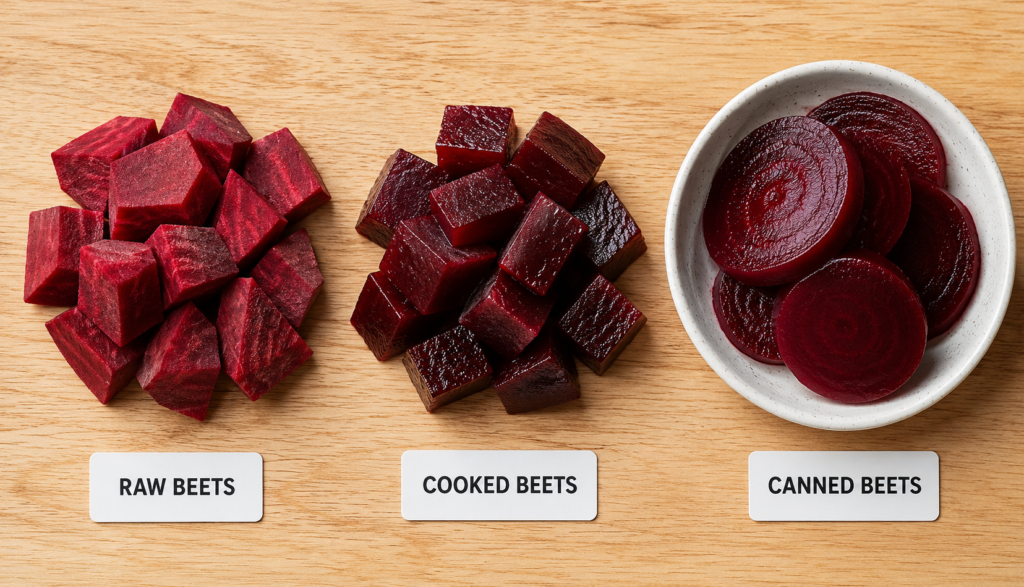
The first time I dealt with this question from a reader, the canned and pickled varieties came up immediately as a concern, and rightly so. Canned beets often carry added sodium content, while pickled beets introduce vinegar, sugar, and sometimes spices that have nothing to do with the beet itself.
Raw beets are tough and fibrous, making them harder to chew and digest, and they can present a real choking hazard if served in large, hard chunks rather than small pieces. Cooked beets, whether boiled, steamed, or roasted plain, are softer and considerably easier on a dog’s digestive system.
If you’re going to share beets at all, plain cooked beets are by far the safest version, with canned rinsed thoroughly as a distant second choice and pickled beets best avoided entirely.
Nutritional Benefits
What surprised me was how nutrient-dense beets actually are despite their relatively high natural sugar content. They offer fiber, folate, manganese, and potassium, all of which contribute in small ways to overall canine health when given as an occasional treat.
Beet greens, the leafy tops often discarded before cooking, are also technically edible for dogs and carry their own nutrient profile, though they’re far less commonly offered than the root itself.
For dogs managing weight, the sugar content here matters more than with most vegetables, meaning beets work better as an occasional addition than a daily low calorie staple the way something like cucumber would.
What Most People Don’t Know
Here’s a detail that rarely comes up: beets contain naturally occurring oxalates, the same compounds found in spinach, which in very large quantities have been linked to kidney stone formation in some animals over time. For the average dog eating beets occasionally as a treat, this isn’t a realistic concern. It only becomes relevant for dogs with a documented history of kidney stones or kidney health issues, where a vet might recommend avoiding high-oxalate foods altogether rather than just moderating portions.
How to Prepare Beets Safely
From experience, the smarter call is to always cook beets plain before offering them, whether boiled, steamed, or roasted without oil, butter, or seasoning. This softens the tough fibrous texture and makes digestion considerably easier on your dog’s stomach.
Cutting cooked beets into small pieces further reduces any choking hazard, particularly important for smaller dogs or those who tend to swallow food quickly without much chewing.
Keeping portions genuinely small, a few small cubes rather than a whole beet, helps avoid both the sugar content concern and the more dramatic beeturia effect that comes with larger amounts.
Risks and Things to Watch For
I’ve watched this go wrong mostly in terms of owner panic rather than actual harm, since the red urine and stool reaction tends to be the most alarming part of feeding beets. Mild digestive upset or diarrhea can also occur if a dog eats more than a small amount, particularly with raw beets.
Dogs with known kidney health concerns should generally avoid beets altogether given the oxalate content, and any dog with diabetes or weight issues should have beets limited strictly due to the sugar content involved.
If symptoms persist or worsen, a vet visit is always the right call, especially if red discoloration shows up without any known beet consumption to explain it.
Frequently Asked Questions

Q. Why did my dog’s urine turn red after eating beets?
A. This is called beeturia, a harmless reaction caused by natural pigments in beets passing through the body. It typically resolves within a day and isn’t a cause for concern.
Q. Can dogs eat raw beets?
A. Raw beets are tough and harder to digest, and large pieces can pose a choking hazard. Cooked beets, cut small and served plain, are generally the safer option.
Q. Are canned beets bad for dogs?
A. Canned beets aren’t toxic, but they often contain added sodium content. Rinsing them thoroughly before serving reduces this, though fresh cooked beets remain the better choice overall.