
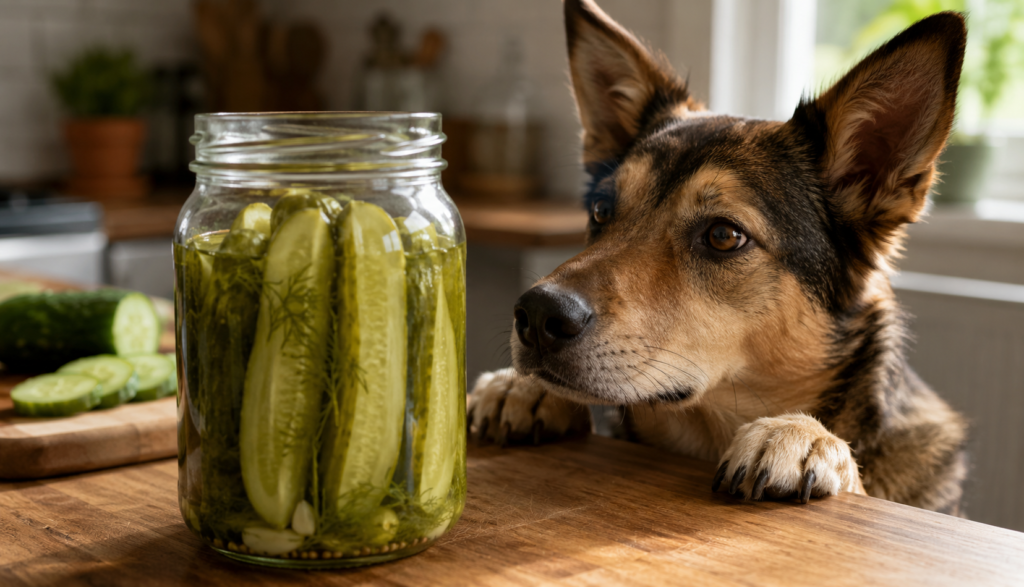
My dog once knocked an entire jar of pickles off the counter trying to get to one, and I spent a panicked five minutes searching before realizing pickles aren’t actually the emergency I assumed they were. That moment taught me something most dog owners never stop to consider: pickles aren’t dangerous in the way grapes or chocolate are, but they’re far from the harmless snack people treat them as. The cucumber underneath is completely fine for dogs. Everything that happens to it after that, the brine, the salt, the garlic, is where things get complicated.
Are Pickles Safe for Dogs?
I’ve seen this firsthand more than once: a dog snags a pickle off a plate and nothing bad happens. Technically, pickles aren’t toxic to dogs. The cucumber base is safe, and a single small bite of a plain pickle generally won’t cause harm to a healthy adult dog.
The problem isn’t the cucumber, it’s everything layered on top of it. Pickling brine is loaded with sodium, often far more than dogs should be consuming in one sitting, and that’s before you factor in any added spices or seasonings.
So the honest answer is “yes, but barely.” A pickle isn’t a treat worth building into your dog’s routine, even though one accidental bite isn’t typically a reason to panic.
The Sodium Problem
Most dog owners miss this completely: the high sodium content in pickle brine is the real concern here, not the cucumber or the vinegar. A single pickle spear can carry a surprising amount of salt content, especially in commercially jarred varieties.
Dogs process sodium very differently than people do, and excess salt intake can strain the kidneys and heart over time, particularly in dogs with existing kidney health or heart health issues. Even healthy dogs can experience symptoms like excessive thirst, vomiting, or lethargy if they consume too much salt at once.
This is why a single small piece is a very different situation than a dog getting into an entire jar of pickle juice, which carries a real risk of dog salt poisoning in larger quantities.
Dill vs Sweet vs Spicy Pickles
The first time I dealt with a reader question on this, I realized most people assume “pickle” means one specific thing, when really the category covers wildly different products. Dill pickles tend to be lower in sugar but often higher in salt content and sometimes garlic.
Sweet pickles trade some of that sodium for added sugar, which isn’t great either, just a different kind of unnecessary. Spicy pickles introduce another layer of risk entirely, since the seasoning blends used can include ingredients that cause digestive upset or worse in dogs.
If you’re ever going to let your dog have a tiny taste, a plain dill pickle with minimal added spices is generally the least risky option of the bunch, though “least risky” still isn’t the same as recommended.
Garlic, Onion, and Other Hidden Ingredients
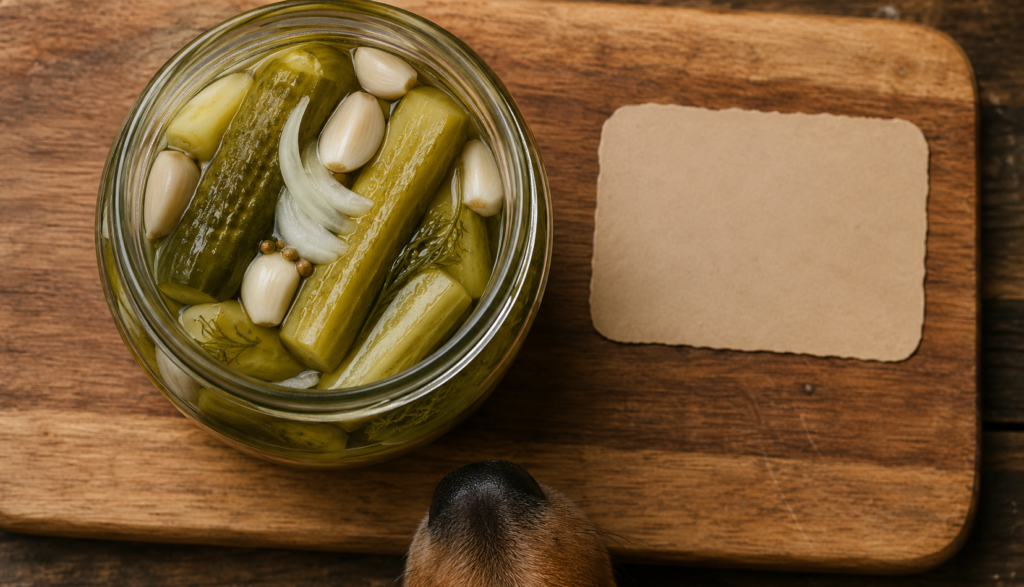
What surprised me was how often garlic and onion show up in pickle recipes without people thinking twice about it. Both are genuinely toxic to dogs, and many dill pickle brines include garlic cloves or onion slices as standard flavoring.
This is the ingredient list people skip reading because it’s “just a pickle.” Relish, in particular, often contains a concentrated mix of onion, sugar, and salt that makes it a far worse choice than a plain pickle spear ever would be.
Checking the jar’s ingredient label before ever sharing a piece with your dog takes ten seconds and removes most of the actual risk involved in this whole conversation.
What Most People Don’t Know
Here’s something that rarely comes up: the fermentation process used in traditional pickling does produce some of the same probiotic benefits found in other fermented foods for dogs, like plain kefir. But commercial pickles are almost always pasteurized afterward, which kills off those live cultures entirely. So the “probiotics in pickles” argument people sometimes use to justify feeding them to dogs doesn’t really hold up for anything you’d buy off a grocery shelf.
How to Safely Offer Pickles (If at All)
From experience, the smarter call is to skip pickles as a planned treat entirely and only treat an accidental nibble as a non-event. If you really want to share something cucumber-based, plain raw cucumber gives your dog the hydration and low calorie crunch without any of the sodium content baggage that comes with pickling.
If you do offer a tiny rinsed piece of plain dill pickle as an occasional treat, rinsing off as much surface brine as possible first reduces the sodium exposure somewhat, though it doesn’t eliminate it.
This isn’t a food worth building portion size habits around. It’s a “maybe once, by accident” food, not a “here’s your weekly healthy treat” food.
Signs of Trouble to Watch For
I’ve watched this go wrong when a dog gets into a full jar rather than a single spear. Watch for excessive thirst, vomiting, diarrhea, or unusual lethargy after any larger pickle exposure, since those can be early salt poisoning symptoms tied to high sodium intake.
Most single-bite incidents resolve with nothing more than mild digestive upset, if anything at all. The real risk scales with quantity, not the simple fact that pickles were involved.
If symptoms persist or worsen, a vet visit is always the right call, especially for senior dogs or dogs with known kidney or heart conditions where sodium sensitivity is already a concern.
Frequently Asked Questions

Q. Can dogs eat pickle juice?
A. No, pickle juice should be avoided. It’s concentrated brine, meaning it carries an even higher sodium content than the pickle itself and offers no nutritional benefit to dogs.
Q. Are dill pickles worse than sweet pickles for dogs?
A. Dill pickles often carry more sodium and sometimes garlic, while sweet pickles trade salt for sugar. Neither is a good regular choice, but plain dill in a tiny amount is usually the safer of the two.
Q. What should I do if my dog eats a whole pickle?
A. Watch for excessive thirst, vomiting, or lethargy over the next few hours, and check the ingredient label for garlic or onion. If symptoms appear or it contained garlic, contact your vet.