

My dog used to sit at my feet every time I made a salad, eyes locked on the lettuce like it was a steak. For years I assumed it was harmless and tossed a leaf his way without thinking twice. It turns out that instinct was mostly right, but there’s more nuance to lettuce for dogs than “it’s just lettuce, who cares.” Lettuce is safe for dogs in moderate amounts, and most dogs can handle it without any issue at all. The real question isn’t whether dogs can eat lettuce, it’s how you prepare it, how much you give, and which type actually does anything for your dog beyond filling space in their bowl.
Is Lettuce Safe for Dogs?
I’ve seen this firsthand with multiple dogs over the years: lettuce is one of the lowest-risk vegetables you can hand your dog. It isn’t toxic, it doesn’t carry the same red flags as grapes or onions, and most dogs tolerate it without any digestive upset at all. The leafy texture and high water content make it a refreshing snack, especially during warmer months when dogs need a little extra hydration.
That said, safe doesn’t mean nutritionally important. Lettuce is mostly water, and while that’s not a bad thing, it means you shouldn’t think of it as a meaningful source of nutrition. It’s a low calorie treat, not a dietary staple, and that distinction matters more than people expect.
Most vets view lettuce as a neutral, low-risk option, which is part of why it shows up so often as a recommended human food for dogs in moderation. The bigger factor is always preparation and portion, not the lettuce itself.
Iceberg vs Romaine: Which Is Better?
Most dog owners miss this completely: not all lettuce is created equal, and the type sitting in your fridge actually matters. Iceberg lettuce is almost entirely water content with very little fiber or nutrient density. It’s safe, it’s hydrating, but it’s not doing much heavy lifting nutritionally.
Romaine lettuce is the better pick if you want your dog to get something out of the leaf beyond crunch. It carries more fiber, more vitamin k, and a bit of vitamin a, along with a slightly more substantial texture that some dogs seem to enjoy more.
Dark leafy greens in general tend to outperform iceberg on the nutrient side, but neither type is dangerous, and switching between them based on what’s in your kitchen isn’t something you need to overthink.
Nutritional Benefits of Lettuce for Dogs
The first time I dealt with this question from a reader, I realized most people expect a “wow” answer, and the honest one is more modest. Lettuce offers fiber, hydration, and a handful of vitamins, but it’s not a superfood for dogs by any stretch.
The fiber content can help support digestion in small amounts, and the water content makes it a genuinely hydrating vegetable, particularly useful for dogs who don’t drink as much as they should. For dogs managing weight, lettuce can work as a low calorie treat alternative to processed dog treats.
Senior dogs and dogs on a calorie-restricted diet sometimes benefit the most from this kind of swap, since it adds bulk and a sense of “getting something” without the calorie load of a typical biscuit. It’s not a replacement for a balanced diet, but as an occasional treat, it fits well.
How to Prepare Lettuce for Your Dog
What surprised me was how often people skip the washing step entirely. Pesticide residue is one of the more overlooked risks with raw vegetables for dogs, and lettuce is no exception. A thorough rinse under cold water removes most surface residue and dirt before it ever reaches your dog’s bowl.
Cut the lettuce into small, manageable pieces rather than handing over a whole leaf. Dogs don’t chew the way we do, and a large leaf can bunch up and become a choking hazard, especially for smaller breeds or dogs that tend to gulp their food.
Cooked lettuce isn’t necessary and honestly isn’t recommended, since cooking breaks down the small amount of nutritional value it has to begin with. Raw, washed, and chopped small is the simplest and safest way to serve it.
Risks and Things to Watch For
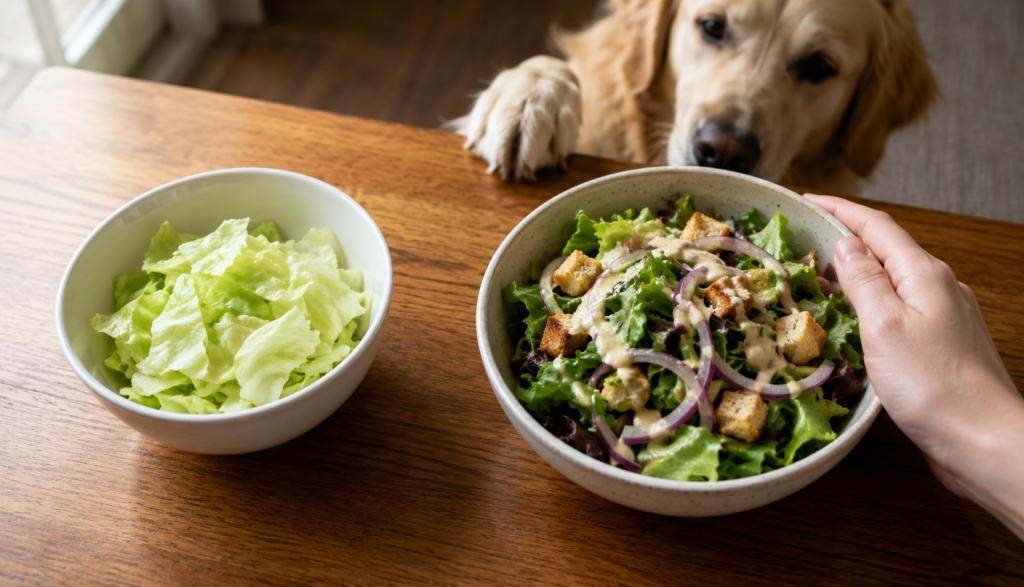
I’ve watched this go wrong when owners assume “lettuce is safe” means “salad is safe.” The lettuce itself rarely causes problems, but salad dressing, oils, cheese, croutons, and especially onion in salad turn an innocent snack into a real hazard. Onions are toxic to dogs regardless of how small the amount, so any lettuce going to your dog needs to be completely separate from the rest of your plate.
Too much lettuce at once, even plain, can lead to digestive upset or mild diarrhea, mostly because of the high water and fiber content hitting a dog’s stomach all at once. Starting with a small amount and watching how your dog reacts is always the smarter move.
If symptoms persist or worsen, a vet visit is always the right call, but for most dogs, a few small pieces of plain lettuce won’t cause anything beyond a slightly upset stomach if they overdo it.
What Most People Don’t Know
Here’s the part that rarely gets mentioned: the lettuce stalk, the firm white core at the base of the head, is actually harder for most dogs to digest than the leafy parts. It’s not dangerous, but it’s denser and chewier, and some dogs end up gulping chunks of it without breaking it down properly. If you’re serving lettuce regularly, sticking to the leafy portion and skipping the stalk avoids an unnecessary risk for very little benefit.
How Much Lettuce Is Too Much?
From experience, the smarter call is to treat lettuce strictly as an occasional snack, not a daily addition to your dog’s bowl. A few small pieces, a couple of times a week, is plenty for most dogs to enjoy the crunchy treat without any downside.
Larger dogs can typically handle a slightly bigger portion than smaller breeds, but portion size should always scale with your dog’s overall size and regular diet, not just how much they’re begging for.
Lettuce should never replace a balanced commercial diet or make up a significant percentage of daily food intake. Used the right way, it’s a hydrating, low calorie extra that most dogs genuinely enjoy.
Frequently Asked Questions

Q. Can dogs eat lettuce every day?
A. Small amounts a few times a week are fine for most dogs, but lettuce shouldn’t become a daily habit since it offers limited nutritional value beyond fiber and hydration.
Q. Is iceberg lettuce bad for dogs?
A. Iceberg lettuce isn’t bad for dogs, it’s simply low in nutrients compared to romaine. It’s safe in moderation but won’t add much beyond water content and a bit of crunch.
Q. Can puppies eat lettuce?
A. Puppies can have small, well-washed pieces of plain lettuce occasionally, but their digestive systems are more sensitive, so introducing it slowly and watching for any digestive upset is the safer approach.