
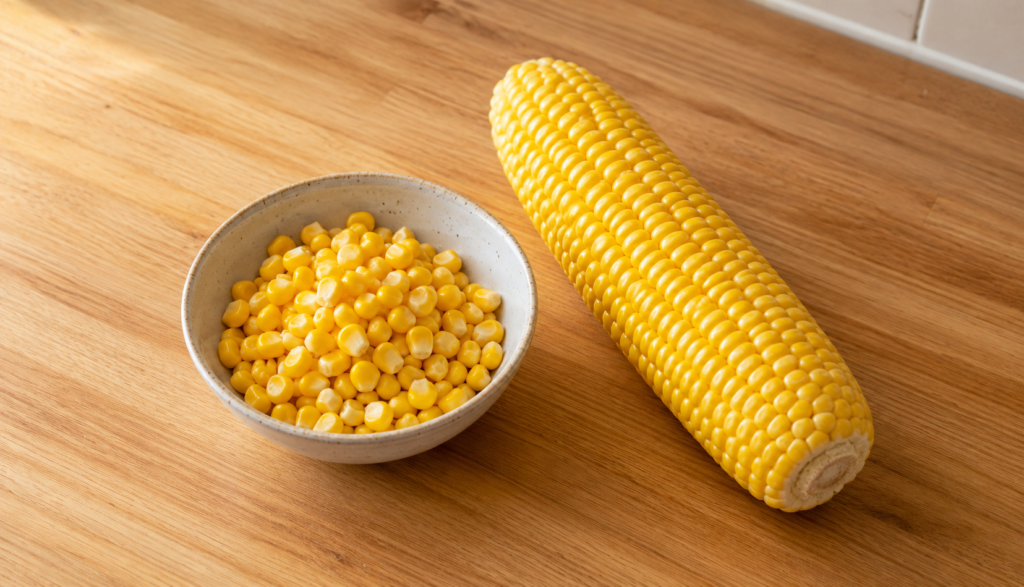
Corn is a strange case in dog food safety because the kernels themselves are genuinely unremarkable — safe, mildly nutritious, low risk — while the cob they grow on is one of the more reliably dangerous household items I’ve encountered in years of working around dogs. I’ve heard more emergency surgery stories involving corn cobs than almost any other single food item, which is part of why this topic deserves more weight than the relatively boring safety profile of plain corn kernels might suggest. Can dogs eat corn? Yes, the kernels are fine in moderate amounts. The cob is where this conversation actually matters, and it deserves serious attention regardless of how harmless eating corn on the cob looks at a summer barbecue.
Corn Kernels — A Mild but Real Nutritional Contributor
Plain corn kernels offer a modest nutritional profile including fiber, some vitamin B content, and a small amount of vitamin C. This isn’t a nutrient powerhouse the way carrots or sweet potato are, but corn isn’t nutritionally empty either, and its frequent appearance in commercial dog foods reflects its reasonable, if unremarkable, contribution as a carbohydrate and fiber source. Corn for dogs in kernel form is a low-calorie addition that most dogs tolerate without issue.
The fiber in corn kernels supports digestion in a mild way, similar to many other vegetables on the safe list. Corn doesn’t carry any of the more dramatic antioxidant or vitamin density that makes berries or carrots stand out, but as an occasional addition to a dog’s diet — whether as a standalone treat or mixed into food — plain corn kernels are a reasonable, low-risk choice.
What’s worth understanding clearly is that corn allergy in dogs, while less common than allergies to proteins like chicken or beef, does occur in some individual dogs. Signs of a corn intolerance or allergy include itching, skin irritation, digestive upset, or other typical food sensitivity symptoms. If your dog hasn’t had corn before, introducing it in a small amount and watching for any reaction over the following day or two is a sensible precaution, the same approach that applies to introducing any new food.
Corn is sometimes the subject of debate in pet nutrition circles regarding whether it’s a “filler” ingredient with limited value in commercial dog food. Whatever the merits of that broader debate around commercial diet formulation, the relevant point here is narrower: plain corn kernels, given occasionally in moderate amounts as a treat or food addition, are safe and reasonably nutritious for most dogs without the controversy that surrounds their role in commercial kibble formulation.
The Corn Cob — A Genuinely Serious Hazard
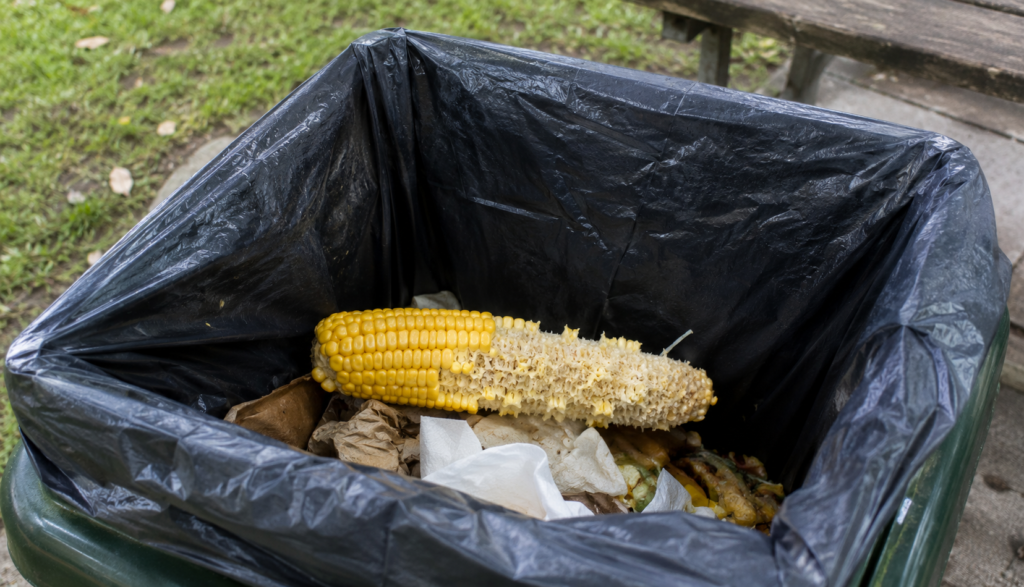
The corn cob is fibrous, dense, and doesn’t break down in the digestive system the way most plant material does. Unlike many things dogs chew on that eventually soften or pass through with some difficulty, a corn cob tends to remain largely intact even after being swallowed, which creates a serious risk of intestinal blockage that frequently requires surgical removal.
This isn’t a rare or theoretical concern — corn cob ingestion is one of the more common causes of intestinal obstruction in dogs that veterinary emergency clinics see, particularly during summer months when corn on the cob is a frequent feature at barbecues and outdoor gatherings. A dog’s natural inclination to chew on something cob-shaped, combined with the corn smell and flavor still present even after the kernels have been eaten off, makes cobs an unusually strong attractant for dogs specifically.
I’ve encountered this scenario more than once — a dog grabbing a discarded cob from a picnic table, a trash can, or a yard during a backyard gathering, working through it enough to swallow a significant piece, and ending up requiring emergency surgery to remove the obstruction. The recovery from this kind of surgery is significant, the cost is substantial, and the entire situation is completely preventable through basic awareness and disposal practices.
Signs of intestinal blockage from a corn cob include vomiting, lethargy, loss of appetite, abdominal pain, and straining without producing normal stool. These symptoms can develop within a day or two of cob ingestion and represent a genuine emergency requiring immediate veterinary attention — this is not a situation to monitor at home and wait out, since intestinal blockages can become life-threatening if not addressed promptly.
Why Corn Cobs Are So Easy to Underestimate
Most dog owners miss this completely: a corn cob looks and feels firm enough that it seems implausible a dog could actually swallow a piece large enough to cause a blockage. The reality is that dogs, particularly larger or more food-motivated breeds, are capable of breaking off and swallowing surprisingly large cob fragments, especially when motivated by the lingering corn flavor and scent. The size of the dog doesn’t provide much protection either — cob ingestion incidents happen across breed sizes, though the specific blockage risk and surgical complexity can vary.
The practical takeaway is straightforward: corn cobs need to be disposed of in a way dogs genuinely cannot access, not just placed in an open trash can or left on an accessible counter or table after a meal. A securable outdoor trash bin, or disposing of cobs in a location entirely separate from where a dog spends time, removes the opportunity for this kind of incident before it can happen.
During barbecues, picnics, or any gathering where corn on the cob is served, active awareness of where cobs end up after eating — rather than assuming they’ll naturally stay out of a dog’s reach — is the single most effective preventive measure. This is one of those situations where a small amount of extra vigilance during a specific, predictable scenario prevents what’s otherwise one of the more common and serious food-related emergencies dogs experience.
How to Serve Corn Kernels Safely
Removing kernels completely from the cob before offering corn to a dog is the only way to share corn safely. Fresh corn, cooked without butter, salt, or seasoning, with kernels cut or scraped off the cob, is an appropriate way to share corn as a treat or meal addition. Frozen corn kernels work just as well and are more convenient for year-round use, similar to frozen peas in terms of practicality.
For small dogs, a tablespoon or two of plain corn kernels is an appropriate serving. Medium dogs can handle a few tablespoons. Large breeds can manage a quarter cup or so without much concern. Corn kernels can be offered occasionally as part of a varied vegetable rotation, though given the relatively modest nutritional profile compared to options like carrots or peas, there’s no particular reason to make corn a primary or frequent treat choice over those more nutritionally robust alternatives.
Canned corn and creamed corn both carry the same sodium concerns discussed with other canned vegetables — added salt during processing that exceeds appropriate levels for regular dog consumption. Creamed corn additionally often contains added sugar, butter, or cream, none of which are appropriate additions. Fresh or frozen plain kernels remain the better choice over either canned variety.
What Most People Don’t Know
Corn syrup, used as a sweetener in countless processed human foods, is an entirely different consideration from corn kernels and carries the same concerns as any concentrated sugar source — contributing to weight gain and digestive upset with regular exposure, and worth avoiding in any product intended for dogs. The presence of corn in an ingredient name doesn’t mean the product follows the same safety profile as plain corn kernels; corn syrup, corn starch as a thickener in sugary products, and corn-based snack foods loaded with seasoning all need to be evaluated on their own terms rather than assumed safe because “corn” appears in the name.
Popcorn, discussed at length elsewhere as its own specific food category, shares the basic corn-kernel safety profile in its plain, air-popped form, but introduces its own separate considerations around unpopped kernels and the common practice of adding butter and salt. The corn kernel safety established here for fresh or frozen corn doesn’t automatically transfer to every corn-derived snack or product without considering how that specific product has been prepared.
The other detail worth knowing: corn cob hazard awareness matters even for dogs who’ve successfully chewed on cobs in the past without incident. Past safe experiences with cobs don’t reduce the risk for future exposure — each instance carries the same blockage potential regardless of how previous encounters went, which is why consistent disposal practices matter more than relying on a dog’s apparent track record with cobs. If symptoms consistent with blockage appear after any cob exposure, treat it as an emergency and seek veterinary care immediately rather than waiting to see if symptoms resolve on their own.
Corn’s Place in a Sensible Vegetable Rotation
Plain corn kernels can reasonably sit alongside peas, carrots, and green beans in an occasional vegetable rotation, contributing modest nutritional value and variety without much risk when prepared correctly. Given its relatively unremarkable nutritional profile compared to some other safe vegetables, corn doesn’t need to feature prominently or frequently, but there’s no strong reason to exclude it entirely either.
The far more important takeaway from this particular food safety topic isn’t really about the kernels at all — it’s about cob awareness and disposal practices, particularly during the warm-weather months when corn on the cob is most commonly served at gatherings where dogs are present. This is one of the clearer cases in dog food safety where the actual food item is low-risk, but a specific, predictable byproduct of how that food is typically consumed by humans represents a genuinely serious and common hazard.
Safe vegetables for dogs include corn kernels with a reasonably clear safety profile, but the broader lesson from corn specifically is the importance of looking beyond the primary food item to how it’s typically served and what gets left behind afterward. Applying that same scrutiny to other foods — checking for pits, cores, cobs, or other inedible parts before sharing — is a habit corn helps reinforce given how dramatic the consequences of overlooking the cob specifically tend to be.
Frequently Asked Questions

Q. Why is corn cob so dangerous for dogs?
A. Corn cob is fibrous and doesn’t break down in the digestive system, creating a serious risk of intestinal blockage that often requires surgery. It’s one of the more common causes of obstruction emergency clinics see, especially during summer gatherings.
Q. How much corn can a dog eat?
A. Small dogs can have a tablespoon or two of plain kernels. Medium dogs can handle a few tablespoons. Large breeds can manage a quarter cup. Corn kernels can be offered occasionally as part of a varied vegetable rotation.
Q. What should I do if my dog swallows a piece of corn cob?
A. Watch for vomiting, lethargy, loss of appetite, or straining without producing stool. These can indicate a blockage and require immediate veterinary attention. Do not wait to see if symptoms resolve on their own.