
Most dog owners assume fruit is either totally fine or completely off the table. The truth is messier than that — and apples are a perfect example. I’ve fed apples to dogs for years, and the answer isn’t just “yes” or “no.” It depends entirely on how you prepare them. Can dogs eat apples? Yes — but the apple seeds, the core, and even the quantity all matter more than most people realize. Get it right and you’ve got a genuinely healthy treat. Get it wrong and you’re making an unnecessary vet trip.
Why Apples Are Actually Good for Dogs
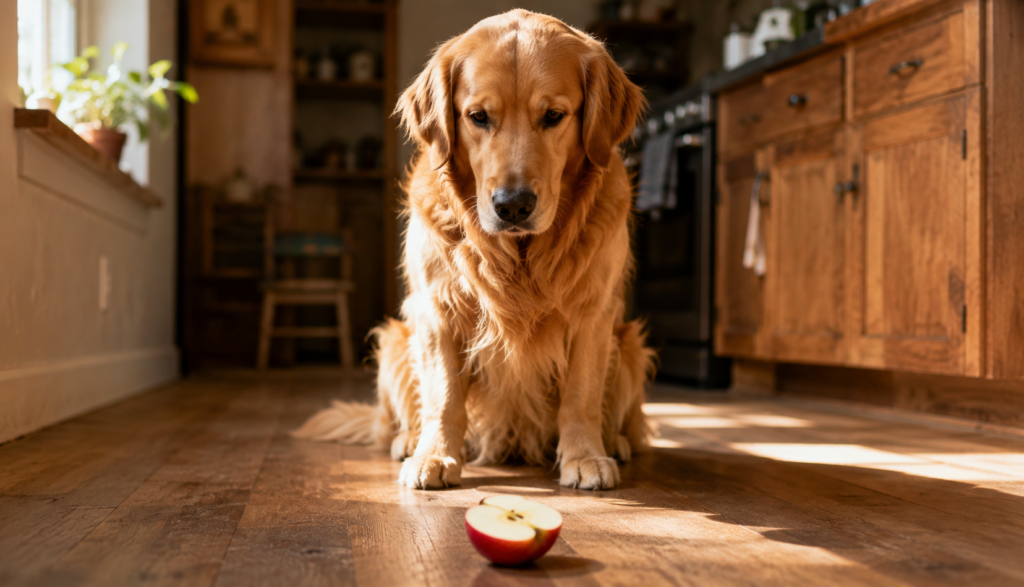
Fresh apple is one of the more underrated dog treats out there. Apples for dogs aren’t just safe — they bring real nutritional value when served correctly. Apple flesh is a source of vitamins A and C, both of which support immune function and skin health. The fiber content in apple skin helps with digestion, and the natural sugar in apple is low enough that it won’t spike blood sugar the way processed treats often do.
What surprised me was how much dogs actually enjoy the texture. The crunch seems to satisfy something instinctive, and the mild sweetness appeals to almost every dog I’ve owned or worked with. Small pieces of plain apple are a solid swap for store-bought treats, especially for dogs on a restricted diet where commercial ingredients are a concern.
The antioxidants in apple flesh also play a role in supporting long-term health — something most owners aren’t thinking about when they hand over a snack. Apples aren’t a superfood, but they do more work than most people give them credit for. The key is treating them as an occasional treat, not a daily staple, and always serving a washed apple with no seeds or core.
Dental health is another upside. The firm texture of apple wedges gently scrubs against tooth surfaces as dogs chew, which helps with mild plaque. It won’t replace brushing, but it’s a useful bonus — especially for dogs who resist dental care.
The Parts You Must Always Remove
Apple seeds are the part of this equation that genuinely matters. Apple seeds contain amygdalin, a compound that breaks down into cyanide when metabolized. A dog eating one or two seeds occasionally isn’t going to collapse — but regular exposure to apple seeds over time can accumulate. Avoid apple seeds entirely. It’s not worth the risk when removing them takes five seconds.
The apple core dogs sometimes chew on is a separate issue. Beyond the seeds sitting in the core, the core itself is a choking hazard — particularly for small dogs. The fibrous center doesn’t break down easily, and I’ve watched this go wrong when a dog got hold of an apple someone left on a counter and swallowed a chunk of core without chewing it properly.
Apple skin is fine. A lot of owners peel their apples before serving, but that’s unnecessary — the skin is where a good portion of the fiber lives. Wash the apple thoroughly first, especially if it’s not organic, since pesticide residue on the skin is a legitimate concern worth addressing.
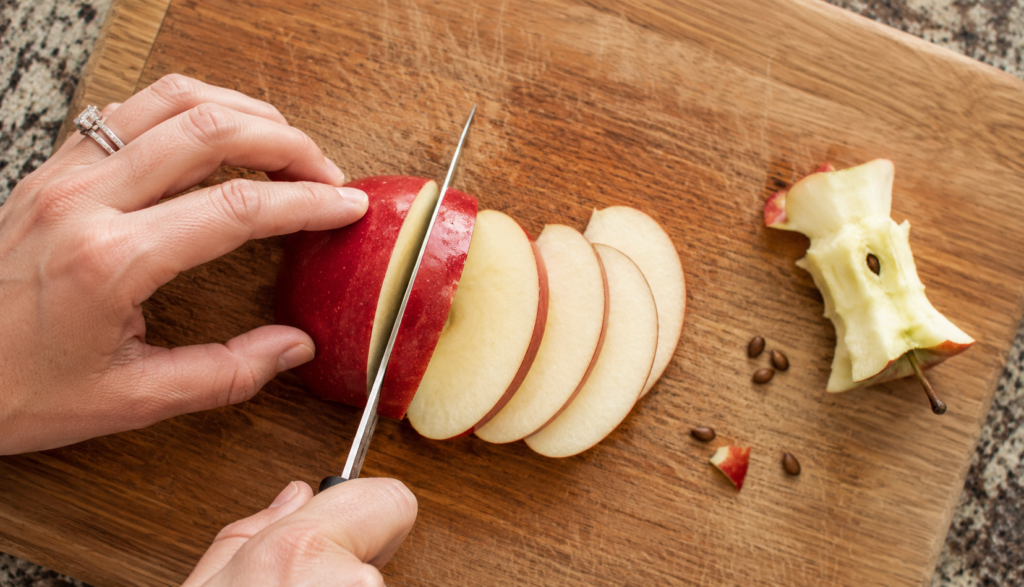
What you’re left with after removing the core and seeds is clean apple flesh, which you can cut into pieces appropriate for your dog’s size. Bite-sized pieces for smaller dogs, apple slices or apple wedges for larger breeds. Always serve apples as a separate item — not mixed into food where the core or seeds could go unnoticed.
How Much Apple Is Too Much
Moderation is the part of this conversation that gets skipped most often. Even with a safe fruit like apple, overfeeding leads to digestive upset — specifically diarrhea and loose stools — because of the fiber content and natural sugar hitting the digestive system faster than it can process. Too much apple is a common enough mistake that it’s worth putting a number on it.
For most dogs, a few apple slices two or three times a week is more than enough. For small dogs — under 20 pounds — keep it to one or two bite-sized pieces per serving. Large breeds can handle more, but “more” still means a handful of apple wedges, not half an apple. Sugar content adds up, and even natural sugar in excess isn’t doing your dog any favors.
I’ve seen this firsthand with a Labrador I fostered who had access to a backyard apple tree. She ate fallen apples regularly for two weeks before anyone noticed, and the digestive fallout was unpleasant for everyone involved. Portion control matters even with healthy treats.
Puppy safety is also worth addressing separately. Puppies can eat apples, but their digestive systems are more sensitive than adult dogs, so start with a very small piece and monitor for any reaction before making it a regular thing. Senior dogs can eat apples too, though if they have diabetes or weight management issues, check with a vet before adding any fruit to their diet — the same caution applies if you’re considering cherries, since those carry a far more serious pit-related risk.
Preparing Apples the Right Way
Serving apples to dogs is simple once you have the preparation steps locked in. Start with a washed apple — run it under cold water and scrub the skin if it’s not organic. Then remove the core completely, making sure no seeds remain. Cut the apple flesh into appropriately sized pieces for your dog’s size and serve as a standalone treat.
From experience, the smarter call is to prep a small batch ahead of time and refrigerate the pieces. Dogs enjoy cold apple slices — the temperature adds to the appeal, and you’re not scrambling to prepare something every time you want to give a treat. Organic apple is preferable when you can get it, since you’re leaving the skin on and pesticide residue accumulates there.
Some owners serve apple mixed into homemade dog food or frozen into ice cube trays with water or plain broth for summer treats. Both approaches work well. Plain apple alone is fine, but if your dog is picky, pairing it with something they already enjoy can help introduce it.
Apple varieties don’t make a significant difference nutritionally — red, green, fuji, gala — all are equally safe. Green apple tends to be more tart, which some dogs respond to differently, but there’s no variety to avoid. Stick to fresh apple rather than anything processed, since applesauce and apple juice often contain added sugar or xylitol, which is toxic to dogs.
What Most People Don’t Know
The real danger with apples and dogs isn’t the apple itself — it’s the false confidence people get from knowing it’s “safe.” Because apples for dogs are widely listed as a safe fruit, owners stop reading carefully and miss the follow-up detail that removes the core, seeds, and any processed apple products from the equation. Xylitol in particular is the hidden risk most people overlook entirely.
Xylitol is an artificial sweetener used in some commercial apple products — especially flavored applesauce, apple-flavored yogurt, and certain apple snack brands. Even small amounts of xylitol can cause rapid insulin release in dogs, leading to hypoglycemia, seizures, and liver failure. If you’re ever giving your dog anything apple-flavored rather than fresh apple, read the ingredient label first. The word “natural flavors” on packaging doesn’t mean xylitol-free.
Most dog owners who know apples are safe don’t know this distinction. Plain, fresh, seedless apple is safe. Apple-flavored processed products are a different category entirely and need to be evaluated individually before you feed them. If symptoms persist or worsen after your dog eats something apple-flavored, a vet visit is always the right call — the same “looks safe but isn’t” trap applies to fruit like grapes, where there’s no safe amount at all.
Fruit Alternatives If Your Dog Doesn’t Like Apple
Not every dog will take to apple, and that’s fine. The dog diet doesn’t require any specific fruit — these are supplemental treats, not nutritional necessities. If your dog ignores apple slices or seems put off by the texture, there are other safe fruits for dogs worth trying.
Blueberries are small, low-sugar, and most dogs take to them immediately. Watermelon (seedless, no rind) is another popular option, especially in warmer months. Banana works well in small amounts, though the sugar content is higher than apple so portion control matters more. Pear follows similar rules to apple — remove seeds and core, serve the flesh only.
Most dog owners miss this completely — the fruit itself matters less than understanding the preparation rules that apply to whichever fruit you choose. Seeds, pits, and cores are the consistent danger across almost all fruits. Master those rules and you can rotate through safe options without having to research each one from scratch every time.
FAQ
Can dogs eat apple skin?
Yes, apple skin is safe for dogs. It contains fiber and nutrients. Wash the apple thoroughly before serving, especially if it’s not organic, to remove any pesticide residue on the skin.
Are apple seeds poisonous to dogs?
Apple seeds contain amygdalin, which converts to cyanide during digestion. While a couple of seeds won’t cause immediate harm, regular exposure is a risk. Always remove seeds before giving apples to dogs.
How many apple slices can a dog eat?
For small dogs, one to two bite-sized pieces per serving is enough. Larger dogs can handle a few apple wedges. Limit apple treats to two or three times per week to avoid digestive upset from excess fiber and natural sugar.
Can dogs eat green apples?
Yes, green apples are safe for dogs. They’re more tart than red varieties, which some dogs may dislike, but there’s no nutritional or safety difference. Remove seeds and core as you would with any apple.
Can puppies eat apples?
Puppies can eat apples in small amounts. Start with one small piece and watch for any digestive reaction before making it a regular treat. Their digestive systems are more sensitive than adult dogs.
Is applesauce safe for dogs?
Plain, unsweetened applesauce with no additives is generally safe in small amounts. Avoid any applesauce containing xylitol, added sugar, or artificial sweeteners, as these are harmful to dogs.
What happens if a dog eats an apple core?
An apple core is a choking hazard and contains seeds. If your dog swallowed a small piece without issue and shows no symptoms, monitor closely. If they swallowed a large chunk or are showing signs of distress, contact your vet.

Final Thought
Apples are a genuinely useful addition to your dog’s treat rotation — cheap, accessible, and nutritious when prepared correctly. The only work required is removing the core and seeds before serving. Do that, keep portions reasonable, and stick to fresh apple over anything processed or flavored. That’s the whole system. Start with a small piece this week and see how your dog responds.