
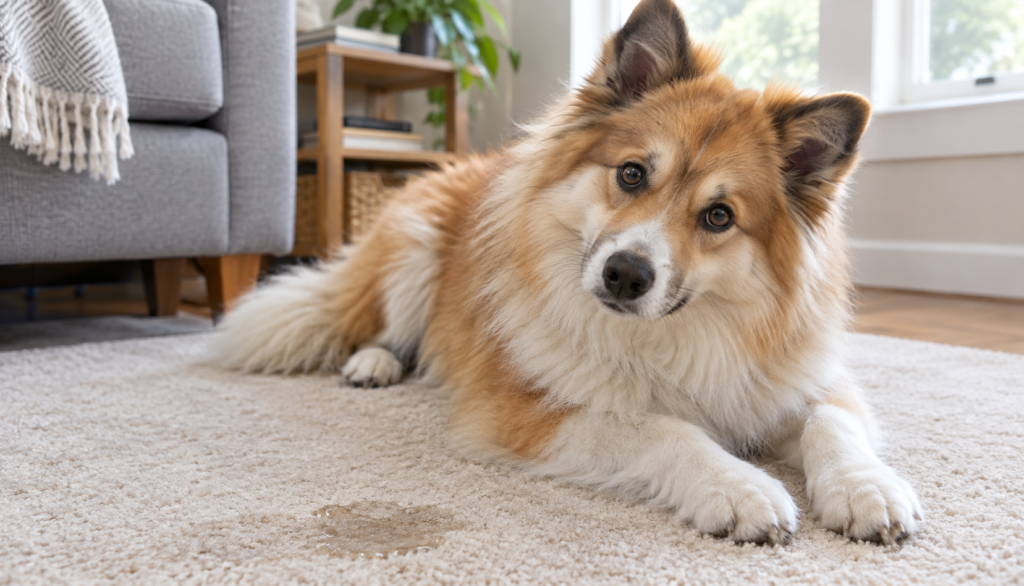
Few things start a morning worse than the sound of your dog retching, followed by the discovery of a wet patch on the carpet. If you are searching for how to clean dog vomit from carpet, the good news is that the job is very doable with ordinary household supplies and one pet-specific product. The key is speed and method: how quickly you remove the mess, how you blot the stain, and which cleaner you use all decide whether the carpet comes out spotless or keeps smelling for weeks.
This guide walks you through the exact steps for fresh and dried dog vomit on carpet, how to handle stubborn yellow bile stains and dye marks, what to avoid, and how to tell when the vomit itself is a reason to call your vet rather than just grab the paper towels.
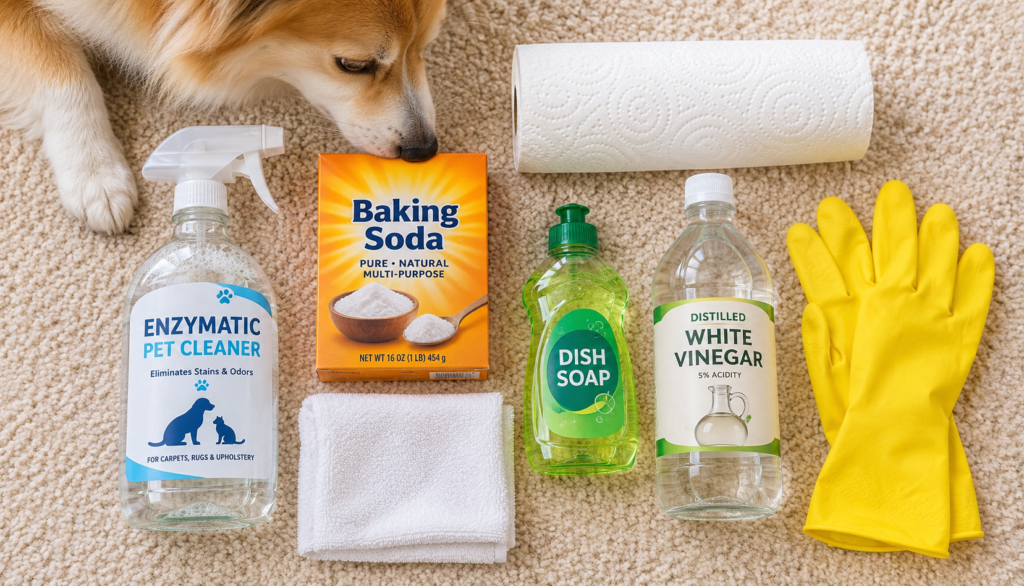
What You Need Before You Start
Gather your supplies first so you are not hunting through cupboards while the stain sets. Dog vomit is a protein-based mess, and protein stains get harder to remove the longer they sit and the more they dry into the carpet fibers. A few minutes of preparation saves a lot of scrubbing later.
- Disposable gloves and a plastic bag for the solids
- A spoon, dull knife, or stiff piece of cardboard for scooping
- Plenty of paper towels and a few clean white cloths
- An enzymatic pet stain remover (the most important item on the list)
- Baking soda for absorbing moisture and odor
- Dish soap and plain white vinegar as a backup solution
- A wet vacuum or a dry vacuum with a clean filter, if you have one
Use white cloths rather than colored ones so no dye transfers onto a damp carpet. And keep your dog away from the area while you work, because many dogs will try to eat their own vomit, which can make them sick again.
Step-by-Step: How to Clean Fresh Dog Vomit From Carpet
Fresh vomit is the easiest version of this problem. Work in the order below and resist the urge to scrub, because rubbing pushes the mess deeper into the carpet padding and spreads the stain outward.
- Remove the solids. Wearing gloves, lift the chunks with a spoon or piece of cardboard, scooping from the outside edge toward the center. Drop everything into a bag and seal it. If you are curious what your dog ate, take a quick look before you toss it, since undigested material can give clues about the cause.
- Blot the liquid. Press clean paper towels firmly onto the wet area and hold for several seconds. Replace them as they soak through. Always blot, never rub.
- Dilute with cold water. Pour a small amount of cold water onto the spot and blot again. Cold matters, because warm or hot water can set protein into the fibers.
- Sprinkle baking soda. If the carpet is still damp, cover the spot with a thin layer of baking soda and leave it for about fifteen minutes. It draws out moisture and starts neutralizing the vomit smell.
- Vacuum it up. Remove the baking soda with a vacuum, then check how much stain remains.
- Apply the enzymatic cleaner. Saturate the area according to the label, making sure the product reaches the carpet backing and not just the surface. Let it sit for the full dwell time, usually ten to fifteen minutes or longer.
- Blot and air dry. Blot up the excess with a clean cloth, then let the carpet dry completely. A fan or open window speeds this up and helps prevent mildew.
If the stain or smell is still faintly present after drying, simply repeat the enzymatic step once more. Many stubborn spots need two treatments, and a second pass is gentler on your carpet than aggressive scrubbing.
How to Remove Dried or Old Dog Vomit Stains
If you find a crusty patch hours or days after the accident, do not panic. Dried dog vomit can still be removed; it simply needs a little more patience. Start by scraping off the hardened material gently with a spoon or the edge of a card, taking care not to tug at the carpet fibers.
Next, rehydrate the stain by spraying it with cool water or a mix of cool water and a splash of white vinegar, and let it soak for several minutes so the crust softens. Blot up the loosened residue, then apply a generous layer of enzymatic cleaner and keep the area damp for the full dwell time, re-spraying if it begins to dry out. Enzymes only work while they are wet, which is why old stains often fail when the product dries too fast.
For a very old vomit stain, you may need to repeat the process two or three times. If the smell persists after the surface looks clean, the vomit has probably soaked into the padding underneath, and you may need to flood the area more deeply with cleaner and extract the liquid with a wet vacuum.
Handling Yellow Bile, White Foam, and Dye Stains
Not all dog vomit looks or behaves the same on carpet. The color and content of what your dog threw up determine which stain you are really fighting, and a few special cases need extra attention.
| Type of Vomit | Typical Look on Carpet | Best Cleaning Approach |
|---|---|---|
| Yellow bile | Yellow or greenish stain that can darken as it dries | Blot, then enzymatic cleaner; repeat if a yellow shadow remains |
| White foam | Little visible stain, mostly moisture and a slight odor | Blot, light enzymatic spray, baking soda to finish |
| Undigested food | Chunks plus a greasy or protein stain | Scoop solids, blot, enzymatic cleaner; add dish soap for greasy residue |
| Food dye (red, orange kibble) | Pink or orange discoloration | Dish soap solution, then peroxide on light carpets only after a patch test |
| Grass-green vomit | Green tint from chlorophyll | Enzymatic cleaner first; dish soap solution for leftover tint |
Yellow Bile Stains
When a dog vomits on an empty stomach, the result is often a yellow, bile-heavy puddle. Bile is a natural dye, so it can leave a yellow ghost on light carpet even after the smell is gone. Treat it as soon as possible with an enzymatic cleaner, and if a faint tint remains once the spot is dry, apply a solution of one tablespoon of dish soap and one tablespoon of white vinegar in a cup of warm water, blot, rinse lightly with cold water, and blot dry.
White Foam
Dog vomiting white foam usually leaves a small, watery patch rather than a heavy stain. Blot it thoroughly, spray a little enzymatic cleaner to handle the odor, and finish with baking soda. The bigger question with foam is why it happened, which we cover in the vet section below.
Dye Stains From Food
Some kibbles, treats, and human foods contain strong coloring that transfers to carpet. Treat these as dye stains rather than protein stains. A diluted dish soap solution is the safest first step. On light-colored carpet only, a small amount of three percent hydrogen peroxide mixed with a few drops of dish soap can lift stubborn color, but always test it on a hidden corner first because peroxide can bleach.
Cleaners to Avoid on Dog Vomit
The wrong product can turn a simple cleanup into a permanent problem, so it helps to know what not to use. Avoid steam cleaners on fresh protein stains, because heat bonds the proteins to the carpet fibers and locks in both the stain and the smell. Clean the area first, and only steam after the spot is fully treated and dry.
Skip ammonia-based cleaners as well. Ammonia smells similar to urine, and the scent can actually encourage your dog to mark or have accidents in that exact spot. Never mix bleach with vinegar, ammonia, or other cleaners, since the combination can release harmful fumes. Heavily perfumed sprays and air fresheners only mask the odor temporarily, and strong fragrance products are best kept away from pets, so choose pet-safe formulas and rinse away any residue so your dog does not lick it later.
What Most People Don’t Know
Most people judge their cleanup by what they can see and smell on the surface, but dog vomit does not stay on the surface. Liquid travels through the carpet fibers into the backing and sometimes the padding, where bacteria keep breaking down the organic material long after the top layer looks clean. That is why a spot that seemed fixed can start smelling again on a humid day, and why only an enzymatic cleaner that reaches deep enough will fully solve the problem.
The second thing many owners miss is that your dog can smell traces you cannot. Leftover scent can make a dog treat that area as a toilet spot or draw them back to sniff and lick it. Thorough enzymatic treatment and complete drying matter for the carpet, and they also matter for your dog’s behavior and health.
Finally, vomit is information. The color, contents, and frequency can tell you and your vet a lot, so a quick photo before you clean can be genuinely useful if your dog gets sick again.
Why Is My Dog Vomiting? Common Causes
An occasional episode is common in dogs and often harmless. A dog may eat too fast, nibble grass and bring it back up, or have a mild upset stomach after getting into something they should not have. Dogs that go too long between meals can also vomit yellow bile, especially first thing in the morning.
Other causes of dog vomiting are more serious. These include eating a foreign object such as a sock or toy, a sudden change in diet, food intolerance or allergy, infections, pancreatitis, kidney or liver problems, and ingestion of toxic foods or plants. Because the possible causes range from trivial to life-threatening, the pattern matters more than any single episode.
When to Call the Vet
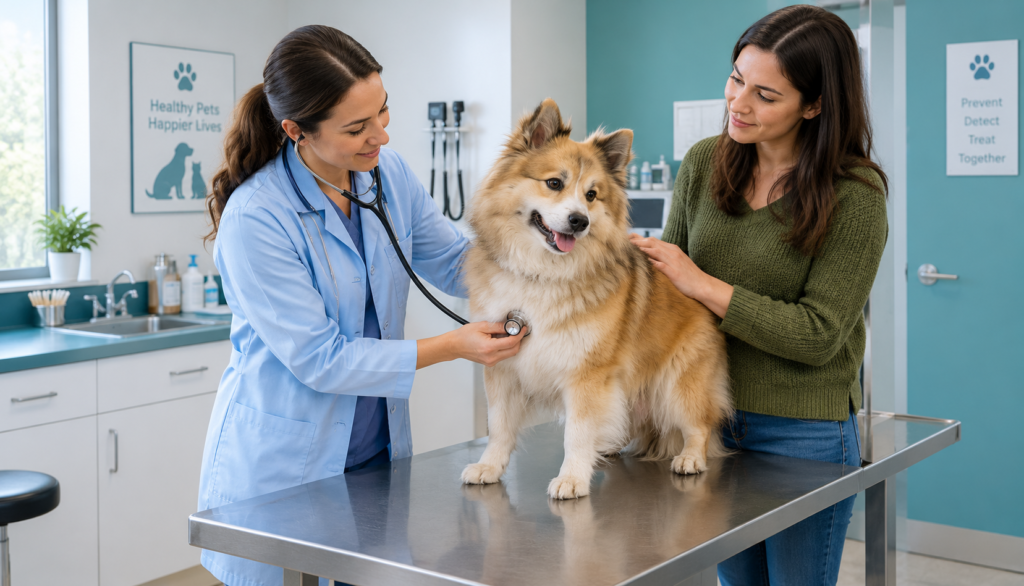
Cleaning the carpet is the easy part. Knowing when your dog needs help is the part that matters most. Call your vet promptly if you notice any of the following:
- Repeated vomiting over several hours, or more than a couple of episodes in a day
- Dog vomiting blood, or vomit that looks like coffee grounds
- Signs of dehydration such as dry gums, sunken eyes, or extreme thirst
- Lethargy, weakness, or refusal to eat or drink
- Vomiting together with diarrhea, fever, or abdominal pain
- Suspected ingestion of a toxin, medication, or foreign object
- Puppies, senior dogs, or dogs with existing health conditions, who can decline quickly
Treat unproductive retching with a swollen, tight belly as an emergency. This can signal bloat, which can become life-threatening within hours and needs immediate veterinary care. When in doubt, call your vet or an emergency clinic, and describe what you saw.
How to Prevent Vomit Stains and Protect Your Carpet
You cannot prevent every accident, but a few habits reduce both the frequency and the damage. Feed smaller, more frequent meals or use a slow-feeder bowl if your dog gobbles food. Avoid sudden diet changes, and keep table scraps and toxic foods out of reach. Limit vigorous play right after meals.
It also helps to keep a bottle of enzymatic cleaner and a roll of paper towels where you can grab them fast. Putting washable rugs or a protective mat in your dog’s favorite resting areas gives you a much easier cleanup if a stomach upset strikes. Carpet that is treated quickly and dried completely rarely holds a stain.
Frequently Asked Questions
Q. What is the best way to get dog vomit out of carpet?
A. Scoop up the solids, blot the liquid with paper towels, dilute with cold water, absorb moisture with baking soda, then saturate the area with an enzymatic pet cleaner and let it dry fully. Blotting rather than rubbing is the most important rule.
Q. How do I get the dog vomit smell out of carpet?
A. Use an enzymatic cleaner that reaches the carpet backing, and let it stay wet for the full dwell time. Baking soda can help afterward, and repeating the treatment once usually removes lingering odor that comes from bacteria deep in the padding.
Q. Can I use vinegar and baking soda on dog vomit?
A. Yes, as a backup. A mix of dish soap, white vinegar, and water can lift light stains, and baking soda helps absorb moisture and odor. For deep or stubborn smells, an enzymatic cleaner works better because it breaks down the organic material itself.
Q. Is it normal for a dog to vomit occasionally?
A. A single episode, especially after eating grass or eating too quickly, is often harmless. Repeated vomiting, blood, lethargy, or signs of pain are not normal and deserve a call to your vet.