
Seeing blood in your dog’s vomit is frightening, and it should be. Unlike a single yellow puddle of bile, a dog throwing up blood is telling you that something inside the digestive tract is bleeding, irritated, or damaged. Sometimes the cause is minor and the blood is only a thin streak after a long bout of retching. Other times it is the first visible sign of an ulcer, a poisoning, a swallowed object, or a clotting problem that can become life-threatening within hours.
This guide walks you through what the blood might mean, how to read its color and amount, which signs make it an emergency, what you can safely do while you arrange care, and what a vet is likely to do once you arrive. The short answer to the question most owners type into a search bar is simple: blood in dog vomit always deserves a call to your vet the same day, and an immediate emergency visit if your dog is weak, pale, vomiting repeatedly, or may have eaten something dangerous.
What Vomiting Blood Actually Means in Dogs
The medical term for vomiting blood is hematemesis. It means blood is coming from somewhere between the mouth and the upper small intestine, which includes the throat, esophagus, stomach, and first section of the intestine. The blood may be fresh and bright red, or it may have been partly digested by stomach acid, which turns it dark brown or black.
It helps to know that not every red substance in vomit is truly bleeding from the stomach. Your dog may have swallowed blood from a bleeding gum, a cracked tooth, a nosebleed, or a cut inside the mouth. A dog that coughs up pink, frothy fluid may be bringing it up from the lungs or airways rather than the stomach. Red dog food dye, beets, red treats, or chewed fabric can also fool you. This is why a photo and a careful description matter so much to your vet.
Whatever the source, bleeding inside the body can cause blood loss, dehydration, and shock if it continues. That is why this symptom is treated as more serious than ordinary vomiting.
What the Blood Looks Like: A Color Guide
The appearance of the blood gives your vet useful clues about where it started and how long it has been there. It is not a diagnosis, but it helps you describe the problem accurately.
| What You See | What It May Suggest |
|---|---|
| Thin red streaks in otherwise normal vomit | Mild irritation of the throat or stomach lining, often after repeated retching; can also be swallowed blood from the mouth or nose |
| Bright red blood, liquid or in clots | Active, fresh bleeding in the esophagus or stomach; treat as urgent |
| Dark brown or black, like coffee grounds | Blood that has been digested, which points to bleeding that has been going on for some time, such as an ulcer; this is serious |
| Pink, foamy vomit | Small amounts of blood mixed with saliva or foam; can be from the mouth, throat, or airway |
| Blood together with diarrhea | Possible hemorrhagic gastroenteritis, parvovirus, toxin exposure, or another severe gut problem |
| Black, tarry stool along with vomiting | Digested blood passing through the intestines, which suggests significant upper digestive bleeding |
If you can do so safely, take a clear photo of the vomit in good light before cleaning it up. Place a spoonful in a sealed container if your vet asks for a sample. Note the time, the amount, and how many episodes there have been.
When It May Be Less Serious: Small Amounts and One-Time Episodes
It is natural to wonder whether a dog that threw up blood once and is now acting normal needs a vet at all. Honestly, blood in vomit is never something to dismiss, but there are situations where it is less likely to signal a crisis.
- A tiny streak after hard retching. A dog that vomited many times from a stomach bug or after eating grass can irritate the lining of the throat and esophagus, leaving a few red threads in the last few episodes.
- Swallowed blood from a mouth injury. A chewed bone, rough toy, or sore gum can leave blood that is later vomited up.
- A single small episode in an alert, healthy adult dog. The dog is bright, drinking water, has normal pink gums, and has no belly pain, diarrhea, or known exposure to anything toxic.
Even in these cases, the safest approach is to phone your vet the same day, describe what you saw, and follow their advice. A dog that seems normal can still have a slow internal bleed, and some poisons, particularly rat poison, cause no obvious symptoms for days before the bleeding becomes visible. A vomiting dog that is acting normal is reassuring, but it does not rule out a problem.
When to Worry: Emergency Signs That Need a Vet Right Now
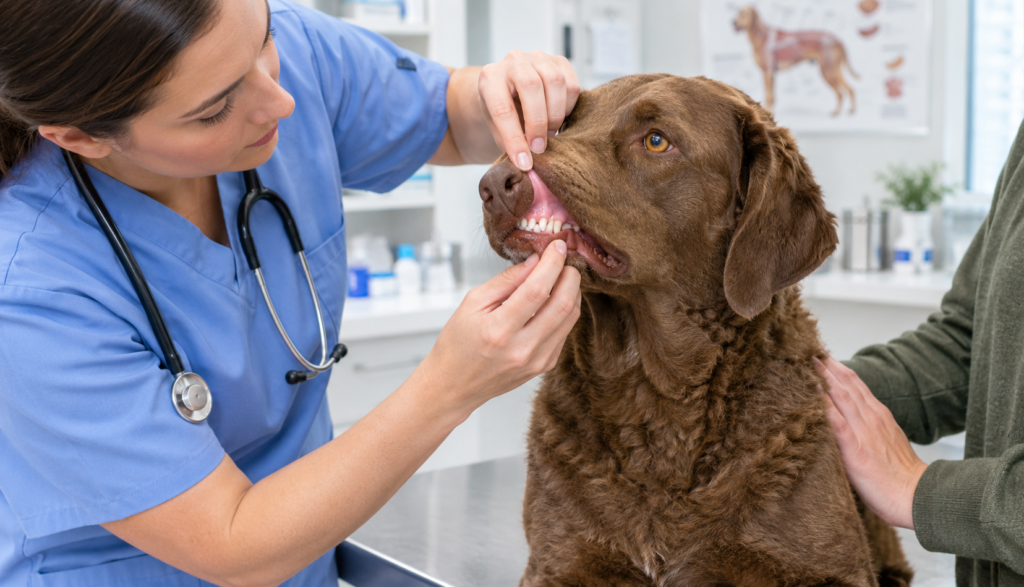
Go to an emergency clinic, or call one while you are on the way, if your dog is vomiting blood along with any of the following:
- Pale, white, gray, or bluish gums, which can mean blood loss or shock
- Weakness, collapse, wobbling, or extreme lethargy
- Repeated vomiting, or vomiting that does not stop
- Large amounts of blood, blood clots, or vomit that looks like coffee grounds
- A swollen, hard, or painful belly, or unproductive retching, which can signal bloat
- Known or possible access to rat poison, human medications, anti-inflammatory pain relievers, mushrooms, antifreeze, or toxic plants
- Bloody or black diarrhea, especially in a puppy
- Rapid breathing, a racing heartbeat, or cold paws and ears
- Bruising, tiny red or purple spots on the gums or skin, or bleeding from the nose or other places
- Refusal to drink, no appetite, or fever
Puppies, senior dogs, toy breeds, and dogs with existing conditions such as kidney disease, liver disease, or Addison’s disease have less reserve, so even a modest amount of blood deserves faster attention. A puppy vomiting blood, particularly one that is not fully vaccinated, should be seen immediately because parvovirus is a real possibility.
Common Causes of a Dog Throwing Up Blood
Many different problems can lead to blood in a dog’s vomit. Your vet narrows the list using your dog’s history, physical exam, and testing. These are among the most common explanations.
Stomach Ulcers and Gastric Irritation
Ulcers and erosions in the stomach or upper intestine can bleed slowly or heavily. They are often linked to anti-inflammatory pain medications, steroids, severe stress, kidney or liver disease, or serious illness. Vomit that looks like coffee grounds is a classic sign of an ulcer that has been bleeding for a while. Never give a dog human pain relievers such as ibuprofen or naproxen, and do not combine veterinary anti-inflammatories without direction, because these drugs are a leading cause of drug-related stomach damage.
Hemorrhagic Gastroenteritis
This sudden illness causes severe vomiting and profuse bloody, jam-like diarrhea. It can cause rapid dehydration and needs prompt veterinary care, usually with fluids. Dogs with it often seem suddenly very sick, and small breeds are commonly affected.
Foreign Objects and Intestinal Blockage
Swallowed socks, toys, corn cobs, bones, rocks, and fabric can scrape or tear the stomach and intestine. Dogs that eat bones, including cooked or splintered bones, may bring up blood after sharp pieces damage the lining. Repeated vomiting, belly pain, and loss of appetite are common alongside blood. Blockages can be surgical emergencies.
Poisoning and Toxins
Anticoagulant rodenticides, often called rat poison, stop the blood from clotting. A poisoned dog may vomit blood, cough, bruise, bleed from the gums, or become weak and pale, sometimes several days after eating the bait. Other toxins that can irritate or damage the gut include certain plants, mushrooms, heavy metals such as zinc from coins, and some household chemicals. If poisoning is possible, call a vet or animal poison hotline right away and bring the packaging.
Infections and Parvovirus
Parvovirus attacks the lining of the intestines and causes vomiting, bloody diarrhea, fever, and dehydration, mostly in young or unvaccinated dogs. Other infections and parasites can also irritate the gut and lead to bleeding.
Clotting Disorders and Systemic Illness
Some dogs bleed because the blood cannot clot properly. Immune-mediated disease, liver disease, tick-borne infections, and inherited clotting problems can all cause bleeding into the digestive tract. Kidney failure can also create painful ulcers in the stomach, while Addison’s disease can cause vomiting, weakness, and gut bleeding.
Tumors and Chronic Disease
In older dogs, tumors of the stomach, esophagus, or intestines can bleed and cause repeated vomiting, weight loss, and poor appetite. Pancreatitis, severe inflammation of the gut, and esophagitis can also lead to blood-tinged vomit.
What Most People Don’t Know
The most dangerous mistake owners make is judging the situation by how much blood they can see. A dog can lose a significant amount of blood into the stomach and intestines without the vomit looking dramatic. Blood that has been digested turns dark and can be mistaken for ordinary brown vomit or dirt, so a coffee-ground appearance deserves more concern, not less, than a few red streaks.
Another surprise is how delayed some causes can be. With anticoagulant rat poison, the bleeding often shows up two to five days after the dog ate the bait, long after the owner has forgotten the incident. If your dog is vomiting blood and there is any chance it came across rodent bait, tell your vet immediately, even if it seems unlikely.
Finally, many owners assume a dog that is eating and playing must be fine. Dogs hide pain and weakness well, and early blood loss may not change behavior until the problem is advanced. A normal mood is a good sign, but it is not a substitute for an exam.
What to Do Right Now While You Arrange Care
These steps can help you protect your dog and give your vet what they need. They are not a replacement for professional treatment.
- Call your vet or the nearest emergency clinic. Describe the color, amount, and number of episodes, plus any other symptoms, and ask whether to come in right away.
- Remove access to anything your dog could swallow. Pick up toys, bones, trash, and any medication or bait that might be involved.
- Take a photo and keep a sample if you can. A sealed container with vomit or a clear picture helps your vet assess the problem.
- Hold off on food, and ask about water. A rested stomach is easier on an irritated gut, but do not withhold water from a dog that is dehydrated or a puppy without checking with your vet first.
- Do not give human medications or home remedies. Pain relievers, antacids, and anti-nausea drugs can be dangerous or mask important signs. There is no safe home remedy for a dog vomiting blood.
- Keep your dog calm and warm. Limit activity and transport them gently, using a blanket if they are weak.
- Bring information. Take medication names, packaging from any suspected toxin, vaccination history, and a note of when symptoms started.
What to Expect at the Vet
Your vet will start with a physical exam, checking gum color, hydration, heart rate, temperature, and belly pain. They will ask about your dog’s diet, medications, access to toxins, and recent behavior. Depending on what they find, they may recommend bloodwork to check red blood cell count, clotting ability, and organ function, along with a stool test, X-rays, or an abdominal ultrasound to look for blockages, masses, or fluid. In some cases an endoscopy is used to look at the stomach lining directly.
Treatment depends on the cause. Common steps include intravenous fluids, anti-nausea medication, stomach-protecting drugs, antibiotics when indicated, vitamin K for certain poisonings, and in severe blood loss a transfusion. Foreign objects may require removal. Dogs with significant bleeding are often hospitalized for monitoring.
Costs vary widely depending on your region, the clinic, and how sick your dog is. A basic exam and bloodwork is a modest expense, while hospitalization, imaging, or surgery can climb quickly. If cost worries you, say so openly. Many vets will outline options, and early treatment is almost always less expensive than waiting.
Recovery and Prevention
After the cause is treated, your vet may suggest a bland, easily digested diet for several days, followed by a gradual return to normal food. Follow the medication schedule exactly and attend any recheck appointments, especially if your dog had an ulcer or clotting problem.
You can lower the chance of a repeat episode by taking a few practical steps:
- Never give human pain relievers or leftover prescriptions to your dog.
- Store rodent bait, cleaning products, and medications out of reach, and avoid anticoagulant rat poison around pets.
- Choose sturdy, size-appropriate chew toys, and avoid cooked bones and items your dog can splinter or swallow.
- Keep vaccinations current, particularly for puppies.
- Do not let your dog scavenge on walks, and supervise around trash and compost.
- Schedule regular wellness exams, with bloodwork for senior dogs.
Frequently Asked Questions
Q. Is it an emergency if my dog threw up blood once?
A. One small streak in an otherwise bright, healthy adult dog may not be an emergency, but you should still call your vet the same day. It becomes an emergency if the blood is bright red in volume, looks like coffee grounds, or comes with pale gums, weakness, repeated vomiting, or possible poison exposure.
Q. Why is my dog vomiting blood but acting normal?
A. A small amount of blood from throat irritation or a mouth injury can happen in a dog that otherwise feels fine. However, ulcers, early poisoning, and slow internal bleeding can also look mild at first. Normal behavior is encouraging, but only a vet exam can tell you whether the cause is minor.
Q. Can I treat a dog vomiting blood at home?
A. No. There is no safe home remedy for blood in vomit, and human medications can make things worse. What you can do is remove hazards, keep your dog calm, collect a photo or sample, and get veterinary advice quickly.
Q. What does coffee-ground vomit in a dog mean?
A. Dark, grainy vomit that resembles coffee grounds usually means blood that has been partly digested in the stomach. It suggests bleeding that has been happening for some time, such as from an ulcer, and should be treated as serious. Contact a vet promptly.