
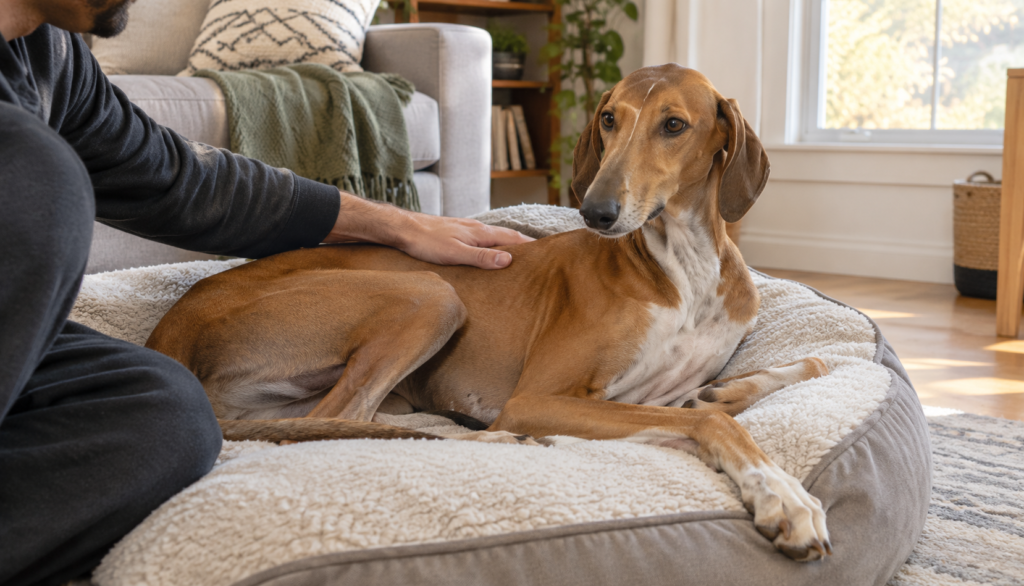
Watching your dog deal with diarrhea is stressful, especially when you’re not sure whether to treat it at home or head straight to the vet. The good news is that most cases of dog diarrhea are mild, short-lived, and respond well to a few tried-and-true home care steps. This guide walks through exactly how to stop dog diarrhea safely, what to feed during recovery, which remedies actually work, and the specific warning signs that mean it’s time to call your veterinarian instead of waiting it out.
Why Is My Dog Having Diarrhea?
Diarrhea itself isn’t a disease — it’s a symptom, and the list of possible causes is long. The most common culprit is dietary indiscretion: your dog got into the trash, ate something off a walk, or had a sudden change in food. Other frequent causes include food intolerances, mild viral or bacterial infections, intestinal parasites, stress (from boarding, travel, or a new environment), and reactions to medication.
Less commonly, diarrhea can signal something more serious — inflammatory bowel disease, pancreatitis, organ dysfunction, or toxin ingestion. Because the same symptom can point to something trivial or something urgent, the goal of home treatment is always to watch closely while you treat, not to treat and forget about it.
The texture and timing of the diarrhea can also offer clues, even though they’re not a substitute for a vet’s diagnosis. Sudden-onset diarrhea right after a walk, a park visit, or a trip through the trash usually points to something eaten. Diarrhea that develops gradually over several days, especially alongside weight loss or a dull coat, is more often tied to a chronic issue like food intolerance or parasites. Diarrhea that shows up during a boarding stay, right after a move, or following a household change like a new pet or baby is frequently stress-related rather than dietary at all, which is a distinction many owners overlook when trying to pinpoint a cause.
Immediate Steps to Stop Dog Diarrhea at Home
If your dog is otherwise acting normal — eating, drinking, alert, and not in obvious pain — these steps are the standard first line of home care recommended by most veterinarians for mild, uncomplicated diarrhea. The goal isn’t to force an instant fix but to give the digestive system the easiest possible path back to normal function, which usually takes 24 to 48 hours even when everything is done right.
It helps to think of this as a short recovery protocol rather than a single remedy. Each step below supports the others — resting the gut, keeping hydration steady, and reintroducing food gently all work together, and skipping one (like jumping straight back to regular kibble too soon) can undo progress from the rest.
- Withhold food for 12-24 hours (adult dogs only). Giving the gut a short rest can help things settle. Puppies, senior dogs, small toy breeds, and dogs with existing health conditions should not be food-restricted without vet guidance, since they’re more prone to blood sugar drops.
- Keep water available at all times. Diarrhea causes fluid loss, so hydration is more important than food during recovery. Offer small, frequent sips if your dog seems reluctant to drink, rather than forcing large amounts at once.
- Reintroduce food with a bland diet. Plain boiled boneless chicken breast and plain white rice, in a roughly 1:2 ratio, is the classic recommendation. Skip seasoning, oils, and skin entirely.
- Add plain canned pumpkin. A spoonful (not pumpkin pie filling) helps firm stool thanks to its soluble fiber content and is one of the most commonly recommended home remedies for dog diarrhea.
- Feed smaller portions, more often. Instead of two normal meals, offer four to six small portions of the bland diet throughout the day to avoid overwhelming a sensitive gut.
Best Foods and Remedies That Actually Help
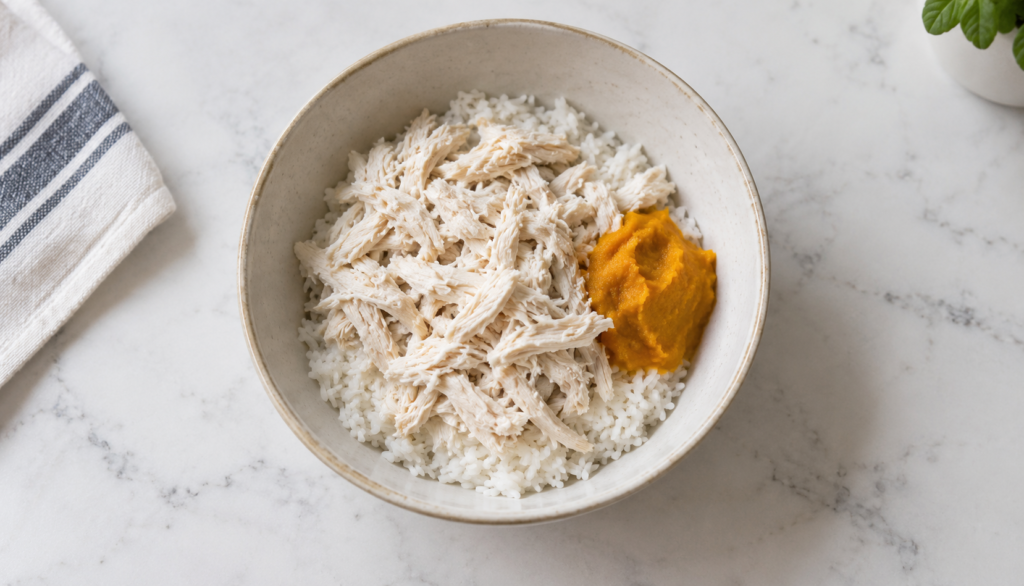
Not every home remedy circulating online is backed by anything real. Here’s what’s genuinely useful versus what to skip.
| Remedy | Helpful? | Notes |
|---|---|---|
| Plain boiled chicken & rice | Yes | Gold-standard bland diet; easy to digest |
| Canned pumpkin (plain) | Yes | Soluble fiber firms stool; safe in small amounts |
| Plain canned or cooked pumpkin puree | Yes | Different from pumpkin pie filling, which contains spices and sugar |
| Plain yogurt (small amount) | Sometimes | Probiotic benefit exists, but skip if your dog is lactose sensitive |
| Vet-recommended probiotics | Yes | Can help restore gut bacteria balance; ask your vet for a dog-specific brand |
| Bone broth (unsalted, no onion/garlic) | Yes | Adds hydration and palatability during bland diet phase |
| Human anti-diarrheal medication | No — vet approval required | Some human meds are toxic to dogs or mask a serious underlying issue |
| Milk | No | Most dogs are lactose intolerant; can worsen diarrhea |
| Fasting puppies or small dogs | No | Risk of hypoglycemia; feed small bland meals instead |
When to Transition Back to Regular Food
Once stool has been firm and normal for a full 24-48 hours on the bland diet, you can start transitioning back to your dog’s regular food. Do this gradually over 3-5 days by mixing in progressively larger portions of regular food with the bland diet, rather than switching all at once. A too-fast transition is a common reason diarrhea “comes back” right after it seemed resolved — it’s often not a relapse, just a gut that wasn’t ready for the switch yet.
A practical way to pace this: on day one back, aim for roughly a quarter regular food to three-quarters bland diet, then shift the ratio by about 25% each following day until your dog is fully back on their normal food. Watch stool consistency at each step rather than following the schedule blindly — if loose stool reappears at any point in the transition, it’s reasonable to hold at the current ratio for an extra day before pushing forward again. Dogs recovering from a more significant bout of diarrhea, or older dogs with more sensitive digestion, often do better with a slightly slower version of this timeline, closer to 5-7 days rather than 3.
What Most People Don’t Know
Many owners assume firming up the stool is the finish line, but consistency alone doesn’t confirm full recovery — appetite, energy, and normal bowel frequency need to hold steady for at least two full days before the gut is considered settled. It’s also widely misunderstood that all bland diets are created equal: white rice is preferred over brown rice during recovery specifically because the higher fiber content in brown rice can aggravate an already irritated gut, which seems counterintuitive given fiber’s usual role in stool health.
Another overlooked detail is that stress-induced diarrhea is extremely common and often goes unrecognized. Boarding, a vet visit, a move, fireworks, or even a new pet in the household can trigger a bout of diarrhea with no dietary cause at all — which is why a symptom can appear “out of nowhere” in a dog whose food and environment seem unchanged.
Home Care vs. When to See a Vet
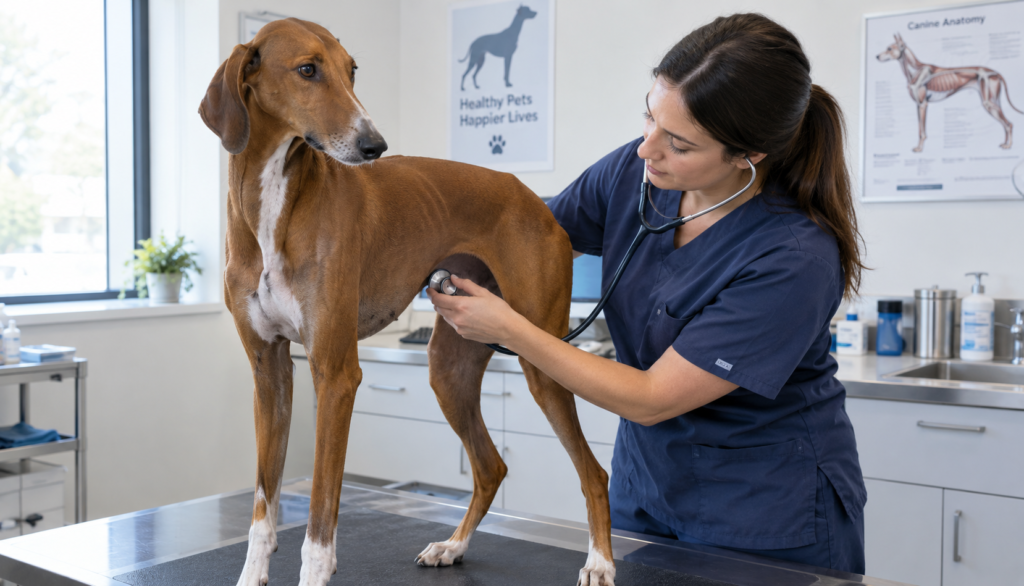
Most cases of dog diarrhea resolve within 24-48 hours with basic home care and never need a vet visit. But certain signs shift the situation from “monitor at home” to “needs professional care,” regardless of how normal your dog otherwise seems. The tricky part for a lot of owners is that “acting normal” and “safe to treat at home” aren’t the same thing — a dog can seem perfectly fine in energy and mood while still showing a warning sign in the stool itself, which is why it’s worth checking both the dog’s behavior and the stool’s appearance before deciding home care is enough.
- Home care is appropriate when: your dog is eating, drinking, and playing normally; there’s no blood or unusual color in the stool; diarrhea has lasted less than 48 hours; there’s no vomiting alongside it.
- See a vet promptly if: diarrhea lasts more than 2 days despite home treatment; you see blood (bright red or black, tarry stool); your dog is also vomiting repeatedly; there’s noticeable lethargy or weakness; your dog is a puppy, senior, or has an existing health condition; you suspect they ate something toxic, a foreign object, or a plant.
- Treat as an emergency if: your dog collapses, has a swollen or painful abdomen, has pale gums, or diarrhea is accompanied by known toxin ingestion — these warrant an emergency vet visit, not a wait-and-see approach.
Preventing Future Episodes
While not every case of diarrhea is preventable, a few habits meaningfully lower the odds of repeat episodes. Most prevention comes down to reducing unpredictability — in diet, routine, and environment — since a dog’s digestive system tends to handle steady conditions far better than sudden changes, even changes that seem minor to an owner.
- Transition to any new food gradually over 7-10 days, mixing old and new food in increasing ratios.
- Keep trash, compost, and counters secured, especially in multi-pet or multi-person households where consistency is harder to control.
- Stick to a consistent feeding schedule and avoid frequent treat or table food changes.
- Keep parasite prevention (deworming, flea/tick control) current, since intestinal parasites are a leading cause of recurring loose stool.
- Ask your vet about a maintenance probiotic if your dog has a history of a sensitive stomach.
FAQ
Q. What is the fastest way to stop dog diarrhea at home?
A. Withholding food for 12-24 hours (adult dogs only), then reintroducing a bland diet of plain boiled chicken and rice with a spoonful of plain pumpkin, is the fastest and safest home approach for mild cases.
Q. Is rice or pumpkin better for dog diarrhea?
A. They work well together rather than as substitutes. Rice forms the digestible base of the bland diet, while pumpkin’s soluble fiber helps firm the stool specifically — most vets recommend using both.
Q. Can I give my dog Pepto-Bismol or Imodium for diarrhea?
A. Only with direct veterinary approval. Some human anti-diarrheal medications are unsafe for dogs, and giving one can also mask symptoms of a more serious underlying issue.
Q. How do I know if my dog’s diarrhea needs a vet instead of home treatment?
A. See a vet if diarrhea lasts more than 2 days, includes blood or black stool, comes with repeated vomiting or lethargy, or affects a puppy, senior, or dog with an existing health condition.