
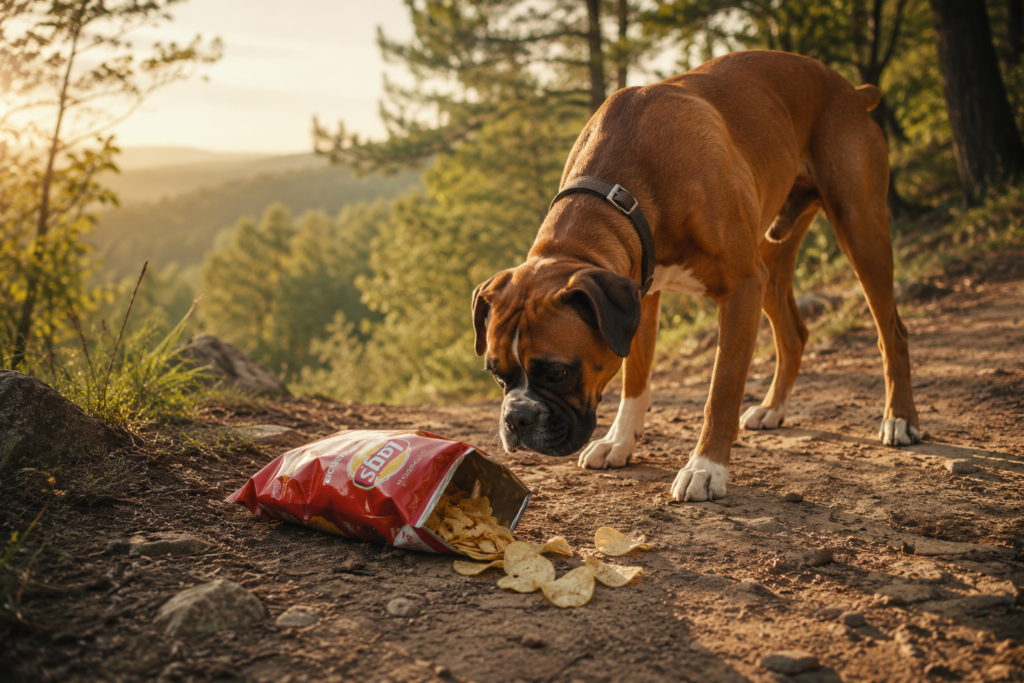
Chips are one of the most commonly dropped human snacks in any household, which makes them one of the most common things a dog scavenges off the floor. The short answer is no — chips are not a safe snack for dogs. While a single stray chip usually isn’t an emergency, chips as a regular treat or in large quantities pose real risks tied to sodium, fat, and seasoning ingredients that many popular brands include.
Why Chips Are Not Safe for Dogs
Chips are engineered for human taste preferences, which means they’re loaded with salt, fried in oil, and often coated in seasoning blends that weren’t designed with canine health in mind. Even “plain” varieties carry more sodium and fat than a dog’s digestive system is built to process regularly. The combination of high salt content and fried fat is the core problem, regardless of brand or flavor.
The Sodium Problem
Salt is the biggest concern with chips. Dogs require far less sodium in their diet than humans do, and a single serving of chips can contain a disproportionate amount relative to a dog’s body weight — especially for small breeds. Excessive sodium intake can lead to increased thirst, frequent urination, vomiting, diarrhea, tremors, elevated temperature, and in severe cases, sodium ion poisoning. This condition typically results from eating large quantities of salty food in a short period, but repeated smaller exposures also strain the kidneys over time.
Flavored and Seasoned Chips Are Riskier
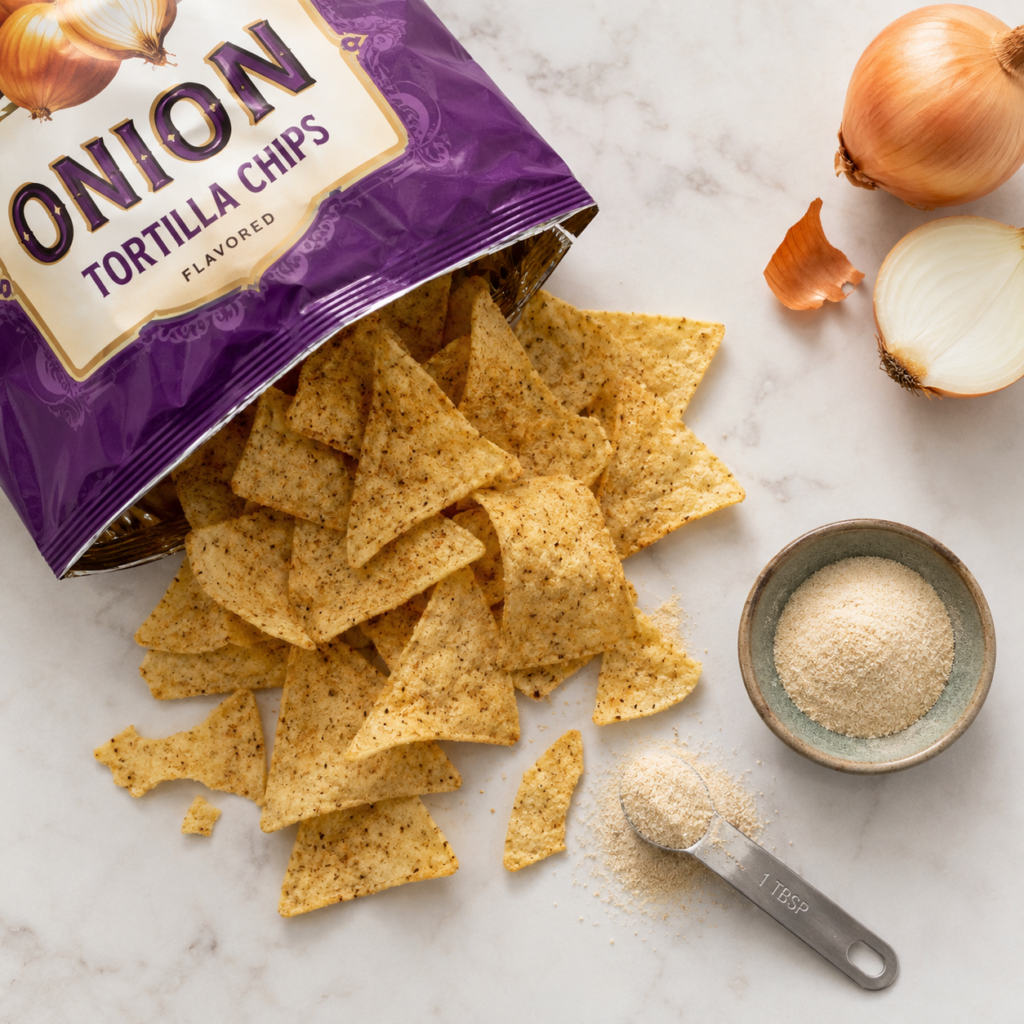
Flavored chips raise the danger level considerably. Many seasoning blends — including sour cream and onion, certain BBQ mixes, and some nacho cheese flavors — contain onion powder or garlic powder. Both are toxic to dogs and can damage red blood cells, potentially leading to hemolytic anemia with repeated or high-dose exposure. Spicy varieties add another layer of risk, since capsaicin and other hot seasonings can cause gastrointestinal irritation, excessive drooling, and stomach upset. Always check the ingredient label before assuming a flavored chip is “just salty.”
Fried Fat and Pancreatitis Risk
Most chips are fried in oil, giving them a high fat content that isn’t part of a dog’s normal diet. Sudden fat intake — even from a single greasy binge — can trigger pancreatitis, a painful and potentially serious inflammation of the pancreas. Symptoms include abdominal pain, vomiting, lethargy, and loss of appetite. Dogs with a history of pancreatitis, small breeds, or overweight dogs are at higher risk from fatty snacks like chips.
What Most People Don’t Know
Most owners assume the danger in chips is only the salt, but seasoning powders are often the bigger hidden threat. A “plain” bag of chips and a “sour cream and onion” bag can look nearly identical on a shelf, yet one carries an ingredient that’s actively toxic to dogs. Reading the flavor label matters more than most people realize — onion and garlic derivatives are frequently used in seasoning blends even when the word “onion” isn’t the first thing that comes to mind, such as in ranch, BBQ, and some cheese-flavored coatings. Checking the ingredient panel, not just the flavor name on the front, is the safest habit to build.
Chip Type Comparison Table
| Chip Type | Main Risk | Relative Safety |
|---|---|---|
| Plain potato chips | Sodium, fried fat | Occasional stray chip low risk; not a treat |
| Plain tortilla/corn chips | Sodium, fried fat | Similar to potato chips; still not recommended |
| BBQ flavored chips | Onion/garlic powder, sodium, sugar | Higher risk — check label for onion/garlic |
| Sour cream and onion chips | Onion powder (toxic), sodium | High risk — avoid entirely |
| Nacho cheese flavored chips | Sodium, artificial flavoring, sometimes onion/garlic | Higher risk — check label |
| Spicy/hot chips | Capsaicin irritation, sodium | Higher risk — GI upset likely |
| Kettle-cooked chips | Higher fat and salt density | Higher risk due to concentrated fat/salt |
What to Do If Your Dog Eats Chips
If your dog eats a single plain chip that fell on the floor, it’s usually not cause for panic — monitor for any unusual symptoms and move on. If your dog gets into a larger portion, a full bag, or any flavored variety containing onion or garlic powder, the situation is different. Watch closely for excessive thirst, vomiting, diarrhea, lethargy, tremors, or abdominal discomfort. Contact your veterinarian or an animal poison control line promptly if symptoms appear, if a large quantity was consumed, or if the ingredient label lists onion or garlic in any form. Bring the bag or a photo of the ingredient list with you if you’re able — it speeds up the vet’s assessment considerably.
Safer Snack Alternatives for Dogs
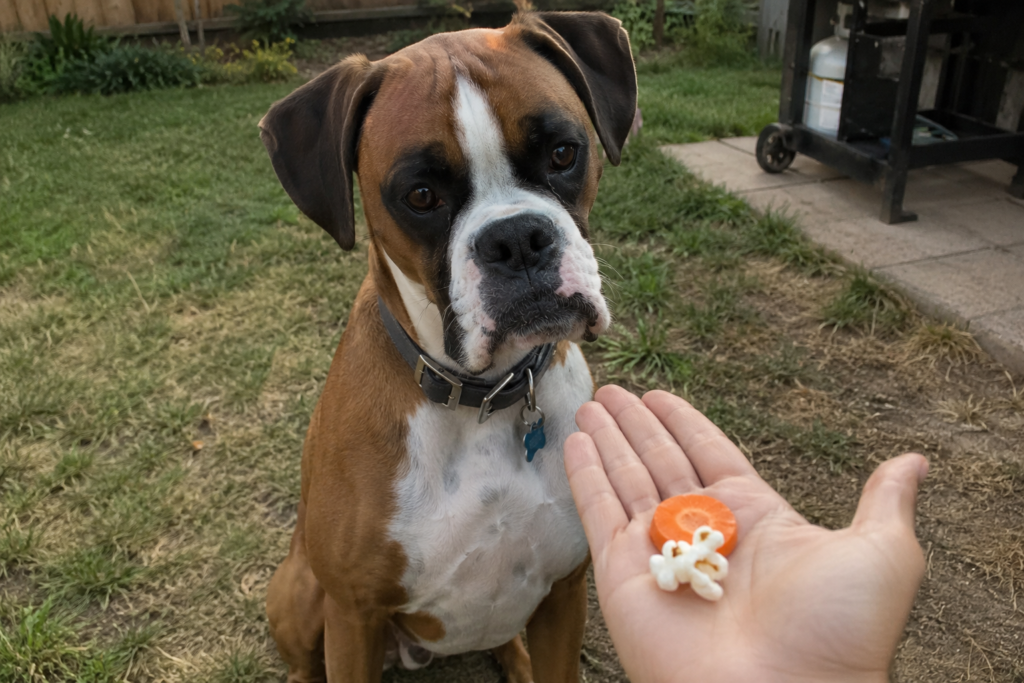
If you want to share a crunchy snack moment with your dog, skip the chip bag entirely. Plain air-popped popcorn (unsalted, unbuttered), thin slices of carrot, cucumber rounds, or commercial low-sodium dog treats give a similar crunch without the sodium or seasoning risks. These options let your dog join snack time without the downside.
Frequently Asked Questions
Q. Can dogs eat one chip without getting sick?
A. A single plain chip is unlikely to cause serious harm to most healthy adult dogs, though it still isn’t recommended as a habit. Small breeds, dogs with kidney issues, or dogs with a history of pancreatitis are more sensitive even to small amounts.
Q. Are Doritos or Pringles worse than plain chips?
A. Yes, generally. Flavored chips like Doritos or many Pringles varieties add seasoning powders, higher sodium levels, and sometimes onion or garlic derivatives on top of the base risks that plain chips already carry, making them a higher-risk choice.
Q. What are the signs of salt poisoning in dogs?
A. Signs of sodium ion poisoning include excessive thirst, frequent urination, vomiting, diarrhea, lethargy, tremors, elevated body temperature, and in severe cases seizures. This typically follows consumption of a large quantity of salty food and warrants immediate veterinary attention.